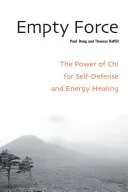
Empty Force
 78
78

Empty Force
Paul Dong and Thomas Raffill's "Empty Force" tackles a subject often relegated to myth or exaggeration, presenting the Ling Kong Jing as a tangible, albeit advanced, martial art. The book's strength lies in its systematic approach, guiding readers from theoretical principles of *chi* manipulation to practical exercises. The detailed explanations of internal cultivation, particularly the emphasis on breathwork and focused intent, offer a structured pathway for serious practitioners. However, the book's ambition to demystify such an esoteric art means some concepts, especially regarding the generation of the "force" itself, remain challenging to grasp without direct instruction. A particularly striking section details the subtle internal movements required to project energy, a concept that, while clearly articulated, demands significant dedicated practice to verify. The work provides a valuable, if demanding, exposition on a rare martial discipline.
📝 Description
78
Paul Dong and Thomas Raffill's 2006 book introduces Ling Kong Jing, a martial art aiming to influence opponents without physical contact.
Empty Force, or Ling Kong Jing, describes a martial art that emphasizes the manipulation of *chi*, the body's vital energy. Rather than relying on physical strength, practitioners cultivate internal power through rigorous practice and an understanding of energy flow. The goal is to affect or defend against an opponent solely through projected energy, creating results that appear to bypass normal physical laws. This discipline is for martial artists seeking to move beyond purely physical techniques, especially those involved with internal arts such as Tai Chi or Qigong. It also appeals to individuals interested in esoteric energy work, alternative healing, or the mind-body connection. The book examines how ancient Chinese philosophy intersects with advanced combative and therapeutic applications.
The concept of Ling Kong Jing has historical ties to China's martial traditions, particularly Daoist practices and advanced monastic training. Its principles are informed by centuries of Qigong and Neidan (internal alchemy) practices. These advanced techniques were often passed down within secretive lineages. The 2006 publication by Dong and Raffill made these esoteric concepts accessible to a global audience, detailing a practice that bridges these philosophical and practical domains. It suggests a path for disciplined individuals to explore the potential of human energy.
Ling Kong Jing belongs to a lineage of Chinese internal martial arts and energy cultivation systems rooted in Daoist philosophy. It draws upon principles found in Qigong, the practice of cultivating and balancing vital energy, and Neidan, or internal alchemy, which focuses on transforming the body's energies for spiritual and physical development. These traditions often emphasize the cultivation of *chi* and its projection, a concept that has been a subject of esoteric study for centuries. The book places Ling Kong Jing within this historical framework of advanced internal practices, often transmitted through master-disciple relationships.
💡 Why Read This Book?
• Learn the foundational principles of Ling Kong Jing, the "Empty Force," as detailed in its original publication year of 2006, understanding how *chi* is cultivated for non-contact martial applications. • Explore practical exercises for internal energy development, moving beyond physical technique to harness vital force as described by Paul Dong and Thomas Raffill. • Gain insight into the dual applications of Empty Force for both self-defense and healing, offering a unique perspective on energy projection derived from ancient Chinese traditions.
⭐ Reader Reviews
Honest opinions from readers who have explored this book.
❓ Frequently Asked Questions
What is the Ling Kong Jing, or Empty Force?
The Ling Kong Jing, translated as "Empty Force," is an advanced Chinese martial art focused on harnessing and projecting vital energy (*chi*) without physical contact. It aims to influence opponents or facilitate healing through refined internal cultivation techniques.
Can anyone learn Empty Force from this book?
The book provides a comprehensive guide from theory to practice, but mastering Empty Force requires significant dedication, discipline, and consistent practice over time. It's intended for serious students of internal martial arts or esoteric energy work.
What is the role of 'chi' in Empty Force?
Chi is central to Empty Force. It's the vital energy practitioners cultivate and manipulate. The art teaches methods to generate, store, and project chi effectively, enabling non-contact effects.
How does Empty Force differ from other martial arts?
Unlike arts that rely on physical striking or grappling, Empty Force emphasizes internal power and energy projection. Its goal is to achieve effects without direct physical engagement, a distinction highlighted in its 2006 publication.
Is Empty Force primarily for combat or healing?
The book explores both aspects. Empty Force can be applied for self-defense by repelling opponents without contact, and also for therapeutic purposes, using directed chi for healing and energy balancing.
Who are Paul Dong and Thomas Raffill?
Paul Dong is a recognized author on Chinese martial arts and culture. Thomas Raffill collaborated on "Empty Force," bringing their combined expertise to explain this esoteric discipline, first published in 2006.
🔮 Key Themes & Symbolism
Internal Energy Cultivation
The book meticulously details the process of cultivating *chi*, the body's vital energy, as fundamental to achieving the Empty Force. It moves beyond superficial physical training to focus on internal alchemy and energetic refinement. Readers are guided through specific breathing techniques, meditative practices, and visualizations designed to strengthen and control this internal power. The progression emphasizes that true mastery comes from within, transforming the practitioner's energetic state to enable seemingly extraordinary feats.
Non-Contact Application
A defining characteristic of the Empty Force is its capacity for non-physical engagement. The text explains how directed *chi* can affect an opponent, creating distance, imbalance, or even incapacitation without direct physical blows. This concept challenges conventional martial arts paradigms, suggesting a higher level of skill achieved through energetic influence. The book provides theoretical frameworks and practical insights into how this non-contact power can be generated and applied effectively in defensive scenarios.
Dual Purpose: Defense and Healing
"Empty Force" is presented not solely as a martial art but as a holistic system with applications in both combat and wellness. The same internal energy cultivated for defense can be channeled for healing purposes. This dual nature underscores the profound connection between energetic states and physical well-being. The book explores how practitioners can utilize their refined *chi* to promote recovery, alleviate ailments, and restore energetic balance in themselves and others.
Bridging Theory and Practice
The work systematically bridges the gap between abstract theory and concrete practice. It begins with the philosophical underpinnings and energetic principles of Ling Kong Jing, then provides step-by-step instructions for practitioners. The authors aim to explain the art, offering clear guidance on exercises and methods necessary to develop Empty Force. This structured approach makes the book accessible to dedicated students seeking to understand and potentially replicate these advanced energetic techniques.
💬 Memorable Quotes
Direct passages from the work, attributed to the author.
“The highest martial art is that which is not seen and not felt.”
— This statement expresses the essence of Empty Force, suggesting that true mastery lies in effects that are subtle, unseen, and achieved without overt physical interaction. It points to a level of skill that operates on energetic principles rather than brute force.
“Chi is the breath of life, the universal energy that connects all things.”
— This interpretation highlights the foundational concept of *chi* as a pervasive life force. Understanding its nature and flow is presented as the prerequisite for learning to manipulate it for practices like Empty Force.
“The body is a vessel, the mind is the pilot, and chi is the engine.”
— This analogy illustrates the integrated system required for Empty Force. It posits that the physical body, mental intent, and vital energy must all work in harmony for the art to be effective.
“Healing and defense are two sides of the same energetic coin.”
— This interpretation underscores the book's theme of duality. It suggests that the principles and energy cultivated for one application can be readily adapted for the other, highlighting the holistic nature of the practice.
💡 Key Ideas
Editorial paraphrase of the work's core concepts — not direct quotes.
To project force without contact requires a mind that is both still and intensely focused.
This paraphrased concept emphasizes the critical role of mental discipline. It suggests that the ability to generate Empty Force is inextricably linked to achieving a state of calm awareness coupled with unwavering concentration.
🌙 Esoteric Significance
Tradition
The Empty Force, Ling Kong Jing, is deeply rooted in Daoist principles and advanced internal martial arts (Neijia) traditions originating in China. It draws heavily from concepts central to Qigong and Neidan (internal alchemy), focusing on the cultivation and manipulation of *chi* (vital energy). While not strictly belonging to Western esoteric lineages like Hermeticism or Kabbalah, its emphasis on internal energy, mind-body unity, and subtle force projection aligns with universal esoteric goals found across various traditions seeking to understand and harness unseen energies.
Symbolism
Key symbolism in Empty Force relates to the concepts of emptiness (void) and fullness (energy). The 'empty' aspect refers to the practitioner's state of mind – a calm, unattached awareness that paradoxically allows for potent energetic action. The 'force' is the manifested *chi*, visualized as flowing, dynamic energy. Breath is also highly symbolic, representing the connection between the internal and external, the seen and unseen, and the vital link for channeling energy. The concept of internal pathways (meridians) also symbolizes the interconnectedness of the body's energetic system.
Modern Relevance
Contemporary thinkers and practitioners in fields like advanced Qigong, medical Qigong, and certain schools of Neijia martial arts continue to explore and develop the principles outlined in "Empty Force." Modern scientific research into bioenergetics and consciousness also finds resonance with the book's exploration of mind-body interaction and subtle energy. Its detailed approach provides a reference point for those investigating the potential applications of directed internal energy for both physical and psychological well-being, bridging ancient wisdom with contemporary scientific curiosity.
👥 Who Should Read This Book
['• Dedicated martial artists seeking to transcend physical limitations and explore the deeper dimensions of internal energy cultivation and non-contact applications.', '• Students of Qigong and Neidan interested in understanding the advanced theoretical and practical aspects of *chi* projection for both defense and healing.', '• Researchers and enthusiasts of esoteric Chinese traditions looking for a structured exposition on the principles and practice of Ling Kong Jing.']
📜 Historical Context
Published in 2006, "Empty Force" emerged during a period of renewed global interest in traditional Chinese culture and its esoteric practices. While concepts like Qigong had gained traction, the specific martial application of Ling Kong Jing remained relatively obscure outside dedicated circles. The book arrived at a time when Western audiences were increasingly exploring alternative health modalities and martial arts beyond their superficial forms. It sought to explain a discipline often associated with legendary, almost mythical, masters, presenting it through the lens of modern understanding and structured practice. Unlike the more widely studied internal arts like Tai Chi, Ling Kong Jing represented a more advanced, often secretive, stratum of internal cultivation. The work by Dong and Raffill aimed to provide a verifiable framework, distinguishing it from mere folklore and situating it within the lineage of advanced Neijia (internal martial arts) practices.
📔 Journal Prompts
The concept of projecting *chi* without physical contact: initial impressions and practical hurdles.
Reflecting on the mind's role in Empty Force: stillness versus focused intent.
How does the idea of "emptiness" in Ling Kong Jing relate to other philosophical concepts you know?
The dual application of Empty Force for healing versus defense: similarities and differences.
Exploring the potential of cultivating *chi* as described in the book's early sections.
🗂️ Glossary
Chi (Qi)
The fundamental vital energy or life force believed to permeate all living things and the universe. In martial arts and healing, it is cultivated and directed for various effects.
Ling Kong Jing
Literally 'Empty Force' or 'Empty Energy.' An advanced Chinese martial art that utilizes internal energy (*chi*) to affect opponents or facilitate healing without physical contact.
Neijia
Internal martial arts of China, such as Tai Chi, Baguazhang, and Xingyiquan, which emphasize cultivating internal energy (*chi*) and mind-body coordination over brute physical strength.
Neidan
Daoist internal alchemy, a practice focused on cultivating the body's intrinsic energies (*chi*, *jing*, *shen*) through meditation, breathwork, and specific exercises to achieve spiritual and physical transformation.
Yi
Intent or mind. In the context of Empty Force, it refers to the focused mental direction and will used to guide and project *chi*.
Meridians
Hypothetical pathways or channels within the body through which *chi* is believed to flow, central to Traditional Chinese Medicine and Qigong practices.
Qigong
A practice involving coordinated body posture, movement, breathing, and meditation used for health, spirituality, and martial arts training. It focuses on cultivating and balancing *chi*.