Second Sight

 71
71

Second Sight
Meg Henderson’s *Second Sight* tackles the weighty subject of wartime loss through a lens of psychic intuition. The premise, a mother’s unwavering belief in her son’s survival against all evidence, is potent. Henderson excels at portraying the quiet, persistent ache of grief and the unconventional ways the mind might seek solace or truth. The character of Ruthie, experiencing visions of a pilot she doesn't know but feels connected to, provides a compelling parallel narrative. This connection between Nancy and Ruthie, though initially abstract, forms the novel’s most intriguing speculative element. However, the pacing occasionally falters; the exposition surrounding Ruthie’s abilities could be more tightly integrated with Nancy’s unfolding certainty. A particularly affecting passage details Nancy’s internal conviction, a feeling that transcends logic and official reports. Ultimately, *Second Sight* offers a poignant, if sometimes slow-burning, examination of enduring maternal bonds and unexplained perception.
📝 Description
71
Meg Henderson's *Second Sight*, published in 2004, examines a mother's unwavering belief in her son's survival.
The novel follows Nancy MacLeod, who refuses to accept the official report of her son Calli's death during World War II. Nancy's intuition tells her Calli is alive, a conviction that drives the story. This maternal bond becomes the central focus, leading the narrative into unexplained connections and psychic phenomena. Henderson contrasts Nancy's internal certainty with the external reality of wartime loss and its aftermath.
The book appeals to readers who connect personal grief with the paranormal. It suits those who prefer character-focused narratives that examine loss, intuition, and the possibility of communication after death. Those interested in a more introspective look at psychic sensitivity, rather than dramatic supernatural events, will find this work engaging. The story is set against the backdrop of World War II and the rebuilding of Glasgow, exploring the human toll of conflict.
Henderson situates *Second Sight* within a 20th-century interest in spiritualism and parapsychology. The novel considers how psychic sensitivity might manifest, particularly through a mother's connection to her child. It touches on precognition and mediumship, suggesting that trauma can influence or be perceived via intuitive channels. The core idea is the possibility of sensing or 'seeing' individuals through means beyond conventional perception, a concept explored in various occult traditions.
💡 Why Read This Book?
• You will explore the specific manifestation of a mother's psychic intuition, as seen in Nancy MacLeod's unwavering belief in her son Calli's survival, offering a unique perspective on grief's persistent echoes. • You will experience how the concept of 'second sight' is portrayed through Ruthie's visions of an unknown pilot, demonstrating how psychic impressions can connect disparate lives. • You will gain insight into the emotional landscape of post-World War II Glasgow, understanding how collective trauma can intertwine with personal psychic experiences.
⭐ Reader Reviews
Honest opinions from readers who have explored this book.
❓ Frequently Asked Questions
What is the primary focus of Meg Henderson's 'Second Sight'?
The novel primarily focuses on a mother's psychic conviction that her son, Calli, is alive despite being declared lost in World War II, and the story of a young woman, Ruthie, who experiences visions connected to him.
When was 'Second Sight' by Meg Henderson first published?
'Second Sight' by Meg Henderson was first published in 2004.
What is the significance of Glasgow in 'Second Sight'?
Glasgow serves as the primary setting where the character Ruthie lives and experiences her psychic visions, grounding the supernatural elements in a specific, tangible urban environment.
Does 'Second Sight' involve supernatural events?
Yes, the book explores psychic phenomena, including intuitive certainty of survival and precognitive visions, suggesting a connection between characters beyond ordinary means.
Who is Calli in the context of the book?
Calli is Nancy MacLeod's son, a pilot who is reported missing and presumed dead during World War II. His fate is the central mystery that drives Nancy's conviction.
What is Ruthie's role in 'Second Sight'?
Ruthie is a young woman in Glasgow who has lifelong experiences of seeing 'a man in the corner', a pilot she doesn't know but feels inexplicably linked to, mirroring Nancy's search for her son.
🔮 Key Themes & Symbolism
Maternal Intuition
The unwavering psychic certainty of Nancy MacLeod regarding her son Calli's survival is central. This theme explores how a mother's bond might transcend physical reality and official reports, suggesting intuition as a powerful, if inexplicable, force. The narrative posits that this inner knowing, even when unsupported by evidence, holds a truth of its own, driving the plot through Nancy's persistent hope and investigation.
Psychic Connection
The novel posits an unseen link between Nancy and Ruthie, mediated by the lost pilot, Calli. Ruthie's lifelong visions of 'a man in the corner' serve as an echo or manifestation of Nancy's desperate search and belief. This theme questions the nature of consciousness and connection, suggesting that individuals can be psychically bound across distances or even perceived states of being.
Trauma and Perception
Set against the backdrop of World War II and its aftermath in Glasgow, the book explores how collective and personal trauma can influence perception. The war's devastation provides a context for the extraordinary. Ruthie's 'second sight' and Nancy's persistent intuition can be interpreted as responses to profound loss and the yearning for resolution, suggesting that psychic sensitivity might be heightened by emotional upheaval.
Grief and Hope
At its heart, *Second Sight* is a story about enduring grief and the persistence of hope. Nancy's refusal to accept her son's death, even without concrete proof, fuels the narrative. The novel examines how individuals cope with profound loss, and how hope, often manifesting as an intuitive certainty, can sustain them through unbearable circumstances and unanswered questions.
💬 Memorable Quotes
Direct passages from the work, attributed to the author.
“Nancy felt Calli was still alive.”
— This simple statement expresses the core of Nancy MacLeod's struggle. It represents an intuitive truth that defies logic and external validation, serving as the primary engine for the narrative's exploration of psychic connection.
“Ruthie saw 'a man in the corner'.”
— This phrase denotes Ruthie's lifelong, unexplained visions. It symbolizes an unknown presence or connection that intrudes upon her reality, hinting at a link to the events surrounding Calli's disappearance.
“His plane was found, but his body never was.”
— This factual detail from the narrative introduces ambiguity into Calli's fate. It provides a tangible basis for Nancy's hope and the possibility of something beyond a straightforward death.
“She felt strangely connected to him.”
— This describes Ruthie's inexplicable bond with the pilot she sees. It points to a psychic resonance that transcends her understanding and connects her to a larger, unfolding mystery.
“The conviction was too strong to ignore.”
— This reflects Nancy's internal state, emphasizing the power of her psychic certainty. It suggests that some truths are perceived intuitively, overriding rational thought and external evidence.
🌙 Esoteric Significance
Tradition
While not explicitly aligned with a singular esoteric tradition like Hermeticism or Gnosticism, *Second Sight* draws upon the broader archetype of the 'sensitive' or psychic individual. It appeals to themes found in folk magic and intuitive practices that emphasize inner knowing over established dogma. The work explores the concept of a 'veil' between worlds, a common motif in many spiritualist and mediumistic traditions, suggesting a permeable boundary between the living and the departed.
Symbolism
The primary symbols revolve around the 'man in the corner' and the lost pilot, Calli. The 'man in the corner' represents an intrusive psychic presence, an unresolved connection demanding attention. Calli, even in absence, symbolizes enduring love and the possibility of spiritual continuity. The setting of Glasgow itself can be seen as a symbol of a city grappling with loss and memory, a place where the veil between past and present, life and death, may be thinner.
Modern Relevance
Contemporary interest in mediumship, psychic development, and the exploration of consciousness continues to make works like *Second Sight* relevant. Thinkers and practitioners exploring the intersection of psychology, grief, and extrasensory perception may find Henderson's narrative a compelling case study. The novel's grounding of psychic phenomena in relatable human emotion appeals to a modern audience seeking tangible, character-driven explorations of the unexplained, rather than purely theoretical or ritualistic approaches.
👥 Who Should Read This Book
• Individuals interested in narratives exploring the psychological impact of wartime loss and grief, particularly through the lens of unexplained intuition. • Readers drawn to character-driven stories that examine psychic phenomena and the possibility of connections beyond conventional understanding. • Those seeking literary fiction that touches upon themes of maternal bonds, intuition, and the persistence of hope in the face of profound uncertainty.
📜 Historical Context
Meg Henderson's *Second Sight*, published in 2004, emerges in a period where literary explorations of the paranormal continued to engage audiences. The novel's setting in Glasgow, post-World War II, taps into the enduring impact of wartime loss, a theme that resonated through much of 20th-century British literature. While not overtly tied to a specific esoteric movement like Theosophy or Spiritualism, the work engages with the broader cultural fascination with psychic phenomena and intuition that has ebbed and flowed since the late 19th century. The book's focus on a mother's instinct and the possibility of survival beyond death can be seen as a contemporary echo of themes explored by authors like J.M. Barrie in his more mystical works, or even the psychological suspense found in Daphne du Maurier. The narrative doesn't engage with the burgeoning New Age movements of the late 20th century directly but rather grounds its psychic elements in personal experience and emotional distress, offering a more intimate and less dogmatic approach to the subject.
📔 Journal Prompts
Nancy MacLeod's conviction about Calli.
Ruthie's persistent visions of 'a man in the corner'.
The connection between grief and psychic sensitivity.
The significance of the pilot's lost body.
The role of Glasgow as a setting for psychic phenomena.
🗂️ Glossary
Second Sight
The ability to perceive events in the future or beyond normal sensory contact. In the novel, this refers to Ruthie's visions and Nancy's intuitive certainty about her son.
Psychic Connection
A bond or link between individuals that is believed to operate outside the known channels of sensory perception, often involving empathy, intuition, or shared consciousness.
Intuition
The ability to understand something immediately, without the need for conscious reasoning. Nancy's belief in her son's survival is presented as a powerful form of intuition.
World War II
The global conflict from 1939 to 1945. Its impact on loss, grief, and societal disruption forms the historical backdrop for the novel's exploration of personal tragedy.
Calli
Nancy MacLeod's son, a pilot reported missing and presumed dead during World War II. His fate is the central mystery driving the narrative's psychic elements.
Ruthie
A character in Glasgow who experiences lifelong visions of a pilot, representing a tangible manifestation of the novel's exploration of psychic connection and unresolved loss.
Pilot
The profession of Calli and the unseen figure in Ruthie's visions. Represents danger, loss, and a potential link between the two main characters.
This book appears in 1 collection
🔮 Readers Also Liked
Browse all →









From the “Clairvoyance” Collection
View all →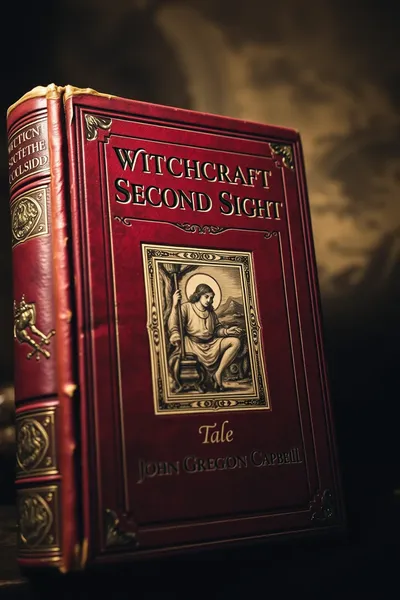


More Free Occult Philosophy Books
View all →