The earthwise herbal repertory

 81
81

The earthwise herbal repertory
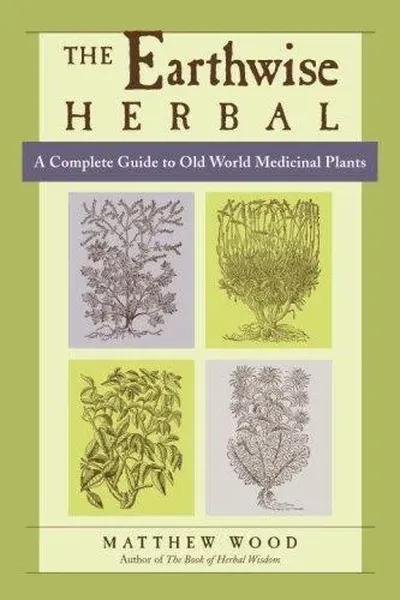
Matthew Wood's The Earthwise Herbal Repertory is a dense, meticulously compiled reference that rewards careful study. Unlike many contemporary herbals that prioritize ease of use or anecdotal evidence, Wood's work is grounded in a deep respect for historical practice and empirical observation. His detailed entries, often spanning several pages per herb, explore not just physical actions but also the subtler energetic qualities and historical applications. A particular strength lies in his exploration of how herbs were understood and applied by earlier generations of practitioners, offering a valuable counterpoint to modern botanical approaches. However, the sheer volume of information and Wood's sometimes dense prose can present a challenge for readers unfamiliar with classical herbal terminology or energetic concepts. For instance, his discussion of the 'spirit' of the plant, while central to his thesis, requires a willingness to engage with non-materialistic frameworks. Despite this hurdle, the depth of research and the unique perspective offered make it an indispensable tool for dedicated herbalists seeking a comprehensive understanding of plant medicine's historical and energetic dimensions. It is a scholarly contribution to the field.
📝 Description
81
Matthew Wood's 2016 Earthwise Herbal Repertory details plant energetics beyond chemical constituents.
Published in 2016, Matthew Wood's Earthwise Herbal Repertory serves as a comprehensive reference for plant medicine. It moves past simple identification to focus on historical and energetic applications derived from empirical observation and traditional practices. The book organizes botanical information structurally, offering detailed knowledge for practitioners and students of herbalism. It is intended for serious students, including professional herbalists, advanced amateurs, and those studying comparative materia medica. The repertory appeals to individuals interested in the specific actions of plants, their historical uses, and the energetic qualities guiding their therapeutic effects. This is not an introductory guide to common remedies but a scholarly resource for those aiming to deepen their expertise.
Wood's work operates within the Western herbalism tradition, acknowledging a lineage that includes figures like Samuel Thomson and the 19th-century Eclectics. It recognizes the empirical knowledge gathered over centuries, acting as a link between historical practices and current understanding. The book values the observational basis of herbal knowledge, distinguishing it from approaches focused solely on laboratory science or theoretical pharmacology. Central to the repertory is the concept of 'energetic properties,' which Wood distinguishes from chemical makeup, focusing instead on how a plant affects the body's vital force or 'spirit.' The book also highlights 'signature,' the idea that a plant's appearance or habitat can suggest its use, and discusses the cumulative effects of plant medicines over time, differentiating them from acute treatments.
This repertory engages with Western herbalism's long tradition of understanding plants not just by their chemical compounds but by their vital force or 'spirit.' It draws on empirical observation accumulated over centuries, a practice that aligns with esoteric traditions valuing direct experience and inherited wisdom. The concept of 'signature,' where a plant's physical characteristics are seen as clues to its medicinal use, is a key element reflecting a worldview where nature's forms hold symbolic or practical meaning. Wood's approach bridges historical practices, including those of figures like Samuel Thomson, with contemporary study, positioning the book within a lineage that sees plant medicine as a holistic art.
💡 Why Read This Book?
• Gain access to historical herbal knowledge through detailed entries on plant energetics and historical applications, as presented in the 2016 publication, offering insights beyond standard materia medica. • Understand the concept of plant 'signatures' and their historical role in identifying medicinal uses, providing a unique interpretive framework not commonly found in modern herbal guides. • Explore the energetic properties of herbs as described by Matthew Wood, moving beyond purely biochemical actions to understand plant medicine through the lens of vital force and historical empirical observation.
⭐ Reader Reviews
Honest opinions from readers who have explored this book.
❓ Frequently Asked Questions
What is the primary focus of The Earthwise Herbal Repertory?
The book focuses on the historical and energetic applications of medicinal plants, presenting detailed information on their properties and traditional uses, moving beyond simple identification or biochemical analysis.
Who is Matthew Wood and what is his background?
Matthew Wood is a respected herbalist and author known for his deep research into historical herbal traditions and his approach to understanding plant medicine through empirical observation and energetic principles.
When was The Earthwise Herbal Repertory first published?
The Earthwise Herbal Repertory was first published in 2016, making it a relatively recent compilation of extensive historical and practical herbal knowledge.
Does this repertory include information on plant identification?
While it describes plants, its primary focus is on their medicinal actions and historical uses rather than detailed botanical identification guides suitable for beginners.
What does the term 'energetic properties' mean in the context of this book?
In this book, 'energetic properties' refers to the subtle qualities and effects a plant has on the body's vital force or 'spirit,' as understood through historical observation and traditional practice.
Is this book suitable for someone new to herbalism?
It is more suited for intermediate to advanced students or practitioners who have a foundational understanding of herbalism, due to its depth and focus on historical and energetic concepts.
🔮 Key Themes & Symbolism
Energetic Herbalism
This work champions an understanding of herbal medicine that extends beyond chemical constituents to encompass the vital force or 'spirit' of plants. Wood details how herbs were historically perceived to interact with the body's energetic field, influencing health and vitality. This approach emphasizes observation and experience, reflecting a lineage of herbalism that predates modern pharmacology, and provides a framework for understanding plant actions that can seem subtle yet are deeply impactful in practice.
Historical Materia Medica
The repertory meticulously compiles information from historical herbal texts and practices, offering a window into how plants were understood and utilized by earlier generations. Wood draws upon centuries of empirical knowledge, highlighting the evolution of herbal understanding and providing context for contemporary applications. This historical grounding is crucial for appreciating the depth and nuances of plant medicine, distinguishing between enduring wisdom and passing trends in the field.
The Doctrine of Signatures
Wood engages with the Doctrine of Signatures, the ancient concept suggesting that a plant's physical characteristics—its color, shape, habitat, or other features—can indicate its therapeutic properties. This is explored not as a rigid dogma but as a historical interpretive tool that guided early herbalists in their investigations. The book examines how this symbolic language of nature offered insights into the medicinal virtues of various botanicals.
Empirical Observation in Practice
A core tenet of the book is the reliance on empirical observation—knowledge gained through direct experience and repeated practice—as the foundation of herbal wisdom. Wood contrasts this with theoretical or purely scientific approaches, advocating for the value of long-term, hands-on experience in understanding the full spectrum of a plant's effects. This emphasis underscores the practical, experiential nature of traditional herbalism.
💬 Memorable Quotes
Direct passages from the work, attributed to the author.
“The work explores the idea that plant remedies affect the vital force as well as the physical body.”
— This highlights Wood's central thesis: herbal medicine operates on multiple levels, influencing not just physiological processes but also the deeper energetic or spiritual essence of an individual.
“Historical texts reveal a long tradition of understanding plants through their observable characteristics.”
— This points to the value of empirical data and historical records in herbal study, emphasizing that much of what we know about herbs comes from generations of direct experience and careful documentation.
“The book considers the cumulative effects of plant medicines over extended periods.”
— This suggests that the book examines how certain herbs, when used consistently, can bring about gradual but lasting changes in health, contrasting with the rapid action of many pharmaceuticals.
“Energetic properties are key to understanding a plant's full therapeutic potential.”
— This emphasizes that a complete appreciation of an herb's healing capacity requires looking beyond its chemical makeup to its more subtle, vital influences.
“Understanding the 'spirit' of the plant is integral to its traditional use.”
— This suggests that for many historical herbalists, the concept of a plant's inherent nature or essence was as important as its physical components for effective healing.
🌙 Esoteric Significance
Tradition
This work is rooted in the Western Esoteric tradition, specifically drawing from folk herbalism and the historical practice of empirical healers. It aligns with traditions that view the natural world as imbued with subtle energies and correspondences, echoing elements found in Hermeticism and Paracelsian vitalism. Wood's approach departs from more structured Kabbalistic or Theosophical systems by prioritizing direct observation and lived experience of plant powers over abstract symbolic mapping.
Symbolism
The concept of the 'spirit' of the plant serves as a primary symbolic motif, representing its vital essence and unique energetic signature. The Doctrine of Signatures, while presented as a historical interpretive lens, also functions symbolically, suggesting a divine language within nature that hints at a plant's purpose. The habitat and growth patterns of plants are also implicitly symbolic, revealing their 'character' and suitability for specific ailments.
Modern Relevance
Contemporary practitioners of vitalistic herbalism, ecological spirituality, and certain branches of folk magic find resonance in Wood's work. Thinkers and practitioners focused on re-enchanting nature and reclaiming pre-industrial understandings of healing often cite his meticulous research. Schools emphasizing bioregional herbalism and a holistic view of plant-human interaction also draw upon the principles outlined in this repertory.
👥 Who Should Read This Book
• Students of historical herbalism seeking to understand the practices and philosophies of 19th and early 20th-century healers, gaining context beyond modern botanical texts. • Advanced herbal practitioners interested in exploring the energetic and vitalistic dimensions of plant medicine, moving beyond a purely biochemical understanding of remedies. • Researchers of Western Esoteric traditions interested in the practical application of vitalistic principles within natural healing modalities, bridging folk wisdom and theoretical frameworks.
📜 Historical Context
The Earthwise Herbal Repertory emerges from the fertile ground of 19th and early 20th-century American herbalism, a period marked by vigorous debate and innovation in botanical medicine. Figures like Samuel Hahnemann (founder of homeopathy, c. 1800s) and the Eclectic physicians, who sought to create a distinctly American pharmacopeia, represent key intellectual currents. Matthew Wood's work engages with this legacy, particularly the empirical and energetic approaches that characterized much of this era's herbal practice. It stands apart from the purely botanical or pharmaceutical focus that gained dominance later. While specific reception details for this 2016 work are less documented than historical texts, its approach consciously aligns with practitioners who emphasized vitalism and direct observation over reductionist science, a perspective sometimes at odds with mainstream medical discourse.
📔 Journal Prompts
The concept of plant 'signatures' and your personal interpretations of them.
Reflections on the energetic properties of a commonly used herb.
How historical herbal practices inform your current understanding of plant medicine.
Comparing the empirical approach to herbalism with other knowledge systems.
The role of the 'vital force' in your personal experience with natural remedies.
🗂️ Glossary
Repertory
A book or index that lists symptoms, conditions, or remedies alphabetically or systematically, serving as a reference tool for practitioners.
Materia Medica
A body of knowledge concerning the medicinal properties, uses, and preparation of substances used for healing, particularly plants in traditional herbalism.
Energetic Properties
The subtle, vital qualities or forces of a plant that influence the body's life energy or 'spirit,' as distinct from its chemical constituents.
Vital Force
The animating principle or life energy believed to be inherent in living organisms, which herbal remedies are understood to support or influence.
Doctrine of Signatures
A historical belief that the physical appearance or habitat of a plant indicates its medicinal uses, suggesting a symbolic correspondence.
Empirical Observation
Knowledge gained through direct experience, experimentation, and repeated practice rather than purely theoretical reasoning.
Eclectic Physicians
A group of medical practitioners in the 19th and early 20th centuries who advocated for a diverse and individualized approach to medicine, often utilizing botanical remedies.
🔮 Readers Also Liked
Browse all →









More by Matthew Wood
All books →

More Free Occult Philosophy Books
View all →