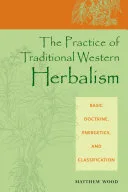
The Practice of Traditional Western Herbalism
 81
81

The Practice of Traditional Western Herbalism
Matthew Wood’s "The Practice of Traditional Western Herbalism" is a vital corrective to much of the superficial herbal lore circulating today. Wood eschews the trendy and the simplistic, instead offering a rigorously researched reconstruction of the theoretical frameworks that gave Western herbalism its historical coherence. His strength lies in meticulously detailing how practitioners, prior to the advent of modern pharmacology, understood the body and the actions of plants within systems like humoral theory. The book's primary limitation, however, is its density; it demands significant prior knowledge of medical history and philosophy, making it less accessible to the complete novice. A particularly illuminating section discusses the concept of 'specific affinities' of plants for certain organs or humors, moving beyond generic action. This is not a beginner's guide but an essential scholarly resource for understanding the roots of European botanical medicine.
📝 Description
81
Matthew Wood's 2008 book reconstructs the theoretical framework of historical Western herbalism.
Matthew Wood's "The Practice of Traditional Western Herbalism" reconstructs the theoretical framework behind historical Western botanical remedies. The book focuses on the European lineage of these practices, distinguishing them from other traditions like Chinese or Ayurvedic medicine. It addresses a gap in knowledge, as the original medical systems that provided context for Western herbs largely disappeared.
This book is for serious students of herbalism who want to grasp the historical medical paradigms that shaped European plant use. It will interest practitioners and researchers interested in the philosophical and theoretical basis of their work, going beyond simple symptom treatment. Those involved with historical medicine, comparative pharmacopeias, or the revival of older healing arts will find significant value.
The work emerged from a late 20th and early 21st century revival of traditional healing. However, this revival often lacked a deep understanding of classical and medieval medical systems, such as humoral theory, which underpinned Western herbalism's logic. Wood's research aims to reconnect contemporary practice with this lost theoretical foundation by drawing on historical texts and practitioners' knowledge.
This work engages with the Western esoteric tradition by reconstructing the theoretical underpinnings of its historical healing practices. It revives a specific lineage of knowledge rooted in classical and medieval European medical thought, particularly humoral theory. By focusing on the philosophical and theoretical aspects of herbalism, distinct from modern, symptom-based approaches, Wood connects contemporary practitioners to a tradition that was once deeply integrated with a holistic understanding of the body and its relationship to the natural world.
💡 Why Read This Book?
• Learn how traditional Western herbalism operated within specific medical paradigms like humoral theory, a concept extensively explored in the book, allowing for a deeper understanding of plant actions beyond modern symptom-based approaches. • Gain insight into the historical context of European plant medicine, distinct from other global traditions, by understanding the intellectual currents that shaped its development before the 20th century. • Understand the concept of "constitutional medicine" as presented by Wood, which emphasizes treating the whole person and their inherent imbalances rather than isolated ailments, a key takeaway from the book's detailed explanations.
⭐ Reader Reviews
Honest opinions from readers who have explored this book.
❓ Frequently Asked Questions
How does Matthew Wood differentiate traditional Western herbalism from other systems like TCM or Ayurveda?
Wood emphasizes that traditional Western herbalism is rooted in European medical history, particularly humoral theory, focusing on the body's internal constitution and imbalances. This contrasts with TCM's energy meridians or Ayurveda's doshas, presenting a distinct philosophical and practical framework.
What is the significance of humoral theory in Matthew Wood's approach?
Humoral theory, the ancient Greek system of four bodily fluids (blood, phlegm, yellow bile, black bile) and their qualities (hot, cold, wet, dry), forms the bedrock of Wood's reconstruction. It provides the diagnostic lens through which herbs' actions and their effects on patient constitutions were historically understood.
Is "The Practice of Traditional Western Herbalism" suitable for complete beginners?
While the book is an invaluable resource, its depth and focus on historical medical theory mean it is best suited for those with some existing knowledge of herbalism or medical history. Beginners might find it more beneficial after exploring introductory texts.
When was Matthew Wood's "The Practice of Traditional Western Herbalism" first published?
Matthew Wood's "The Practice of Traditional Western Herbalism" was first published on April 2, 2013. This publication aimed to address a perceived lack of information regarding the theoretical underpinnings of Western herbal practices.
What does the book mean by the 'disappearance' of the system of medicine for Western herbs?
Wood refers to the decline and near abandonment of classical European medical theories, such as humoralism, due to the rise of modern scientific and allopathic medicine. This left the historical applications of Western herbs without their original theoretical context.
Can this book help understand the specific actions of herbs on different body constitutions?
Yes, the book extensively details how traditional practitioners understood herbs' 'specific affinities' for particular organs or humors, linking plant properties to the patient's overall constitution and energetic state, offering a holistic view.
🔮 Key Themes & Symbolism
Humoral Theory Foundations
The work meticulously reconstructs Western herbalism through the lens of humoral theory, the ancient medical system positing four bodily fluids (blood, phlegm, yellow bile, black bile) and their qualities. Wood explains how historical practitioners understood herbs as having specific actions – hot, cold, wet, or dry – designed to correct imbalances in these humors within a patient's constitution. This provides a framework for understanding why certain plants were historically paired with specific ailments and individuals, moving beyond a superficial understanding of plant properties.
Constitutional Medicine
A core concept explored is "constitutional medicine," which posits that disease arises from an imbalance within an individual's inherent physical and energetic makeup. Unlike modern symptom-focused approaches, traditional Western herbalism, as detailed by Wood, aimed to restore the body's equilibrium by addressing its underlying constitution. This involves understanding the patient's unique energetic signature and selecting herbs that harmonize with or correct their specific imbalances, reflecting a deeply holistic approach to healing.
Historical Medical Paradigms
The book serves as a crucial bridge, reconnecting contemporary herbal practices with their historical medical systems, which largely fell into disuse with the advent of modern allopathic medicine. Wood argues that understanding these older paradigms, such as Galenic medicine and its successors, is essential for appreciating the rationale behind traditional Western herbal applications. It highlights how the efficacy and application of European herbs were historically inseparable from the medical theories that gave them context and meaning.
Distinction from Other Traditions
Wood deliberately separates traditional Western herbalism from other global healing systems like Traditional Chinese Medicine (TCM) or Ayurveda. The book emphasizes that Western botanical medicine evolved within a distinct philosophical and theoretical landscape, primarily influenced by Greco-Roman and later European medical thought. This distinction is vital for practitioners and scholars seeking to understand the unique lineage and principles of European plant-based healing without conflating it with other, albeit related, esoteric or medical traditions.
💬 Memorable Quotes
Direct passages from the work, attributed to the author.
“The system of medicine the herbs fit into had all but disappeared.”
— This highlights the central problem Matthew Wood addresses: the historical application of Western herbs is largely divorced from its original theoretical and diagnostic context, leading to a fragmented understanding of their use.
“The Practice of Traditional Western Herbalism places the function of western herbs in their true historical context, apart from homeopathy, traditional Chinese medicine, and Ayurveda.”
— This emphasizes the book's mission to carve out and define a specific lineage for Western herbalism, grounding it in European medical history and distinguishing it from other major herbal traditions and related practices.
“Recently there has been a revival of interest in western herbalism, but practitioners haven't been able to explore its benefits due to a void of information on the topic.”
— This points to the practical motivation behind the book: to fill an informational gap that hinders the authentic practice and understanding of traditional Western herbalism amidst a contemporary resurgence of interest.
“Matthew Wood has researched the old-time pra[ctitioners]...”
— This indicates Wood's methodology involved extensive study of historical sources and potentially oral traditions or the work of earlier practitioners to reconstruct the forgotten theoretical underpinnings of Western herbalism.
“The book aims to remedy the situation [of a void of information].”
— This clearly states the author's objective: to provide a foundational text that restores the theoretical framework necessary for a comprehensive understanding and practice of traditional Western herbalism.
🌙 Esoteric Significance
Tradition
This work fits within the broader esoteric tradition of Western esotericism, specifically its Hermetic and alchemical branches, which historically intertwined with medical theory. While not overtly magical, its focus on the vital forces within plants and their interaction with the human microcosm (the body understood as a reflection of the macrocosm) echoes alchemical principles of balance and correspondence. Wood's reconstruction of humoral theory can be seen as an effort to reclaim and re-contextualize a foundational element of pre-modern Western medicine that was deeply integrated with esoteric cosmology.
Symbolism
Within the context of humoral theory, the qualities of 'hot,' 'cold,' 'wet,' and 'dry' associated with both herbs and bodily states function symbolically. They represent fundamental energetic principles governing health and disease. For example, a 'hot and dry' herb might be symbolically understood to counteract a 'cold and wet' imbalance in the body, reflecting an ancient symbolic language of elemental forces and their influence on physiology. The concept of 'specific affinities' also carries symbolic weight, suggesting an inherent correspondence between plant parts or properties and specific human organs or tissues.
Modern Relevance
Contemporary practitioners of traditional Western herbalism, bioregional herbalists, and scholars of medical history are increasingly drawing on Wood's work. His research provides a crucial theoretical backbone for those seeking to move beyond purely symptomatic treatment towards a more constitutional and historically informed approach. Thinkers in the broader esoteric community interested in the historical integration of medicine, philosophy, and cosmology find his work valuable for understanding the roots of Western healing arts before their fragmentation by modernity.
👥 Who Should Read This Book
• Students of historical European medicine: Those researching the evolution of medical thought from antiquity through the medieval and Renaissance periods will find a detailed examination of humoral theory's application. • Aspiring traditional Western herbalists: Practitioners seeking to understand the theoretical underpinnings of their craft, moving beyond modern symptom-based approaches to grasp the historical logic of plant use. • Comparative medical historians: Researchers interested in differentiating and understanding the unique theoretical frameworks of various global healing traditions, particularly in contrast to TCM or Ayurveda.
📜 Historical Context
Published in 2013, "The Practice of Traditional Western Herbalism" emerged during a period of significant renewed interest in holistic and traditional healing modalities. However, much of this revival occurred in a vacuum, disconnected from the sophisticated medical theories that historically underpinned European plant use. Matthew Wood's work directly confronted this informational deficit by reconstructing the theoretical frameworks, primarily humoral theory, that had been largely abandoned since the rise of scientific medicine in the 19th century. This era saw competing medical systems like allopathy gain dominance, marginalizing older traditions. Wood's approach was a deliberate effort to re-establish the intellectual lineage of Western herbalism, differentiating it from contemporary influences like homeopathy (which gained prominence in the 19th century) and established non-European systems like Traditional Chinese Medicine. His research aimed to provide a scholarly basis for a practice that had, for many, become largely empirical or based on fragmented historical knowledge.
📔 Journal Prompts
The concept of a plant's specific affinity for certain humors or organs.
Reconstructing the humoral constitution of a historical figure based on available descriptions.
The relationship between elemental qualities (hot, cold, wet, dry) and bodily states.
The historical 'disappearance' of humoral theory and its impact on herbal practice.
Comparing the theoretical basis of traditional Western herbalism with another medical system discussed.
🗂️ Glossary
Humoral Theory
An ancient medical doctrine, prominent in Western medicine until the 19th century, that health depends on the balance of four bodily fluids (humors): blood, phlegm, yellow bile, and black bile, each associated with specific qualities (hot, cold, wet, dry) and temperaments.
Constitutional Medicine
A system of medicine that views disease as a manifestation of an imbalance within an individual's inherent physical and energetic makeup (constitution), rather than solely an external agent or isolated symptom.
Specific Affinity
The traditional concept that a particular herb or substance has a specific, inherent relationship or action towards a certain organ, tissue, or humor within the body, based on its perceived qualities and energetic signature.
Qualities (Hot, Cold, Wet, Dry)
The fundamental energetic properties attributed to substances, diseases, and bodily states within humoral theory, used to diagnose imbalances and select appropriate remedies.
Galenic Medicine
The medical tradition based on the theories of the Greek physician Galen (2nd century CE), which elaborated on and dominated Western medicine for over a millennium, heavily incorporating humoral theory and principles of balance.
Allopathy
A term often used by alternative medicine practitioners to describe conventional Western medicine, characterized by the treatment of disease with remedies that produce effects different from or opposite to those produced by the disease itself.
Microcosm/Macrocosm
The philosophical concept, prominent in esoteric traditions, that the human body (microcosm) is a reflection or miniature version of the universe (macrocosm), with corresponding structures and principles.