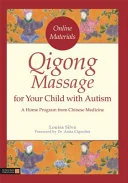
Qigong Massage for Your Child with Autism
 73
73

Qigong Massage for Your Child with Autism
Louisa Silva’s *Qigong Massage for Your Child with Autism* offers a focused, accessible guide for parents seeking gentle, somatic interventions. The strength lies in its practical, step-by-step approach, demystifying Qigong for a specific therapeutic application. The clear instructions, originally accompanied by video, aim to empower caregivers. However, a limitation is the book's specificity; while valuable for its intended audience, it assumes a baseline understanding of ASD and a willingness to commit to a daily routine, which may not be feasible for all families. The section detailing specific acupressure points, like the one for calming the spirit (Shenmen), is particularly concrete and useful. Silva provides a tangible tool, moving beyond abstract theories to actionable techniques. It serves as a practical manual, not a theoretical exploration of autism.
📝 Description
73
Louisa Silva's 2017 book details a Qigong massage program for children with autism.
This book details a Qigong massage program designed for parents to use with their children diagnosed with Autism Spectrum Disorder (ASD). It moves beyond general wellness practices to offer a structured approach focused on the unique needs of children on the spectrum. The program emphasizes gentle, repetitive movements intended to promote calm and connection.
Primarily, the book targets parents and primary caregivers of children with ASD. It is also valuable for therapists, educators, and any professional working with children on the autism spectrum who seek complementary, hands-on therapeutic techniques. Individuals interested in somatic practices and gentle touch therapies will also find it beneficial.
The core concept is the application of Qigong massage principles to address common challenges associated with ASD. This includes fostering sensory regulation, improving body awareness, and strengthening the parent-child bond through therapeutic touch. The program aims to be easily incorporated into daily routines, offering a practical and nurturing approach.
Originating in Traditional Chinese Medicine (TCM), Qigong is a practice that combines specific movements, breathing techniques, and meditation to cultivate and balance vital energy, or 'qi'. Its application extends beyond physical health to encompass mental and spiritual well-being. In this context, Qigong massage is adapted as a gentle, non-pharmacological method to support children with ASD, drawing on TCM principles of energetic flow and balance to address developmental needs.
💡 Why Read This Book?
• Learn a structured Qigong massage routine directly applicable to children with ASD, as detailed in the step-by-step instructions, offering a unique therapeutic touch. • Gain practical skills for integrating calming, somatic practices into your child’s daily life, building on the program’s emphasis on routine consistency. • Explore the potential benefits of gentle acupressure and Qigong movements for sensory regulation and parent-child connection, concepts central to the book's methodology.
⭐ Reader Reviews
Honest opinions from readers who have explored this book.
❓ Frequently Asked Questions
What is Qigong massage for children with autism?
Qigong massage for children with autism, as presented in Louisa Silva's book, is a specific program of gentle movements and acupressure techniques adapted from Traditional Chinese Medicine. It's designed to help with sensory regulation, body awareness, and fostering a calm environment for the child.
Is this book suitable for beginners with no prior Qigong experience?
Yes, the book is designed for parents and caregivers, assuming no prior Qigong knowledge. It provides step-by-step instructions and originally included video demonstrations to make the techniques easy to learn and apply.
What are the main benefits of this massage technique for children with ASD?
The primary benefits highlighted include improved sensory processing, enhanced body awareness, reduced anxiety, and strengthened parent-child bonding. The repetitive, rhythmic nature of the massage aims to create a predictable and calming experience.
How was the original Qigong massage program developed?
The program was developed by adapting established Qigong massage principles from Traditional Chinese Medicine, specifically tailoring them for children with Autism Spectrum Disorder (ASD). The focus is on gentle, non-invasive techniques.
Can this Qigong massage program be integrated into a daily routine?
Absolutely. The book emphasizes simplicity and ease of integration into a child's daily schedule. The program is structured to be practiced regularly, reinforcing its benefits over time.
Where can I find the video demonstrations that were previously on DVD?
The original DVD content is now available online via the publisher's website, www.jkp.com, allowing parents to see the Qigong massage techniques demonstrated in action.
🔮 Key Themes & Symbolism
Somatic Regulation Through Touch
This work centers on the principle that mindful, therapeutic touch can significantly aid in regulating the nervous system of children with ASD. By focusing on specific Qigong massage sequences, parents are guided to provide sensory input that promotes calm and reduces hyper- or hypo-reactivity. The book details how sustained, gentle pressure and rhythmic movements, rooted in Traditional Chinese Medicine (TCM) concepts, can help children become more attuned to their bodies and find a state of balance. This approach leverages the body's innate capacity for self-healing and equilibrium.
Parent-Child Energetic Connection
Beyond physical benefits, the Qigong massage program fosters a deeper energetic connection between parent and child. The act of giving and receiving this specific type of massage cultivates a shared space of presence and intention. This practice can be interpreted through an esoteric lens as the harmonization of parental qi (vital energy) with the child's, creating a supportive energetic field. It aims to build trust and strengthen the relational bond through focused, compassionate interaction, moving beyond mere caretaking to a form of energetic attunement.
Integration of Traditional Medicine
The book's foundation lies in the principles of Traditional Chinese Medicine (TCM), a system with ancient roots predating modern diagnostic categories like ASD. Qigong massage draws upon centuries of understanding of the body's energetic pathways (meridians) and vital force (qi). By applying these time-tested methods, Silva bridges ancient wisdom with contemporary therapeutic needs. This integration offers a holistic perspective, viewing the child not just through the lens of a diagnosis but as a complex energetic being whose well-being can be supported through these traditional practices.
Mindful Daily Routine
Silva emphasizes transforming everyday routines into opportunities for therapeutic engagement. The Qigong massage program is designed for easy incorporation into a child's daily life, suggesting specific times and approaches. This transforms mundane moments into intentional practices that support the child's development and well-being. From an esoteric viewpoint, this infuses the ordinary with the sacred, recognizing that consistent, mindful action can create profound shifts. The repetitive nature of the exercises supports habit formation and predictability, which are often beneficial for children with ASD.
💬 Memorable Quotes
Direct passages from the work, attributed to the author.
“The aim is to create a consistent, calming touch routine.”
— This statement expresses the book's practical philosophy: that regular, gentle physical interaction, guided by Qigong principles, can establish a predictable and soothing experience for children with ASD, fostering stability.
“Focus on the flow of energy, not just the physical action.”
— This highlights the esoteric dimension of Qigong massage, encouraging parents to be mindful of the energetic exchange (qi) during the practice, moving beyond mechanical movements to a more holistic engagement.
“Simple acupressure points can help regulate the nervous system.”
— This points to a core technique within the book, drawing on TCM knowledge to suggest that specific, targeted pressure on certain points can have a direct, beneficial impact on a child's physiological and emotional state.
“The video demonstrations provide clear guidance on technique.”
— This emphasizes the practical, instructional value of the supplementary materials, ensuring parents can accurately replicate the massage sequences for maximum effectiveness.
“Building trust through gentle, consistent physical contact.”
— This interpretation underscores the relational aspect of the practice, suggesting that the consistent application of this specific massage helps build a secure and trusting bond between caregiver and child.
🌙 Esoteric Significance
Tradition
This work draws directly from the ancient Chinese tradition of Qigong, a practice deeply embedded within Taoism and Traditional Chinese Medicine (TCM). Qigong is fundamentally about cultivating and balancing vital life force (qi) through movement, breathwork, and meditation. Silva's application adapts these principles for a specific therapeutic outcome, moving beyond general health cultivation to targeted support for children with ASD. It represents a modern interpretation of these ancient practices, making them accessible to Western parents seeking non-pharmacological, holistic approaches.
Symbolism
Within Qigong massage, the primary symbolism relates to the flow of energy (qi) through the body's meridians. The repetitive, rhythmic strokes symbolize the smoothing and unblocking of these energetic pathways, akin to clearing a river's course. Specific acupressure points, like those on the chest or abdomen, can symbolize centers of emotional and physical vitality. The act of gentle, sustained touch itself symbolizes care, connection, and the parent's role in facilitating the child's energetic and physical well-being.
Modern Relevance
In contemporary wellness circles, there's a significant resurgence of interest in mind-body practices and somatic therapies. Qigong massage, as presented by Silva, aligns with this trend, offering a tangible, hands-on method for parents. It appeals to modern therapeutic approaches that emphasize sensory integration, interoception, and the therapeutic benefits of secure attachment. Thinkers and practitioners in fields like developmental psychology, occupational therapy, and even somatic experiencing might find value in Silva's structured approach to applying these ancient techniques.
👥 Who Should Read This Book
• Parents and caregivers of children with Autism Spectrum Disorder seeking practical, hands-on techniques to promote calm and improve sensory regulation. • Therapists and educators working with children on the spectrum interested in incorporating gentle, somatic practices into their sessions or recommending them to families. • Individuals exploring complementary and alternative medicine (CAM) approaches rooted in Traditional Chinese Medicine for developmental support and parent-child bonding.
📜 Historical Context
Published in September 2017, *Qigong Massage for Your Child with Autism* arrived during a period of increasing parental and clinical interest in complementary and alternative medicine (CAM) for developmental disorders. The late 2010s saw a proliferation of books and resources exploring non-pharmacological approaches to managing ASD symptoms. Qigong, a practice with roots stretching back millennia in China, was being adapted by various Western practitioners for different therapeutic contexts. Silva’s work positioned itself within this trend, offering a specific application of Qigong massage. While not a controversial topic in itself, the broader field of CAM for autism faced scrutiny from some medical communities who advocated for evidence-based, conventional treatments. However, many parents sought holistic options, making books like Silva's relevant. The shift from a DVD to online availability for its instructional component reflects the evolving digital field of the late 2010s, mirroring trends seen across educational and therapeutic publishing.
📔 Journal Prompts
The concept of balancing qi through gentle massage.
Parental intention during the Qigong massage practice.
Observing your child’s response to specific acupressure points.
Integrating the massage routine into daily predictability.
The energetic connection fostered by consistent touch.
🗂️ Glossary
Qigong
An ancient Chinese practice involving coordinated movement, breath, and meditation used for health, spirituality, and martial arts training. It aims to cultivate and balance the body's vital life force, known as qi.
Qi (Chi)
The fundamental concept in Traditional Chinese Medicine representing vital life force or energy that flows through the body. Qigong and acupuncture aim to harmonize and balance qi.
ASD (Autism Spectrum Disorder)
A neurodevelopmental disorder characterized by differences in social interaction, communication, and repetitive behaviors or restricted interests. The term 'spectrum' highlights the wide variation in challenges and strengths.
Acupressure
A technique in Traditional Chinese Medicine where firm pressure is applied to specific points on the body to stimulate self-healing abilities. It is similar to acupuncture but uses manual pressure instead of needles.
Meridians
In TCM, these are pathways through which qi flows throughout the body. Blockages or imbalances in meridians are believed to cause illness, while smooth flow promotes health.
Sensory Regulation
The ability to process and respond to sensory information (from sight, sound, touch, taste, smell, movement) in a way that allows for an adaptive and organized behavioral response.
Somatic
Relating to the body, especially as distinct from the mind or spirit. Somatic practices focus on the physical experience and sensations within the body.
This book appears in 1 collection
🔮 Readers Also Liked
Browse all →








From the “Qi Gong” Collection
View all →



More Free Occult Philosophy Books
View all →