The Serpent's Shadow

 73
73

The Serpent's Shadow
Rick Riordan’s 2016 entry, The Serpent’s Shadow, continues his established pattern of injecting youthful energy into ancient mythologies. The novel’s strength lies in its accessible presentation of complex mythological genealogies, making the Olympian pantheon feel immediate and relevant to its young protagonists. However, the relentless pacing, while often exhilarating, can sometimes overshadow the subtler thematic explorations. The scene where Sadie Kane confronts the resurrected Egyptian god Apophis, for instance, is a masterclass in escalating stakes, but the emotional fallout feels somewhat compressed. While the adventure is undeniably fun, a deeper engagement with the psychological toll of these divine battles would have elevated the narrative further. The work delivers on its promise of action and mythological engagement, but at the expense of deeper character introspection.
📝 Description
73
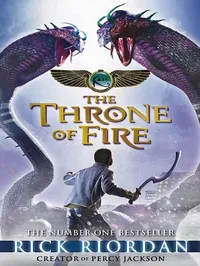
Rick Riordan's 2016 novel, The Serpent's Shadow, reimagines ancient Greek deities in a modern context.
The Serpent's Shadow follows the story of Carter Kane, a young demigod who must confront the ancient Egyptian serpent god Apophis. Set in a world where gods and monsters from ancient mythologies are real, the novel blends modern-day action with classic lore. Carter, alongside his sister Sadie, grapples with his lineage and the immense power he wields. Their quest involves gathering allies and mastering their abilities to prevent the world's destruction.
The book situates its characters within a secret society known as the House of Life, which monitors and combats magical threats. This society is divided between the descendants of Egyptian pharaohs and those who have inherited divine bloodlines. The narrative emphasizes the personal struggles of its young protagonists as they confront overwhelming odds and learn to trust each other. It is an adventure that explores the idea that ordinary individuals can rise to meet extraordinary challenges.
This novel draws heavily on ancient Egyptian mythology, a tradition rich with complex deities, magical practices, and creation myths. The concept of gods walking among mortals and the struggle between cosmic order (Ma'at) and chaos (Isfet) are central. Riordan adapts these ancient narratives for a contemporary audience, focusing on the lineage of pharaohs and their divine connections. The book touches upon the idea of magical societies operating in secret, a common trope in occult fiction that mirrors historical esoteric groups who claimed to preserve ancient knowledge.
💡 Why Read This Book?
• Gain an understanding of how ancient Egyptian deities like Apophis are recontextualized within a modern adventure narrative, offering a fresh perspective on mythological figures. • Experience the specific narrative device of characters grappling with prophecy and their predetermined destinies, as seen in the trials faced by the protagonists. • Discover the unique blend of humor and high-stakes action that Riordan employs, exemplified by the fast-paced confrontations between demigods and powerful ancient entities.
⭐ Reader Reviews
Honest opinions from readers who have explored this book.
❓ Frequently Asked Questions
What is the primary mythological system explored in The Serpent's Shadow?
The Serpent's Shadow primarily draws from ancient Egyptian mythology, featuring gods, demons, and magical concepts integral to that pantheon. It reimagines these elements for a contemporary audience.
Who are the main protagonists in The Serpent's Shadow?
The main protagonists are Sadie and Carter Kane, siblings who discover their lineage as powerful magicians descended from ancient Egyptian pharaohs and gods.
What is the significance of the title 'The Serpent's Shadow'?
The title refers to Apophis, the great serpent of chaos in Egyptian mythology, representing a primary antagonist and the overarching threat that the protagonists must confront.
Does The Serpent's Shadow require prior knowledge of Rick Riordan's other series?
While knowledge of the Kane Chronicles series is beneficial, The Serpent's Shadow is designed to be accessible. It introduces key characters and concepts, though some nuances might be richer with prior reading.
What age group is The Serpent's Shadow best suited for?
The book is generally recommended for middle grade and young adult readers, typically ages 10 and up, due to its themes, complexity, and adventure-focused narrative.
What are some of the core themes explored in The Serpent's Shadow?
Core themes include family, destiny versus free will, the nature of good and evil, and the courage required to face overwhelming odds, all set against an Egyptian mythological backdrop.
🔮 Key Themes & Symbolism
Egyptian Pantheon Reimagined
The work actively engages with the pantheon of ancient Egyptian deities, presenting figures like Ra, Isis, and Osiris in a dynamic, often personified, manner. It moves beyond mere historical depiction to explore their roles and interactions within a narrative of ongoing conflict. Gods are not static entities but active participants or influences on mortal affairs, reflecting a modern interpretation of their power and relevance in a world still subject to ancient forces.
Chaos vs. Order
A central conflict is the struggle between cosmic order (Ma'at) and primordial chaos, personified by the serpent Apophis. This theme is not abstract but manifests through the actions of characters and the very fabric of the world. The narrative explores how individuals, particularly those with divine or magical lineage, must actively defend order against encroaching disorder. This ancient Egyptian concept provides a framework for understanding the stakes of the protagonists' battles.
The Nature of Magic
Magic in The Serpent's Shadow is presented as an inherent force, often tied to bloodlines and ancient rituals. It is not merely a tool but a fundamental aspect of existence for certain characters, like the Kane siblings. The book details various forms of magic, including hieroglyphs, incantations, and the manipulation of divine energy, exploring its potential for both creation and destruction. This emphasizes magic as a potent, often dangerous, force requiring discipline and understanding.
Family and Legacy
The bonds of family, particularly sibling relationships, form a crucial pillar of the narrative. Sadie and Carter Kane's journey is as much about reconciling their fractured family history and learning to trust each other as it is about defeating ancient evils. Their legacy as descendants of pharaohs and gods places a heavy burden on them, forcing them to confront their heritage and define their own identities beyond inherited roles.
💬 Memorable Quotes
Direct passages from the work, attributed to the author.
“Apophis is the great serpent of chaos, the devourer of souls, the enemy of all that is good.”
— This describes the primary antagonist, Apophis, emphasizing his role as a primordial force of destruction within the Egyptian cosmology and the existential threat he poses.
“Magic is not a game. It is a responsibility.”
— This statement underscores the serious nature of magical abilities within the book's universe, framing them not as mere powers but as duties that require ethical consideration and commitment.
“Every god needs a human. Every human needs a god.”
— This highlights the symbiotic relationship between the divine and mortal realms presented in the narrative, suggesting that balance and existence depend on this interconnectedness.
“The path of a hero is never easy.”
— A straightforward declaration that reinforces the narrative's focus on the arduous challenges and sacrifices inherent in the heroic journey undertaken by the characters.
💡 Key Ideas
Editorial paraphrase of the work's core concepts — not direct quotes.
We're staying in this house, and we're going to fight the gods.
This quote captures the defiant spirit of the protagonists, who, despite being outmatched, resolve to stand their ground against powerful divine forces, highlighting themes of courage and resistance.
🌙 Esoteric Significance
Tradition
The work draws heavily from ancient Egyptian religion and mythology, which, while not a 'modern esoteric tradition' in the same vein as Hermeticism or Kabbalah, forms a foundational layer for many esoteric practices. The concept of Ma'at (cosmic order), the cyclical nature of existence, and the power of divine beings are central. Riordan's interpretation presents these ancient beliefs through a lens accessible to contemporary readers, framing them within a narrative of good versus evil and the inherent power within humanity to uphold order.
Symbolism
The primary symbol is the 'serpent' in 'The Serpent's Shadow,' representing Apophis, the embodiment of chaos and primal darkness in Egyptian cosmology. Other significant symbols include hieroglyphs, which are treated not just as writing but as conduits of magical power, and the Duat, the Egyptian underworld, serving as a liminal space where souls journey and divine battles occur. These symbols are imbued with their traditional meanings of destruction, power, and spiritual transition.
Modern Relevance
Contemporary interest in Egyptian mythology, often fueled by popular culture like Riordan's books, continues to inspire fascination with ancient Egyptian esoteric concepts. Modern occultists and spiritual seekers may find inspiration in the book's portrayal of divine forces, magical principles, and the struggle against chaos. While not a direct grimoire, it serves as an accessible entry point, sparking curiosity about the deeper esoteric traditions rooted in ancient Egypt that continue to influence various spiritual paths today.
👥 Who Should Read This Book
• Young adult readers seeking adventure stories grounded in mythology, particularly those interested in Egyptian lore. • Fans of Rick Riordan's previous works, such as the Percy Jackson series, who appreciate his style of blending ancient myths with contemporary settings. • Educators and parents looking for engaging fiction that introduces complex mythological concepts in an accessible and exciting format.
📜 Historical Context
Published in 2016, The Serpent's Shadow by Rick Riordan arrived amidst a flourishing market for young adult fantasy deeply rooted in mythology. Riordan himself had already established significant success with his Percy Jackson series, which revitalized interest in Greek mythology for a new generation. This particular book, part of The Kane Chronicles, focused on Egyptian lore, a less common but increasingly popular area within the genre, exemplified by works like Rick Yancey’s *The Monstrumologist* series which, while different in focus, also engaged with darker, historical-tinged fantasy elements. The early 2010s saw a surge in myth retellings across various media, making Riordan's foray into Egyptian mythology a timely contribution. The reception was generally positive, aligning with the broad appeal of his previous works, though it existed within a landscape already rich with similar thematic explorations.
📔 Journal Prompts
The confrontation with Apophis and the fight for Ma'at.
Carter and Sadie Kane's discovery of their lineage.
The symbolic meaning of hieroglyphs as conduits of power.
The balance between divine influence and human agency.
Sadie's initial skepticism versus Carter's belief in magic.
🗂️ Glossary
Apophis
The great serpent of chaos in ancient Egyptian mythology, a primordial entity representing darkness, destruction, and the enemy of the sun god Ra.
Ma'at
The ancient Egyptian concept of truth, balance, order, harmony, law, morality, and justice. It is often personified as a goddess.
Duat
The ancient Egyptian underworld or area of the dead, through which the sun god Ra traveled each night.
Pharaoh
The title given to the rulers of ancient Egypt, considered divine or semi-divine figures.
Maga
An initiate or practitioner of magic within the context of the Kane Chronicles, often possessing a bloodline connection to gods or ancient Egyptian royalty.
House of Life
An ancient Egyptian order of magicians and scholars dedicated to preserving and practicing magic, serving as a network and training ground.
Scarab
A beetle considered sacred in ancient Egypt, often symbolizing rebirth, transformation, and the sun god Khepri.
🔮 Readers Also Liked
Browse all →









More by Rick Riordan
All books →




More Free Occult Philosophy Books
View all →