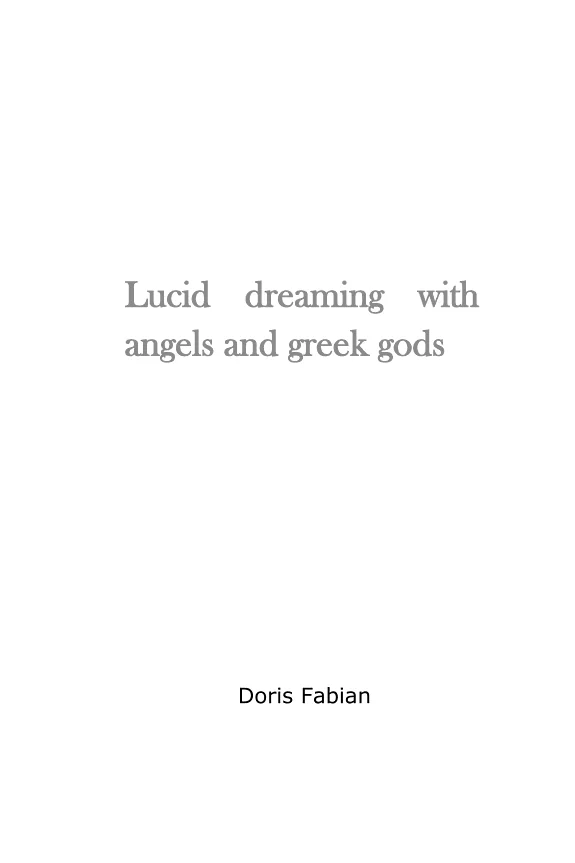
Lucid dreaming with angels and greek gods
 79
79

Lucid dreaming with angels and greek gods
Doris Fabian's exploration of lucid dreaming through the lens of angelic and Hellenic figures offers a unique, if occasionally uneven, approach to active imagination. The strength lies in its directness; Fabian doesn't shy away from presenting specific practices for invoking or interacting with entities like Archangel Michael or Athena. The chapter detailing the characteristics of Greek gods, for instance, provides a concise overview that can serve as a practical reference. However, the book's presentation of complex theological and mythological concepts can sometimes feel superficial. The original blurb's redirection to external websites for "more information" is a notable limitation, suggesting a lack of self-contained depth. Despite this, the direct guidance on dreamwork makes it a functional tool for those already familiar with basic esoteric concepts. Fabian's work serves as a straightforward entry point into exploring divine archetypes within the dream state.
📝 Description
79
Doris Fabian's 2021 book connects lucid dreaming with angels and Greek gods.
Lucid Dreaming with Angels and Greek Gods, published in 2021, guides readers through active imagination techniques to connect with celestial and mythological figures. Fabian outlines methods for perceiving and interacting with angels, detailing their characteristics and the advantages of their presence. The book also examines the attributes of various Greek gods, suggesting ways to understand their archetypes and potential influence on the dreamer.
This work is for individuals interested in esoteric practices, especially dreamwork, angelic communication, and classical mythology. It is suitable for those practicing active imagination who wish to deepen their spiritual or psychological exploration through conscious dreaming. Readers curious about the convergence of ancient pantheons and personal spiritual development will find relevant material.
The book draws on a modern revival of interest in esoteric traditions. It parallels ancient mythologies with current spiritual paths and builds on a long history of dream interpretation and visionary experiences. Published in 2021, it reflects the intersection of Jungian psychology, New Age spirituality, and neo-paganism in contemporary thought.
This book emerges within a contemporary interest in esoteric traditions, drawing connections between ancient mythologies and modern spiritual practices. It follows a long lineage of dream interpretation and visionary experiences documented across cultures. The 2021 publication situates it within current discussions where Jungian psychology, New Age spirituality, and neo-paganism frequently overlap in the exploration of archetypes and divine figures.
💡 Why Read This Book?
• Learn specific techniques for invoking angelic presence within your dreams, drawing from Fabian's guidance on angelic characteristics and their perceived roles, a practical application not commonly detailed. • Explore the archetypal qualities of Greek gods, such as Zeus or Aphrodite, as presented in the 2021 publication, to understand how these figures can manifest in your dreamscapes. • Understand the practice of active imagination as detailed by Fabian, focusing on how engaging with celestial and mythological beings can enhance self-awareness and spiritual connection.
⭐ Reader Reviews
Honest opinions from readers who have explored this book.
❓ Frequently Asked Questions
What is active imagination as described in Lucid Dreaming with Angels and Greek Gods?
Active imagination, as presented in Doris Fabian's 2021 book, is a technique for consciously engaging with the subconscious mind. It involves inviting dream figures, such as angels or Greek gods, into a waking or dreaming state to foster dialogue and gain insight.
How does the book suggest connecting with angels?
The book outlines methods for perceiving and interacting with angels. It discusses their characteristics and how their presence can be felt, guiding readers on how to foster a connection during lucid dreams or states of active imagination.
What role do Greek gods play in this book?
Greek gods are presented as archetypal figures that can be encountered and understood within the dream state. The book explores their characteristics and potential influence, offering them as guides or symbolic representations for personal exploration.
Is this book suitable for beginners in lucid dreaming?
Yes, the book offers practical guidance on active imagination, making it accessible for beginners interested in exploring conscious dreaming with spiritual or mythological themes. It aims to demystify the process.
When was Lucid Dreaming with Angels and Greek Gods first published?
Lucid Dreaming with Angels and Greek Gods by Doris Fabian was first published on October 31, 2021.
Where can I find more information about Doris Fabian's work?
The book's original blurb suggests visiting specific websites for more information about the author's books and the art of active imagination, including abstract-art-for-sell.lovable.app and sites.google.com/view/dorisfabian/home.
🔮 Key Themes & Symbolism
Active Imagination Techniques
The core of the book revolves around active imagination, a method for engaging with the psyche's symbolic language. Fabian guides readers on how to intentionally invite and interact with figures like angels and Greek deities within their dreams or meditative states. This process is presented as a tool for self-discovery, problem-solving, and spiritual growth, emphasizing conscious dialogue with internal or perceived external entities.
Angelic Communication and Perception
Fabian explores the nature of angels, detailing their characteristics and the potential impact of their presence. The book offers practical advice on how to perceive these celestial beings, suggesting that they can act as guides and protectors. It aims to clarify angelic interactions, presenting them as accessible phenomena within the area of consciousness and dreams.
Greek God Archetypes in Dreams
The work examines the attributes and symbolism of prominent Greek gods, framing them as powerful archetypes. Readers are encouraged to recognize and engage with these figures within their dream experiences, understanding their mythological narratives as keys to understanding human psychology and spiritual dynamics. The intention is to harness their wisdom and energy for personal development.
Dreamwork and Consciousness
This book positions lucid dreaming as a potent avenue for exploring the spiritual and psychological realms. By focusing on conscious awareness within the dream state, Fabian suggests readers can access deeper levels of consciousness. The interaction with angels and gods serves as a framework for navigating these inner landscapes and extracting meaningful insights.
💬 Memorable Quotes
Direct passages from the work, attributed to the author.
“What happens when we have angels close to us?”
— This question highlights the book's focus on the tangible effects and perceived benefits of angelic presence in one's life, suggesting a practical rather than purely theoretical approach to spiritual connection.
“What are your characteristics? [referring to Greek gods]”
— This phrasing indicates the book's method of exploring mythological figures by examining their distinct attributes and personality traits, encouraging readers to understand them as complex archetypes.
“How can angels help us?”
— This prompt underscores the book's practical orientation, aiming to provide readers with actionable insights into how angelic energies or influences can be leveraged for support and guidance in daily life and spiritual practice.
“See how we can perceive them and have them around.”
— This suggests a focus on practical techniques and sensory awareness, guiding the reader toward developing the capacity to sense or experience the presence of angels, integrating them into one's personal space or consciousness.
“What are the characteristics of angels?”
— This is a direct inquiry into the nature and qualities attributed to angels, serving as a foundational point for understanding their roles and how they might manifest or interact with human consciousness.
🌙 Esoteric Significance
Tradition
This work aligns with modern syncretic esoteric traditions that draw from classical mythology, angelology, and depth psychology. It departs from strictly defined lineages like Theosophy or Kabbalah by creating a more fluid, personalized approach to spiritual figures, emphasizing direct experience over dogmatic adherence. It carries the Hermetic principle 'As Above, So Below' by linking celestial and mythological realms to the inner range of the dreamer.
Symbolism
Key symbols include angels, often representing divine messengers, guardians, or higher consciousness aspects. Greek gods, such as Zeus (authority, cosmic order) or Aphrodite (love, creation), function as potent archetypes embodying fundamental human drives and universal forces. The dream state itself symbolizes the subconscious, a fertile ground for accessing hidden wisdom and transformative energies.
Modern Relevance
Contemporary practices in lucid dreaming, Jungian analysis, and neo-shamanism can find resonance in Fabian's work. Thinkers and practitioners focusing on archetypal psychology, dream interpretation for personal growth, and the integration of classical myth into modern spiritual life often employ similar frameworks for understanding the psyche's symbolic interactions.
👥 Who Should Read This Book
• Aspiring lucid dreamers seeking practical methods to consciously engage with their dream states and explore inner symbolism. • Individuals interested in exploring the archetypal dimensions of Greek mythology and angelic lore for personal insight and spiritual connection. • Practitioners of active imagination looking for specific guidance on interacting with divine or mythological figures within their imaginative work.
📜 Historical Context
Published in 2021, Doris Fabian's "Lucid Dreaming with Angels and Greek Gods" arrives amidst a persistent contemporary interest in Jungian archetypes, neopaganism, and accessible forms of spiritual exploration. It taps into a lineage of dream interpretation that spans from antiquity through figures like Artemidorus to modern psychotherapists such as Carl Jung, who extensively studied mythological motifs. The work emerges in a landscape where explicit engagement with deities from various pantheons, including the Greek, is common within New Age and esoteric circles, often blending psychological understanding with spiritual practice. This contrasts with more academic or strictly historical approaches to mythology, focusing instead on the personal and experiential. While the book doesn't appear to have faced significant censorship or public controversy, its approach to integrating classical deities and angelic figures into personal dreamwork aligns with broader trends in contemporary spirituality that seek direct, embodied experience of the divine or archetypal.
📔 Journal Prompts
The characteristics of Archangel Michael as a dream guide.
Perceiving the presence of a specific Greek god within a lucid dream.
Engaging in dialogue with an angel during active imagination.
The symbolic meaning of a specific Greek god's attributes in your dream.
Reflections on how angelic presence influences your waking perception.
🗂️ Glossary
Active Imagination
A technique, often associated with Carl Jung, for consciously engaging with the subconscious mind. It involves inviting images, figures, or thoughts to emerge and interacting with them intentionally.
Lucid Dreaming
The state of being aware that one is dreaming while the dream is occurring. This awareness can allow for greater control over the dream narrative and environment.
Angels
Spiritual beings traditionally believed to serve as messengers, guardians, or intermediaries between the divine and humanity. Their characteristics vary across different theological and esoteric traditions.
Greek Gods
Deities from the ancient Greek pantheon, such as Zeus, Hera, Apollo, and Athena. In esoteric contexts, they are often viewed as archetypal forces or psychological energies.
Archetype
A universally understood symbol, character, or pattern of behavior that recurs in mythology, literature, and the collective unconscious, as theorized by Carl Jung.
Dreamwork
The process of exploring, interpreting, and utilizing dreams for personal insight, psychological healing, or spiritual growth.
Esoteric
Relating to or interesting to the small number of people with a specialized knowledge of or interest in a particular subject, especially the occult.
This book appears in 1 collection
🔮 Readers Also Liked
Browse all →









From the “Lucid Dreaming” Collection
View all →








More Free Occult Philosophy Books
View all →