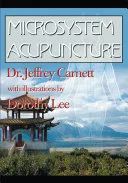
Microsystem Acupuncture
 72
72

Microsystem Acupuncture
Jeffrey Carnett's "Microsystem Acupuncture" offers a valuable, albeit dense, exploration of less-discussed acupuncture modalities. The strength of the book lies in its meticulous detail regarding the microsystems of the nose, eye, tongue, and extremities, presenting them as coherent diagnostic and therapeutic frameworks. Carnett effectively bridges ancient principles with modern applications, a task often handled superficially. A particular point of interest is the detailed mapping of the iris, which deviates from more common auricular or hand acupuncture systems. However, the book's limitation is its highly technical language, which can be a barrier for the uninitiated. A less academic tone in certain sections might have broadened its accessibility. The discussion on wrist/ankle microsystems, for instance, is exceptionally thorough but demands prior knowledge. Overall, Carnett provides a specialized reference for those committed to deepening their understanding of these intricate energetic maps.
📝 Description
72
Jeffrey Carnett's 2015 book examines how small body areas map the entire organism.
This book details alternative acupuncture methods that use microsystems, which are small anatomical regions reflecting the whole body. Carnett explains how points on the face, ears, hands, or feet can be used for diagnosis and therapy, differing from traditional body acupuncture. He traces the history of these approaches and discusses their modern uses.
The text is for Traditional Chinese Medicine practitioners and acupuncturists wanting to broaden their skills. It also appeals to students of esoteric medicine, alternative health followers, and researchers interested in acupuncture's varied applications. Readers curious about the body's energetic maps, especially on extremities and facial features, will find this work valuable.
The central concept is that concentrated body areas, like the ear or iris, hold a complete map of the organism. Stimulating specific points in these microsystems is thought to affect corresponding organs and body systems.
While rooted in Chinese Medicine, microsystem acupuncture gained prominence in the 20th century as part of a broader movement in complementary and alternative medicine. These systems, which propose that small body parts like the ear or hand contain a map of the entire body, represent a particular development and synthesis of older ideas. The book situates these methods within a context that sought to validate and integrate diverse healing modalities, often viewed with skepticism by mainstream medical establishments.
💡 Why Read This Book?
• Learn about the energetic correspondences of the nose, eye, and tongue, which are often less emphasized in Western introductions to acupuncture, providing unique diagnostic insights. • Understand how stimulating specific points on the wrist and ankle can be used therapeutically, offering practical alternative treatment strategies beyond traditional body acupuncture. • Gain a historical perspective on the evolution of microsystem theories within Chinese Medicine, appreciating their development and adaptation from ancient roots to contemporary practice.
⭐ Reader Reviews
Honest opinions from readers who have explored this book.
❓ Frequently Asked Questions
What are the primary microsystems discussed in Jeffrey Carnett's book?
The book primarily discusses the microsystems of the Nose, Eye, and Tongue, alongside Wrist/Ankle systems. It explores how these smaller anatomical regions are believed to reflect the entire body for diagnostic and therapeutic purposes.
Is "Microsystem Acupuncture" suitable for beginners?
While it introduces the concepts, the book is quite technical. It's best suited for practitioners or students of acupuncture and Traditional Chinese Medicine who have a foundational understanding of meridian theory and diagnostic principles.
What is the historical origin of microsystem acupuncture?
Microsystem acupuncture has roots in ancient Chinese Medicine but has seen significant development and modern interpretation. Carnett's work highlights these contemporary advancements built upon ancient foundations.
How does microsystem acupuncture differ from traditional body acupuncture?
Traditional body acupuncture typically uses points along the main meridian pathways. Microsystem acupuncture focuses on specific, often smaller, anatomical areas that are believed to represent the entire body, offering a different map for treatment.
What are the benefits of studying microsystems like the eye or nose?
Studying these microsystems offers practitioners alternative diagnostic tools and treatment points. They can be particularly useful when traditional body points are inaccessible or less effective, expanding the therapeutic toolkit.
When was "Microsystem Acupuncture" first published?
The book "Microsystem Acupuncture" by Jeffrey Carnett was first published in November of 2000, making it a relatively modern exploration of these ancient concepts.
🔮 Key Themes & Symbolism
The Body as a Holographic Map
Carnett's work posits the body as a holographic entity, where specific, localized areas like the iris, ear, or extremities contain a complete energetic map of the entire organism. This concept, central to microsystem acupuncture, suggests that by stimulating points within these miniature representations, one can influence distant organs and systems. The book details how these reflections are not arbitrary but follow specific energetic pathways and correspondences, offering a condensed yet comprehensive view of the body's interconnectedness.
Evolving Traditional Chinese Medicine
While firmly rooted in the principles of Traditional Chinese Medicine, "Microsystem Acupuncture" showcases the evolution and adaptation of these ancient practices. The text moves beyond classical meridian theory to explore diagnostic and therapeutic techniques that have been refined or newly discovered. It illustrates how TCM is not a static doctrine but a living tradition capable of innovation, particularly in areas like somatotopic mapping on the face and limbs, demonstrating a dynamic engagement with its own history.
The Uncharted Territories of Diagnosis
This book shines a light on diagnostic methods often unfamiliar to Western practitioners. By detailing the microsystems of the nose, tongue, and eye, Carnett introduces readers to unique ways of assessing health imbalances. The detailed mapping of the iris, for instance, offers a specialized lens for understanding systemic conditions. This focus on less-explored diagnostic avenues encourages a broader perspective on identifying the root causes of illness, moving beyond conventional TCM approaches.
Practical Application of Esoteric Anatomy
Beyond theory, "Microsystem Acupuncture" provides practical guidance for applying esoteric anatomical knowledge. It outlines specific points and techniques for stimulating microsystems like the wrist and ankle. This hands-on approach allows practitioners to integrate these methods into their clinical practice, offering targeted treatments for a range of conditions. The book serves as a guide for translating complex energetic principles into tangible therapeutic interventions.
💬 Memorable Quotes
Direct passages from the work, attributed to the author.
“The microsystems of the Nose, Eye, Tongue, Wrist/Ankle and more are explored.”
— This statement expresses the book's primary focus, highlighting the specific anatomical regions that serve as condensed maps of the entire body, offering a unique diagnostic and therapeutic approach.
“Many of these 'systems' are relatively unknown to the West.”
— This observation points to the book's role in disseminating specialized knowledge, suggesting that the Western understanding of acupuncture often overlooks these particular microsystems, making this text a valuable resource for broader awareness.
“Microsystem Acupuncture has its roots in ancient Chinese Medicine but with current developments.”
— This framing emphasizes the book's dual contribution: honoring ancient wisdom while showcasing its modern evolution and integration into contemporary practice, bridging historical depth with current clinical relevance.
“The text covers diagnostic and therapeutic applications for these specialized areas.”
— This highlights the practical utility of the book, indicating that it provides not just theoretical understanding but also actionable techniques for practitioners aiming to utilize microsystem acupuncture in their work.
“Carnett details specific points on extremities like the wrist and ankle.”
— This specific example underscores the book's detailed approach to mapping and treatment, focusing on accessible yet potent areas for therapeutic intervention that may not be commonly recognized.
🌙 Esoteric Significance
Tradition
This work fits within the broader Hermetic and holistic healing traditions that view the body as an interconnected energetic system, mirroring macrocosmic principles within the microcosm. While not explicitly Kabbalistic or Gnostic, it shares the Hermetic axiom "As Above, So Below," applying it to anatomical mapping. It departs from strict classical TCM by emphasizing specific, often less-explored, somatotopic representations, aligning with a modern esoteric impulse to discover and codify new energetic correspondences.
Symbolism
The primary symbolism lies in the concept of the 'map' itself – how a small part (like the iris or tongue) can symbolically represent the whole. The text implicitly utilizes the symbol of the 'axis' or 'pillar' in its exploration of the tongue and spine correspondences, and the 'circle' or 'wheel' in the representation of the iris. These symbols suggest order, completeness, and the potential for centralized control over dispersed elements of the body.
Modern Relevance
Contemporary practitioners of acupuncture, bodyworkers, and energy healers continue to draw upon microsystem theories. Schools teaching specialized acupuncture techniques often incorporate concepts discussed in such texts. Thinkers in somatic psychology and integrative medicine also find value in these models for understanding mind-body connections, influencing practices like neuro-acupuncture and functional medicine that seek to address systemic health through targeted interventions.
👥 Who Should Read This Book
• Licensed Acupuncturists and TCM Practitioners seeking to expand their diagnostic and therapeutic toolkit with less common microsystem approaches. • Students of Esoteric Medicine and Holistic Health interested in exploring the body's energetic maps beyond standard meridian theory. • Alternative Health Researchers and curious individuals wanting to understand the diverse applications of acupuncture and energetic healing principles.
📜 Historical Context
Published in 2000, Jeffrey Carnett's "Microsystem Acupuncture" emerged during a period of significant growth and diversification within the complementary and alternative medicine (CAM) landscape. The late 20th century saw a renewed interest in Traditional Chinese Medicine (TCM) in the West, spurred by figures like Ted Kaptchuk. While auricular acupuncture (ear acupuncture), notably developed by Paul Nogier in France, had gained some traction, many other microsystems remained less explored. Carnett's work sought to consolidate and present these less-familiar systems, such as those based on the nose, tongue, and extremities, which represented a departure from the more established body-based acupuncture schools. The book implicitly engaged with the broader intellectual current of exploring holistic and energetic healing modalities, often in contrast to the reductionist tendencies of Western allopathic medicine.
📔 Journal Prompts
The microsystem of the Nose: how might its mapped energetic correspondences relate to respiratory or olfactory function?
Reflect on the concept of the body as a holographic map as presented in the Eye microsystem.
Consider the historical development of Tongue Diagnosis within Traditional Chinese Medicine.
How can the Wrist/Ankle microsystems be practically applied in a clinical setting?
The relative obscurity of certain microsystems in the West: what factors contribute to this?
🗂️ Glossary
Microsystem
A specific, localized anatomical region (e.g., ear, hand, face) that is believed to contain a complete energetic map of the entire body, allowing for diagnosis and treatment by stimulating points within that region.
Auricular Acupuncture
A microsystem acupuncture therapy that uses points on the external ear (auricle) to diagnose and treat conditions throughout the body, based on the principle that the ear represents a fetus in the womb.
Somatotopic Mapping
The principle that specific points or areas on one part of the body correspond to specific parts or functions of another part of the body, as seen in microsystems.
Meridian Theory
A foundational concept in Traditional Chinese Medicine describing pathways through which Qi (vital energy) flows in the body. Microsystems often relate to or interface with these meridians.
Qi
The vital life force or energy believed in Traditional Chinese Medicine to flow through the body along meridians, essential for maintaining health and well-being.
Iris Diagnosis (Iridology)
A diagnostic method that examines the patterns, colors, and other characteristics of the iris of the eye to determine information about a patient's systemic health.
Body Acupuncture
The practice of acupuncture that utilizes points located on the major meridian pathways that run throughout the body, as opposed to microsystems.