The Dark Night of the Soul [microform]
![The Dark Night of the Soul [microform] —](/img/the-dark-night-of-the-soul-microform-saint-1542-1591-john-of-the-cross-359215.webp)
 82
82

The Dark Night of the Soul [microform]
The enduring power of Saint John of the Cross's "The Dark Night of the Soul" is undeniable, even when presented in a modern scholarly edition. The prose, even when translated and edited, retains a stark, almost brutal honesty about the spiritual path. Zimmerman's editorial hand, while facilitating access, occasionally feels a bit too modern in its framing, though the core message remains unblemished. A particularly resonant passage is the description of the "night of the spirit," where the soul experiences a profound sense of God's absence, not as punishment, but as a necessary stripping away of self-reliance. The limitation, if one can call it that, is the inherent difficulty of the subject matter; this is not light reading, but a profound engagement with existential spiritual struggle. The work's strength lies in its unwavering focus on the soul's direct, unmediated encounter with the Divine, devoid of sentimentality. It remains a challenging but ultimately illuminating guide for those seeking profound spiritual reality.
📝 Description
82
Saint John of the Cross wrote 'The Dark Night of the Soul' around 1578-1579, detailing the soul's difficult path to God.
Written in Spanish during the late 16th century, 'The Dark Night of the Soul' by Saint John of the Cross describes the soul's spiritual progression toward divine union. The book addresses a necessary purification process, often experienced as a withdrawal of God's presence, which the author calls the 'dark night.' This edition, with an introduction by Benedict Zimmerman, was published in 2021, aiming to make this classic accessible to contemporary readers while respecting its original form. The work is known for its spiritual insights and poetic language.
This text is suited for those involved in deep spiritual study, especially within Christian contemplative practices or those interested in the history of mystical thought. It speaks to individuals experiencing spiritual dryness, doubt, or significant inner struggles, providing a perspective for understanding and enduring these periods. Readers aiming to enhance their prayer life, comprehend spiritual development stages, or engage with the writings of notable mystics will find it valuable. It is for readers who approach spiritual writings with earnestness and a wish for inner change.
Saint John of the Cross, a Spanish Carmelite friar and mystic, composed 'The Dark Night of the Soul' during a period of religious reform and scrutiny in 16th-century Spain. His writings emerged from his own experiences of persecution and imprisonment. The work is a key text within Christian mysticism, particularly its contemplative and ascetical branches. It reflects a tradition that emphasizes direct experience of the divine through rigorous self discipline and spiritual practice, often interpreting scriptural and theological concepts through the lens of personal spiritual encounters.
💡 Why Read This Book?
• Understand the spiritual purification process described by Saint John of the Cross, particularly the "night of the senses," gaining insight into periods of spiritual dryness that are not signs of failure but of growth. • Grasp the theological underpinnings of the "night of the spirit," learning how the intellect and will are purified for union with God, as detailed in the text's profound allegorical language. • Discover the transformative power of "transforming union" as the ultimate goal of the spiritual journey, as Saint John of the Cross elucidates the soul's complete surrender to the Divine.
⭐ Reader Reviews
Honest opinions from readers who have explored this book.
❓ Frequently Asked Questions
What is the historical period of Saint John of the Cross?
Saint John of the Cross lived from 1542 to 1591, a period of significant religious and political activity in Spain during the Counter-Reformation.
Who edited the 2021 edition of The Dark Night of the Soul?
The 2021 edition of The Dark Night of the Soul was edited by Benedict Zimmerman.
Is The Dark Night of the Soul in the public domain?
The original work by Saint John of the Cross is in the public domain in the United States. However, specific translations and editions, like Zimmerman's 2021 publication, may have their own copyright.
What is the 'dark night' in Christian mysticism?
The 'dark night' refers to a stage in the spiritual life where the soul experiences a profound sense of God's absence, leading to purification of the senses and spirit.
What is the main goal of the spiritual journey described in The Dark Night of the Soul?
The ultimate goal is "transforming union" with God, a state of deep intimacy and oneness achieved through the soul's complete surrender and purification.
What are the two main phases of the dark night?
The two main phases are the 'night of the senses,' where spiritual consolations cease, and the 'night of the spirit,' a deeper cleansing of the intellect and will.
🔮 Key Themes & Symbolism
The Dark Night of the Soul
This central theme describes the painful but necessary process of spiritual purification. It is not a punitive experience but a divine discipline designed to detach the soul from worldly attachments and sensory consolations. The work posits two nights: the night of the senses, where spiritual sweetness fades, and the night of the spirit, a more profound and often agonizing cleansing of the intellect and will, preparing the soul for direct union with God.
Union with God
The ultimate aim of the spiritual journey, as articulated by Saint John of the Cross, is 'transforming union.' This is not merely a state of grace but an intimate, reciprocal dwelling of God within the soul and the soul within God. It represents the culmination of the purification process, where the soul loses its self-will and conforms entirely to the Divine will, experiencing profound peace and divine love.
The Role of Faith and Love
During the dark nights, when sensible spiritual experiences vanish, faith, hope, and charity become the primary anchors. The text emphasizes that while the soul may feel abandoned, it is actively growing in theological virtue. Faith becomes the sole guide, love the driving force, and hope the unwavering expectation of divine union, even in the deepest darkness. These virtues are cultivated through trials, leading to a more robust and mature spiritual life.
Spiritual Progress Through Suffering
Contrary to a view of suffering as mere affliction, Saint John of the Cross presents it as an essential catalyst for spiritual growth. The trials and desolation experienced in the dark nights are instrumental in detaching the soul from ego, pride, and creaturely comforts. This detachment is crucial for the soul to become receptive to the transformative action of God, leading to a higher degree of spiritual perfection and divine knowledge.
💬 Memorable Quotes
Direct passages from the work, attributed to the author.
“Upon a dark night, with the yearnings of love inflamed, O happy fortune! I went forth unseen, my house being now at rest.”
— This opening line expresses the essence of the journey: a soul, driven by intense love for God, ventures into the unknown ('dark night') during a time of inner quiet, signifying a deliberate step toward spiritual encounter.
“To come to the enjoyment of all, desire the enjoyment of none.”
— This paradoxical statement highlights the ascetical principle of detachment. True fulfillment is found not in pursuing specific desires, but in relinquishing all selfish attachments, thereby opening oneself to the fullness of divine grace.
“The soul that is attached to anything, however much, cannot advance.”
— This emphasizes the necessity of radical detachment for spiritual progress. Any lingering attachment, whether to comfort, knowledge, or even spiritual experiences, acts as an impediment to deeper union with the Divine.
“In the evening of life, I shall be examined in love.”
— This profound statement, often attributed to St. John of the Cross, suggests that the ultimate measure of a spiritual life is not intellectual achievement or outward piety, but the depth and authenticity of one's love for God and neighbor.
💡 Key Ideas
Editorial paraphrase of the work's core concepts — not direct quotes.
For the spirit of man is a spirit of darkness, in its very essence, until it be transformed by the Spirit of God.
This quote underscores the need for divine intervention. The natural state of the human spirit is seen as limited and obscured until illuminated and transformed by God's presence and action.
🌙 Esoteric Significance
Tradition
While firmly rooted in Catholic mysticism, "The Dark Night of the Soul" has resonated within broader esoteric traditions due to its exploration of radical inner transformation and the soul's direct, unmediated encounter with the Divine. It aligns with mystical paths across various religions that emphasize detachment, purification, and union with ultimate reality, transcending specific denominational dogma.
Symbolism
The primary symbol is the "dark night" itself, representing the soul's journey through stages of purification devoid of sensory or intellectual consolation. Light, often associated with divine presence, paradoxically becomes blinding or absent during this phase. Fire and burning represent the intense love and suffering that purify the soul, while the journey or path symbolizes the arduous but divinely guided progression toward union.
Modern Relevance
Contemporary spiritual seekers, regardless of religious affiliation, draw upon "The Dark Night" for its unflinching depiction of spiritual struggle. Psychologists and spiritual directors utilize its concepts to understand periods of existential doubt and spiritual dryness. Its emphasis on detachment and interiority also finds echoes in secular mindfulness practices and contemplative traditions seeking inner peace.
👥 Who Should Read This Book
• Contemplative Christian practitioners seeking to understand and navigate periods of spiritual desolation and dryness, finding guidance for deepening their prayer life. • Students of comparative mysticism interested in the historical development of spiritual literature and the universal themes of purification and divine union across traditions. • Souls undergoing significant personal or spiritual trials who seek a framework for understanding suffering not as an endpoint, but as a crucible for profound inner transformation.
📜 Historical Context
Saint John of the Cross wrote "The Dark Night of the Soul" in the latter half of the 16th century, a period of intense religious reformation and counter-reformation across Europe. He was a key figure in the Carmelite reform movement alongside Teresa of Ávila, striving for a more austere and contemplative form of religious life. This era saw theological discourse often dominated by scholasticism, yet John of the Cross brought a uniquely experiential and poetic voice to mystical theology. His writings, including "The Dark Night," emerged from his personal struggles, including imprisonment by his own order in Toledo around 1577-1578. The Spanish Inquisition was active, and while John of the Cross's work was later recognized for its orthodoxy, mystical writings could be viewed with suspicion. His clear insights into the soul's journey offered a counterpoint to more academic theological treatises, deeply influencing subsequent Christian contemplative traditions.
📔 Journal Prompts
The yearnings of love inflamed: How does this describe your current spiritual state?
The night of the senses: Reflect on a time spiritual consolations ceased, and what guided you.
The soul's complete surrender: What aspects of self-will resist this surrender in your life?
The examination in love: How can you cultivate a deeper love for the Divine in daily actions?
The dark night as preparation: What might this purification be preparing you for?
🗂️ Glossary
Dark Night
A metaphor for the stages of spiritual purification where the soul experiences detachment from sensory pleasures and spiritual consolations, leading to a profound, often painful, encounter with God.
Night of the Senses
The initial phase of the dark night, characterized by the loss of spiritual sweetness and sensory consolations in prayer, making spiritual practices feel dry and difficult.
Night of the Spirit
A deeper stage of purification where the intellect, memory, and will are cleansed of deep-seated imperfections and attachments, often involving intense spiritual suffering.
Transforming Union
The ultimate goal of the spiritual journey; a state of profound intimacy and oneness with God, where the soul's will is perfectly aligned with the Divine will.
Detachment
The process of voluntarily relinquishing attachment to worldly things, sensory experiences, and even spiritual consolations, to become more receptive to God's presence.
Theological Virtues
Faith, hope, and charity (love), which are infused by God and are essential guides during the dark nights when sensible spiritual experiences are absent.
Spiritual Desolation
A state of dryness, emptiness, or perceived absence of God, often a key characteristic of the dark night, prompting deeper reliance on faith.
This book appears in 1 collection
🔮 Readers Also Liked
Browse all →








From the “Dark Night of the Soul” Collection
View all →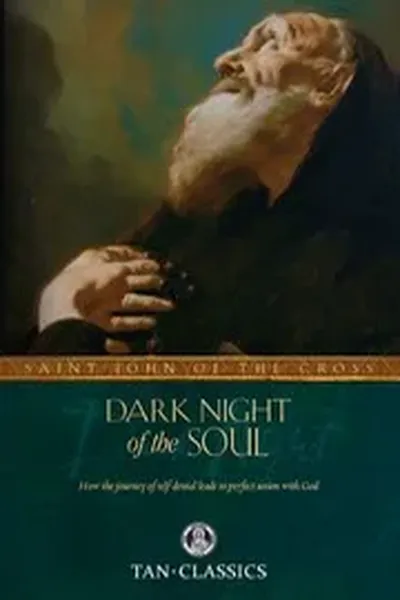





More Free Occult Philosophy Books
View all →