Wicca for Beginners
 72
72

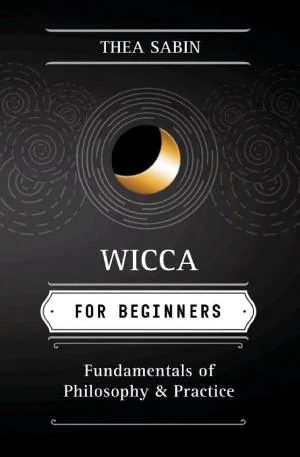
Wicca for Beginners
Thea Sabin's "Wicca for Beginners" successfully demystifies a spiritual path often shrouded in misconception. Its strength lies in its straightforward presentation of Wiccan beliefs and practices, avoiding overly esoteric jargon that can alienate newcomers. Sabin's explanation of the Wiccan Rede, for instance, is commendably clear, emphasizing its ethical imperative. However, the book's primary limitation is its brevity; while concise, some readers may desire a deeper exploration of the historical nuances or more varied ritual examples. A particularly effective section details the correspondences of the Wheel of the Year, offering a tangible way to connect with seasonal energies. Ultimately, this is a solid, if introductory, primer for the curious seeker.
📝 Description
72
Thea Sabin's Wicca for Beginners, first published in 2006, offers a practical guide to the religion.
Thea Sabin's Wicca for Beginners provides a clear introduction to the religion's core beliefs and practices. The book aims to give new adherents the knowledge needed to begin their own Wiccan path. It covers the philosophical foundations and common rituals, focusing on personal spiritual development.
This book is written for individuals new to Wicca. It suits those curious about paganism, modern witchcraft, or other spiritual paths. Readers interested in building a personal practice connected to nature, ethics, and earth cycles will find it useful. The text addresses how Wiccan principles can fit into contemporary life.
Key concepts include reverence for nature, the God and Goddess, the Wheel of the Year, and the Wiccan Rede. It also explains practices like spellcraft, meditation, and ritual construction. These are presented to help enhance personal spirituality and divine connection.
Published in 2006, this book arrived as modern paganism saw significant growth and diversification. Wicca, which gained public attention through figures like Gerald Gardner in the mid-20th century, has continued to evolve. Sabin's work offers a contemporary starting point, differing from earlier, more historically focused accounts by emphasizing integration into modern life. It addresses the religion's philosophical underpinnings and established rituals.
💡 Why Read This Book?
• Learn the core principles of Wicca, including the concept of the Wiccan Rede, to understand its ethical framework and how it guides practice. • Discover the significance of the Wheel of the Year, understanding how its eight festivals mark the agricultural and solar cycles crucial to Wiccan observance. • Gain practical advice on developing personal spiritual skills, such as meditation and ritual crafting, as presented in the book's guidance for beginners.
⭐ Reader Reviews
Honest opinions from readers who have explored this book.
❓ Frequently Asked Questions
What are the fundamental beliefs of Wicca as explained in Thea Sabin's book?
Thea Sabin's "Wicca for Beginners" outlines core Wiccan beliefs including reverence for nature, the divinity of the God and Goddess, and the cyclical understanding of life through the Wheel of the Year.
Is Wicca for Beginners suitable for someone with no prior knowledge of witchcraft?
Yes, the book is explicitly designed for beginners, offering a clear introduction to Wiccan concepts, practices, and terminology without assuming prior experience.
When was Wicca for Beginners first published?
Thea Sabin's "Wicca for Beginners" was first published in 2006, positioning it as a contemporary guide to the religion.
What kind of spiritual growth does the book suggest Wiccan practices can foster?
The book suggests that Wiccan practices can foster spiritual growth through increased connection to nature, personal empowerment, and a deeper understanding of life's cycles.
Does the book cover specific Wiccan rituals or spells?
Yes, "Wicca for Beginners" introduces readers to common Wiccan practices, including basic ritual construction and the principles behind spellcraft, as a means to enhance spirituality.
What is the significance of the Wheel of the Year in Wicca according to this book?
The Wheel of the Year, as explained in the book, represents the cycle of seasons and harvests, marking eight key festivals that are central to Wiccan observance and spiritual connection.
🔮 Key Themes & Symbolism
The God and Goddess
The book introduces the Wiccan concept of dual divinity, often represented as the Horned God and the Triple Goddess. This explores the balance of masculine and feminine energies inherent in the universe and within the practitioner. It signifies not just anthropomorphic deities, but fundamental forces of creation, destruction, and transformation, central to the Wiccan worldview and ritual practice.
The Wheel of the Year
This theme centers on the cyclical nature of time as observed in Wicca, marked by eight major festivals (Sabbats) that correspond to the solar and agricultural seasons. The book explains how understanding and celebrating these turning points, from Yule to Samhain, fosters a deep connection with the earth's rhythms and the ongoing processes of life, death, and rebirth.
The Wiccan Rede
The Wiccan Rede serves as the ethical a core part of the religion, famously stating 'An it harm none, do what ye will.' This theme emphasizes personal responsibility, ethical conduct, and the understanding that one's actions have consequences, often framed by the concept of the Threefold Law. It guides practitioners toward actions that are beneficial and avoid causing harm to oneself or others.
Nature as Sacred
Central to Wicca, as presented in the book, is the sacredness of the natural world. This theme explores how Wiccans view the earth, its elements, and its cycles as divine or imbued with divine energy. Practices often involve attuning to natural forces, honoring the land, and recognizing the interconnectedness of all living things, fostering a reverence for creation.
💬 Memorable Quotes
Direct passages from the work, attributed to the author.
“An it harm none, do what ye will.”
— This foundational ethical guideline, known as the Wiccan Rede, is central to responsible practice. It empowers individuals to make their own choices while strongly emphasizing accountability for the consequences of those actions.
“The divine is both within us and all around us.”
— This concept highlights the immanent and immanent nature of the divine in Wicca. It suggests that divinity is not external but can be found both within the individual's own being and within the natural world.
“The cycles of the earth mirror our own spiritual journey.”
— This interpretation emphasizes the symbolic relationship between the natural world and personal development in Wicca. The seasons and life cycles of the earth are seen as metaphors for human growth and spiritual evolution.
💡 Key Ideas
Editorial paraphrase of the work's core concepts — not direct quotes.
Ritual is a way to focus intent and connect with the sacred.
This paraphrased concept explains the purpose of ritual in Wicca. It's not merely ceremony, but a practical tool for directing one's will and energy, and for consciously engaging with spiritual forces.
Spellcraft is about channeling energy, not manipulation.
This paraphrased concept clarifies the approach to spellcasting in Wicca. It focuses on the focused use of personal energy and natural forces, rather than forceful control or coercion.
🌙 Esoteric Significance
Tradition
This work functions as an entry point to modern Wicca, a contemporary esoteric tradition that draws heavily on Neopaganism. While not strictly adhering to older Hermetic or Kabbalistic lineages, Wicca incorporates elements of nature worship, cyclical time, and divine duality that echo ancient fertility cults and animistic beliefs, reinterpreted for a modern spiritual context.
Symbolism
Key symbols explored include the Pentacle, representing the five elements and the human spirit's connection to them, and the Horned God, symbolizing wild nature, virility, and the masculine divine principle. The Triple Goddess, often depicted in her maiden, mother, and crone aspects, represents the feminine divine, lunar cycles, and the mysteries of life, death, and rebirth.
Modern Relevance
Sabin's book remains relevant for contemporary practitioners seeking a grounded introduction to Wicca. It informs modern pagan spirituality, influences discussions on nature-based ethics, and provides a framework for those exploring personal spirituality outside of mainstream religions in the 21st century.
👥 Who Should Read This Book
• Newcomers to Wicca and Neopaganism seeking a clear, introductory text that explains core beliefs and practices without overwhelming jargon. • Individuals interested in nature-based spirituality and developing a deeper connection with the earth's cycles and seasons. • Students of comparative religion or mythology looking for an accessible overview of a significant modern esoteric tradition.
📜 Historical Context
Thea Sabin's "Wicca for Beginners," published in 2006, arrived during a period where Neopaganism, and Wicca in particular, had moved beyond its mid-20th-century origins with figures like Gerald Gardner and Doreen Valiente. By the early 2000s, Wicca had become more accessible, with numerous authors attempting to create introductory texts for a burgeoning public interest. Sabin's work sits within this lineage, aiming to present a clear, accessible overview for newcomers. This era saw a diversification of Wiccan traditions, with authors like Starhawk influencing feminist interpretations and Scott Cunningham popularizing a more nature-focused, less ritualistic approach. Sabin’s book contributes to this trend of making Wicca understandable without necessarily studying the complex historical debates or the more arcane practices found in earlier foundational texts.
📔 Journal Prompts
Reflect on the core ethical principle of the Wiccan Rede and its application in daily life.
Explore the concept of the God and Goddess as presented in the book.
Consider how the Wheel of the Year's cycles might relate to personal life events.
Identify one natural element or phenomenon that feels sacred to you.
Describe a personal intention and how ritual might focus it.
🗂️ Glossary
Wiccan Rede
The ethical code of Wicca, most famously expressed as 'An it harm none, do what ye will.' It emphasizes personal responsibility and avoiding harm.
Wheel of the Year
The cycle of eight annual festivals celebrated in Wicca, marking the solstices, equinoxes, and cross-quarter days, reflecting agricultural and natural rhythms.
Sabbat
One of the eight major festivals of the Wheel of the Year, such as Samhain, Yule, or Beltane.
Esbat
A ritual or meeting held during the full moon, often focused on lunar deities and personal magic.
Pentacle
A five-pointed star, often enclosed in a circle, used as a symbol in Wicca and other pagan traditions, typically representing the five elements.
Threefold Law
A concept in some Wiccan traditions stating that whatever energy a person sends out, whether positive or negative, will return to them threefold.
God and Goddess
The primary divine figures in many Wiccan traditions, representing the masculine and feminine principles of the universe.
This book appears in 1 collection
🔮 Readers Also Liked
Browse all →








From the “Wicca” Collection
View all →





More Free Occult Philosophy Books
View all →