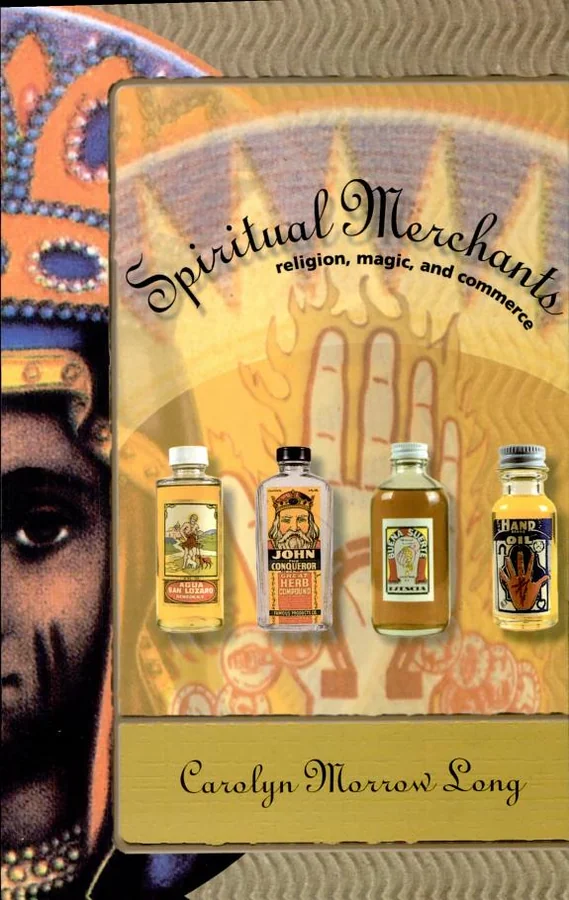
Spiritual Merchants
 84
84

Spiritual Merchants
Carolyn Morrow Long’s *Spiritual Merchants* provides a rare, grounded look at the businesses that fuel the practices of Voodoo, hoodoo, and Santería. Rather than abstract theology, Long focuses on the shops themselves – the "spiritual merchants" and their wares. The book excels in its detailed ethnography, revealing how everyday items like soaps and candles become conduits for divine intervention and personal ambition. A particular strength is the examination of how these businesses navigate the legal and social stigmas attached to their clientele and products. However, the narrative occasionally feels a bit too descriptive, leaving the reader wishing for more direct engagement with the controversies or the practitioners’ own voices beyond the merchant’s perspective. The passage discussing the labeling and marketing of "spiritual soaps" offers a compelling microcosm of the book's larger argument about faith, commerce, and cultural adaptation. Ultimately, *Spiritual Merchants* is an indispensable, unsentimental study of a vital, often overlooked, facet of American religious life.
📝 Description
84
Carolyn Morrow Long's 2001 book examines the commercial side of Voodoo, hoodoo, and Santería in America.
Published in 2001, Carolyn Morrow Long's *Spiritual Merchants* offers an ethnographic look at businesses selling religious items for Voodoo, hoodoo, Santería, and related traditions. These shops, often found on city side streets, are vital for people seeking ritual objects, ingredients for charms, and prepared items like soaps and oils. The book analyzes how spiritual needs, from health and success to love and protection, are met through the commercial sale of goods linked to saints and African deities.
Long's research places this trade within the larger history of American religious diversity and the commercialization of spiritual goods. Her work appeared as academic interest in New Religious Movements and folk practices was growing, but detailed studies of the businesses supporting these traditions were rare. It offers a different perspective from purely theological or historical accounts, focusing instead on the physical elements of religious practice and the economic systems that make them possible.
The core idea is the 'spiritual merchant' who selects and sells the material items for spiritual activities. The book also addresses 'spiritual products,' a broad category of goods used in these practices.
This work is situated within the study of African diaspora religions and their material manifestations in the United States. It examines how traditions like Voodoo, hoodoo, and Santería adapt and persist through commercial networks, providing tangible items for spiritual practitioners. By focusing on the 'spiritual products' industry, Long illuminates the economic underpinnings that support these religious lives outside of more formalized institutions.
💡 Why Read This Book?
• Understand the economic engine behind folk magic by examining the specific "spiritual products" like soaps and oils discussed in Chapter 3, revealing how commerce facilitates spiritual practice. • Gain insight into the historical development of African diaspora religious businesses, referencing the early 20th-century context provided, to see how these traditions adapted and thrived. • Appreciate the complex social positioning of "spiritual merchants" and their shops, as detailed in the book's ethnographic accounts, to grasp the challenges and strategies involved in serving marginalized spiritual communities.
⭐ Reader Reviews
Honest opinions from readers who have explored this book.
❓ Frequently Asked Questions
What is the primary focus of Carolyn Morrow Long's "Spiritual Merchants"?
The book ethnographically examines the "spiritual products" industry in America, focusing on herb and candle shops that cater to practitioners of Voodoo, hoodoo, Santería, and similar beliefs, detailing the items sold and their cultural significance.
When was "Spiritual Merchants" first published and by whom?
"Spiritual Merchants" was first published in 2001. The author is Carolyn Morrow Long.
What types of spiritual traditions are discussed in the book?
The book specifically discusses Voodoo, hoodoo, and Santería, along with similar folk religious beliefs and practices found within American spiritual marketplaces.
What are "spiritual products" as defined in the book?
"Spiritual products" are items sold in these specialized shops, including ritual items, raw materials for charms, and prepared goods like soaps, powders, and aromatic oils, intended to aid in seeking health, love, success, or protection.
What is the significance of the "spiritual merchants"?
The "spiritual merchants" are the individuals who own and operate these shops. They act as curators and purveyors of sacred materials, bridging the gap between divine powers and the needs of their clientele.
What academic fields does "Spiritual Merchants" contribute to?
The book contributes to religious studies, anthropology, sociology, and American cultural history by providing an ethnographic account of the material culture and economic systems of folk religions.
🔮 Key Themes & Symbolism
The Sacred Marketplace
This theme explores the commercialization of spiritual needs and the unique businesses that cater to practitioners of African diaspora religions. Long details how shops become vital centers for acquiring everything from specific herbs and candles to pre-made "spiritual soaps" and powders. These establishments are not just retail outlets but integral parts of religious practice, offering tangible means to connect with supernatural forces for personal gain, protection, or healing. The book reveals the intricate economy that supports these traditions, highlighting the "spiritual merchants" as key figures in this sacred commerce.
Material Culture of Folk Religion
The work centers on the tangible objects that form the backbone of everyday magical and religious practice. Items like "gris-gris" bags, specific incense blends, novena candles, and anointing oils are presented not as mere trinkets but as potent tools imbued with spiritual efficacy. Long meticulously describes these "spiritual products," explaining their intended uses and the belief systems that give them power. This focus on material culture provides a grounded perspective on how faith is enacted and sustained through everyday objects and commercial exchange.
Intersection of African Diaspora Religions and American Culture
"Spiritual Merchants" examines how traditions like Voodoo, hoodoo, and Santería have adapted and persisted within the American context, often operating within specialized commercial niches. Long illustrates how these businesses serve as crucial points of contact and continuity for these faiths, providing essential resources and a sense of community. The book highlights the resilience and adaptability of these religious systems, showing how they have carved out a space within the broader American cultural and economic landscape, often blending African, Catholic, and indigenous influences.
The Role of the "Spiritual Merchant"
Central to the book is the figure of the "spiritual merchant," the proprietor of the herb or candle shop. Long portrays these individuals as more than mere shopkeepers; they are often knowledgeable practitioners, counselors, and cultural brokers. They understand the specific needs of their clientele, curate appropriate wares, and often possess a deep understanding of the spiritual traditions they support. The book explores the unique challenges and responsibilities faced by these merchants in reading through the often-stigmatized world of folk magic and religious commerce.
💬 Memorable Quotes
Direct passages from the work, attributed to the author.
“Herb or candle shops catering to practitioners of Voodoo, hoodoo, Santería, and similar beliefs.”
— This phrase succinctly defines the core subject of the book: the physical spaces and communities that facilitate the practice of specific African diaspora religions in America.
“Potions offer the power of the saints and the authority of the African gods.”
— This highlights the dual spiritual influences often invoked in these traditions, blending Catholic veneration with West African deities, and shows how commercial products are seen as conduits for that power.
“Traditional charms, plus a variety of soaps, powders, and aromatic goods known in the trade as 'spiritual products.'”
— This defines the range of items available, from custom-made magical components to mass-produced goods, all categorized under the specific commercial term "spiritual products."
“For those seeking health or success, love or protection.”
— This captures the common human desires and needs that drive individuals to seek out the services and products offered by these spiritual businesses.
“They can be found along the side streets of many American cities.”
— This descriptive opening immediately grounds the reader in the physical reality of these businesses, often located in less conspicuous urban areas, emphasizing their presence within everyday American life.
🌙 Esoteric Significance
Tradition
This work primarily engages with the traditions of Voodoo, hoodoo, and Santería, which are rooted in West African spiritual systems, Catholicism, and indigenous beliefs. While not strictly within the Western Esoteric traditions like Hermeticism or Kabbalah, it explores a related sphere of folk magic and popular spirituality that often intersects with or runs parallel to more formally organized esoteric paths. The book's significance lies in its documentation of the material culture and economic systems that sustain these practices, providing a crucial lens for understanding how esoteric beliefs manifest in everyday life.
Symbolism
Key symbols explored include the use of specific herbs (like rue or bayberry) for their perceived magical properties, colored candles (e.g., red for love, green for money) representing focused intention, and religious imagery (saints, deities like Orishas) that serve as focal points for prayer and ritual. The "spiritual products" themselves – soaps, powders, oils – become symbolic conduits, designed to attract desired outcomes or ward off negative influences, embodying the belief that material items can be charged with spiritual power.
Modern Relevance
Contemporary practitioners of hoodoo, Voodoo, and various forms of folk magic continue to rely on the types of businesses and products documented by Long. Thinkers and practitioners interested in the commodification of spirituality, the ethnography of religion, and the persistence of African diaspora traditions find her work foundational. It informs discussions about how spiritual needs are met in contemporary society, the role of small businesses in cultural preservation, and the evolving range of religious practice outside mainstream institutions.
👥 Who Should Read This Book
• Beginning students of African diaspora religions: Gain a foundational understanding of the material culture and economic realities that support Voodoo, hoodoo, and Santería practices. • Anthropologists and sociologists of religion: Utilize the detailed ethnographic data on "spiritual products" and "spiritual merchants" to analyze the intersection of faith, commerce, and community. • Practitioners of folk magic and spirituality: Discover the historical and commercial context of the tools and materials used in your practice, fostering a deeper appreciation for their origins and significance.
📜 Historical Context
Carolyn Morrow Long's *Spiritual Merchants*, published in 2001, emerged during a period of increased academic and popular interest in previously marginalized religious traditions, including those of the African diaspora. The late 20th century saw scholars like Albert Raboteau examining the historical roots and cultural expressions of African American religion. Long’s work distinguished itself by focusing on the commercial infrastructure supporting these practices – the shops and their proprietors – rather than solely on theological doctrines or ritual performances. This ethnographic approach offered a materialist perspective on faith, examining how economic activity facilitated religious expression. The book’s emphasis on the tangible "spiritual products" provided a counterpoint to more abstract spiritual movements of the era, such as the New Age phenomenon, grounding esoteric practices in a concrete, often urban, marketplace. While not directly engaging with a specific contemporary author in public debate, Long’s research implicitly engaged with anthropological traditions that analyze religion and economy, building on earlier works that studied folk Catholicism or other forms of syncretic belief.
📔 Journal Prompts
The "spiritual products" described in Chapter 3: how do their commercial forms reflect underlying spiritual beliefs?
The role of the "spiritual merchant": what ethical considerations arise when profiting from spiritual needs?
The blend of Catholic saints and African deities: how does this syncretism manifest in the items sold?
Seeking health, success, love, or protection: reflect on the universality of these desires across different spiritual traditions.
The side streets of American cities: consider the visibility and accessibility of these spiritual businesses.
🗂️ Glossary
Spiritual Merchants
Individuals who own and operate shops selling "spiritual products" to practitioners of various folk religions, acting as purveyors of ritual items and magical supplies.
Spiritual Products
A trade term for items sold in specialized shops, including soaps, powders, oils, candles, herbs, and incense, used in Voodoo, hoodoo, Santería, and similar practices for ritualistic purposes.
Hoodoo
A spiritual tradition developed from West African religious beliefs and practices, mixed with elements of Christianity and European folk magic, often involving charms, spells, and herbal remedies.
Voodoo
A religion primarily practiced in Haiti and other Caribbean nations, blending West African Vodun traditions with elements of Roman Catholicism, involving deities (Loa), rituals, and spirit possession.
Santería
An Afro-Caribbean religion originating in Cuba, synthesizing Yoruba religious beliefs with those of the Roman Catholic Church, involving the worship of Orishas and ancestor veneration.
Gris-gris
A type of charm or amulet, often a small cloth bag containing herbs, spices, or other items, believed to possess magical properties for protection, luck, or love.
Ritual Items
Objects specifically used in religious ceremonies or magical workings, such as candles, incense, crystals, statues, and ceremonial tools.
This book appears in 1 collection
🔮 Readers Also Liked
Browse all →









From the “Talismans” Collection
View all →



More Free Occult Philosophy Books
View all →