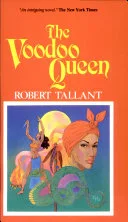
The Voodoo Queen
 84
84

The Voodoo Queen
Tallant’s "The Voodoo Queen" sidesteps sensationalism, offering instead a grounded look at Marie Laveau’s extraordinary life. The author excels at detailing the social stratification and religious syncretism of 19th-century New Orleans, painting Laveau not as a caricature, but as a formidable historical actor. A particular strength lies in the depiction of her business acumen, illustrating how she leveraged her spiritual authority for tangible influence. The book, however, occasionally struggles to definitively separate historical fact from the persistent folklore that has accrued around Laveau, leaving some aspects of her personal beliefs and motivations open to speculation. The description of her passing on secrets to a favored daughter, for instance, highlights the transmission of power but leaves the precise nature of those secrets tantalizingly vague. It's a valuable, if sometimes elusive, chronicle of a complex woman.
📝 Description
84
Robert Tallant's 1973 book, 'The Voodoo Queen,' examines the life of Marie Laveau.
Robert Tallant's "The Voodoo Queen" reconstructs the life of Marie Laveau, a prominent figure in 19th-century New Orleans who became known as the "Queen of the Voodoos." Born in 1794, Laveau wielded considerable spiritual and social influence over several decades. Tallant details her rise to power, analyzing the societal dynamics and her personal charisma that allowed her to maintain a significant position.
The book is situated within the unique cultural landscape of New Orleans during that era, a period marked by a blending of Catholic, African, and Creole traditions. Tallant shows how Laveau operated within this complex environment, her practices both shaped by and influential upon the city's social and political currents. The work focuses on New Orleans "Voudou," distinguishing it from other Caribbean forms, and portrays Laveau not only as a religious leader but also as a businesswoman and community figure.
Tallant discusses the spiritual authority Laveau held, the rituals associated with her practice, and the network she built. Her influence often extended from the fringes of accepted society, making her a subject of historical fascination and debate.
This biography engages with the historical development of African diaspora religions in the Americas, specifically focusing on the syncretic forms that emerged in New Orleans. It examines the role of a powerful female practitioner within a spiritual tradition that blended African cosmology with European Catholic and local Creole influences. The book addresses the social position and spiritual authority of figures like Laveau, who operated at the intersection of folk religion and community leadership, often in contexts where such practices were viewed with suspicion.
💡 Why Read This Book?
• Understand the historical context of Marie Laveau's rise to power in 19th-century New Orleans, learning how she navigated a society rife with racial and religious tensions. • Explore the specific practices and societal role of New Orleans Voudou, distinct from other Caribbean forms, as detailed in Tallant's research. • Gain insight into the life of a powerful woman who defied conventional roles, examining her influence as a spiritual leader, businesswoman, and community figure.
⭐ Reader Reviews
Honest opinions from readers who have explored this book.
❓ Frequently Asked Questions
When was Marie Laveau born and when did she die?
Marie Laveau was born around 1794 and died in 1881, making her a dominant figure in New Orleans for nearly a century.
What is the historical significance of Marie Laveau in New Orleans?
Marie Laveau is historically significant as the "Queen of the Voodoos" in New Orleans, wielding considerable spiritual, social, and political influence throughout the 19th century.
What kind of practices is Marie Laveau associated with?
She is primarily associated with New Orleans Voudou, a syncretic religious tradition blending African spiritual beliefs with Catholic elements, which she led and shaped.
Did Marie Laveau have children who followed her path?
Yes, the book indicates she passed on her secrets and influence to a favorite daughter, who helped maintain her dominance in the Voodoo underworld.
What was the atmosphere of New Orleans during Marie Laveau's time?
New Orleans during Laveau's prominence (19th century) was a unique melting pot of cultures, characterized by a complex blend of French, Spanish, African, and Creole influences, alongside Catholic and African spiritual practices.
What differentiates New Orleans Voudou from other Voodoo traditions?
New Orleans Voudou, as explored in the book, is a distinct regional form that developed through a unique syncretism of African, Catholic, and local cultural elements present in the city.
🔮 Key Themes & Symbolism
The Cult of Personality
Marie Laveau’s legendary beauty and powers are central to her mystique. Tallant explores how this persona was cultivated and maintained, making her an almost mythical figure in 19th-century New Orleans. This theme examines the construction of charisma and its role in spiritual leadership, particularly within a community seeking both solace and agency amidst social upheaval.
Spiritual Authority and Social Power
The book details Laveau’s dual role as a spiritual leader and a powerful social influencer. Her Voudou practices were not isolated rituals but intertwined with her ability to command respect, mediate disputes, and influence the city's underworld. This theme investigates the symbiotic relationship between religious authority and worldly power in a unique historical context.
Syncretism in New Orleans Voudou
Tallant highlights the unique syncretic nature of New Orleans Voudou, a blend of African spiritual traditions and Catholic iconography. Laveau’s practice exemplifies this fusion, demonstrating how enslaved and free people of color creatively adapted and preserved their ancestral beliefs within a dominant European religious framework.
Legacy and Succession
The passing of Laveau’s secrets to her daughter underscores the theme of legacy and the transmission of esoteric knowledge. This aspect explores how power and influence are maintained across generations, ensuring the continuity of spiritual traditions and the enduring legend of the Voodoo Queen.
💬 Memorable Quotes
Direct passages from the work, attributed to the author.
“Marie Laveau reigned as the undisputed Queen of the Voodoos for nearly a century.”
— This statement expresses Laveau's immense and prolonged influence. It suggests a singular, dominant position within her spiritual domain, highlighting her longevity and unchallenged authority.
“Her beauty and powers were legendary, and caused her to be the subject of wild gossip throughout her life.”
— This points to the dual nature of Laveau's public perception: a source of awe due to her spiritual gifts and beauty, yet also a subject of pervasive rumors, indicating the complex and often speculative relationship between the public and powerful esoteric figures.
“She passed on her secrets to a favorite daughter, who helped her dominate the underworld of voodoo in New Orleans.”
— This highlights the dynastic aspect of her power, suggesting a deliberate transfer of knowledge and authority. It emphasizes the practical, organized nature of her influence, extending into the less visible strata of New Orleans society.
“Born in 1794, Marie Laveau reigned as the undisputed Queen of the Voodoos for nearly a century.”
— This factual anchor firmly places Laveau within a specific historical timeframe, emphasizing the extraordinary duration of her reign and establishing her as a key figure across multiple decades of New Orleans history.
“The emotional undertones, the conflicts in her human relations, the overwhelming loneliness of her position.”
— This interpretation of the book's content suggests an exploration of Laveau's personal life beyond her public persona, hinting at the human cost and emotional toll of wielding such unique power and influence.
🌙 Esoteric Significance
Tradition
While not strictly aligned with a single Western esoteric lineage like Hermeticism or Kabbalah, "The Voodoo Queen" studies the practical application of spiritual power within the context of New Orleans Voudou. This tradition, born from the forced syncretism of West African religions and Catholicism, represents a unique branch of diaspora spirituality focused on community well-being, spiritual mediation, and ancestor veneration.
Symbolism
The book implicitly engages with symbols of power and protection inherent in Laveau's practice. While specific symbols aren't detailed extensively, the concept of Laveau herself functions as a potent symbol of female spiritual authority and resilience. Her legendary status and the 'secrets' she passed on represent the transmission of esoteric knowledge vital for navigating both the spiritual and material worlds.
Modern Relevance
Contemporary practitioners and scholars of African diaspora religions, particularly those focused on Haitian Vodou and its New Orleans variant, continue to reference Marie Laveau. Her story informs discussions on spiritual leadership, the intersection of race and religion, and the adaptation of ancestral practices in new environments. Thinkers exploring female divinity and power in marginalized communities often cite Laveau as a historical archetype.
👥 Who Should Read This Book
• Researchers of African diaspora religions: to understand the historical development and socio-cultural impact of New Orleans Voudou through the lens of its most famous practitioner. • Students of American folklore and history: to explore the creation and endurance of legend around a powerful 19th-century figure in a unique American city. • Readers interested in the intersection of spirituality and social influence: to examine how religious authority can translate into tangible power within a specific historical and cultural context.
📜 Historical Context
Robert Tallant's "The Voodoo Queen," first published in 1984, revisits a figure central to 19th-century New Orleans, a city then a vibrant crucible of cultural exchange. The era was marked by a complex interplay of Catholic, French, Spanish, African, and Creole traditions, a syncretism that profoundly shaped religious and social life. In this milieu, figures like Marie Laveau could rise to prominence by skillfully blending spiritual practices, including elements of Roman Catholicism and West African Vodun. While Tallant’s work appeared long after Laveau’s death in 1881, it engaged with a persistent fascination for her legend. The academic study of African diaspora religions was gaining momentum, and Laveau was a key figure in understanding these emergent traditions. Contemporaries like Hurston, though focusing on folklore more broadly, also captured the spirit of these communities. Tallant’s book sought to ground the myth in historical reality, though the pervasive folklore surrounding Laveau made definitive separation challenging.
📔 Journal Prompts
Marie Laveau's reign as Queen of the Voodoos for nearly a century.
The secrets passed from Laveau to her favorite daughter.
The wild gossip surrounding Laveau's legendary beauty and powers.
The specific context of 19th-century New Orleans' underworld.
The balance between spiritual leadership and human relations in Laveau's life.
🗂️ Glossary
Voudou
A syncretic religion that originated in the West African kingdom of Dahomey (present-day Benin), blending traditional African religious concepts with Roman Catholicism. It is practiced in Haiti and has distinct regional variations, such as New Orleans Voudou.
Queen of the Voodoos
The title referring to Marie Laveau, signifying her supreme authority and influence within the Voudou community of New Orleans during the 19th century.
Syncretism
The merging or blending of different religions, cultures, or schools of thought. In the context of New Orleans Voudou, it refers to the fusion of African spiritual beliefs with elements of Roman Catholicism.
Underworld
In this context, refers to the less visible, often illicit or marginalized, social networks and activities within New Orleans, which Laveau is said to have influenced or controlled.
Esoteric
Relating to or accessible only by a relatively small number of people with a specialized knowledge or interest. Often pertains to spiritual or mystical teachings.
Creole
A term historically used in Louisiana to refer to people of French, Spanish, or African descent born in Louisiana, often with a distinct cultural identity blending European and African influences.
Rituals
A set of actions, often ceremonial or symbolic, performed in a prescribed order. In Voudou, rituals are used for healing, divination, community building, and connecting with spirits.