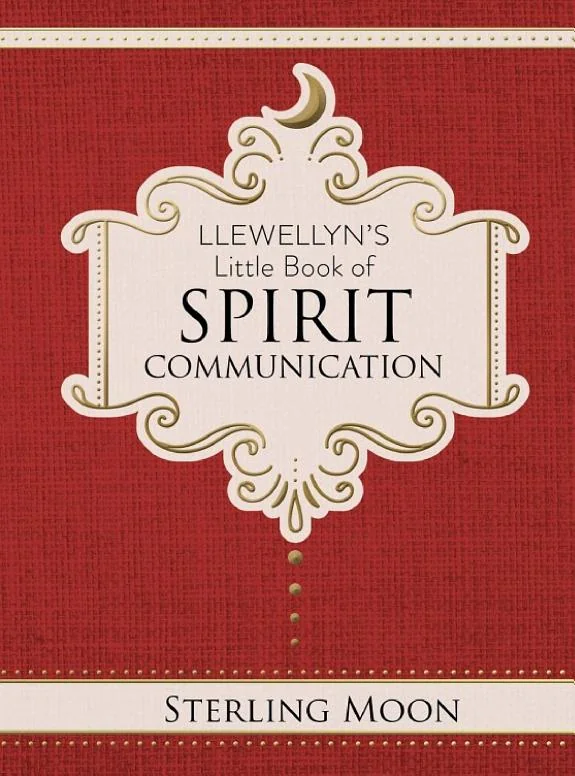
Llewellyn's Little Book of Spirit Communication
 73
73

Llewellyn's Little Book of Spirit Communication
Sterling Moon's "Llewellyn's Little Book of Spirit Communication" offers a straightforward guide to a subject often shrouded in mystery. Its primary strength lies in its clarity and accessible language, making complex ideas digestible for newcomers. The section on the history of spirit communication, though brief, provides valuable context, particularly its mention of early 20th-century spiritualist movements. However, the book occasionally leans towards a generalized approach, which might leave seasoned practitioners wanting more depth. The discussion on distinguishing spirit guidance from personal intuition, while present, could benefit from more nuanced examples. Overall, it functions effectively as an introductory text for those taking their first steps into understanding spirit communication.
📝 Description
73
Sterling Moon's 2017 book explains how to connect with spirits.
This book offers a clear approach for people interested in communicating with spirits. It addresses common misunderstandings and builds a basic understanding of what spirits are, drawing from different spiritual viewpoints. The author aims to help readers find more meaning by connecting with the non-physical world. It is written for those new to spiritual or psychic ideas, presenting the subject gently. The book places spirit communication within its historical and cultural background, discussing how beliefs about the afterlife and human connection to it have changed. It notes the persistent human wish to communicate across the veil between life and death. Moon describes the main ideas for engaging with spirit, explaining various methods, the nature of spiritual energy, and the ethics involved. The goal is to establish a respectful and direct channel for communication.
This work fits within the modern spiritualist tradition, which gained prominence in the 19th century with figures like the Fox sisters and Allan Kardec. Spiritualism centers on the belief that spirits of the departed can and do communicate with the living. It often involves mediums who act as channels for such communication. While rooted in historical movements, contemporary spiritualist literature like Moon's book often adapts these ideas for a modern audience, focusing on personal connection and practical guidance rather than solely on séances or public demonstrations.
💡 Why Read This Book?
• Gain a practical framework for understanding spirit communication, moving beyond anecdotal evidence to explore foundational concepts introduced by Sterling Moon. • Explore the historical lineage of spirit interaction, including references to early 20th-century spiritualism, to contextualize contemporary practices. • Learn about different methods of engaging with the spirit realm, as outlined in the book's core principles, fostering a sense of connection and purpose.
⭐ Reader Reviews
Honest opinions from readers who have explored this book.
❓ Frequently Asked Questions
What is the primary goal of "Llewellyn's Little Book of Spirit Communication"?
The book aims to provide a well-rounded, introductory guide to understanding spirit communication, clarifying what spirits are and offering fundamental techniques for connecting with them.
Who is the intended audience for this book?
It is designed for individuals curious about spirit communication, particularly beginners who seek a clear and accessible introduction to the subject and its potential for adding meaning to life.
Does the book discuss the history of spirit communication?
Yes, Sterling Moon touches upon the historical context of spirit communication, offering insights into how beliefs and practices have evolved over time.
What are the core concepts covered in the book?
The book covers the nature of spirits, fundamental communication methods, and ethical considerations for engaging in spirit communication, presented in a concise overview.
Is this book suitable for experienced mediums?
While it provides a solid foundation, experienced mediums might find the content introductory. It is best suited for those new to the practice or seeking a refresher on basic principles.
What is the publication year of Llewellyn's Little Book of Spirit Communication?
The book was first published on October 8, 2025.
🔮 Key Themes & Symbolism
Nature of Spirits
The work explores various perspectives on what constitutes a 'spirit,' moving beyond simplistic definitions to consider them as energetic presences or consciousness continuing beyond physical life. It addresses common questions about their form, intent, and capabilities, aiming to explain their existence and potential for interaction with the living.
Foundations of Communication
This theme focuses on the practical 'how-to' of engaging with spirits. Moon outlines essential principles, including developing intuition, creating a safe space, and employing respectful communication techniques. It emphasizes that effective spirit communication relies on intention, clarity, and an open heart, rather than solely on psychic ability.
Meaning and Connection
A central tenet is how spirit communication can foster a profound sense of connection to something larger than oneself. The book suggests that understanding and interacting with spirits can bring comfort, guidance, and a deeper appreciation for life's mysteries, leading to a more purpose-driven existence.
Historical Perspectives
Moon situates contemporary approaches to spirit communication within a historical framework. This includes brief mentions of historical movements and figures who engaged with similar concepts, providing context and demonstrating the enduring human interest in bridging the gap between the physical and spiritual realms.
💬 Memorable Quotes
Direct passages from the work, attributed to the author.
“Communication is built on intention and respect.”
— This core idea emphasizes that genuine connection with spirit requires a clear purpose and an ethical, respectful approach, rather than forceful or demanding methods.
“Connecting with spirit adds meaning to our lives.”
— This interpretation of the book's message underscores the benefit of spiritual communication in fostering a sense of purpose and belonging within a larger cosmic framework.
“The veil between worlds is thinner than we often realize.”
— This evocative statement suggests that the perceived separation between the physical and spiritual realms is not absolute and can be navigated with awareness and practice.
💡 Key Ideas
Editorial paraphrase of the work's core concepts — not direct quotes.
Spirits are energy, consciousness that continues beyond the physical body.
This paraphrased concept highlights the book's foundational view of spirits not as ghosts in the traditional sense, but as enduring aspects of consciousness accessible through specific practices.
Understanding the history helps us practice today.
This paraphrased sentiment points to the book's effort to ground modern practices by referencing historical precedents and the evolution of beliefs about spirit interaction.
🌙 Esoteric Significance
Tradition
This work aligns broadly with modern neo-spiritualist and New Age thought, which often synthesizes elements from various traditions without strict adherence to a single lineage. It departs from older, more dogmatic forms of mediumship by emphasizing personal empowerment and accessible techniques, fitting into a contemporary esoteric landscape that values individual exploration and experiential learning.
Symbolism
The book likely employs symbols of connection, such as bridges, veils, or pathways, to represent the interface between the physical and spiritual realms. Light often symbolizes spirit or higher consciousness, while darkness might represent the unknown or the material world. These motifs serve to make abstract concepts of spiritual presence and communication more tangible for the reader.
Modern Relevance
Contemporary figures and communities focused on mediumship, energy healing, and intuitive development draw upon the principles presented in works like this. It informs practices within New Age spirituality and online spiritual communities that seek practical guidance for developing psychic abilities and fostering a connection with what they perceive as higher consciousness or departed loved ones.
👥 Who Should Read This Book
['• Individuals new to spiritualism and mediumship, seeking a gentle introduction to the concepts of spirit communication and its potential benefits for personal growth.', '• Those feeling a sense of existential curiosity or a desire for deeper meaning, who are open to exploring non-physical connections as a source of comfort and guidance.', '• Readers interested in the historical evolution of spiritual beliefs, looking for a concise overview of how humanity has sought to connect with the spirit world across different eras.']
📜 Historical Context
Published in 2025, "Llewellyn's Little Book of Spirit Communication" emerges in an era where interest in the paranormal and esoteric subjects continues to hold a steady, albeit sometimes niche, appeal. Its approach can be seen as a descendant of the Spiritualist movement that gained significant traction in the mid-19th century, particularly following figures like the Fox sisters and later mediums who engaged with public séances. This book, however, presents these concepts in a more secularized, psychological, and accessible format, moving away from the overt religious or devotional aspects that characterized some earlier Spiritualist expressions. It contrasts with the more academic or skeptical approaches to consciousness and the afterlife often debated in philosophical circles, offering a practical, self-help orientation. While specific reception events for this 2025 publication are not yet documented, Llewellyn Publications has a long history of engaging with such topics, often becoming a reference point for practitioners in fields like astrology and Wicca.
📔 Journal Prompts
Spirit communication as a source of meaning in your life.
Your personal understanding of what constitutes a 'spirit'.
The ethical considerations you would apply to spirit communication.
Historical parallels to contemporary spirit communication practices.
Methods for developing your intuitive connection to the spirit realm.
🗂️ Glossary
Spirit
In the context of this book, a spirit refers to the consciousness or energetic essence of a being that continues to exist after physical death, capable of interaction.
Communication
The process of exchanging information or energy between individuals or entities, in this case, between the living and spirits, often through intuition, feelings, or mental impressions.
Intuition
The ability to understand something immediately, without the need for conscious reasoning; a key faculty for receiving messages from the spirit world.
Veil
A metaphorical barrier or separation between the physical world and the spirit world, which practitioners aim to perceive or gently part.
Energy
The fundamental force or substance that permeates the universe, believed by some to be the basis of consciousness and spiritual presence.
Mediumship
The practice of acting as an intermediary between the spirit world and the physical world, facilitating communication.
Guidance
Support, advice, or direction offered by spirits to assist individuals in their life path and decisions.
This book appears in 1 collection
🔮 Readers Also Liked
Browse all →








From the “Spirit Communication” Collection
View all →







More Free Occult Philosophy Books
View all →