The Dark Night of the Soul, a Spiritual Canticle, and the Living Flame of Love
 78
78

The Dark Night of the Soul, a Spiritual Canticle, and the Living Flame of Love
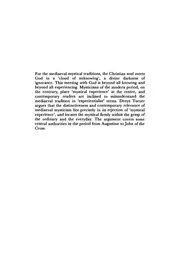
The 1891 reprint of Saint John of the Cross's "The Dark Night of the Soul," "A Spiritual Canticle," and "The Living Flame of Love" offers a tactile connection to historical spiritual discourse. Its antiquarian binding and faithful reproduction of the original text provide an immersive, if at times challenging, reading experience. The strength lies in its unadulterated presentation; readers encounter John's stark, poetic articulation of the soul's arduous purification without modern editorial softening. However, the dense, allegorical language and the 16th-century Spanish mystical framework can present a significant barrier for contemporary readers unfamiliar with the Carmelite tradition or scholastic theological concepts. A particular passage in "The Dark Night" describing the "darkness" as a "guide more certain than the light" encapsulates both the work's power and its difficulty—a profound assertion that requires considerable meditative unpacking. This edition is for the dedicated seeker, not the casual browser.
📝 Description
78
Saint John of the Cross wrote these three mystical poems and commentaries in 16th-century Spain.
This volume collects three significant mystical writings by Saint John of the Cross: "The Dark Night of the Soul," "A Spiritual Canticle," and "The Living Flame of Love." Composed in the 1500s, these texts describe the soul's difficult progression toward union with God. This edition faithfully reproduces a 1891 publication, featuring the original text and black and white images within a brown cloth binding with gold stamping, maintaining an antiquarian aesthetic.
The book is suited for serious spiritual seekers, theologians, and students of Christian mysticism who value historical presentation and direct engagement with a 16th-century mystic's voice. It will appeal to those interested in the contemplative tradition, ascetic philosophy, and the experience of spiritual progression, particularly those prepared for dense, poetic language.
Saint John of the Cross, a Spanish Carmelite friar, penned these works during the Counter-Reformation. His writings reflect the challenging path of spiritual purification, often called the "dark night," a concept central to his theology. His advocacy for strict contemplative practice and reform within his order led to opposition and imprisonment.
These works belong to the Christian mystical tradition, particularly the Spanish mystics of the 16th century. Saint John of the Cross, alongside Teresa of Ávila, articulated a path of spiritual development characterized by intense self-denial and a direct, unmediated experience of the divine. His concept of the 'dark night' signifies a necessary, albeit painful, process of detachment from the senses and spirit, clearing the way for divine union. This tradition emphasizes inner transformation through prayer and contemplation over external ritual.
💡 Why Read This Book?
• Gain an unmediated encounter with 16th-century Carmelite mysticism, particularly the concept of the 'dark night' as detailed in Saint John of the Cross's own words, offering a unique perspective on spiritual desolation. • Understand the poetic and allegorical language used to describe divine union, as exemplified in 'A Spiritual Canticle,' providing insights into the soul's longing and progression toward God. • Explore the advanced stage of spiritual transformation described in 'The Living Flame of Love,' learning about the soul's immersion in divine love as a purifying fire, a concept distinct from earlier stages.
⭐ Reader Reviews
Honest opinions from readers who have explored this book.
❓ Frequently Asked Questions
What is the significance of the 'dark night' in Saint John of the Cross's writings?
The 'dark night' refers to a period of spiritual trial and purification where the soul feels abandoned by God. Saint John of the Cross, in his work, describes it as a necessary process for detaching from sensory and spiritual imperfections to achieve union with the divine.
Who was Saint John of the Cross and when did he live?
Saint John of the Cross (Juan de la Cruz) was a 16th-century Spanish mystic and Carmelite friar, born in 1542 and died in 1591. He was a key figure in the Counter-Reformation and a reformer of the Carmelite Order, known for his profound spiritual poetry and theological writings.
What is the difference between 'The Dark Night of the Soul' and 'A Spiritual Canticle'?
'The Dark Night of the Soul' focuses on the passive purification of the soul through suffering and detachment. 'A Spiritual Canticle,' conversely, describes the soul's active yearning and joyful progression toward union with God, often using a bride-groom allegory.
Is this edition suitable for beginners in spiritual study?
This specific edition, a reprint of an 1891 publication, is best suited for those with some background in Christian mysticism or contemplative traditions. Its unedited, antiquarian nature may present challenges for absolute beginners due to the dense theological and poetic language.
What does 'A Spiritual Canticle' mean by the 'living flame of love'?
The 'Living Flame of Love' represents the culmination of the soul's journey in Saint John of the Cross's schema. It signifies the soul's complete transformation and union with God, where divine love acts as an intense, purifying, and illuminating fire.
Why is this book presented as a reprint of an 1891 edition?
This reprint aims to provide readers with an authentic, historical experience of the text, mirroring the physical and textual presentation from 1891. It preserves the original formatting and content without modern annotations or stylistic adjustments.
🔮 Key Themes & Symbolism
The Dark Night of the Soul
This central concept describes the soul's passage through spiritual desolation and purification. It's not a literal darkness but a state of detachment from worldly pleasures and spiritual consolations, necessary for a direct encounter with God. Saint John of the Cross outlines two nights: one of the senses, shedding attachment to physical and sensory experiences, and a more profound one of the spirit, detaching from intellectual and spiritual comforts. This phase is crucial for fostering faith and divine love.
Spiritual Union
The ultimate goal described is the soul's complete union with the Divine. This union is depicted through rich allegorical language, particularly in 'A Spiritual Canticle,' using the metaphor of a bride's union with her beloved. It signifies a transformation where the soul reflects the divine essence, experiencing profound peace and fulfillment through absolute surrender and love. This state is achieved after the arduous process of purification.
Divine Love as Transformation
In 'The Living Flame of Love,' divine love is portrayed as an active, transformative force. It is not merely an emotion but an intense, burning presence that purifies and enkindles the soul. This 'living flame' consumes imperfections and refines the soul, enabling it to participate in the divine life. It represents a stage of infused contemplation where God's presence is intimately felt and experienced.
Detachment and Surrender
A recurring theme is the necessity of detachment from all created things, including spiritual consolations. Saint John of the Cross argues that true love for God requires relinquishing self-will and attachments. This surrender is not an act of despair but a courageous step towards freedom, allowing the soul to be wholly possessed by and united with God. It's the foundation for progressing through the spiritual journey.
💬 Memorable Quotes
Direct passages from the work, attributed to the author.
“I yielded myself and gave up my face to all suffering, from man to man I went not; from place to place I went not.”
— This reflects the theme of detachment and singular focus on the divine. It illustrates the soul's resolute journey, prioritizing spiritual progression over worldly comfort or human interaction, embracing suffering as part of the path.
“The soul that is progressing in love is always advancing.”
— This aphorism underscores the dynamic nature of spiritual growth. It suggests that genuine love for God is not static but a continuous movement of the soul towards greater union and perfection.
“Upon the nourishment of love, all things are sweetest.”
— This suggests that even the most challenging spiritual experiences become bearable, even 'sweet,' when undertaken with a heart filled with divine love. It points to the sustaining power of love in the spiritual life.
“Darkness and trials are guides for the soul seeking God.”
— This interpretation emphasizes the paradoxical role of suffering in the spiritual journey. The difficulties encountered are presented not as hindrances but as divinely appointed means to guide the soul towards a deeper, more authentic encounter with God.
💡 Key Ideas
Editorial paraphrase of the work's core concepts — not direct quotes.
To arrive at the experience of the pure love of God, the soul must pass through the dark night.
This paraphrased concept highlights the core tenet of 'The Dark Night.' It posits that suffering and emptiness are not obstacles but essential pathways to experiencing divine love in its purest form, stripping away all lesser attachments.
🌙 Esoteric Significance
Tradition
Saint John of the Cross belongs to the Western Christian mystical tradition, specifically the Carmelite school. His work is a central to Christian contemplative practice, focusing on the direct, unmediated experience of God. While rooted in Catholic dogma, his exploration of spiritual ascent through purgation and union has influenced broader esoteric and mystical circles, including figures in psychological and philosophical spirituality who engage with the phenomenology of inner experience.
Symbolism
Key symbols include the "dark night," representing profound spiritual purification and the shedding of attachments; the "wounded deer" or "fountain," symbolizing the soul's ardent thirst and pursuit of God; and the "living flame of love," signifying the transformative, enkindling presence of the Divine within the purified soul. These symbols articulate the soul's journey from longing and suffering to ecstatic union.
Modern Relevance
Contemporary thinkers and practitioners in fields ranging from spiritual psychology to comparative mysticism engage with John's work. His articulation of the 'dark night' is frequently referenced in discussions of spiritual crisis, depression, and existential doubt. The emphasis on detachment and direct experience continues to inform contemplative practices across various traditions, appealing to those seeking inner transformation beyond conventional religious structures.
👥 Who Should Read This Book
• Advanced practitioners of Christian contemplative prayer seeking to deepen their understanding of the purification process and divine union as described by a foundational mystic. • Scholars of religious history and comparative mysticism interested in the theological and poetic expressions of 16th-century Spanish spirituality and its impact. • Individuals experiencing profound spiritual trials or 'dark nights' who are looking for textual guidance and theological framework from a recognized master of the spiritual path.
📜 Historical Context
Saint John of the Cross penned these profound mystical treatises in 16th-century Spain, a period dominated by the Counter-Reformation's theological rigor and spiritual renewal. His writings emerged from the vibrant Carmelite milieu, significantly influenced by Teresa of Ávila, with whom he co-founded the Discalced Carmelites. His work offered a starkly ascetic path compared to some contemporary mystical writers who emphasized ecstatic visions. The concept of the "dark night" of the soul, detailing a passive purgation, was radical and contributed to his later struggles. John's advocacy for reform and his mystical theology led to conflict with ecclesiastical authorities, including his imprisonment in Toledo in 1577 by conservative elements of the order, a period during which some of his most significant works were conceived or refined.
📔 Journal Prompts
The soul's detachment from sensory pleasures, as detailed in the dark night of the senses.
The bride's ardent longing for the divine presence in 'A Spiritual Canticle.'
The transformative power of the 'living flame of love' upon the purified soul.
The paradox of finding God through absence and darkness.
The necessity of relinquishing self-will for true spiritual union.
🗂️ Glossary
The Dark Night
A concept describing the soul's passive purification process, involving spiritual desolation and detachment from sensory and spiritual consolations, essential for achieving union with God.
Spiritual Canticle
A poem and commentary by Saint John of the Cross detailing the soul's journey of longing and movement towards union with God, often using the allegory of a bride and bridegroom.
Living Flame of Love
The final stage of spiritual union where the soul is transformed by the intense, purifying, and clear presence of divine love.
Purgation
The process of cleansing the soul from sin and imperfections, often involving suffering and detachment, to prepare it for union with God.
Divine Union
The ultimate goal of the spiritual life, where the soul achieves a profound and intimate connection with God, often described as a transformation or transformation into God.
Detachment
The voluntary renunciation of attachment to worldly goods, pleasures, and even spiritual consolations, seen as necessary for freeing the soul to love God exclusively.
Contemplation
A form of prayer characterized by a direct, intuitive knowledge of God, often involving quietude and a passive reception of divine grace, as opposed to discursive meditation.