Rainbow Body
 73
73

Rainbow Body
Kurt Leland's "Rainbow Body" provides a much-needed scholarly anchor for understanding the Western chakra system's often-murky origins. Its strength lies in the extensive collection of historical data, presented through numerous tables and illustrations that chart the system's development from the mid-19th century. The sheer volume of visual evidence, drawn from rare sources, is impressive. However, the book's dense academic approach might deter casual readers; it reads more like a doctoral dissertation than an accessible guide. A particular highlight is the detailed breakdown of how the seven-chakra model, with its specific color and planetary associations, solidified in Western esotericism, a process often taken for granted. The book's limitation is its occasional dryness, which can obscure the vibrant spiritual lineage it discusses. "Rainbow Body" offers an indispensable, if challenging, cartography of Western esoteric thought.
📝 Description
73
Kurt Leland's "Rainbow Body" traces the Western chakra system's evolution from Indian Tantric roots.
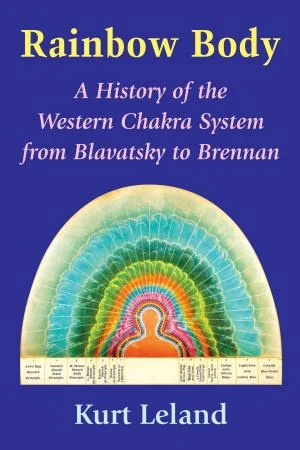
Published in 2015, Kurt Leland's "Rainbow Body" meticulously details the Western chakra system's historical development. The book examines how Indian Tantric concepts of energy centers were adapted, renamed, and recontextualized within various Western esoteric movements starting around the mid-19th century. It presents a comprehensive visual and textual history, showing the divergence from original Indian sources.
Leland's work situates this transformation within the late 19th and 20th centuries, a period marked by significant cross-pollination between Eastern philosophies and Western occultism. Movements like Theosophy, influenced by figures such as Helena Blavatsky, were instrumental in introducing and reshaping these Indian concepts for Western audiences. The book illustrates how these energy centers were integrated into diverse Western frameworks, often resulting in the familiar seven-chakra model with specific colors, locations, and symbolic associations that deviate from Tantric origins. The influence of visual representations, like diagrams and illustrations, in shaping contemporary understanding is also highlighted.
This book emerges from the historical milieu of the late 19th and 20th centuries, a time when Western esoteric traditions actively engaged with Eastern spiritual philosophies. Key figures and movements like Helena Blavatsky and Theosophy played a significant role in adapting and reinterpreting Indian concepts, including the chakra system, for Western practitioners. "Rainbow Body" examines how these imported ideas were reshaped, often through visual aids and new symbolic associations, becoming distinct elements within Western occultism and modern energy healing practices.
💡 Why Read This Book?
• Gain clarity on the origins of the Western seven-chakra system, understanding how it evolved from its Indian Tantric roots through specific adaptations by Western esotericists starting in the mid-19th century. • Discover the historical development of chakra associations, such as colors and locations, by examining 24 tables and 28 illustrations that chart their transformation over the 20th century. • Appreciate the scholarly rigor applied to esoteric subjects, providing a factual basis for understanding concepts often presented without historical context.
⭐ Reader Reviews
Honest opinions from readers who have explored this book.
❓ Frequently Asked Questions
Where did the Western chakra system originate?
The Western chakra system largely evolved from Indian Tantric traditions but was significantly adapted and reinterpreted by Western esotericists, particularly from the mid-19th century onwards, as detailed in Kurt Leland's research.
How does "Rainbow Body" differ from typical chakra books?
Unlike many popular books, "Rainbow Body" focuses on the historical and comparative analysis of the chakra system's Western development, using extensive visual documentation and scholarly research rather than solely spiritual instruction.
What historical periods does "Rainbow Body" cover?
The book primarily focuses on the development of the Western chakra system from the mid-19th century through the 20th century, tracing its integration into various esoteric movements.
Are there many illustrations in "Rainbow Body"?
Yes, "Rainbow Body" features 28 black-and-white illustrations and 24 tables, many drawn from rare or forgotten sources, to visually demonstrate the evolution of the chakra system.
Who was instrumental in bringing chakras to the West?
While "Rainbow Body" traces a broader evolution, figures associated with movements like Theosophy in the late 19th and early 20th centuries were key in introducing and adapting Indian spiritual concepts, including chakras, to Western audiences.
What specific inconsistencies in chakra systems does the book address?
The book addresses inconsistencies in names, colors, locations, and other associations of chakras as they were adopted and modified by different Western esoteric schools over time.
🔮 Key Themes & Symbolism
Chakra System Evolution
This theme examines how the concept of chakras, originating from Indian Tantra, was fundamentally reinterpreted and systematized within Western esoteric thought. Leland meticulously documents the shift from a more fluid, diverse understanding in its original context to the standardized seven-center model prevalent in the West. The book highlights how specific attributes—colors, locations, associated deities or planets—were assigned, often in response to the needs and frameworks of Western occultism and New Age movements that emerged from the mid-19th century onwards.
Visual History of Esotericism
A significant aspect of "Rainbow Body" is its reliance on visual documentation. The book presents numerous historical diagrams and illustrations that served as pedagogical tools for transmitting esoteric knowledge. These visuals are not merely decorative; they are crucial evidence of how concepts were conceptualized and disseminated. By analyzing these images, Leland shows how the visual representation of the chakra system evolved, influencing practitioners' understanding and energetic work throughout the 20th century.
Comparative Mysticism
The work serves as a case study in comparative mysticism, illustrating the complex process of cultural and philosophical translation. It highlights the challenges and innovations that arise when spiritual traditions cross geographical and cultural boundaries. By contrasting the original Tantric understanding with its Western adaptations, Leland invites readers to consider the nature of spiritual authority, textual transmission, and the creative reinterpretation of ancient wisdom in new contexts.
The "Rainbow Body" Concept
While the book primarily focuses on the historical development of the chakra system, the title itself alludes to advanced Tantric concepts of spiritual attainment, often associated with the dissolution of the physical form into a luminous, rainbow-hued body of light. Leland's historical tracing of the chakra system's Westernization implicitly touches upon the potential divergence between the foundational principles of Tantra and the more therapeutically or psychologically oriented applications that became common in the West.
💬 Memorable Quotes
Direct passages from the work, attributed to the author.
“The Western chakra system developed from the mid-19th through the 20th century.”
— This factual statement anchors the book's core argument, emphasizing that the familiar chakra model is a historical construct, not an ancient, immutable doctrine, and its specific form owes much to Western esoteric movements.
“The chakras have been used for centuries as focal points for healing, meditation, and spiritual development.”
— This highlights the enduring purpose of the chakra concept across traditions, serving as a bridge between the book's historical analysis and the practical applications that continue to resonate with practitioners today.
“Many [illustrations] from rare and forgotten sources.”
— This points to the scholarly depth of Leland's research, indicating that the book unearths obscure historical materials that offer unique insights into the transmission and evolution of esoteric knowledge.
“Questions about inconsistencies between chakra systems... you'll find the answers here.”
— This directly addresses a common point of confusion for students of esoteric traditions, promising a resolution rooted in historical context rather than speculative theory.
“Based on the teachings of Indian Tantra...”
— This establishes the foundational lineage of the chakra concept, while the subsequent discussion implies a significant departure and adaptation occurred in its Western transmission.
🌙 Esoteric Significance
Tradition
The work primarily engages with the Western esoteric tradition, tracing the adaptation of concepts originating in Indian Tantra. It sits within the lineage of scholarship that examines how Eastern spiritual philosophies were received, translated, and integrated into Western occult and metaphysical frameworks, particularly from the Theosophical and post-Theosophical eras of the late 19th and 20th centuries.
Symbolism
Central to the book's exploration is the symbolism of the chakras themselves. The seven primary chakras, often depicted as lotuses with specific numbers of petals, represent different energetic and consciousness centers. Their associated colors (e.g., red for Muladhara, violet for Sahasrara) and locations along the spine are key symbolic elements that have been heavily modified in the Western system, moving beyond their original Tantric meanings to align with Western cosmological or psychological models.
Modern Relevance
Contemporary practices in energy healing, yoga, and mindfulness meditation often utilize modified chakra systems. Thinkers and practitioners in these fields, particularly those interested in the historical accuracy and lineage of their methods, draw upon works like Leland's to understand the roots of their practices and the evolution of concepts like the "rainbow body" itself.
👥 Who Should Read This Book
• Students of comparative religion and esoteric history: Those seeking to understand the cross-cultural transmission of spiritual ideas will find value in Leland's detailed analysis of how Indian Tantric concepts were Westernized. • Practitioners of yoga and energy healing: Individuals working with chakra systems who desire a deeper, historically grounded understanding of the models they employ will benefit from the book's factual presentation. • Scholars of Western Occultism: Researchers interested in the development of esoteric thought from the mid-19th century onwards will appreciate the book's focus on visual and textual evolution within specific historical movements.
📜 Historical Context
Kurt Leland's "Rainbow Body" emerged in 2016, a period where interest in Eastern spiritual practices had long permeated Western culture. Its subject matter, the evolution of the chakra system, places it within the broader study of Western esotericism, particularly movements like Theosophy and later New Age spirituality. The late 19th and early 20th centuries saw figures such as Helena Blavatsky and Rudolf Steiner introduce and adapt concepts from Indian traditions, including the chakras, into their own philosophical systems. "Rainbow Body" directly engages with this historical process, analyzing how these energy centers were reconfigured, often deviating significantly from their Tantric origins. While not directly engaging with a specific competing school of thought in its blurb, the work implicitly contrasts the popularized Western models with the complex Tantric frameworks it references. Its scholarly approach positions it as a resource for understanding the historical currents that shaped modern energetic and spiritual practices, distinct from purely devotional or experiential accounts.
📔 Journal Prompts
The transformation of Tantric chakras into the Western seven-center model.
Analysis of the 28 black-and-white illustrations depicting chakra evolution.
Reflection on the "rainbow body" concept's origins versus its modern interpretations.
Comparison of specific chakra color associations described in the book.
Tracing the historical development of the chakra system from the mid-19th century.
🗂️ Glossary
Chakra
In Indian Tantric traditions, chakras are described as psycho-energetic centers within the subtle body, often visualized as spinning wheels of energy. They are focal points for meditation, spiritual development, and the regulation of vital force (prana).
Tantra
A complex spiritual tradition originating in India, Tantra encompasses a wide range of practices, philosophies, and rituals aimed at spiritual liberation and transformation, often involving the use of the body and senses as tools for enlightenment.
Esotericism
A broad category of spiritual or mystical traditions that emphasize inner knowledge, hidden meanings, and direct experience of the divine. It often involves symbolic language, secret teachings, and practices designed for spiritual attainment.
Theosophy
A spiritual movement founded in the late 19th century, notably by Helena Blavatsky, which sought to synthesize Eastern and Western mystical traditions, aiming to reveal the underlying unity of all religions and promote universal brotherhood.
Subtle Body
In many esoteric and spiritual traditions, the subtle body is considered a non-physical counterpart to the physical body, composed of energy channels (nadis), vital centers (chakras), and vital force (prana or qi).
Western Esoteric Chakra System
The specific model of seven primary energy centers, typically aligned with the spine, with assigned colors, planets, and psychological functions, that became prevalent in Western spiritual and healing practices from the 20th century onwards.
Rainbow Body
In some advanced Tantric traditions, the attainment of a luminous, non-physical body of light, often described as having rainbow hues, representing a state of spiritual realization and transcendence of the material form.
This book appears in 1 collection
🔮 Readers Also Liked
Browse all →








From the “Chakras” Collection
View all →




![Hindi Bangla Speaking Course[ S. P. Chakraborty]](/img/thumb/hindi-bangla-speaking-course-s-p-chakraborty.webp)
More Free Occult Philosophy Books
View all →