Master the power of self-hypnosis

 83
83

Master the power of self-hypnosis
C. Roy Hunter’s "Master the Power of Self-Hypnosis" offers a refreshingly direct approach to a practice often shrouded in mystique. Unlike many texts that lean on anecdotal evidence or complex theoretical frameworks, Hunter’s 2011 publication grounds itself in actionable steps. The section detailing the process of deepening self-induced trance states, specifically the use of progressive relaxation coupled with mental imagery, stands out for its clarity. It demystifies the experience, presenting it as a trainable skill. However, the book occasionally feels slightly clinical, perhaps lacking the evocative language that some readers might associate with exploring altered states. A potential limitation is the absence of extensive discussion on potential psychological pitfalls or advanced therapeutic applications, focusing instead on personal empowerment. Nevertheless, for its clear instruction and accessible methodology, it is a solid primer for the self-directed explorer.
📝 Description
83
C. Roy Hunter's 2011 book teaches self-hypnosis as a practical skill for personal empowerment.
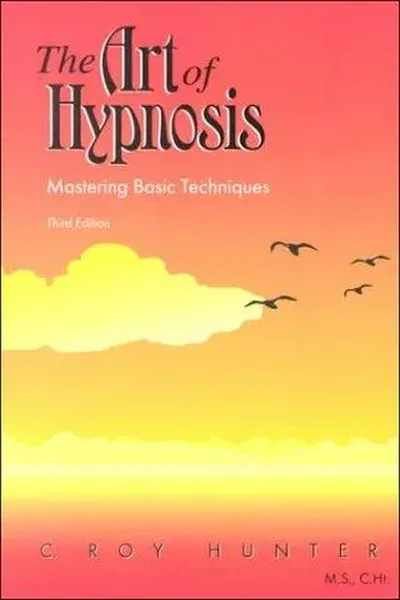
Published in 2011, C. Roy Hunter's "Master the Power of Self-Hypnosis" presents a practical approach to achieving altered states and influencing one's own mind. Hunter positions self-hypnosis not as a mystical art, but as a learnable skill available to anyone through dedicated practice. The book details specific exercises and mental frameworks designed to access the subconscious mind without external guidance. It is written for individuals interested in personal development, stress reduction, and enhanced focus, particularly those exploring the mind-body connection and self-improvement. Students of psychology, parapsychology, and alternative healing may find its systematic method useful. Those who find traditional guided hypnosis intimidating may appreciate Hunter's direct, self-directed techniques.
The work emerged in the early 21st century, a time of renewed interest in consciousness studies and practical psychological applications. While hypnosis has a long history, Hunter's book offers a modern, accessible perspective. It moves away from theatrical or overly clinical presentations, emphasizing personal empowerment through self-directed methods. This approach stands apart from purely therapeutic applications by focusing on the individual's ability to master their own mental states.
Hunter's work engages with the tradition of mind-body practices that seek to harness internal states for personal growth. While rooted in psychological principles, it shares common ground with esoteric traditions that explore consciousness beyond ordinary waking awareness. Like many spiritual development texts, it proposes that individuals can achieve significant internal change through focused mental discipline and self-directed techniques. This contrasts with externalized spiritual paths, placing agency firmly within the practitioner's own mind and will.
💡 Why Read This Book?
• Learn specific techniques for inducing self-hypnotic states, such as progressive relaxation and mental imagery, as detailed in the book's early chapters, allowing for direct application to personal goals. • Understand the core principles of suggestion and visualization as presented by Hunter, enabling you to craft and internalize empowering messages for self-improvement. • Gain practical methods for deepening trance and anchoring positive suggestions, as described in the book's practical exercises, empowering you to manage stress and enhance focus independently.
⭐ Reader Reviews
Honest opinions from readers who have explored this book.
❓ Frequently Asked Questions
What is the primary goal of C. Roy Hunter's self-hypnosis techniques?
The primary goal is to empower individuals to independently achieve altered states of consciousness for personal development, stress reduction, and enhanced focus, as detailed in the book published in 2011.
Is "Master the Power of Self-Hypnosis" suitable for beginners?
Yes, the book is designed for beginners and those seeking to learn self-hypnosis independently. It provides step-by-step instructions and practical exercises to guide the user.
Does C. Roy Hunter discuss the historical origins of hypnosis?
While the book focuses on practical application, it acknowledges the broader history of hypnosis, positioning its methods within a lineage of mind-influence techniques.
What kind of results can one expect from practicing self-hypnosis from this book?
Readers can expect to gain abilities in stress management, improved concentration, habit modification, and enhanced creativity through consistent practice of the techniques outlined.
Are there any specific concepts from the book that are crucial for understanding?
Key concepts include the nature of the 'hypnotic state' as a natural phenomenon, the power of suggestion, and the effectiveness of visualization for directing the subconscious mind.
When was 'Master the Power of Self-Hypnosis' first published?
The book 'Master the Power of Self-Hypnosis' by C. Roy Hunter was first published in 2011.
🔮 Key Themes & Symbolism
The Hypnotic State
Hunter defines the hypnotic state not as an abnormal condition but as a natural, albeit heightened, state of consciousness characterized by increased suggestibility. This work emphasizes that individuals can access this state through focused intention and specific techniques. The book details how to recognize and enter this state, moving beyond the common misconception of hypnosis as mere sleep or unconsciousness. It presents it as a powerful tool for internal exploration and directed change, accessible through practiced mental discipline.
Suggestion and Visualization
Central to mastering self-hypnosis is the effective use of suggestion and visualization. Hunter explains how to formulate and deliver suggestions that are more likely to be accepted by the subconscious mind. The book provides exercises for creating vivid mental imagery, which acts as a powerful vehicle for these suggestions. This theme explores the creative potential of the mind and how directed mental focus can shape perception and behavior, leading to tangible personal outcomes.
Self-Directed Empowerment
A core tenet of the book is the empowerment of the individual through self-directed practice. Unlike methods requiring an external hypnotist, Hunter's approach places the control firmly in the hands of the practitioner. The book is structured to build confidence and competence, enabling readers to apply self-hypnosis to a variety of personal goals, from overcoming anxieties to enhancing performance. This theme highlights autonomy and the innate capacity for self-transformation available through disciplined mental effort.
Practical Application
Master the Power of Self-Hypnosis prioritizes actionable techniques over theoretical discourse. Each concept presented is linked to practical exercises designed for immediate use. The book guides readers through creating their own hypnotic scripts, deepening trance, and utilizing affirmations. This focus on applicability ensures that the knowledge imparted is not merely academic but directly instrumental in achieving personal objectives, making it a working manual for self-improvement.
💬 Memorable Quotes
Direct passages from the work, attributed to the author.
“Suggestions must be clear, positive, and directly stated.”
— This highlights the mechanics of effective suggestion within self-hypnosis. Hunter emphasizes that for the subconscious mind to accept and act upon an instruction, it needs to be unambiguous and framed in terms of what is desired, rather than what is to be avoided.
“Visualization provides a vivid pathway for the subconscious mind to process suggestions.”
— This points to the role of mental imagery as a critical component of hypnotic suggestion. Creating detailed mental scenarios makes the suggested outcome feel more real and therefore more actionable for the deeper levels of consciousness.
“Self-hypnosis requires consistent practice to yield significant results.”
— This underscores the developmental nature of self-hypnosis. It's presented not as a quick fix but as a skill that, like any other, improves with regular application, building proficiency and deepening the effectiveness of the techniques over time.
“You are the director of your own mental landscape.”
— This captures the core message of empowerment within the book. It asserts that the individual has the agency and the tools to consciously shape their thoughts, feelings, and ultimately, their experiences through the practice of self-hypnosis.
💡 Key Ideas
Editorial paraphrase of the work's core concepts — not direct quotes.
The hypnotic state is a natural phenomenon accessible to everyone.
This quote reframes hypnosis from an extraordinary or rare event into an inherent human capacity. It suggests that the techniques discussed are not about forcing an unnatural state, but about learning to consciously access and utilize a mode of being that is already available.
🌙 Esoteric Significance
Tradition
While not strictly belonging to a single esoteric lineage, Hunter's work taps into the broader tradition of mind-based spiritual and psychological practices that have existed across cultures. It shares common ground with Hermetic principles of "as above, so below" by focusing on the inner world's influence on external reality, and with certain meditative practices that aim to achieve focused states of consciousness for insight. It departs from traditional occultism by emphasizing secular, pragmatic outcomes rather than mystical communion or esoteric knowledge acquisition.
Symbolism
The book implicitly uses the symbol of the 'doorway' or 'gateway' to represent the threshold of the subconscious mind, accessible through self-hypnosis. Another recurring motif is the 'inner landscape,' a symbolic representation of the mind's internal resources and potential, which the practitioner learns to navigate and cultivate. The act of 'anchoring' positive suggestions can also be seen as a symbolic act of inscribing desired states onto the psyche, much like a sigil or talisman.
Modern Relevance
Hunter's approach to self-hypnosis is highly relevant to contemporary practices in neuro-linguistic programming (NLP), cognitive behavioral therapy (CBT) techniques for anxiety and phobias, and modern mindfulness applications. Thinkers and practitioners in the self-development and wellness industries frequently draw upon principles of suggestion and visualization, often without direct attribution to Hunter, but echoing his emphasis on personal agency and mental discipline. His work provides a foundational understanding for those exploring biofeedback and consciousness hacking.
👥 Who Should Read This Book
• Individuals seeking practical, self-administered tools for stress reduction and anxiety management, who want to learn techniques that can be employed without external guidance. • Aspiring practitioners of personal development and self-improvement who wish to enhance focus, creativity, or overcome limiting beliefs through direct mental training. • Students of psychology or parapsychology interested in understanding the mechanics of altered states of consciousness and the power of suggestion from a practitioner's perspective.
📜 Historical Context
Published in 2011, C. Roy Hunter's "Master the Power of Self-Hypnosis" emerged during a period of renewed public interest in mindfulness, meditation, and practical psychological techniques for well-being. The early 21st century saw a proliferation of self-help literature, with many authors exploring consciousness and altered states. Hunter's work distinguished itself by focusing on self-directed application, moving away from the more clinical or stage-hypnosis presentations that had often dominated public perception since the era of Franz Mesmer in the late 18th century. While figures like Milton H. Erickson were revolutionizing hypnotherapy with their indirect approaches in the mid-20th century, Hunter's manual offered a more direct, user-friendly manual for personal exploration. It bypassed the more esoteric interpretations of hypnosis, aligning more with cognitive-behavioral and self-improvement frameworks, a popular current in the wellness industry.
📔 Journal Prompts
The process of achieving a 'hypnotic state' as described in the book.
Crafting a positive suggestion for self-improvement based on Hunter's guidelines.
The role of 'visualization' in reinforcing desired outcomes.
Personal goals that could be addressed using the self-hypnosis techniques.
Reflections on the concept of 'self-directed empowerment' through mental discipline.
🗂️ Glossary
Hypnotic State
A natural state of focused attention and heightened suggestibility, distinct from sleep, that can be consciously accessed and utilized for personal development.
Suggestion
An idea or instruction presented to the subconscious mind, intended to influence thoughts, feelings, or behaviors, particularly effective when clear and positive.
Visualization
The practice of creating vivid mental images or scenarios to engage the imagination and reinforce suggestions, making them more impactful.
Trance Deepening
Techniques used to intensify the self-hypnotic state, increasing receptivity to suggestions and the potential for profound mental shifts.
Anchoring
The process of associating a specific suggestion or desired state with a particular cue, allowing for easy recall and activation later.
Subconscious Mind
The part of the mind operating below conscious awareness, influencing emotions, habits, and beliefs; the primary target of hypnotic suggestion.
Self-Directed Practice
Engaging in techniques like self-hypnosis independently, without the direct supervision of another person, emphasizing personal control and autonomy.
🔮 Readers Also Liked
Browse all →








More by C. Roy Hunter
All books →
More Free Occult Philosophy Books
View all →