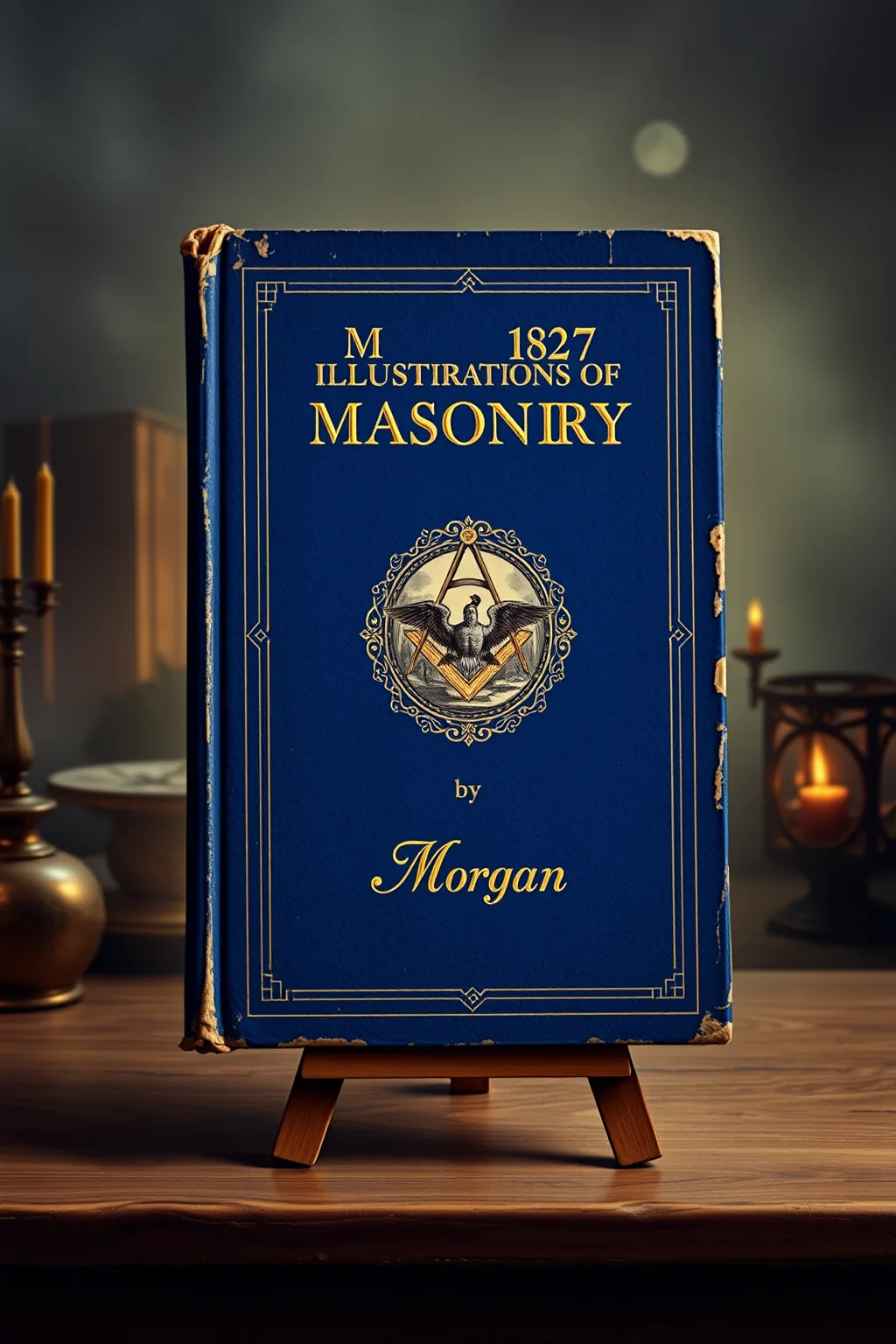
Morgan 1827 Illustrations Of Masonry nwo illuminati freemasons
 72
72

Morgan 1827 Illustrations Of Masonry nwo illuminati freemasons


'Morgan 1827 Illustrations Of Masonry' is a seminal work for anyone interested in the esoteric and occult aspects of Freemasonry. The book's detailed illustrations and descriptions provide a rare glimpse into the secret rituals and symbols of the Freemasons, making it an invaluable resource for modern esoteric seekers. The historical context provided in the text adds depth to the understanding of Freemasonry's influence and controversies. However, the book's controversial nature and the mysterious circumstances surrounding William Morgan's death add an element of intrigue that makes it even more compelling. For those looking to delve into the hidden world of secret societies, this book is a treasure trove of information. It is a 4-star read for its historical significance and esoteric value.
📝 Description
72
Morgan's 1827 Illustrations of Masonry details Masonic rituals and symbols, with a legend about its author's fate.
Published in 1827, Illustrations of Masonry presents an account of Freemasonry's rituals and symbolism. The anonymous author claims to reveal hidden knowledge within the fraternity. This text is notable for its alleged connection to the author's death shortly after publication, a story that adds to its mystique. The book attempts to illuminate the philosophical basis of Masonic practices and the deeper meanings behind its emblems. It aims to uncover the connections between ancient traditions and the mysteries associated with secret societies. The work addresses themes relevant to those interested in the occult and the history of groups like the Illuminati. It offers a specific perspective on the esoteric currents purportedly influencing the world.
Readers will find discussions on Masonic degrees, allegorical interpretations of common symbols such as the square and compasses, and catechisms that purportedly explain core tenets. The author frames these elements as keys to understanding a broader system of hidden wisdom. The text is presented as an initiation into some of these secrets, though its veracity and the author's true intentions remain subjects of speculation. It stands as a historical artifact from a period of intense interest in secret societies and their alleged influence.
This volume emerged during the early 19th century, a time when European secret societies, particularly Freemasonry and alleged offshoots like the Illuminati, were subjects of widespread fascination and suspicion. Works purporting to expose their inner workings often blended factual accounts with speculative interpretations and moralistic warnings. Illustrations of Masonry fits into this category of literature, aiming to demystify Masonic practices for a wider audience while simultaneously hinting at deeper, perhaps occult, layers of meaning. It reflects a broader cultural interest in hidden traditions and the perceived power structures associated with them.
💡 Why Read This Book?
Reading 'Morgan 1827 Illustrations Of Masonry' today offers a unique opportunity to explore the hidden world of Freemasonry and its influence on modern society. The book provides valuable insights into the symbolism and rituals of Freemasonry, making it an essential read for anyone interested in the occult and secret societies. Additionally, understanding the historical context and controversies surrounding Freemasonry can shed light on modern conspiracy theories and the alleged influence of the NWO and Illuminati.
⭐ Reader Reviews
Honest opinions from readers who have explored this book.
❓ Frequently Asked Questions
Who was William Morgan?
William Morgan was an American stonemason who claimed to have been initiated into Freemasonry. His book, 'Illustrations Of Masonry,' revealed the secrets of the fraternity, leading to his mysterious disappearance and presumed death.
What is the significance of the 1827 publication date?
The 1827 publication date is significant because it marked a pivotal moment in the history of Freemasonry, sparking public controversy and leading to increased scrutiny of the society's practices.
Are the illustrations in the book authentic?
The authenticity of the illustrations in 'Morgan 1827 Illustrations Of Masonry' is a subject of debate among historians and esoteric researchers. However, they provide a unique insight into the symbolism and rituals of Freemasonry as understood in the early 19th century.
🔮 Key Themes & Symbolism
Hidden Knowledge
Illustrations of Masonry reveals the hidden knowledge and rituals of Freemasonry, offering readers a glimpse into the esoteric traditions that have been guarded for centuries. The book looks at the philosophical and symbolic foundations of Freemasonry, exploring the deeper meanings behind its rituals and symbols.
Esoteric Symbolism
The book is rich in esoteric symbolism, providing detailed illustrations and explanations of the symbols used in Freemasonry. These symbols are not just decorative but carry deep philosophical and mystical meanings, revealing the hidden wisdom of the craft.
Philosophical Underpinnings
Illustrations of Masonry explores the philosophical underpinnings of Freemasonry, exploring the ancient traditions and modern mysteries that shape this secret society. The book offers readers a deeper understanding of the principles that guide Freemasons and the influence they have on the world.
💡 Key Ideas
Editorial paraphrase of the work's core concepts — not direct quotes.
The secrets of Freemasonry are not meant for the uninitiated.
This quote underscores the exclusivity and mystery surrounding Freemasonry, highlighting the importance of initiation and the guarding of hidden knowledge.
Symbols are the language of the gods.
This line emphasizes the mystical power of symbols in Freemasonry, suggesting that they hold divine wisdom and can reveal deeper truths to those who understand them.
The path to enlightenment is a journey through the labyrinth of the mind.
This quote hints at the philosophical and spiritual journey that Freemasons undertake, using esoteric rituals and symbols to guide them towards enlightenment.
The truth is hidden in plain sight.
This line suggests that the secrets of Freemasonry are not hidden away but are visible to those who know where to look, emphasizing the importance of esoteric knowledge and symbolism.
The mysteries of the craft are revealed to the worthy.
This quote underscores the importance of initiation and the guarding of hidden knowledge, suggesting that the secrets of Freemasonry are revealed only to those who are deemed worthy.
🌙 Esoteric Significance
Tradition
Illustrations of Masonry belongs to the Hermetic tradition, which emphasizes the study of hidden knowledge and the pursuit of spiritual enlightenment. The book draws on ancient Hermetic principles and symbolism to reveal the deeper meanings behind Freemasonry's rituals and symbols.
Symbolism
The book is rich in esoteric symbolism, with detailed illustrations and explanations of the symbols used in Freemasonry. These symbols carry deep philosophical and mystical meanings, revealing the hidden wisdom of the craft. Key symbols include the Square and Compasses, the All-Seeing Eye, and the Pyramid, each with its own esoteric significance.
Modern Relevance
Today, Illustrations of Masonry remains a valuable resource for those interested in the esoteric traditions of Freemasonry. It is studied by scholars of occult studies and practitioners of hidden arts, who use its insights to deepen their understanding of the mystical dimensions of Freemasonry. Modern practitioners often refer to this work when exploring the philosophical and symbolic foundations of the craft.
👥 Who Should Read This Book
Beginners may find this book challenging due to its depth and complexity, but those with some familiarity with Freemasonry will find it invaluable. Scholars of occult studies and practitioners of hidden arts will appreciate the esoteric insights and detailed illustrations. Spiritual seekers interested in the philosophical and symbolic foundations of Freemasonry will also benefit from this work. It is a must-read for anyone seeking to understand the mystical dimensions of secret societies.
📜 Historical Context
Published in 1827, Illustrations of Masonry emerged during a time when Freemasonry was both influential and controversial. The era was marked by political upheaval and social change, with secret societies playing a significant role in shaping the course of history. The book's publication was met with both fascination and fear, as it revealed the hidden rituals and symbols of Freemasonry to the public. Its influence can still be seen in modern esoteric literature, inspiring countless works on the occult and secret societies.
📔 Journal Prompts
How do the symbols in Illustrations of Masonry resonate with your own spiritual journey?
What are some of the hidden truths about Freemasonry that this book reveals?
How does the book's exploration of esoteric symbolism deepen your understanding of Freemasonry?
What philosophical principles guide the rituals and practices of Freemasonry, as described in this book?
How does the legend surrounding the book's publication influence your perception of its content?
🗂️ Glossary
Freemasonry
A secret society that focuses on moral and spiritual development through esoteric rituals and symbols.
Illuminati
A mysterious and powerful secret society often associated with Freemasonry, known for its influence on world events.
Esoteric Symbolism
Symbols that carry deep philosophical and mystical meanings, often used in secret societies to convey hidden knowledge.
Hermetic Tradition
A spiritual and philosophical tradition that emphasizes the study of hidden knowledge and the pursuit of spiritual enlightenment.
Secret Societies
Organizations that operate in secrecy, often with hidden rituals and symbols, and a focus on esoteric knowledge and spiritual development.
This book appears in 2 collections
🔮 Readers Also Liked
Browse all →






From the “Secret Societies” Collection
View all →





More Free Freemasonry & Secret Societies Books
View all →