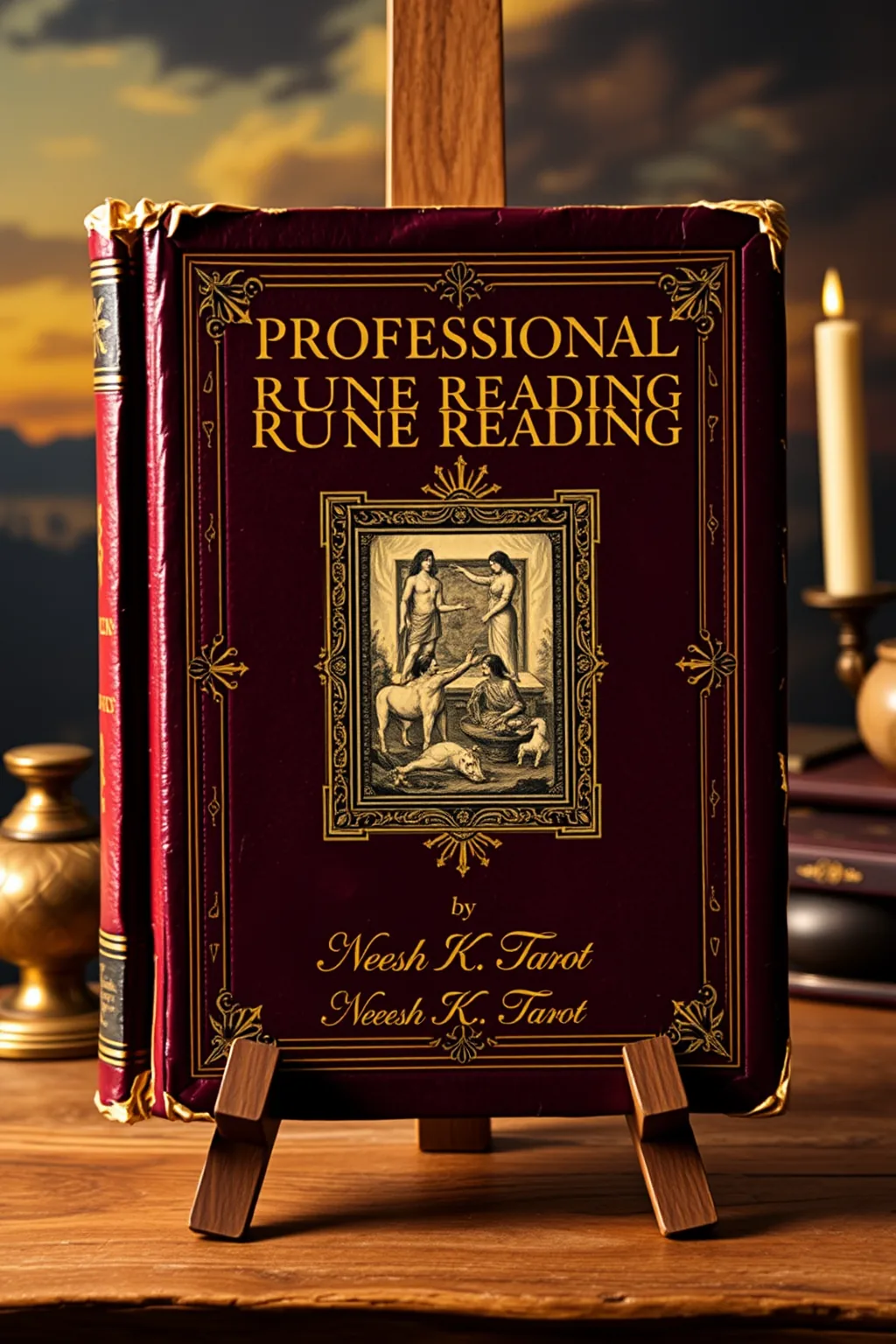
Professional Rune Reading Course
 75
75

Professional Rune Reading Course
Neesh K. Tarot's "Professional Rune Reading Course" attempts to demystify the Elder Futhark for the novice. The straightforward presentation of the 25 runes, their colors, and upright/reversed meanings is a clear strength. It avoids overly academic jargon, aiming for accessibility. However, the "course" feels more like a primer than a comprehensive guide. While it promises to build confidence for reading for others, the insights derived from "teachers and meditation process" remain largely unsubstantiated within the text itself. The inclusion of "II Om Namah Shivaya II" feels incongruous with the Germanic focus. A more detailed exploration of the specific meditative techniques or a deeper dive into historical rune lore beyond basic meanings would have elevated this work. It serves as a basic introduction but falls short of delivering a truly professional training.
📝 Description
75
This 2023 course details the 25 runes of the Elder Futhark alphabet.
Neesh K. Tarot's Professional Rune Reading Course breaks down the Elder Futhark, the oldest runic alphabet. It covers the individual meanings of all 25 runes, including their significance, associated colors, and the implications of reversed positions. The book aims to give readers the knowledge necessary to interpret runes for themselves and others.
The course is for people new to runic divination or those wanting to strengthen their knowledge. It is for aspiring practitioners who want to go beyond simple memorization and apply their learning confidently. The intended audience will use these readings for friends, family, and clients, suggesting a practical, community-focused learning goal.
Key concepts include the individual symbolism of each Elder Futhark rune, their upright and reversed meanings. Color associations and meditation are presented as aids for deeper insight. The course stresses building personal confidence and practical skills for applying runic knowledge in predictive or advisory readings, moving from theory to practice.
The Elder Futhark, central to this course, originated around the 2nd century CE with Germanic tribes. Its use continued through the Viking Age for writing, magic, and divination. Runic interpretation traditions have seen revivals, notably in the 19th and 20th centuries, influenced by figures like Guido von List and later New Age movements seeking connection with ancient Germanic spirituality.
💡 Why Read This Book?
• Gain foundational knowledge of the 25 runes of the Elder Futhark, including their color associations and reversed interpretations, enabling you to start personal divination. • Develop confidence in practical rune reading for friends, family, and clients by following a structured guide designed for aspiring practitioners. • Understand how personal meditation and insights from teachers, as outlined by Neesh K. Tarot, can be integrated into your runic practice to deepen interpretation.
⭐ Reader Reviews
Honest opinions from readers who have explored this book.
❓ Frequently Asked Questions
What is the Elder Futhark and how many runes does it contain in this course?
The Elder Futhark is the oldest runic alphabet used by Germanic tribes. Neesh K. Tarot's "Professional Rune Reading Course" focuses on 25 specific runes within this system, detailing their individual meanings and applications.
Does this course cover rune casting methods?
While the course focuses on understanding the meanings of the 25 runes, their colors, and reversals, it aims to build the confidence needed to start practicing readings. Specific casting methods are implied as part of this practice.
What is the significance of colors in Neesh K. Tarot's rune readings?
The "Professional Rune Reading Course" explains the significance of colors associated with each of the 25 runes. These color associations are presented as integral to a deeper understanding and interpretation of the runes' meanings.
Can I use this book to read runes for professional clients?
The book is designed to help readers gain the confidence to start practicing readings on their own, which includes reading for friends, family, and clients. It provides the foundational knowledge for such practice.
How does Neesh K. Tarot incorporate meditation into rune reading?
Neesh K. Tarot includes insights gained through personal meditation processes in this course. This suggests that meditative practices are considered a valuable tool for enhancing understanding and interpretation of the runes' symbolism.
What is the origin of the runes discussed in this course?
The runes discussed are from the Elder Futhark, the earliest form of the runic alphabet, which originated among Germanic peoples around the 2nd century CE and was used through the Viking Age.
🔮 Key Themes & Symbolism
Runic Alphabet Mastery
The core of this work lies in clarifying the 25 runes of the Elder Futhark. It moves beyond simple alphabetical listing to explore the nuanced significance of each symbol. Readers are guided through understanding not only the upright meaning but also the interpretive shifts that occur when a rune appears reversed. The association of specific colors with each rune adds another layer of symbolic depth, intended to enrich the divinatory process and offer a more holistic interpretation.
Developing Divinatory Confidence
This course emphasizes practical application and self-assurance in rune reading. It is structured to transition learners from passive study to active practice. By providing clear interpretations and encouraging personal engagement through meditation, the author aims to equip individuals with the skills and confidence necessary to perform readings for themselves, friends, family, and potentially clients, fostering a sense of empowerment in their esoteric pursuits.
Personalized Esoteric Practice
The text integrates personal insights derived from the author's teachers and meditation practices. This approach highlights the subjective element in esoteric work, suggesting that while foundational knowledge is crucial, personal connection and intuitive development are equally important. The inclusion of "II Om Namah Shivaya II" points towards a syncretic approach, blending Indic spiritual concepts with Germanic runic traditions for a unique interpretive framework.
Color Symbolism in Runes
Beyond the traditional phonetic and symbolic meanings, this course introduces the dimension of color association for each of the 25 runes. This adds a sensory and chromatic layer to runic interpretation, potentially linking rune meanings to emotional states, energetic frequencies, or elemental correspondences. Understanding these color significations is presented as a method to enhance the depth and accuracy of a rune reading.
💬 Memorable Quotes
Direct passages from the work, attributed to the author.
“understand the meanings of 25 runes and their colors, significance and reversals”
— This statement captures the book's core curriculum. It highlights the three primary facets of rune study presented: the fundamental meaning, the supplementary layer of color symbolism, and the crucial interpretive aspect of reversed positions.
“gain confidence to start practicing readings on your own”
— This expresses the practical outcome the course aims to deliver. It's about empowering the reader to move from theoretical knowledge to active, self-assured application in the art of divination.
“read your friends, family and clients”
— This indicates the intended scope of application for the skills taught. The course is geared towards practical use in interpersonal relationships and potentially professional contexts.
“jotted down insights with the help of teachers and my meditation process”
— This reveals the author's methodology, suggesting a blend of traditional learning (from teachers) and intuitive development (through meditation) as the source of the presented knowledge.
“II Om Namah Shivaya II”
— This Sanskrit mantra, often associated with Hindu traditions, suggests a personal spiritual framework that may influence or complement the author's approach to runic divination, indicating a potential syncretism.
🌙 Esoteric Significance
Tradition
This work aligns with contemporary esoteric practices focused on Germanic paganism and divination, specifically utilizing the Elder Futhark. While not strictly adhering to ancient sources, it draws from the modern revivalist interest in runes, often synthesized with broader New Age or personal spiritual development frameworks. The inclusion of the mantra "Om Namah Shivaya" suggests a potentially syncretic approach, blending Indic spiritual concepts with Germanic runic traditions.
Symbolism
The core symbolism revolves around the 25 runes of the Elder Futhark. Each rune is presented with its associated color and significance, including interpretations for reversed positions. This multi-layered approach to symbolism suggests that a complete reading involves considering the visual (color), semantic (meaning), and positional (upright/reversed) aspects of each rune, aiming for a richer, more nuanced divinatory outcome.
Modern Relevance
Contemporary practitioners of Heathenry, Asatru, and various forms of modern paganism often engage with the Elder Futhark for divination and spiritual guidance. This course's focus on practical application and personal confidence building appeals to individuals seeking accessible tools for self-exploration and connection to ancestral traditions within these modern spiritual movements.
👥 Who Should Read This Book
• Aspiring diviners seeking a structured introduction to runic interpretation, particularly those interested in the Elder Futhark system. • Individuals curious about practical applications of esoteric knowledge for personal insight and guidance in everyday life. • Students of comparative mythology or ancient European scripts looking for accessible primers on runic symbolism and its divinatory use.
📜 Historical Context
The "Professional Rune Reading Course" engages with the Elder Futhark, the earliest runic alphabet, which emerged among Germanic peoples around the 2nd century CE. Its use continued through the Migration Period and the Viking Age, serving as both a writing system and a tool for magical and divinatory practices. While Neesh K. Tarot's work is a modern interpretation first published in 2020, it taps into a long lineage of runic scholarship and practice. The 19th and 20th centuries saw significant revivals of interest in runes, influenced by figures like Guido von List and later by Theosophy and various occult revival movements. These periods often sought to reconnect with perceived ancient Germanic wisdom. This work appears within a contemporary landscape where such esoteric traditions are explored, sometimes alongside competing interpretations or academic skepticism regarding their historical accuracy.
📔 Journal Prompts
Reflect on the significance of the color associated with the rune Thurisaz.
Consider how the reversed meaning of Ansuz might manifest in your communication.
Explore the insights gained from meditation regarding the rune Uruz.
How does the concept of practicing readings for friends and family align with your personal goals?
Analyze the interplay between a rune's upright meaning and its potential reversed interpretation.
🗂️ Glossary
Elder Futhark
The earliest known runic alphabet, used by Germanic tribes from approximately the 2nd to the 8th centuries CE. It consists of 24 runes, though some interpretations and modern courses may include additional or variant forms.
Rune
A character from an ancient Germanic alphabet, each carrying symbolic meaning used historically for inscriptions and later for divination and magic.
Reversed Rune
A rune that appears upside down or sideways in a reading. Its interpretation often signifies a blocked, delayed, challenging, or contrary aspect of the rune's primary meaning.
Significance
In the context of rune reading, this refers to the deeper symbolic meaning, predictive quality, or advisory counsel that each individual rune conveys.
Color Association
The practice of linking specific colors to each rune, believed to enhance understanding by adding layers of energetic or symbolic meaning related to the color's traditional associations.
Divination
The practice of seeking knowledge of the future or the unknown by supernatural means, such as interpreting the positions and meanings of runes.
Meditation Process
A practice of focused contemplation or mindfulness used to achieve mental clarity, emotional calm, and insight, employed here as a tool for understanding rune meanings.