The Camel Club
 81
81

The Camel Club
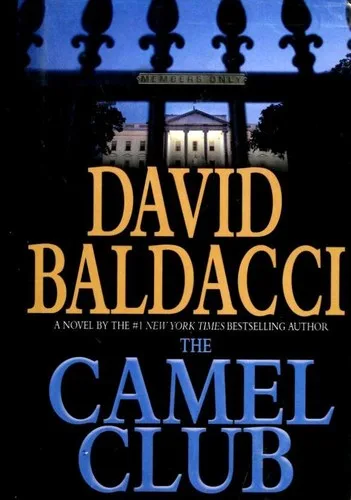
Baldacci’s The Camel Club presents a compelling premise: a secret society of civilians dedicated to uncovering governmental malfeasance. The strength of the novel lies in its intricate plotting and the palpable sense of urgency Baldacci generates as the Camel Club unravels a complex conspiracy. The characterization, while functional for the thriller genre, occasionally leans towards archetypes, particularly with the shadowy figures pulling strings from behind the scenes. A particularly effective sequence involves the club’s early, almost accidental, discovery of the initial murder and their subsequent, cautious efforts to gather evidence. The limitation, however, is a predictable trajectory in certain subplots, where the antagonists’ motives become apparent sooner than the narrative intends. Despite this, the novel delivers a satisfyingly complex puzzle for the armchair detective. It’s a solid entry for those who enjoy conspiracies served with a side of political intrigue.
📝 Description
81
David Baldacci's The Camel Club debuted in 2017, following a group of citizens disillusioned with government accountability.
The Camel Club, published in 2017, introduces a secret organization of ordinary citizens who band together due to their shared distrust of government accountability. They operate from the shadows, observing perceived injustices and conspiracies. Using their combined skills, they aim to bring hidden truths into the open. The story follows their investigation into a string of murders that pose a threat to national security.
This novel is for readers who enjoy complex plots, suspenseful pacing, and characters who operate outside of official channels. It will attract those interested in political thrillers that address themes of power, corruption, and the unconventional pursuit of justice. Readers drawn to conspiracy narratives and the dynamics of secret societies will find the book engaging.
Emerging in 2017, The Camel Club arrived during a time of public discussion about government transparency and the influence of special interests. The novel taps into a tradition of thriller fiction that looks at the hidden workings of power. Baldacci's work echoes authors like John le Carré and Tom Clancy, though he often focuses on contemporary threats within the United States. The book questions the effectiveness of official institutions and the role of citizen activism.
💡 Why Read This Book?
• Gain an understanding of clandestine citizen action by examining the Camel Club's methods for investigating the 2017 murder, illustrating proactive truth-seeking outside official channels. • Experience the tension of navigating institutional corruption through the club's strategic pursuit of evidence, highlighting the challenges of exposing hidden agendas. • Appreciate Baldacci's exploration of accountability by observing how the Camel Club operates, offering a fictional perspective on the power dynamics between citizens and government.
⭐ Reader Reviews
Honest opinions from readers who have explored this book.
❓ Frequently Asked Questions
What is the primary goal of the Camel Club in David Baldacci's 2017 novel?
The Camel Club's primary goal is to expose truth and hold those in power accountable, operating outside official channels to investigate conspiracies and perceived injustices.
Who are the main characters in The Camel Club?
The core members include Alex Ford, the reluctant leader, and other individuals with unique skills who form the clandestine group dedicated to truth-seeking.
What kind of threats does the Camel Club typically investigate?
They investigate threats related to government corruption, conspiracies, and high-profile crimes where official investigations may be compromised or inadequate.
When was The Camel Club first published?
The novel The Camel Club by David Baldacci was first published in 2017.
Does The Camel Club involve supernatural elements?
No, The Camel Club is a political thriller focusing on realistic conspiracies and investigations, not supernatural or esoteric themes.
What makes the Camel Club unique compared to other fictional groups?
Their uniqueness lies in their status as ordinary citizens from diverse backgrounds who unite their skills for a common cause of uncovering hidden truths.
🔮 Key Themes & Symbolism
Citizen Vigilance and Accountability
The core of The Camel Club revolves around the concept of ordinary citizens taking it upon themselves to ensure governmental and institutional accountability. The group, formed by individuals disillusioned with the status quo, actively seeks out truths that official channels either miss or deliberately obscure. This theme questions the traditional reliance on established authorities and posits that informed, organized civilian action can serve as a crucial check on power, particularly in the face of complex, high-stakes conspiracies prevalent in the 2017 publication landscape.
The Power of Information
In Baldacci's narrative, the strategic acquisition, analysis, and dissemination of information are paramount. The Camel Club's effectiveness hinges on its members' ability to gather intelligence, connect disparate facts, and leverage this knowledge to expose wrongdoing. This highlights the modern relevance of information warfare and the critical role of data in challenging established narratives, a concept amplified in the digital age of 2017 where information flows rapidly but can also be easily manipulated.
Moral Ambiguity in Pursuit of Justice
The novel looks at the ethical tightrope walked by the Camel Club. While their intentions are noble—seeking truth and justice—their methods often operate in a gray area, involving surveillance, subterfuge, and actions that skirt legality. This exploration of moral ambiguity forces readers to consider whether the ends justify the means when confronting powerful, potentially corrupt entities, a perennial question in thriller fiction and political discourse.
The Disillusioned Citizen
The formation of the Camel Club is a direct response to widespread public disillusionment with political systems and official narratives. The characters represent a segment of society that feels unheard and disenfranchised, leading them to create their own mechanisms for redress. This theme taps into the sentiment of civic disengagement and the subsequent rise of alternative forms of activism or investigation that gained traction around the mid-2010s.
💬 Memorable Quotes
Direct passages from the work, attributed to the author.
“There are always people who are willing to do what needs to be done.”
— This statement underscores the novel's central theme of citizen initiative. It suggests that even within a system that may seem apathetic or corrupt, there exist individuals motivated to act for the greater good, often outside conventional frameworks.
“They were the watchers, the listeners, the ones who noticed.”
— This describes the essence of the Camel Club members. Their strength lies not in overt power, but in their keen observation skills and their dedication to paying attention to details others overlook.
“Justice isn't always served by the law.”
— This interpretation highlights the novel's exploration of the limitations of the legal system. It suggests that sometimes, achieving true justice requires actions that transcend or operate parallel to formal legal structures.
“Ordinary people can do extraordinary things when they unite.”
— This reflects the foundational principle of the Camel Club. It posits that collective action, drawing on diverse skills and shared purpose, can empower average individuals to achieve significant outcomes.
💡 Key Ideas
Editorial paraphrase of the work's core concepts — not direct quotes.
The truth is out there, but it’s not going to come to you.
This paraphrased concept emphasizes the proactive nature of the Camel Club's mission. It implies that uncovering hidden truths requires active pursuit and diligent investigation, rather than passive waiting for revelations.
🌙 Esoteric Significance
Tradition
While not overtly esoteric, The Camel Club engages with themes that resonate with certain clandestine traditions, particularly those focused on hidden knowledge and societal critique. It reflects the Gnostic impulse to uncover a hidden truth behind a perceived illusion of worldly power structures. The group's operations, shrouded in secrecy and driven by a desire to expose a 'deeper reality' of corruption, parallel the methods of secret societies that believe in a higher form of knowledge accessible only to initiates who question the status quo.
Symbolism
The 'Camel Club' itself can be interpreted symbolically. Camels are known for their endurance and ability to traverse harsh, seemingly barren landscapes – a metaphor for the arduous and often thankless task of uncovering difficult truths. The club's clandestine meetings and operations symbolize the hidden nature of true knowledge, which often operates unseen beneath the surface of everyday events. Their pursuit of 'truth' acts as a guiding star, akin to a sacred quest for enlightenment.
Modern Relevance
In the contemporary landscape, particularly post-2017, The Camel Club's themes of citizen-led investigation and skepticism towards official narratives remain highly relevant. Thinkers and activists exploring topics of disinformation, government accountability, and the power of decentralized networks can find parallels in the club's methods. It speaks to modern concerns about surveillance capitalism and the need for critical engagement with information presented by powerful institutions, making its fictional exploration of these dynamics pertinent to current societal dialogues.
👥 Who Should Read This Book
• Students of political thrillers who appreciate intricate plots and the exploration of governmental intrigue, particularly those interested in narratives published around 2017. • Readers fascinated by secret societies and citizen-led movements seeking to challenge established power structures, offering a fictional case study in organized activism. • Individuals interested in the concept of information as a tool for accountability, examining how knowledge can be leveraged to expose corruption.
📜 Historical Context
David Baldacci's The Camel Club, published in 2017, arrived at a time of significant public scrutiny regarding government transparency and the influence of powerful entities. The novel taps into a prevailing atmosphere of skepticism towards official narratives, a sentiment amplified by political shifts and the pervasive nature of digital information dissemination. This period saw a resurgence of interest in conspiracy thrillers that questioned authority, a genre historically explored by authors like Robert Ludlum and more recently by contemporary writers. While Baldacci focuses on domestic political intrigue, his work aligns with a broader cultural moment that demanded greater accountability from public figures. The reception of such thrillers in 2017 often reflected ongoing debates about national security versus civil liberties, making Baldacci's exploration of a clandestine group challenging the status quo particularly resonant. The novel implicitly engages with the idea that citizen vigilance is a necessary counterpoint to potential governmental overreach.
📔 Journal Prompts
The Camel Club's methods for uncovering hidden truths.
Alex Ford's evolving role as leader within the clandestine group.
The symbolic significance of the 'Camel Club' name.
The ethical considerations of operating outside legal frameworks.
Parallels between the club's mission and contemporary citizen activism.
🗂️ Glossary
Camel Club
A clandestine group of ordinary citizens who unite to investigate conspiracies and expose corruption, operating outside official channels.
Accountability
The obligation of individuals or institutions to take responsibility for their actions and decisions, a central pursuit of the Camel Club.
Conspiracy
A secret plan by a group to do something unlawful or harmful, which the Camel Club seeks to uncover.
Disillusionment
A feeling of disappointment resulting from the discovery that something is not as good as it was believed to be, motivating the club's formation.
Vigilantism
The exercise of a function or power that belongs to someone else, often in pursuit of justice, a method sometimes employed by the club.
Information Broker
An individual or entity that collects and sells information, a role some characters may embody or interact with.
Oversight
Supervision or close observation, a function the Camel Club attempts to perform regarding governmental actions.
🔮 Readers Also Liked
Browse all →








More by David Baldacci
All books →





More Free Occult Philosophy Books
View all →