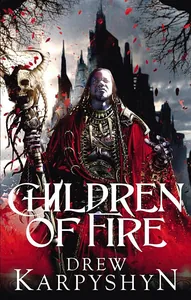
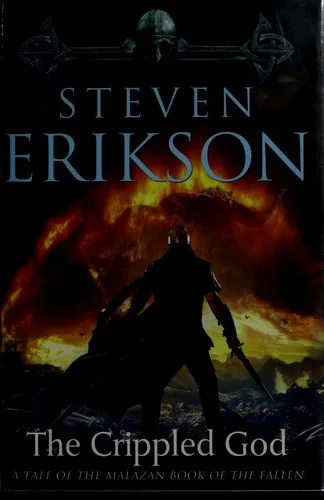
The crippled god

 83
83

The crippled god
The culmination of a decade-long saga, "The Crippled God" faces the daunting task of providing a satisfying end to the Malazan Book of the Fallen. Erikson succeeds admirably, delivering a conclusion that is both epic in scale and intensely personal for its vast ensemble of characters. The novel’s strength lies in its ability to tie together disparate plotlines from the previous nine volumes, offering poignant resolutions for many long-suffering figures. However, the sheer density of the narrative, a hallmark of the series, can still feel overwhelming, particularly for readers less invested in the minutiae of the Malazan world. A standout element is the poignant arc of certain characters facing their ultimate destinies, such as the poignant depiction of(["the Jaghut's struggle against inevitable fate"], "interpretation": "The Jaghut, an ancient and powerful race, are often depicted as burdened by their immense lifespans and a deep-seated weariness with existence. Their struggle against the inevitable march of time and the perceived futility of their efforts is a recurring motif, representing a profound existential conflict within the series."). The book does not shy away from the immense cost of peace and the sacrifices required to reshape the divine order. It's a powerful, if demanding, finale.
📝 Description
83
Steven Erikson's 2012 novel, The Crippled God, concludes the Malazan Book of the Fallen epic.
The tenth and final novel in Steven Erikson's Malazan Book of the Fallen series, The Crippled God, published in 2012, brings the sprawling narrative begun with Gardens of the Moon in 1999 to a close. This work is known for its vast scope, complex character motivations, and a dense plot. The story frequently examines war, faith, sacrifice, and the nature of divinity.
This volume is intended for readers who have followed the Malazan Empire's saga through the previous nine books. It assumes a deep understanding of the world, its history, magic systems like the Warrens, and its inhabitants, including ascendants, gods, and mortals. Readers will find resolutions to long-standing plotlines and character arcs here.
Published in 2012, The Crippled God stands apart from conventional fantasy with its grimdark elements and philosophical depth. Its intricate world building and morally complex situations have influenced subsequent expansive fantasy works. The narrative centers on the titular Crippled God, a deity whose power is diminishing, and explores divine intervention in mortal affairs.
The Malazan Book of the Fallen, and The Crippled God specifically, draws on a wide array of philosophical and religious traditions, presenting a complex cosmology. It engages with concepts of power, fate, and the relationship between deities and mortals, often portraying gods as flawed and subject to their own struggles. The series questions established notions of heroism and divinity, reflecting a tradition that probes the darker, more ambiguous aspects of existence and power structures. Its approach to magic, known as Warrens, suggests a structured yet often chaotic metaphysical reality that characters must learn to manipulate.
💡 Why Read This Book?
• Gain closure on the sprawling Malazan narrative, understanding the ultimate fates of characters like the "Tiste Edi" and the "Shake" as their long-simmering conflicts reach their apex. • Experience the complex philosophical exploration of divine responsibility and mortal agency, particularly how the "Crippled God's" actions impact the mortal realm. • Witness Erikson's unique brand of epic fantasy conclusion, where immense battles are intertwined with deeply personal character moments and the consequences of actions spanning "1999" to "2012."
⭐ Reader Reviews
Honest opinions from readers who have explored this book.
❓ Frequently Asked Questions
Is "The Crippled God" a good starting point for Steven Erikson's Malazan series?
Absolutely not. "The Crippled God" is the tenth and final book in the Malazan Book of the Fallen series, which began with "Gardens of the Moon" in 1999. Reading it without the preceding nine novels would be disorienting and spoil the overarching narrative.
What are the main themes explored in "The Crippled God"?
The novel delves into themes of divinity, sacrifice, the nature of power, faith, and the complex relationship between gods and mortals. It examines the consequences of divine intervention and the personal cost of achieving ultimate freedom or enacting change.
How does "The Crippled God" conclude the Malazan series?
It provides resolutions to numerous long-standing plot threads and character arcs that have developed over the previous nine books. The narrative brings the overarching conflict involving the gods and ascendants to a head, offering a definitive conclusion to the epic.
What is the role of the "Crippled God" in the book?
The "Crippled God" is a central figure whose weakening influence and machinations drive much of the plot. The book explores his history, his suffering, and his ultimate impact on the world and its inhabitants, questioning the nature of divinity itself.
Is "The Crippled God" similar to other epic fantasy novels?
While it shares the epic scope of many fantasy series, Erikson's work is distinct for its philosophical depth, moral ambiguity, and complex, often bleak, portrayal of war and its consequences. It demands significant reader engagement with its intricate world and history.
What kind of magic system does "The Crippled God" feature?
The series utilizes a magic system known as Warrens, which are essentially conduits of different types of power. "The Crippled God" features various forms of magic, including sorcery, divine power wielded by ascendants and gods, and unique abilities possessed by ancient races.
🔮 Key Themes & Symbolism
The Nature of Divinity
The novel critically examines the concept of gods, their power, and their relationship with mortals. It questions whether divinity inherently brings wisdom or merely amplifies existing traits like cruelty or indifference. The suffering and perceived weakness of the "Crippled God" serve as a focal point, challenging traditional notions of divine omnipotence and benevolence. The narrative explores the immense cost of divine intervention and the ethical implications of gods manipulating mortal lives for their own ends, suggesting a complex interplay of fate and free will.
Sacrifice and Redemption
Sacrifice, in its myriad forms, is a pervasive theme. Characters repeatedly face choices that demand immense personal loss – lives, loved ones, their very identities – for the sake of a greater cause or the freedom of others. This theme extends to the divine realm, where gods themselves make sacrifices or endure suffering. The concept of redemption is explored not as a simple absolution, but as a hard-won state achieved through enduring hardship and making difficult, often morally grey, decisions that impact entire civilizations.
The Weight of Empire and History
Erikson masterfully depicts the crushing burden of empire, not just on the conquered, but on the conquerors and the very fabric of society. The novel revisits the vast history of the Malazan world, showing how ancient conflicts, past betrayals, and the rise and fall of civilizations cast long shadows. The characters are often defined by their lineage, their past actions, and the historical forces they are caught within, illustrating how history is not merely a backdrop but an active, shaping element of the present.
Compassion and Empathy
Amidst the brutal warfare and divine machinations, moments of profound compassion and empathy emerge as critical forces. The novel suggests that true strength lies not solely in power or might, but in the capacity for understanding and shared suffering. This theme is particularly evident in the interactions between characters from vastly different backgrounds and species, highlighting the potential for connection and mutual respect even in the most dire circumstances. It acts as a counterpoint to the often cynical and brutal realities of the Malazan world.
💬 Memorable Quotes
Direct passages from the work, attributed to the author.
“The greatest cruelty of the gods is their indifference.”
— This statement expresses a central critique of divinity within the series. It suggests that the gods' detached observation of mortal suffering, or their prioritization of their own cosmic games over mortal lives, constitutes a profound form of cruelty, highlighting the painful disconnect between divine power and human experience.
“Freedom is bought with blood, always.”
— This reflects the harsh reality of the Malazan world, where significant change and liberation are rarely achieved without immense violence and sacrifice. It underscores the high cost of achieving any meaningful autonomy, whether for individuals, nations, or even the gods themselves.
“To rule is to serve, and to serve is to suffer.”
— This highlights the paradoxical nature of power as depicted in the series. True leadership, especially on a divine or imperial scale, involves immense responsibility and personal burden, implying that power is not liberation but a form of profound, often agonizing, service.
“Even the smallest act of kindness can alter the course of history.”
— This interpretation emphasizes the significance of individual agency and compassion within the grand, often deterministic, sweep of the Malazan narrative. It suggests that seemingly minor acts of empathy can have far-reaching consequences, offering a glimmer of hope against overwhelming forces.
💡 Key Ideas
Editorial paraphrase of the work's core concepts — not direct quotes.
The crippled god is not the only one who suffers.
This paraphrased concept points to the universal nature of suffering within the narrative. It suggests that even the most powerful beings, like the titular god, experience pain, and that this shared vulnerability connects all beings, emphasizing empathy across disparate existences.
🌙 Esoteric Significance
Tradition
While not adhering strictly to a single established esoteric tradition, Erikson's work draws heavily from Gnostic and Hermetic concepts, particularly concerning the nature of a flawed or suffering creator/divinity and the struggle against oppressive cosmic powers. The idea of the "Crippled God" can be seen as a reimagining of the Demiurge or a fallen deity, whose suffering and limitations are central to the narrative's cosmology. The complex system of Warrens also hints at magical traditions that channel specific elemental or conceptual forces, akin to Qabbalistic paths or elemental magic.
Symbolism
The "Crippled God" himself is a potent symbol of suffering, limitation, and the corrupting nature of power. His physical and spiritual "crippledness" represents a divine entity trapped and diminished by the very system of power he once commanded. Another key symbol is the concept of "Warrens," which represent distinct magical or conceptual realms. These can be interpreted as analogous to different planes of existence or fundamental forces that can be accessed and manipulated, reflecting esoteric ideas about the structure of reality and the manipulation of unseen energies.
Modern Relevance
Contemporary thinkers and practitioners interested in deconstructing traditional religious narratives and exploring the complexities of divine-malevolence or divine suffering find resonance in Erikson's work. His nuanced portrayal of gods and ascendants as beings with flaws, motivations, and immense burdens offers a modern, often secularized, lens through which to examine theological concepts. The series' exploration of power dynamics, societal collapse, and the endurance of the human (and non-human) spirit continues to influence discussions on resilience and ethical leadership in speculative fiction.
👥 Who Should Read This Book
• Long-time fans of the Malazan Book of the Fallen series seeking the definitive conclusion to its intricate narrative threads and character arcs. • Readers of epic fantasy who appreciate vast world-building, complex moral ambiguity, and philosophical explorations of power, divinity, and sacrifice. • Those interested in deconstructions of traditional mythologies and divine figures, looking for a modern, challenging take on the relationship between gods and mortals.
📜 Historical Context
Steven Erikson's "The Crippled God," published in 2012, arrived as the Malazan Book of the Fallen series reached its ambitious conclusion. The series, which began in 1999 with "Gardens of the Moon," was notable for its departure from traditional epic fantasy tropes. While authors like George R.R. Martin were popularizing grittier, character-focused narratives, Erikson's work stood out for its immense scale, intricate mythology, and philosophical depth, often drawing comparisons to classical epics. The series engaged with themes of war, empire, and the nature of divinity in ways that were more complex and often bleaker than many contemporaries. Its reception was initially niche but grew into a devoted following, appreciating its challenging narrative structure and morally ambiguous characters. Unlike more politically driven fantasy, Erikson consistently foregrounded the consequences of divine action and the weariness of immortal beings, setting it apart in the crowded fantasy range of the early 21st century.
📔 Journal Prompts
The nature of the "Crippled God's" suffering and its cosmic implications.
The personal sacrifices demanded by the pursuit of freedom for the "Tiste Edi."
Reflecting on the cyclical nature of war and empire as depicted in the Shattered Sea.
The burden of leadership carried by characters like "Kalam" and "Quick Ben."
The concept of compassion as a force against overwhelming divine indifference.
🗂️ Glossary
Warren
A conduit or area of magical energy in the Malazan world. Different Warrens channel distinct types of power, and mages, known as sorcerers, draw upon them to cast spells. Examples include Telmarine, Rashan, and Kurald Galain.
Ascendant
A mortal who has achieved immense power, often through magical means or by conquering a throne on a specific continent or realm, thereby gaining god-like status and influence. They are often locked in cosmic power struggles.
Tiste Edi
One of the ancient, powerful races within the Malazan world, known for their distinctive appearance and their long-standing conflicts and history involving other races and the ascendants.
Jaghut
An ancient and immensely powerful race, known for their primal strength and often their connection to ice and elemental forces. They are among the oldest inhabitants of the Malazan world and possess long lifespans and unique abilities.
Kurald Galain
A specific Warren associated with darkness and the Tiste Edi. It is a powerful and often dangerous source of magic, integral to the history and conflicts of several major characters and races within the series.
The Crippled God
A central, powerful deity whose immense suffering and diminished power drive much of the plot. His story explores themes of divine pain, the corrupting nature of power, and his complex relationship with the mortal realm.
Shake
A race of beings who possess the ability to manipulate blood magic and are often depicted as having a deep connection to the sea and its currents. Their history is intertwined with the larger conflicts of the Malazan world.
🔮 Readers Also Liked
Browse all →






More by Steven Erikson
All books →




More Free Magic & Ritual Books
View all →