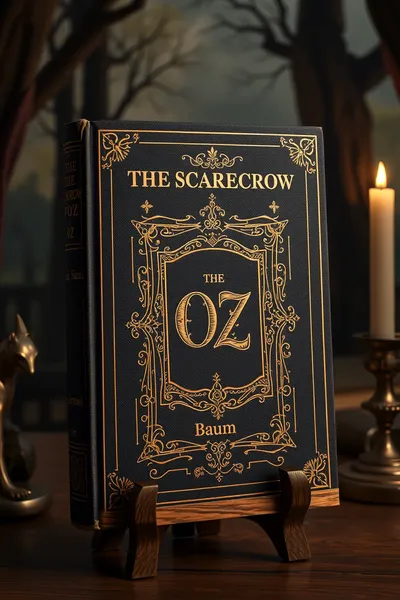
The Calling

 72
72

The Calling
Gonzalo S. Rey’s *The Calling* presents a compelling narrative of spiritual awakening, skillfully embedding its core message within a 13th-century setting. The work's strength lies in its evocative prose, which renders the protagonist’s internal journey as vividly as the external historical landscape. A particularly striking element is the exploration of how societal structures and spiritual seeking can both conflict and converge, as seen in the protagonist’s initial struggles with established doctrines. However, the pacing occasionally falters, particularly in the mid-section, where the narrative momentum seems to decelerate, perhaps in an attempt to deepen philosophical contemplation. Despite this, the novel’s ultimate trajectory towards inner freedom is powerfully conveyed, offering a luminous portrayal of transcendence. It is a significant contribution to esoteric fiction, rewarding patient readers with its spiritual depth.
📝 Description
72
Gonzalo S. Rey's 2023 novel, The Calling, traces a protagonist's spiritual awakening against a 13th-century backdrop.
The Calling, by Gonzalo S. Rey, is a novel set in the 13th century that follows a protagonist's quest for inner freedom. The story blends historical detail with explorations of spiritual themes. It aims to engage readers who seek narratives that move beyond the ordinary, touching on themes of knowledge, love, and the human desire for transcendence. The book connects historical settings with personal spiritual journeys.
The narrative is firmly rooted in the 13th century, a time of notable intellectual and spiritual changes, including the growth of scholasticism and various mystical traditions. The story reflects this period's search for meaning and a connection to the divine. Core concepts within The Calling include spiritual liberation, the definition of true knowledge, and the path toward inner peace. These ideas are developed through the protagonist's transformative experiences and interactions within the novel's historical context.
The novel is set in the 13th century, a period marked by significant intellectual and spiritual currents. This era saw the rise of scholasticism alongside various mystical movements, such as those within the Franciscan tradition and Catharism, all grappling with questions of divine connection and the nature of reality. The Calling reflects this historical search for meaning, situating its protagonist's journey within the philosophical and spiritual debates of the time.
💡 Why Read This Book?
• Discover the 13th-century context of spiritual seeking, understanding how figures like the protagonist grappled with established doctrines during an era of intellectual ferment. • Experience the novel's unique blend of historical narrative and spiritual allegory, learning how Rey uses the past to illuminate contemporary paths to inner freedom. • Explore the concept of 'spiritual awakening' as depicted through the protagonist's specific trials and illuminations, offering a concrete model for personal growth.
⭐ Reader Reviews
Honest opinions from readers who have explored this book.
❓ Frequently Asked Questions
What historical period does 'The Calling' take place in?
The novel is set in the 13th century, a dynamic period in European history known for significant intellectual and religious developments, including the flourishing of scholasticism and various esoteric movements.
Is 'The Calling' based on any real historical figures or events?
While 'The Calling' is a work of fiction, it is deeply informed by the spiritual and intellectual currents of the 13th century, drawing inspiration from the historical milieu rather than specific individuals.
What is the central theme of 'The Calling'?
The central theme is spiritual awakening and the pursuit of inner freedom. The narrative explores the journey towards transcendence, knowledge, and a deeper understanding of life's meaning.
Who is the author, Gonzalo S. Rey?
Gonzalo S. Rey is the author of 'The Calling,' a novel first published on September 27, 2017. His work often explores spiritual and philosophical themes within narrative structures.
What kind of reader would enjoy 'The Calling'?
Readers interested in historical fiction with a strong spiritual or philosophical component, those seeking narratives about personal transformation, and individuals drawn to the esoteric traditions will find 'The Calling' engaging.
Where can I find more information about books like 'The Calling'?
Esoteric Library offers a curated collection of mystical, occult, and metaphysical literature, providing context and further reading for works that explore spiritual awakening and esoteric philosophy.
🔮 Key Themes & Symbolism
Spiritual Awakening
The novel meticulously details the process of spiritual awakening, moving beyond simple enlightenment to depict a profound transformation of consciousness. It illustrates how external events and internal contemplation, particularly within the structured environment of the 13th century, can catalyze a shift towards higher awareness. The protagonist’s journey highlights the challenges and illuminations that accompany the shedding of old paradigms and the embrace of a more luminous understanding of existence.
The Path to Inner Freedom
Central to 'The Calling' is the exploration of true inner freedom, which is presented not as an escape from the world, but as a state of being achieved through knowledge and self-realization. The narrative suggests that liberation is found by understanding the deeper currents of existence and aligning oneself with them, even amidst the historical and social constraints of the 13th century. This freedom is depicted as a profound integration of the self with the universal.
Knowledge and Transcendence
The pursuit of knowledge serves as a primary vehicle for transcendence in the novel. It is not mere intellectual accumulation but a form of gnosis—a direct, experiential understanding of reality. The protagonist's quest involves seeking this deeper knowledge, which ultimately enables a connection to something greater than the self. This theme is interwoven with the historical context, suggesting that the yearning for transcendent understanding is a constant across ages.
Love as a Spiritual Force
Beyond romantic or familial affection, the novel presents love as a fundamental spiritual force that guides and transforms. This expansive love is depicted as a key component of spiritual maturity and a catalyst for understanding the interconnectedness of all things. The protagonist’s experiences with this force are crucial in their journey towards liberation and a more profound engagement with life.
💬 Memorable Quotes
Direct passages from the work, attributed to the author.
“The longing for transcendence is woven into the fabric of existence.”
— This statement captures the novel's core premise: that the human spirit possesses an innate drive towards something beyond the material and mundane, a fundamental yearning present in all eras, including the 13th century.
“True knowledge is not found in dogma, but in the luminous silence of the soul.”
— This highlights a key esoteric concept within the book: that authentic spiritual understanding comes from inner experience and direct perception, rather than adherence to external doctrines or established teachings.
“Freedom is the recognition of one's true nature, unbound by the illusions of the world.”
— This interpretation emphasizes that liberation is an internal state, achieved through self-awareness and the discernment of reality from Maya, or illusion, irrespective of external circumstances.
“Every soul carries a unique calling, a whisper of divine purpose.”
— This suggests a belief in individual destiny and a sacred mission unique to each person, a concept central to many spiritual traditions and the driving force behind the protagonist's journey.
“The path to light is often illuminated by the shadows we confront.”
— This aphorism speaks to the necessity of facing personal challenges and inner darkness as integral steps in the process of spiritual growth and achieving enlightenment.
🌙 Esoteric Significance
Tradition
The work draws implicitly from Gnostic and Hermetic traditions, emphasizing the pursuit of inner knowledge (gnosis) as the path to liberation from material illusion and spiritual awakening. It aligns with the Hermetic principle of 'As Above, So Below,' suggesting a correspondence between the inner spiritual realm and the outer manifest world. The narrative departs from rigid dogmatism, favoring a personal, experiential approach to spiritual truth, characteristic of many mystical lineages that emphasize direct communion with the divine.
Symbolism
The 'Calling' itself functions as a primary symbol, representing the soul's innate drive towards its divine origin or higher purpose. Light and darkness are recurrent motifs, symbolizing spiritual illumination versus ignorance or material bondage. The journey motif, embedded within the 13th-century setting, symbolizes the arduous but necessary path of self-discovery and the shedding of egoic limitations to achieve spiritual freedom.
Modern Relevance
In contemporary spirituality, *The Calling* speaks to the resurgence of interest in personal sovereignty and direct spiritual experience, moving away from institutionalized religion. Thinkers and practitioners exploring consciousness studies, mindfulness, and esoteric philosophy find resonance in its depiction of the inner journey. Its themes are relevant to modern seekers who feel a similar 'calling' amidst the complexities of the 21st century, offering a historical perspective on the enduring human quest for meaning and transcendence.
👥 Who Should Read This Book
• Readers interested in historical fiction that studies spiritual and philosophical themes, particularly those drawn to the medieval period and its intellectual currents. • Individuals on a personal spiritual quest seeking narratives that explore awakening, inner freedom, and the nature of knowledge from a non-dogmatic perspective. • Students of comparative religion and esoteric studies looking for fictional explorations of universal spiritual concepts within a specific historical context.
📜 Historical Context
Gonzalo S. Rey’s *The Calling* is situated within the rich intellectual and spiritual milieu of the 13th century. This era witnessed the height of Scholasticism, with figures like Thomas Aquinas seeking to synthesize faith and reason. Simultaneously, diverse mystical traditions, including Beguines and Cathars, flourished, often challenging established ecclesiastical authority. The novel engages with this dynamic tension, exploring how individuals sought spiritual truth outside rigid structures. The 13th century also saw the rise of courtly love traditions and burgeoning trade routes, elements that subtly inform the novel's adventurous spirit. While not directly referencing specific contemporaries like Dante Alighieri, whose *Divine Comedy* would later explore similar themes of spiritual journey, Rey taps into the era's pervasive search for meaning and divine connection. The reception of such narratives in the 21st century often reflects a contemporary hunger for spiritual depth that appeals to historical quests.
📔 Journal Prompts
The protagonist's 'Calling': Reflect on moments when you felt a distinct inner summons towards a particular path or purpose.
Spiritual awakening as depicted in the 13th century: How do the challenges faced by the character mirror contemporary struggles with spiritual growth?
The concept of inner freedom: Identify one illusion from the novel's context that still holds sway in modern life.
The pursuit of knowledge: Consider how the novel contrasts intellectual learning with experiential wisdom.
Love as a transformative force: Explore how acts of compassion or profound connection in the book contribute to spiritual progress.
🗂️ Glossary
Spiritual Awakening
A profound shift in consciousness involving increased awareness, insight, and a deeper connection to one's true self or the divine, often marked by a reevaluation of life's purpose.
Inner Freedom
A state of liberation achieved through self-understanding and detachment from external conditioning, societal expectations, and internal limitations, leading to authentic self-expression.
Transcendence
The state or quality of surpassing ordinary limits or expectations; in a spiritual context, it refers to rising above the material world and achieving a higher state of consciousness or union with the divine.
Gnosis
Knowledge, particularly intuitive or spiritual insight, often associated with Gnostic traditions, believed to lead to salvation or liberation from the material world.
Esoteric
Intended for or likely to be understood by only a small number of people with a specialized knowledge or interest; relating to occult inner meanings.
Dogma
A principle or set of principles laid down by an authority as incontrovertibly true, often associated with religious or political systems.
The Calling
The central theme of the novel, representing an individual's innate spiritual imperative or divine purpose that guides their life journey towards self-realization.
This book appears in 1 collection
🔮 Readers Also Liked
Browse all →







From the “Spiritual Awakening” Collection
View all →




More Free Magic & Ritual Books
View all →