Toll the hounds

 79
79

Toll the hounds
Erikson’s "Toll the Hounds" confronts the reader with the crushing weight of history and the often-unseen forces that dictate the lives of mortals. The novel’s strength lies in its unflinching examination of faith and the cost of divine intervention, particularly through the lens of the Jaghut and their ancient grievances. The return of Shadowthrone and Cotillion, while pivotal, feels somewhat overshadowed by the more personal tragedies unfolding in Darujhistan. A particular passage detailing the desperate prayers in the besieged city highlights the book's capacity for evoking profound despair. However, the sheer density of plot threads and the sprawling cast can, at times, dilute the emotional impact. The narrative’s relentless grimness, while characteristic, may prove exhausting for some. Ultimately, "Toll the Hounds" delivers a somber, philosophically charged entry that challenges the reader’s perception of heroism and divinity.
📝 Description
79
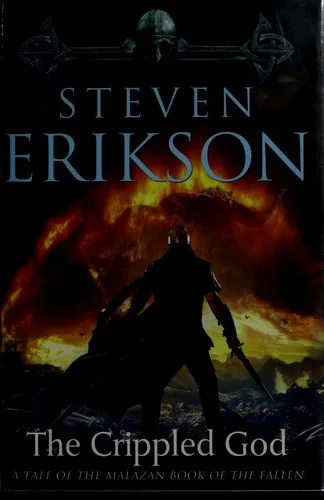
Steven Erikson’s 2008 novel, "Toll the Hounds," places the Malazan Empire at a crossroads between divine intervention and mortal struggle.
The eighth novel in Steven Erikson's Malazan Book of the Fallen series, "Toll the Hounds" returns to Darujhistan as ancient forces stir. The narrative centers on the Emperor's Deck, a potent artifact, and the reemergence of Shadowthrone and Cotillion, the Jack
This installment complicates the ongoing war against the Jaghut, weaving a complex story across the Malazan Empire. Erikson engages with fundamental questions about faith, the weight of destiny, and the relationship between gods and the people they influence. The book’s dense plot and philosophical inquiries are characteristic of the series' ambitious scope.
Readers will encounter the mechanics of Warrens, particularly Shadow and Bone, and the complex dynamics of Ascendants who hold god-like power. The ancient Jaghut race also plays a significant role, adding another layer to the world's deep history. The novel demands attention to its intricate world-building and character arcs.
Published in 2008, "Toll the Hounds" arrived during a time when epic fantasy was moving toward greater moral complexity. Erikson's work, alongside contemporaries, brought a grittier, more philosophical edge to the genre. This novel, like others in the Malazan series, uses its sprawling world and complex magic systems not just for adventure, but to interrogate ideas about power, belief, and the divine. It stands in a tradition of fantasy that uses its invented worlds to explore deep questions about existence and agency, drawing parallels to dense historical narratives but focusing more overtly on philosophical quandaries.
💡 Why Read This Book?
• Gain a deeper understanding of the Malazan cosmology, particularly the mechanics of Warrens like Shadow and Bone, and their influence on mortal affairs, as depicted through the conflict in Darujhistan. • Experience Erikson's exploration of divine intervention and fate through the ancient conflict of the Jaghut, a race with a profound, often tragic, history within the series. • Witness the complex interplay between mortal suffering and the machinations of Ascendants, as the narrative examines the ethical implications of godhood and power dynamics.
⭐ Reader Reviews
Honest opinions from readers who have explored this book.
❓ Frequently Asked Questions
What is the primary conflict in Toll the Hounds?
The primary conflict involves the Jaghut race's resurgence and their ancient wars, alongside the political and magical machinations surrounding Darujhistan and the Emperor's Deck, which draws the attention of powerful Ascendants.
Who are the main gods involved in Toll the Hounds?
Key deities include Shadowthrone and Cotillion, the rulers of Shadow and Bone, whose plans are central to the plot. Other Ascendants also play significant roles in manipulating events.
Is Toll the Hounds a good starting point for the Malazan series?
No, "Toll the Hounds" is the eighth book and relies heavily on prior knowledge of the Malazan world, its history, characters, and magical systems. It is not suitable for new readers.
What is the significance of the Jaghut in Toll the Hounds?
The Jaghut are an ancient, powerful race whose history and ongoing conflicts, particularly with humanity and the magical Warrens, are central to the book's themes and plot developments.
Does Toll the Hounds resolve any major plotlines from previous books?
While it continues ongoing arcs and develops characters introduced earlier, "Toll the Hounds" primarily advances the overarching narrative of the Malazan Empire and its gods, rather than offering complete resolutions.
What is the 'Emperor's Deck' mentioned in the book?
The Emperor's Deck is a powerful magical artifact or concept central to the plot of "Toll the Hounds," influencing the actions of gods and mortals alike in their quest for power and control.
🔮 Key Themes & Symbolism
The Nature of Divinity
This novel critically examines the role and nature of gods within the Malazan world. It questions whether Ascendants are truly benevolent or merely mortals wielding immense power, often indifferent to the suffering they cause. The book contrasts the distant, often cruel, machinations of deities like Shadowthrone and Cotillion with the desperate pleas of mortals caught in their cosmic games. It explores the burden of godhood and the philosophical implications of power unchecked by empathy, highlighting the often-brutal reality behind divine pronouncements and interventions. The Jaghut's perspective offers a counterpoint to established divine orders, questioning their legitimacy and origins.
History and Memory
"Toll the Hounds" emphasizes the pervasive influence of the past on the present. Ancient conflicts, particularly those involving the Jaghut, resurface and shape current events, demonstrating how history is not merely recorded but actively shapes the world and its inhabitants. The narrative explores how collective memory, or the deliberate suppression of it, influences societal structures and individual beliefs. Characters grapple with the weight of ancestral deeds and the long-term consequences of actions taken millennia ago. This theme underscores the idea that the past is never truly buried, but remains a potent force influencing destiny and present struggles.
Faith and Despair
The novel presents a stark portrayal of faith in the face of overwhelming adversity. In the besieged city of Darujhistan, prayers go unanswered, and hope dwindles, pushing characters towards despair. Erikson scrutinizes the efficacy and nature of faith when confronted with the harsh realities of war and the apparent indifference of the divine. The book questions whether faith is a source of strength or a form of self-deception when facing insurmountable odds. This theme is amplified by the presence of gods who may or may not intervene, leaving mortals to question the very foundation of their beliefs and their place in a seemingly uncaring universe.
The Jaghut's Enduring Legacy
A significant portion of the narrative focuses on the Jaghut, an ancient and formidable race. Their presence and historical conflicts with other races and the very fabric of magic serve as a critical backdrop. The novel looks at their origins, their unique relationship with the Warrens, and the reasons behind their long-standing grievances. Their perspective offers a challenge to the established order of Ascendants and the current pantheon, suggesting alternative histories and power structures. The Jaghut represent a force of primal power and deep-seated resentment, integral to understanding the world's foundational conflicts.
💬 Memorable Quotes
Direct passages from the work, attributed to the author.
“The hounds of shadow, the hounds of light, the hounds of the sea, the hounds of the sky, the hounds of the earth, the hounds of the void. All the hounds are here.”
— This evocative statement captures the pervasive sense of impending doom and the convergence of various powerful forces, both divine and elemental, within the narrative. It suggests a cosmic reckoning where all aspects of existence are about to be unleashed.
“They speak of the ascendants, these gods of ours. But I see only men who have climbed too high.”
— This interpretation challenges the divine status of Ascendants, viewing them as mortals who have attained power through ruthless means rather than inherent divinity. It highlights the book's theme of questioning the true nature of godhood and its origins.
“The past is never truly buried. It just waits.”
— This sentiment underscores the novel's preoccupation with history and its lingering impact. It suggests that unresolved conflicts and ancient traumas remain potent forces, capable of resurfacing and influencing present events unexpectedly.
“In the end, all roads lead to Darujhistan.”
— This phrase emphasizes the strategic and symbolic importance of the city of Darujhistan within the Malazan narrative. It suggests that despite the vastness of the empire and the multitude of conflicts, the fate of this single city often becomes a focal point for larger struggles.
💡 Key Ideas
Editorial paraphrase of the work's core concepts — not direct quotes.
It is the will of the gods that we suffer.
This line reflects the fatalistic outlook of many characters facing overwhelming hardship. It questions the nature of divine power, implying a cruel or indifferent pantheon that inflicts suffering rather than offering solace or justice.
🌙 Esoteric Significance
Tradition
While not strictly adhering to a single esoteric tradition, "Toll the Hounds" draws heavily from Gnostic themes of a flawed, often malevolent, creator deity or pantheon, contrasting them with a hidden, purer truth or a more compassionate, albeit distant, force. The concept of Ascendants, mortals achieving god-like status, echoes certain interpretations within Hermeticism and Neoplatonism, where the ascent of the soul is a central goal. The intricate magic system, tied to parallel planes known as Warrens, can be seen as a complex magical cosmology, reminiscent of Kabbalistic ideas of divine emanations and worlds, though filtered through a distinctly modern, often cynical, lens.
Symbolism
The hounds themselves, as invoked in the title and narrative, serve as potent symbols of primal forces, fate, and inescapable destiny, often associated with the underworld or divine judgment across various mythologies. The city of Darujhistan, a locus of conflict and prayer, functions as a symbol of mortal resilience and the battleground where divine will clashes with human agency. The Warrens, particularly Shadow and Bone, represent the hidden dimensions of reality and the underlying magical structures that govern existence, symbolizing the unseen powers that shape the material world, much like the concept of the Astral or Akasha in occult traditions.
Modern Relevance
Contemporary thinkers and practitioners interested in critical myth-making and deconstructing traditional religious narratives find resonance in Erikson's work. His portrayal of gods as flawed, power-hungry beings challenges simplistic notions of divinity and divine justice, aligning with post-modern critiques of organized religion and mythology. The exploration of ancient races and their grievances, like the Jaghut, offers a framework for understanding deep historical trauma and cyclical conflict, relevant to contemporary discussions on historical revisionism and the long-term impact of past injustices. The series continues to be a touchstone for discussions on epic fantasy's potential for philosophical and theological exploration.
👥 Who Should Read This Book
• Established fans of the *Malazan Book of the Fallen* series seeking continuation of the intricate plotlines and character arcs established in prior volumes. • Readers interested in dark epic fantasy that explores philosophical themes of divinity, fate, and the consequences of power on a grand scale. • Students of comparative mythology and theology who appreciate complex fictional pantheons and the deconstruction of divine archetypes within a narrative framework.
📜 Historical Context
Steven Erikson’s "Toll the Hounds," published in 2008, arrived during a flourishing period for epic fantasy, a genre increasingly characterized by complex world-building and darker themes. Erikson’s *Malazan Book of the Fallen* series, known for its immense scope and philosophical depth, stood apart from more traditional fantasy narratives. While authors like Robert Jordan were crafting sprawling sagas with clear good-versus-evil conflicts, Erikson, alongside contemporaries such as George R.R. Martin, explored moral ambiguity and the harsh realities of war and power. The reception of the Malazan series has been notably passionate, with dedicated fan communities forming around its intricate lore and challenging narrative structure. While not always achieving mainstream critical acclaim akin to some of its genre peers at the time, its ambition and unique approach to magic systems, history, and theology cemented its place as a significant, albeit demanding, contribution to modern fantasy literature.
📔 Journal Prompts
The prayers offered in Darujhistan during the siege.
The historical grievances of the Jaghut race.
The nature of Ascendants as depicted in the novel.
The symbolism of the 'hounds' invoked in the title.
The contrast between mortal suffering and divine indifference.
🗂️ Glossary
Warren
In the Malazan world, Warrens are parallel planes of existence that channel specific forms of magic. Different races and cultures have different relationships with various Warrens, influencing their magical capabilities and understanding of the cosmos.
Ascendant
An Ascendant is a mortal being who has achieved god-like power and status, often through immense effort, magical prowess, or manipulation. They rule over their own domains or influence mortal affairs, forming the pantheon of the Malazan world.
Jaghut
An ancient and powerful race in the Malazan universe, known for their immense strength and their historical conflicts with other races, particularly humans. They are often associated with ice and primal magic.
Shadowthrone and Cotillion
These are the twin gods who rule the Warren of Shadow and Bone. Originally mortals, they ascended to godhood, overthrowing the previous god of Shadow. They are known for their cunning and often manipulative nature.
Darujhistan
A significant city within the Malazan Empire, often a focal point for political intrigue and conflict. It is known for its ancient history and its resistance to direct imperial control, making it a recurring setting.
Emperor's Deck
A powerful, often mystical, concept or artifact central to the plot of 'Toll the Hounds.' Its exact nature is complex, but it represents a nexus of power and destiny that various factions seek to control or influence.
Bonecaster
A type of mage who draws power from the Warren of Bone. Their magic is often associated with death, decay, and the manipulation of physical forms, reflecting the grim nature of the Warren.
🔮 Readers Also Liked
Browse all →








More by Steven Erikson
All books →




More Free Occult Philosophy Books
View all →