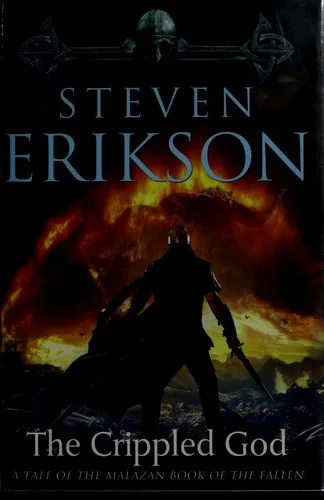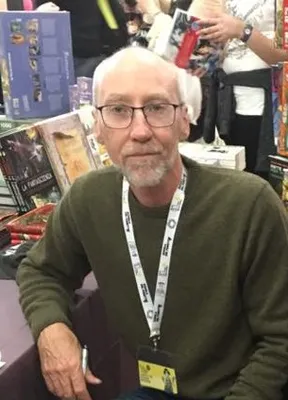
Steven Erikson
Steven Erikson is a Canadian author known for the epic fantasy Malazan series, blending archaeology, anthropology, and complex themes.
Canadian author Steven Erikson, born Steve Rune Lundin, is recognized for his extensive work in epic fantasy, most notably the ten-volume Malazan Book of the Fallen series. Trained as an archaeologist and anthropologist, Erikson infuses his narratives with a deep understanding of societies and cultures, often exploring themes of compassion, social inequality, and the human condition. His writing is characterized by complex plots, a large cast of multidimensional characters, and a deliberate subversion of traditional fantasy tropes. Beyond the Malazan universe, Erikson has also explored science fiction with works like the comedic Willful Child Trilogy and the first-contact novel Rejoice, a Knife To the Heart.
Erikson's academic background significantly informs his fictional worlds. He began his literary career with works like A Ruin of Feathers and Revolvo and other Canadian Tales, before publishing his first "real novel," This River Awakens, under his birth name. He later adopted the pseudonym Steven Erikson. His Malazan series, which began with Gardens of the Moon, has achieved significant commercial success and critical acclaim, with reviewers praising its originality, depth, and ambitious scope. He has also penned prequel and sequel series within the Malazan world, demonstrating a sustained commitment to this rich, complex universe.
The Malazan World and Thematic Depth
Steven Erikson's primary contribution to literature is the sprawling Malazan Book of the Fallen series, set in a meticulously crafted world. This epic fantasy saga, comprising ten volumes, delves into profound themes beyond typical genre fare. Erikson, drawing from his academic training in anthropology and archaeology, constructs societies and cultures that challenge conventional power structures, notably by envisioning worlds free from sexism and gender-based hierarchies. His work consistently explores the "human condition," with compassion serving as a central driving force. Other recurring thematic elements include social inequality, egalitarianism, the nature of life and death, and a dedication to historical accuracy within his fictional frameworks. This intricate world-building and thematic complexity have earned the series significant critical praise, with comparisons made to foundational works of epic fantasy.
Narrative Style and Characterization
Erikson's writing style is marked by its deliberate departure from conventional fantasy narratives. He is known for employing complex plots with a vast array of characters, often beginning stories mid-action, as seen in Gardens of the Moon. A key aspect of his style is the creation of multidimensional characters who defy stereotypes, embodying realistic human traits that lend depth and unpredictability to his stories. Erikson has also been noted for his willingness to subvert reader expectations by killing central characters when it serves the narrative. He emphasizes the importance of emotional truth in storytelling, arguing that universal emotions like grief and anguish can be transposed into fictional contexts, requiring imaginative vulnerability from both writer and reader. This approach allows for profound empathy and emotional resonance within his elaborate fictional landscapes.
Literary Influences and Early Career
The foundations of Steven Erikson's writing, particularly the Malazan Empire, are heavily influenced by tabletop role-playing games like AD&D and GURPS. His storytelling also draws inspiration from post-Tolkien fantasy authors such as Stephen R. Donaldson and Glen Cook, as well as earlier writers like Robert E. Howard and Edgar Rice Burroughs, and classical figures like Homer. Erikson's early career began with works published under his birth name, Steve Rune Lundin, including the story cycle A Ruin of Feathers and the novella and short stories Revolvo and other Canadian Tales. His first novel, This River Awakens, was written before he adopted the pseudonym Erikson, which he chose as an homage to his mother's maiden name. These early experiences and diverse influences have shaped the distinctive voice and ambitious scope of his later, more widely recognized works.
Key Ideas
- Exploration of the human condition through fiction
- Compassion as a central theme in literary work
- Creation of societies without sexism or gender hierarchies
- Subversion of fantasy genre conventions
- Multidimensional characterization for realism
- Emotional truth and empathy in storytelling
- Influence of role-playing games on world-building
Notable Quotes
“Grief just is”
“This act of becoming someone else... is an act of immense vulnerability. Emotions rarely trickle into a consciousness—they flood in... and one can drown in them.”
Books by Steven Erikson
7 free public domain books · Read online or download