The magical universe
 81
81

The magical universe
Stephen Wilson's "The Magical Universe" presents a commendable effort to chart the sprawling landscape of Western esoteric thought. Its strength lies in its methodical approach, providing clear explanations of complex concepts like the principle of correspondence and the evolution of magical theory across centuries. The section detailing the influence of figures like Eliphas Lévi on later occultism is particularly well-articulated. However, the sheer breadth of the subject matter occasionally leads to a somewhat superficial treatment of certain traditions; for instance, the exploration of Gnostic elements feels less developed than its Hermetic or Kabbalistic counterparts. A passage discussing the symbolic language of Tarot cards, while accurate, could have benefited from deeper engagement with specific decks beyond general archetypes. Despite this, the book serves as a valuable, if sometimes broad, survey for those new to the field.
📝 Description
81
Stephen Wilson's 2004 book analyzes Western magical traditions.
Stephen Wilson's "The Magical Universe," published in 2004, examines the history and philosophy of Western magical traditions. The book covers a wide range of esoteric thought, from its earliest roots to modern forms. Wilson aims to explain complex ideas clearly and place them within their historical and cultural settings. This is not a guide to casting spells, but rather an analytical study of the belief systems and practices that have influenced mystical currents.
This work is a valuable resource for anyone studying comparative religion, the history of magic, or Western esotericism. Scholars looking for a broad overview will find its scope useful, as will enthusiasts of occult history who want to trace the intellectual development of contemporary magical movements. The book suits readers who prefer thorough research and a structured exploration of complex subjects over anecdotal accounts or practical instruction.
Published in the early 2000s, a period when academic interest in esoteric studies was growing, Wilson's book joined a wave of scholarship seeking to analyze and contextualize occult traditions. It built upon the work of earlier scholars like Frances Yates and Antoine Faivre, who helped establish the academic study of magic and esotericism as a legitimate field. The book contributes to understanding these traditions as intellectual and historical phenomena, moving beyond fringe perceptions.
💡 Why Read This Book?
• Gain a structured understanding of how concepts like the principle of correspondence have historically informed magical practices, offering a framework beyond simple spellcasting. • Trace the intellectual lineage of modern esoteric movements back to figures and texts discussed, such as the influence of Agrippa's *Three Books of Occult Philosophy*. • Grasp the academic methodology for studying esotericism, enabling critical engagement with occult claims and historical narratives.
⭐ Reader Reviews
Honest opinions from readers who have explored this book.
❓ Frequently Asked Questions
When was "The Magical Universe" by Stephen Wilson first published?
Stephen Wilson's "The Magical Universe" was first published in 2004, placing it within a period of renewed academic interest in esoteric studies.
Does "The Magical Universe" provide practical magic instructions?
No, "The Magical Universe" is primarily an academic and historical survey of magical traditions, not a practical guide for performing spells or rituals.
What historical periods does "The Magical Universe" cover?
The book covers a broad historical sweep, examining magical concepts from ancient philosophical traditions through to more modern expressions in Western esotericism.
Which philosophical concepts are central to "The Magical Universe"?
Central concepts include the principle of correspondence, the nature of ritual, theories of occult energy, and the evolution of magical paradigms across different eras.
Is Stephen Wilson a recognized scholar in esoteric studies?
Stephen Wilson is recognized for his work in esoteric studies, with "The Magical Universe" serving as a significant contribution to the academic exploration of Western magical traditions.
What is the 'principle of correspondence' as discussed in the book?
The principle of correspondence, as explored in the book, posits a sympathetic link between different levels of reality, often summarized as 'as above, so below'.
🔮 Key Themes & Symbolism
The Principle of Correspondence
Wilson dedicates significant attention to the doctrine of correspondence, a core part of Hermetic philosophy and magical thought. This principle asserts that there are meaningful connections and parallels between the macrocosm (the universe) and the microcosm (humanity or the Earth). The book illustrates how this belief system facilitated magical practices by suggesting that manipulating one level could affect another. It examines its influence on alchemy, astrology, and ceremonial magic, providing historical examples of its application in understanding universal patterns and hidden sympathies.
Evolution of Magical Paradigms
The work traces the shifting range of magical understanding across different historical epochs. It highlights how magical traditions adapted and transformed, moving from ancient animistic beliefs and Neoplatonic philosophies to the more structured ceremonial magic of the Renaissance and the psychological interpretations prevalent in the 19th and 20th centuries. Wilson discusses how societal changes and intellectual currents, such as the Enlightenment and the rise of science, impacted the perception and practice of magic, leading to new esoteric formulations.
The Nature of Ritual
Central to the study is an analysis of ritual as a fundamental component of magical practice. Wilson explores the symbolic language, psychological impact, and perceived efficacy of various ritual forms found within Western esotericism. The book examines how rituals are designed to invoke specific energies, alter consciousness, or achieve desired outcomes, often through sympathetic action or symbolic representation. It contextualizes ritual within broader philosophical frameworks, discussing its role in creating order, accessing altered states, and engaging with perceived spiritual forces.
Hermeticism and Its Legacy
Wilson places significant emphasis on Hermeticism as a foundational stream within Western magical thought. The book examines the *Corpus Hermeticum* and its influence, explaining how its teachings on divine knowledge, the structure of the cosmos, and humanity's place within it provided a fertile ground for magical speculation. It details how Hermetic principles permeated subsequent esoteric movements, including alchemy, Rosicrucianism, and modern ceremonial magic, demonstrating its enduring impact on the development of the magical universe.
💬 Memorable Quotes
Direct passages from the work, attributed to the author.
“Ritual serves as a symbolic language for interacting with unseen forces.”
— This interpretation highlights Wilson's view of ritual not merely as performance but as a structured communication system. It implies that through specific actions and symbols, practitioners aim to engage with, influence, or understand spiritual or energetic realms.
“The evolution of magical practice reflects broader societal and intellectual shifts.”
— This concept underscores Wilson's historical approach. It posits that magic is not static but adapts its forms and explanations in response to changing worldviews, scientific discoveries, and cultural contexts throughout history.
“Hermetic philosophy provided a foundational cosmology for many later esoteric schools.”
— This highlights the significance Wilson places on Hermeticism. It suggests that the ideas presented in texts like the *Corpus Hermeticum* offered a coherent worldview that subsequent traditions, such as alchemy and ceremonial magic, built upon and adapted.
“Understanding the macrocosm helps illuminate the microcosm.”
— This reflects the principle of correspondence in a concise form. It suggests that by studying the patterns and structures of the universe (macrocosm), one can gain insight into the workings of the human being or smaller systems (microcosm), and vice versa.
💡 Key Ideas
Editorial paraphrase of the work's core concepts — not direct quotes.
The belief that the universe operates on a system of sympathetic connections.
This paraphrase captures the essence of the principle of correspondence, a core tenet Wilson explores. It suggests that actions or symbols on one level of existence can directly influence corresponding elements on another, forming the basis for many magical operations.
🌙 Esoteric Significance
Tradition
The work primarily situates itself within the study of Western Esotericism, with a strong emphasis on the Hermetic, Kabbalistic, and Neoplatonic streams that have historically informed magical practices. It analyzes how these traditions interacted and evolved, particularly from the Renaissance through to the 20th century. Wilson's approach departs from purely devotional or practical occult texts by framing these traditions within their historical and philosophical contexts, offering an analytical perspective on their development and internal logic.
Symbolism
Central to the book's exploration of symbolism is the concept of the 'as above, so below' principle, derived from Hermeticism, which posits a fundamental interconnectedness between the celestial and terrestrial realms. Another key motif is the symbolic language of alchemy, where processes like the transmutation of metals represent spiritual purification and transformation. The book also examines the symbolic representation of divine hierarchies and angelic beings found in Kabbalistic and ceremonial magic traditions.
Modern Relevance
Contemporary thinkers and practitioners in fields like comparative mythology, depth psychology, and various forms of modern occultism and neo-paganism draw upon the historical frameworks outlined by Wilson. His work provides a valuable resource for understanding the intellectual lineage of practices such as ceremonial magic, modern Hermeticism, and the symbolic interpretations of Tarot and astrology, helping to contextualize their resurgence and adaptation in the 21st century.
👥 Who Should Read This Book
• Students of Western Esotericism seeking a foundational text that maps out the historical and philosophical development of magical traditions. • Comparative religion scholars interested in understanding the intellectual currents and belief systems that underpin various occult movements. • Enthusiasts of intellectual history looking to grasp how concepts like Hermeticism and Kabbalah influenced Western culture and thought beyond purely religious contexts.
📜 Historical Context
Published in 2004, "The Magical Universe" emerged during a period when academic interest in Western esotericism was gaining significant traction. Scholars like Antoine Faivre had already established frameworks for studying these traditions, moving them from the margins of intellectual history. Wilson's work contributed to this growing field, offering a comprehensive overview that synthesized historical developments and philosophical underpinnings. It followed in the wake of influential texts by figures such as Frances Yates, whose work on Hermeticism and the Renaissance had reshaped understandings of occultism's intellectual role. The book's academic approach contrasted with the more popular, practice-oriented occult literature of the time, positioning itself as a scholarly resource for understanding the historical and conceptual range of magic.
📔 Journal Prompts
Reflect on the principle of correspondence as presented in the text and its potential implications.
Analyze the evolution of magical paradigms discussed, considering how external factors might have shaped them.
Consider the role of ritual described by Wilson in shaping individual and collective consciousness.
Examine the legacy of Hermetic philosophy within the magical universe as detailed in the book.
How does the concept of the macrocosm/microcosm relationship, as explored in the text, inform your understanding of interconnectedness?
🗂️ Glossary
Hermeticism
A religious, philosophical, and esoteric tradition based on writings attributed to Hermes Trismegistus. It emphasizes divine wisdom, the structure of the cosmos, and the potential for human spiritual ascent.
Correspondence
A core principle in magical thinking, asserting that there are sympathetic relationships and parallels between different levels of reality, often summarized as 'as above, so below'.
Macrocosm
The larger universe or cosmos, often contrasted with the microcosm. The principle of correspondence suggests that the macrocosm's patterns are reflected within the microcosm.
Microcosm
The smaller world, typically referring to the human being, considered as a reflection or miniature of the macrocosm. Understanding the microcosm can offer insights into the larger universe.
Alchemy
An ancient tradition involving the study of matter and its transformations, often associated with the pursuit of the philosopher's stone. Esoterically, it represents a process of spiritual purification and transformation.
Kabbalah
A system of Jewish mysticism that deals with the nature of God and the universe, often represented through the Tree of Life. It has influenced various Western esoteric traditions.
Ceremonial Magic
A formalized system of magic involving elaborate rituals, symbolic gestures, incantations, and often the use of specific tools and attire to achieve magical effects.
🔮 Readers Also Liked
Browse all →








More by Wilson, Stephen
All books →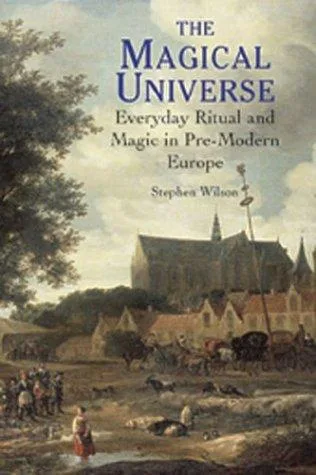
More Free Magic & Ritual Books
View all →