The Great Secret Of The Flower Of Life And The Light Liquid Of The Gods
 81
81

The Great Secret Of The Flower Of Life And The Light Liquid Of The Gods
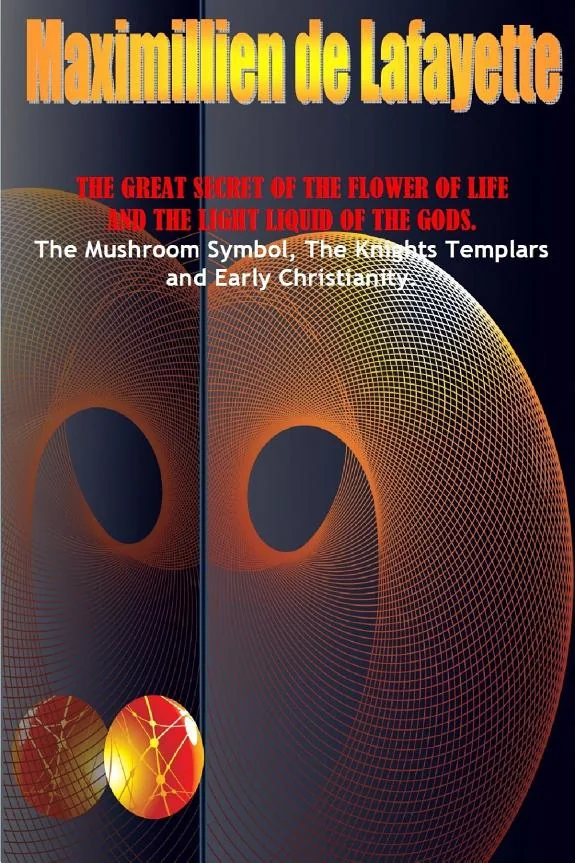
Maximillien De Lafayette's "The Great Secret Of The Flower Of Life And The Light Liquid Of The Gods" attempts to bridge ancient Sumerian cosmology with early Christian symbolism via the Knights Templar. The book's central thesis, linking the "Filfila" symbol (interpreted as a rose, chalice, and mushroom) to the Anunnaki's "Light Liquid" and the "Flower of Life," is ambitious. Lafayette’s examination of the mushroom as a chalice, particularly within religious art, offers a point of interest, suggesting a recurring motif across belief systems. However, the work occasionally suffers from a lack of rigorous scholarly citation, making some connections feel speculative rather than definitively proven. A strength lies in its ambitious scope, aiming to connect disparate historical and mythological threads. Its limitation is the sometimes tenuous evidence presented for these grand syntheses. The exploration of the Knights Templar's potential connection to these symbols, while intriguing, remains largely in the realm of interpretation.
This book is a curious exploration for those fascinated by esoteric connections, but readers should approach its conclusions with a critical eye.
📝 Description
81
Maximillien De Lafayette's 2015 book connects the Anunnaki concept of 'Light Liquid' with a rose symbol known as 'Filfila'.
Published in 2015, Maximillien De Lafayette's "The Great Secret Of The Flower Of Life And The Light Liquid Of The Gods" examines esoteric symbolism and ancient cosmologies. The book posits a link between a symbol called 'Filfila', depicted as a rose, mushroom, or chalice, and the Anunnaki concept of 'Light Liquid'. Lafayette traces this symbol's potential connections to early Christian iconography and the Knights Templar.
This work is intended for readers interested in Mesopotamian mythology, early Christian symbolism, and esoteric traditions. It appeals to those drawn to sacred geometry, hidden meanings in religious art, and speculative historical interpretations. The book seeks to illuminate how symbolic language has been used across different cultures and eras to convey spiritual or cosmological information.
This book situates itself within traditions that explore sacred geometry and ancient cosmologies, particularly those linking Mesopotamian myth with later European esoteric movements. It engages with the historical and symbolic interpretations surrounding the Anunnaki and the Knights Templar, often found in occult philosophy. The work investigates how complex geometric patterns like the Flower of Life and specific symbols such as the rose might serve as conduits for understanding ancient theological or cosmological concepts.
💡 Why Read This Book?
• Understand the symbolic interpretations of 'Filfila,' the rose, chalice, and mushroom as presented by Lafayette, offering unique perspectives on ancient motifs. • Explore the proposed connection between the Anunnaki's 'Light Liquid' and the geometric 'Flower of Life,' providing a specific cosmological framework. • Examine the book's theories regarding the Knights Templar and early Christianity, revealing potential esoteric links rooted in symbolism from 2015's publication.
⭐ Reader Reviews
Honest opinions from readers who have explored this book.
❓ Frequently Asked Questions
What is the "Filfila" symbol discussed in the book?
The "Filfila" symbol is presented in Maximillien De Lafayette's work as being synonymous with a rose. It is described as an esoteric symbol that also represents a magical chalice, and at times, this chalice is depicted as a mushroom.
What is the "Light Liquid" of the Gods mentioned?
The "Light Liquid" is an esoteric concept attributed to the Anunnaki, an ancient Mesopotamian pantheon. The book connects this concept to the "Filfila" symbol, suggesting it represents a form of divine or primordial substance.
How does the "Flower of Life" relate to the book's themes?
The "Flower of Life," a geometric pattern, is presented as being intrinsically linked to the "Filfila" symbol and the "Light Liquid." The work explores how these elements together form a complex esoteric understanding.
What is the historical period covered by the book's theories?
The book's theories span ancient Mesopotamia (Anunnaki), early Christianity, and the medieval period concerning the Knights Templar. The first publication date is August 20, 2015.
Does the book discuss the Knights Templar?
Yes, the book explicitly mentions the Knights Templar and explores their potential connection to the esoteric symbolism of the "Filfila" and the "Light Liquid," suggesting they may have guarded or transmitted this knowledge.
Who is the author, Maximillien De Lafayette?
Maximillien De Lafayette is the author of "The Great Secret Of The Flower Of Life And The Light Liquid Of The Gods." He is known for his writings on esoteric subjects, mythology, and historical mysteries.
🔮 Key Themes & Symbolism
Filfila Symbolism
The book centers on the "Filfila," identified as a rose symbol, which is explored for its complex meanings. It's posited as a representation of a magical chalice, often visualized as a mushroom. This interpretation is crucial for understanding the connections Lafayette draws between ancient Mesopotamian concepts and later religious iconography. The symbol serves as a key to unlocking deeper layers of meaning within esoteric traditions and historical artifacts.
Anunnaki Light Liquid
The concept of the "Light Liquid" is attributed to the Anunnaki, ancient Mesopotamian deities often interpreted in esoteric circles as extraterrestrial beings. Lafayette connects this "Light Liquid" to the "Filfila" symbol, suggesting it represents a primordial, divine, or energetic substance. The exploration aims to illuminate how this ancient concept might have influenced later symbolic systems and spiritual beliefs across different cultures and epochs.
Flower of Life Geometry
The "Flower of Life," a sacred geometric pattern, is presented as an integral part of the book's esoteric framework. Lafayette links this ancient symbol to the "Filfila" and the "Light Liquid," suggesting a unified cosmological understanding. The geometric perfection of the "Flower of Life" is seen as a fundamental blueprint of creation, and its relationship with other symbols is explored to reveal hidden universal principles.
Templar and Christian Connections
A significant focus is placed on the potential connections between the "Filfila" symbol, the "Light Liquid," and the "Flower of Life" with the Knights Templar and early Christianity. The work investigates how these esoteric concepts might have been preserved, transmitted, or symbolized within these historical groups, particularly through art and religious practices. It seeks to unveil hidden narratives within these traditions.
💬 Memorable Quotes
Direct passages from the work, attributed to the author.
“Filfila" is the name for an esoteric symbol closely related to the Anunnaki's "Light Liquid" and the "Flower of Life."”
— This statement establishes the core thesis of the book, positioning the "Filfila" symbol as a central nexus point. It immediately links ancient Mesopotamian mythology (Anunnaki, Light Liquid) with universal sacred geometry (Flower of Life), setting the stage for a deep dive into their interconnectedness.
“Some time, the chalice itself. Quite often, this chalice was depicted as a mushroom.”
— This expands on the previous interpretation, directly linking the chalice symbol to the mushroom form. This connection is highly significant in many esoteric traditions, often associated with altered states of consciousness, shamanic practices, and hidden knowledge, bridging the symbolic to the psychoactive.
“It is quite obvious, that the chalice, the”
— This incomplete fragment suggests the author is about to draw a direct, perhaps self-evident (to the initiated), link between the chalice symbolism and another concept or symbol. It implies a continuity or shared origin for these powerful archetypes within the book's narrative.
“(The Mushroom Symbol, The Knights Templar and Early Christianity).”
— This parenthetical phrase acts as a subtitle, clearly outlining the key historical and symbolic elements the book intends to explore. It signals the book's ambition to connect specific, often controversial, historical groups and religious periods through the lens of potent, recurring symbols like the mushroom.
💡 Key Ideas
Editorial paraphrase of the work's core concepts — not direct quotes.
Literally it means a rose. And the rose represents a magical chalice.
This quote provides a concrete interpretation of the "Filfila" symbol, grounding its esoteric significance in a familiar natural form and a potent magical archetype. The rose as a chalice suggests themes of divine feminine energy, sacred containment, and hidden spiritual power.
🌙 Esoteric Significance
Tradition
This work draws heavily from a syncretic esoteric tradition that blends elements of ancient Mesopotamian mythology, Hermeticism, Gnosticism, and modern ufology. It attempts to synthesize these disparate threads by positing a continuous stream of hidden knowledge concerning creation and divine substance, linking the Anunnaki narratives with later symbolic systems. It departs from strict adherence to any single tradition by creating novel connections between them.
Symbolism
The core symbols explored are "Filfila" (rose, chalice, mushroom), the "Light Liquid," and the "Flower of Life." The rose-chalice-mushroom motif is interpreted as a vessel of divine essence or transformative power. The "Light Liquid" represents this divine essence itself, potentially a primordial energy or consciousness. The "Flower of Life" serves as the underlying geometric blueprint of creation, within which these other symbols operate and convey their meaning.
Modern Relevance
Contemporary thinkers and practitioners interested in sacred geometry, ancient astronaut theories, and comparative mythology might find Lafayette's synthesis intriguing. Its exploration of recurring symbols across cultures speaks to modern New Age spirituality and certain branches of occultism that seek universal truths. The book contributes to ongoing discussions about the origins of religious symbolism and consciousness.
👥 Who Should Read This Book
• Students of comparative mythology and ancient religions seeking connections between Sumerian lore, early Christianity, and medieval orders. • Esoteric researchers interested in symbolic interpretations of the rose, chalice, and mushroom across different historical and cultural contexts. • Enthusiasts of sacred geometry and theories linking cosmic blueprints (like the Flower of Life) to divine concepts (like the Anunnaki's Light Liquid).
📜 Historical Context
Published in 2015, "The Great Secret Of The Flower Of Life And The Light Liquid Of The Gods" emerged in an era of widespread interest in alternative histories and esoteric interpretations of religious and mythological texts. The work engages with concepts rooted in ancient Sumerian civilization, particularly the Anunnaki narratives that gained traction in ufological and esoteric circles from the mid-20th century onwards, notably through authors like Zecharia Sitchin. It also touches upon the rich symbolic range of early Christianity and the enduring mystique surrounding the Knights Templar, a medieval military order founded around 1119. These Templars have been central figures in conspiracy theories and esoteric traditions since the Enlightenment, often depicted as guardians of secret knowledge. The book’s approach places it within a lineage of speculative historical inquiry that seeks to find unifying threads between ancient cosmologies, Gnostic traditions, and Western mystery schools, often challenging mainstream historical and religious scholarship.
📔 Journal Prompts
Analyze the symbolic convergence of the rose, chalice, and mushroom as "Filfila."
Reflect on the Anunnaki's "Light Liquid" as a concept of primordial substance.
Consider the geometric implications of the "Flower of Life" in relation to divine creation.
Explore potential esoteric knowledge held by the Knights Templar.
Compare the "Filfila" symbol's interpretation with other known chalice or rose symbolism.
🗂️ Glossary
Filfila
An esoteric symbol discussed in the book, identified as a rose, representing a magical chalice, and often depicted as a mushroom.
Light Liquid
A concept attributed to the Anunnaki, representing a divine or primordial substance, linked by the author to the "Filfila" symbol.
Flower of Life
A sacred geometric pattern composed of overlapping circles, presented in the book as a fundamental blueprint of creation connected to other esoteric symbols.
Anunnaki
A group of deities appearing in ancient Mesopotamian cultures, often interpreted in esoteric and ufological contexts as extraterrestrial beings.
Chalice
A cup, often used in religious or ceremonial contexts, interpreted in the book symbolically as a vessel of magical or divine power.
Mushroom Symbol
The depiction of a mushroom used symbolically, which the book equates with the chalice and "Filfila" symbol, suggesting deeper meanings.
Knights Templar
A medieval Catholic military order, discussed in the book for their potential connection to esoteric symbolism and hidden knowledge.
This book appears in 1 collection
🔮 Readers Also Liked
Browse all →






From the “Flower of Life” Collection
View all →









More Free Sacred Texts & Gnosticism Books
View all →