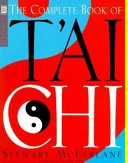
The Complete Book of T'ai Chi
 76
76

The Complete Book of T'ai Chi
Stewart McFarlane and Mew Hong Tan’s "The Complete Book of T'ai Chi" presents the Yang form with a clarity that demystifies its intricate choreography. The sheer volume of well-executed illustrations, detailing each micro-movement, is its primary strength, offering a visual lexicon for practitioners. A notable passage is the detailed breakdown of the "Push Hands" section, illustrating the practical application of yielding principles. However, the book occasionally feels overly focused on the mechanics, sometimes glossing over the deeper philosophical underpinnings that many seek in T'ai Chi. While it provides historical context, it could have benefited from more explicit connections to Taoist philosophy, which informs much of the art's spirit. Despite this, it remains a solid, reliable manual for learning the physical execution of the Yang style.
📝 Description
76
Stewart McFarlane and Mew Hong Tan's 1999 book systematically breaks down the Yang style of T'ai Chi Ch'uan.
Published in 1999, The Complete Book of T'ai Chi Ch'uan offers a detailed visual guide to the Yang style. Stewart McFarlane and Mew Hong Tan present the form through extensive photographic illustrations, breaking down each movement and transition into manageable steps. This approach aims to make the practice accessible, particularly for individuals new to T'ai Chi. The book also includes preparatory exercises and background information on the art's historical development.
Beyond the physical form, the authors touch upon foundational knowledge and principles. The volume is intended for a wide range of readers, from beginners seeking a clear, step-by-step manual to experienced practitioners wishing to review specific postures. It also provides context for those interested in the history and underlying concepts of T'ai Chi, aiming to demystify a tradition often seen as complex.
T'ai Chi Ch'uan, with roots stretching back centuries, blends martial and healing arts from China. The Yang style, which became widely popular in the 19th century, is known for its accessible movements and health benefits. McFarlane and Tan's 1999 publication arrived as global interest in Eastern practices grew. It provided a structured introduction to T'ai Chi, a discipline often perceived as obscure. The book builds on earlier efforts to make the art more understandable outside its traditional context, referencing figures who simplified the form for wider dissemination.
💡 Why Read This Book?
• Learn the precise sequence and posture details of the Yang style T'ai Chi Ch'uan, as meticulously illustrated with numerous clear images, allowing for accurate self-correction. • Understand the historical lineage of T'ai Chi, including its development through figures like Yang Luchan, providing context for the practice beyond mere physical movement. • Gain insight into preparatory stretching exercises and fundamental stances, enabling a safer and more effective approach to learning the flowing movements of the art.
⭐ Reader Reviews
Honest opinions from readers who have explored this book.
❓ Frequently Asked Questions
What is the primary T'ai Chi style covered in The Complete Book of T'ai Chi?
The book focuses primarily on the Yang style of T'ai Chi Ch'uan, which is the most widely practiced and recognized form globally due to its accessibility and flowing movements.
When was The Complete Book of T'ai Chi first published?
The book was first published in 1999, making it a relatively contemporary guide to this ancient martial art.
Are there illustrations in the book?
Yes, the book features numerous clear, step-by-step illustrations that are crucial for understanding the postures and movements of T'ai Chi.
Does the book cover the history of T'ai Chi?
Yes, it introduces the history of T'ai Chi Ch'uan, providing context for the practice as an ancient martial art form.
What kind of exercises are included besides the main form?
The book includes preparatory stretching exercises designed to warm up the body and prepare it for the more complex movements of the T'ai Chi form.
Who are the authors of The Complete Book of T'ai Chi?
The authors are Stewart McFarlane and Mew Hong Tan. The work was first published in 1999.
🔮 Key Themes & Symbolism
The Yang Style Form
This book meticulously details the Yang style, the most prevalent form of T'ai Chi Ch'uan. It breaks down the sequence into 108 postures, emphasizing the smooth, continuous transitions between them. The focus is on correct alignment, body mechanics, and the cultivation of Qi through deliberate, flowing movement. McFarlane and Tan guide the reader through each step, ensuring that the intricate choreography, popularized by masters like Yang Luchan, is accessible for learners seeking to master its physical execution.
Martial Art Foundations
Beyond its meditative and health benefits, T'ai Chi is fundamentally a martial art. This volume explores the underlying principles of self-defense inherent in the form, such as yielding to an opponent's force and redirecting energy. It touches upon concepts like 'listening energy' (ting jin), crucial for understanding how to sense and respond to an attacker's movements. The book provides a bridge between the purely physical practice and the martial applications, rooted in centuries of Chinese combat philosophy.
Internal Energy Cultivation
A central tenet of T'ai Chi is the development and circulation of internal energy, or Qi. McFarlane and Tan explain how the slow, deliberate movements, coordinated with breath, help to harmonize the body's energy flow. This internal cultivation is seen not only as vital for health but also as the source of power in its martial applications. The book encourages practitioners to become aware of this subtle energy, fostering a deeper connection between mind, body, and spirit.
Historical and Philosophical Roots
The work situates T'ai Chi Ch'uan within its historical context, acknowledging its origins as an ancient Chinese martial art. It touches upon the evolution of the practice and its dissemination, particularly the widespread adoption of the Yang style. While not deeply philosophical, it introduces the idea of T'ai Chi as a moving meditation, influenced by Taoist principles of balance, harmony, and yielding, offering a glimpse into the broader cultural and spiritual landscape from which it emerged.
💬 Memorable Quotes
Direct passages from the work, attributed to the author.
“The art of T'ai Chi Ch'uan is a synthesis of martial skill, philosophical insight, and physical discipline.”
— This statement captures the holistic nature of T'ai Chi, highlighting that it is not merely a set of physical exercises but a comprehensive practice integrating combat strategy, a way of understanding the world, and rigorous physical training.
“Each posture flows seamlessly into the next, creating a continuous, unbroken movement.”
— This emphasizes the dynamic quality of the T'ai Chi form. The idea of unbroken flow is central to its practice, distinguishing it from static exercises and connecting it to concepts of continuous energy circulation and mindful awareness.
“Preparatory exercises are essential for warming the body and cultivating the necessary flexibility and balance.”
— This highlights the importance of foundational work in T'ai Chi. The book stresses that proper preparation through stretching and specific exercises ensures safer practice and better execution of the main form.
“Understanding the principles of yielding and rooting allows one to control an opponent without brute force.”
— This points to the core martial application of T'ai Chi. It suggests that true power lies not in direct confrontation but in absorbing, redirecting, and neutralizing an opponent's energy through subtle techniques.
“The practice aims to harmonize the body's internal energy, known as Qi.”
— This succinctly explains the energetic goal of T'ai Chi. It frames the physical movements as a means to cultivate and balance the vital life force, contributing to both health and martial efficacy.
🌙 Esoteric Significance
Tradition
While T'ai Chi Ch'uan is rooted in Chinese Taoist philosophy and traditional Chinese medicine, its practice can be approached through an esoteric lens. This work, by detailing the physical form, offers a tangible entry point into practices that aim to cultivate internal energy (Qi) and harmonize the body's energetic pathways, concepts central to many esoteric traditions. It aligns with the Hermetic principle of 'As Above, So Below,' where the microcosm of the human body reflects the macrocosm of the universe, and internal balance is key to external harmony.
Symbolism
The slow, circular movements of T'ai Chi can be seen as symbolic of cyclical cosmic processes and the flow of the Tao. The emphasis on yielding, rather than confronting force, reflects the Taoist principle of 'wu wei' (non-action or effortless action). The coordination of breath and movement symbolizes the union of the physical and energetic bodies, a common theme in esoteric practices seeking to achieve a unified consciousness.
Modern Relevance
Contemporary practitioners and schools of T'ai Chi, including those focusing on the Yang style, continue to draw upon detailed instructional guides like McFarlane and Tan's. Its clear methodology informs modern T'ai Chi instruction worldwide. Furthermore, the book's emphasis on mindful movement and energy cultivation speaks to current trends in somatic practices, embodied cognition, and integrated wellness approaches that seek to bridge physical health with mental and spiritual well-being.
👥 Who Should Read This Book
• Aspiring T'ai Chi practitioners seeking a detailed, step-by-step visual guide to learning the Yang form, providing clear instructions on postures and transitions. • Individuals interested in the historical development of Chinese internal martial arts, offering context on the Yang style and its foundational principles. • Those looking for a practice that combines physical exercise with meditative awareness, aiming to improve balance, coordination, and internal energy cultivation.
📜 Historical Context
Published in 1999, Stewart McFarlane and Mew Hong Tan's "The Complete Book of T'ai Chi" entered a global landscape where interest in Eastern practices like T'ai Chi had been steadily growing since the mid-20th century. The Yang style, the focus of the book, was already the most widely disseminated form, largely due to efforts by masters such as Madame Zheng Manqing, who simplified the form for broader accessibility in the West. This era saw a surge in Western engagement with martial arts and contemplative disciplines, often viewed as counter-cultural or as alternative health modalities. The book provided a structured, visually-driven approach, contrasting with more philosophically dense or orally transmitted teachings. Its publication coincided with the rise of the internet, which would soon democratize access to information, yet books like this remained crucial for systematic learning. While T'ai Chi gained widespread acceptance, it coexisted with other popular practices like Yoga and various forms of Qigong, and sometimes faced skepticism from Western scientific communities regarding its energetic claims.
📔 Journal Prompts
The flow of postures in the Yang form, as detailed in the book, offers a model for continuous adaptation. How can this principle be applied to unexpected challenges in daily life?
Reflect on the concept of 'yielding' as presented in the martial applications. What does it mean to yield without losing one's own center, and how can this be cultivated?
Consider the emphasis on preparatory exercises. What foundational steps are crucial for mastering more complex skills, whether in T'ai Chi or other endeavors?
The book describes T'ai Chi as a moving meditation. How does the practice of slow, deliberate movement cultivate internal awareness and Qi?
Analyze the balance between martial skill and philosophical insight within T'ai Chi, as explored in the text. Where do these two aspects intersect in your own understanding?
🗂️ Glossary
T'ai Chi Ch'uan
A Chinese internal martial art practiced for defense training, meditation, and health. It is characterized by slow, flowing, and continuous movements.
Yang Style
The most popular and widely practiced style of T'ai Chi Ch'uan, known for its slow, even movements and emphasis on relaxation and yielding.
Qi (Chi)
Vital life force or energy believed to flow through the body in traditional Chinese medicine and martial arts. Its cultivation is central to T'ai Chi.
Postures
Specific positions or shapes held or transitioned through during the T'ai Chi form. The book details numerous postures in the Yang style sequence.
Stances
The way the body is positioned and balanced during a particular posture, emphasizing rooting and stability.
Flow of Postures
The seamless and continuous transition from one posture to the next, creating an unbroken chain of movement characteristic of T'ai Chi practice.
Listening Energy (Ting Jin)
A T'ai Chi concept referring to the ability to sense an opponent's force and intention through touch, crucial for effective martial application.
This book appears in 1 collection
🔮 Readers Also Liked
Browse all →









From the “Tai Chi” Collection
View all →







More Free Occult Philosophy Books
View all →