A Handbook of Cartomancy
 71
71

A Handbook of Cartomancy
The enduring appeal of cartomancy as a divinatory art is undeniable, and *A Handbook of Cartomancy* offers a solid entry point into its practical application. The strength of this work lies in its systematic approach, treating a common deck of cards as a potent tool for self-reflection and foresight. The author, under the pseudonym Grand Orient, avoids overly flowery language, opting instead for clear instructions and well-reasoned interpretations. A particular strength is the detailed breakdown of each card’s meaning, considering its position and relation to others. However, the book's reliance on older esoteric frameworks, while providing depth, might feel somewhat dense to the complete novice. The section on "Cagliostro's Mystic Alpha of the Magi," for instance, requires a degree of familiarity with alchemical and Kabbalistic concepts to fully grasp. Despite this, the text remains accessible for dedicated study. It serves as a functional guide for those seeking to master the language of the cards.
📝 Description
71
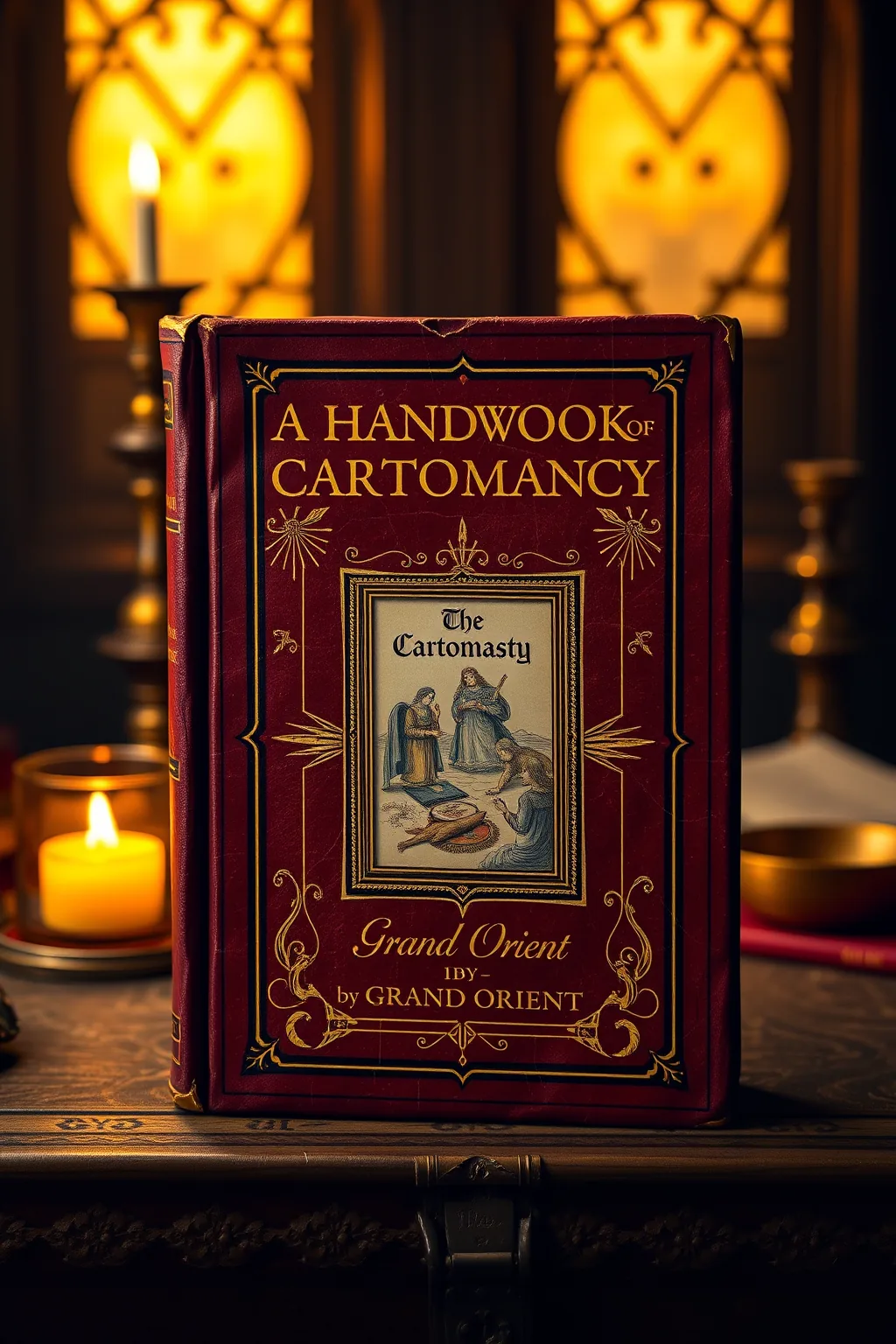
Grand Orient's 1996 'A Handbook of Cartomancy' codifies a complete system for reading playing cards.
This book details a comprehensive method for divination using a standard 52-card deck. It moves beyond basic fortune-telling by examining the inherent symbolic language within the suits, numbered cards, and court figures. The author treats the deck as a mystical lexicon, assigning specific meanings to each card and its position within a spread.
The work is aimed at students of divination and occult practices, particularly those seeking a structured, yet in-depth, approach to cartomancy. It provides practical techniques grounded in historical esoteric thought, moving past superficial interpretations. Readers interested in the symbolic connections between playing cards and broader occult systems will find this guide valuable.
Published in 1996, 'A Handbook of Cartomancy' draws upon earlier occult revivals and card divination practices, particularly from the late 19th century. This era saw significant interest in spiritualism and esoteric philosophy, leading to the codification of occult symbolism. Authors like Éliphas Lévi and figures associated with the Hermetic Order of the Golden Dawn influenced the development of systems that could be applied to common playing cards, a tradition this book continues.
💡 Why Read This Book?
• Learn the specific correspondences between a standard 52-card deck and esoteric symbolism, moving beyond parlor tricks to understand the "oracle of human destiny" as presented by Grand Orient. • Gain practical methods for interpreting card spreads, including the "Golden Wheel of Fortunes," a technique detailed within the text for charting potential outcomes. • Understand the historical lineage of playing card divination, placing this 1996 publication within the context of late 19th-century occult studies, particularly the influence of figures like Cagliostro.
⭐ Reader Reviews
Honest opinions from readers who have explored this book.
❓ Frequently Asked Questions
Can I use any deck of playing cards for the methods in A Handbook of Cartomancy?
Yes, the system described in *A Handbook of Cartomancy* is designed to work with a standard 52-card deck. The focus is on the inherent symbolism of the pips, court cards, and suits, rather than the specific artwork of a particular deck.
What is the 'Oracle of Human Destiny' mentioned in the book?
The 'Oracle of Human Destiny' refers to the system of divination using playing cards as detailed in Grand Orient's handbook. It presents the deck as a tool to understand the unfolding patterns and potential of human life.
Is this book suitable for absolute beginners in divination?
The book provides a comprehensive guide, but some concepts, like 'Cagliostro's Mystic Alpha of the Magi,' assume a prior interest or basic knowledge of esoteric symbolism. It is best suited for those willing to engage with deeper symbolic meanings.
When was A Handbook of Cartomancy first published?
The work was first published in September 1996, though its contents draw heavily on older traditions of cartomancy and occult divination dating back to at least the late 19th century.
Does the book include methods for different types of readings?
Yes, *A Handbook of Cartomancy* includes various methods, such as the 'Golden Wheel of Fortunes,' offering techniques for different divinatory needs and levels of complexity.
What is the significance of the court cards in this system?
The court cards (King, Queen, Jack) are interpreted as archetypal figures representing people, personality traits, or significant influences in the querent's life. Their specific meanings are detailed within the text.
🔮 Key Themes & Symbolism
Playing Card Symbolism
The core of *A Handbook of Cartomancy* lies in its detailed exploration of how a standard deck of playing cards functions as a system of divination. It meticulously assigns meanings to each of the 52 cards, considering their suit, number, and rank. The work emphasizes that these cards are not merely random markers but carry a rich symbolic language, capable of reflecting the 'oracle of human destiny.' This approach treats the deck as a microcosm of life's patterns and possibilities, offering a structured yet flexible method for insight.
Esoteric Alphabets and Oracles
Grand Orient connects the playing cards to broader esoteric traditions, notably through 'Cagliostro's Mystic Alpha of the Magi' and the concept of an 'oracle of human destiny.' This framing suggests that the cards serve as a symbolic alphabet, capable of spelling out truths about the human condition and the future. The book positions cartomancy not just as fortune-telling, but as a method of accessing hidden knowledge, akin to more complex systems like Tarot or the I Ching, but rendered accessible through the familiar playing card format.
The Golden Wheel of Fortunes
A significant practical element presented in the handbook is the 'Golden Wheel of Fortunes.' This likely refers to a specific card spread or layout designed for divinatory purposes. The 'wheel' imagery suggests a cyclical understanding of time and events, and its 'golden' attribute implies a focus on favorable outcomes or valuable insights. This particular method serves as a concrete application of the symbolic principles discussed, providing readers with a tangible tool for astrological and divinatory interpretation.
Divination and Self-Knowledge
Beyond mere prediction, *A Handbook of Cartomancy* implicitly advocates for divination as a tool for self-knowledge. By examining the symbolic interplay of cards, readers are encouraged to understand the forces at play in their lives, both internal and external. The work treats the unfolding of a card reading as a mirror to the soul, offering clarity on challenges and opportunities. This perspective aligns with many esoteric traditions that use symbolic systems to foster personal growth and spiritual understanding.
💬 Memorable Quotes
Direct passages from the work, attributed to the author.
“The Oracle of Human Destiny.”
— This phrase captures the book's core thesis: that a common deck of playing cards holds profound symbolic meaning capable of revealing the patterns and trajectory of human life and fate.
“Cagliostro's Mystic Alpha of the Magi.”
— This refers to a specific symbolic system, attributed to the enigmatic Count Cagliostro, that the author incorporates into the cartomancy method, suggesting a link to ancient, possibly alchemical, wisdom.
“The Golden Wheel of Fortunes.”
— This likely describes a particular card spread or layout presented in the book, designed to offer insights into the ebb and flow of destiny in a structured, potentially cyclical, manner.
“fortune-telling and occult divination - by the use of a regular deck of playing cards.”
— This direct statement from the original blurb clarifies the book's dual purpose: practical fortune-telling and deeper occult exploration, both achieved through the seemingly ordinary medium of playing cards.
“Including the oracle of human-destiny, cagliostro's mystic alpha of the magi, and the golden wheel of fortunes.”
— This highlights the key components and unique selling points of the original publication, promising readers access to specialized divinatory systems beyond basic card interpretation.
🌙 Esoteric Significance
Tradition
This work fits within the Western Esoteric tradition, specifically drawing from the practices of cartomancy that gained prominence during the late 19th-century occult revival. It bridges the gap between folk divination and more formalized esoteric systems by assigning complex symbolic meanings to a common deck of playing cards, aligning it with practices explored by groups like the Hermetic Order of the Golden Dawn, albeit with a focus on cards rather than Tarot.
Symbolism
Key symbols include the four suits (Hearts, Diamonds, Clubs, Spades) representing elemental forces and human faculties, and the court cards (King, Queen, Jack) embodying archetypal personalities and roles. The numbered cards, from Ace to Ten, are interpreted as a progression of energies and events, mirroring cycles of manifestation and experience within the divinatory framework.
Modern Relevance
Contemporary practitioners of divination, particularly those interested in accessible yet symbolically rich methods, continue to engage with playing card cartomancy. The book's structured approach offers a foundation for modern readers seeking to understand the underlying principles of symbolic interpretation, applicable even in secular contexts of self-reflection and psychological insight.
👥 Who Should Read This Book
• Aspiring cartomancers seeking a structured system for reading playing cards, moving beyond simple memorization to understand symbolic interplay. • Students of Western Esotericism interested in the historical development of divination practices and their connection to occult traditions of the late 19th century. • Individuals looking for a practical tool for self-reflection and insight, using the familiar format of playing cards to explore personal challenges and opportunities.
📜 Historical Context
The original publication of *A Handbook of Cartomancy* in 1996 places it within a late 20th-century resurgence of interest in esoteric subjects, following the New Age movements of the 1970s and 80s. However, the content itself is deeply rooted in the late 19th century, a period of intense occult revival. Figures like Eliphas Lévi and the Hermetic Order of the Golden Dawn were actively developing and disseminating systems of divination and magical symbolism, often drawing connections between various esoteric traditions. While the Golden Dawn focused heavily on Tarot and Kabbalah, the practice of using common playing cards for divination also flourished, seen as an accessible yet potent form of occult study. This book taps into that lineage, offering methods that would have been circulating and evolving during the era of Helena Blavatsky and the burgeoning Theosophical Society, which also explored divinatory arts.
📔 Journal Prompts
The symbolic progression of the numbered cards from Ace to Ten.
The archetypal representation of the court cards (King, Queen, Jack).
The elemental and psychological correspondences of the four suits.
The concept of the 'Oracle of Human Destiny' as applied to a card spread.
The 'Golden Wheel of Fortunes' layout and its potential interpretations.
🗂️ Glossary
Cartomancy
The practice of divination using a deck of cards, typically playing cards or Tarot. It involves interpreting the symbols, numbers, and positions of the cards in a spread to gain insight into past, present, or future events.
Oracle of Human Destiny
A term used to describe the divinatory system presented in the book, suggesting that a regular deck of playing cards can reveal the patterns and potential outcomes of human life and fate.
Cagliostro's Mystic Alpha of the Magi
A specific esoteric system attributed to Count Cagliostro, incorporated into the handbook, which likely links playing card symbols to a deeper, possibly alchemical or Kabbalistic, symbolic alphabet for divination.
Golden Wheel of Fortunes
A specific card spread or layout detailed in the book, designed to offer insights into the cyclical nature of events and potential outcomes, likely with an emphasis on valuable or favorable interpretations.
Pips
The numbered cards in a deck of playing cards (Ace through Ten), each bearing a number of symbols (pips) corresponding to its rank. In cartomancy, these are assigned specific divinatory meanings.
Court Cards
The King, Queen, and Jack cards in a playing card deck. In cartomancy, they often represent people, personality types, or significant influences within a reading.
Suits
The four divisions of a playing card deck: Hearts, Diamonds, Clubs, and Spades. Each suit is typically associated with specific elements, emotions, or areas of life in divinatory systems.