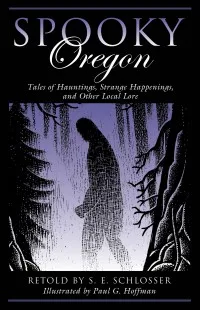
Spooky Oregon
 71
71

Spooky Oregon
S. E. Schlosser’s *Spooky Oregon* offers a catalog of spectral events and unexplained occurrences that feel genuinely rooted in the damp, shadowed corners of the Pacific Northwest. The strength of this collection lies in its specific regional focus; rather than generic hauntings, these tales often tie directly to identifiable landmarks or historical events, lending them a grounded, almost documentary feel. For instance, the accounts surrounding the disappearance of the ship *USS Potomac* near the Oregon coast in 1941 lend a tangible historical anchor to the supernatural speculation. However, the book’s primary limitation is its sheer breadth; while comprehensive, it sometimes feels like a list of intriguing premises without deep exploration of the psychological or cultural implications behind each legend. The narrative voice remains largely detached, presenting the stories without extensive authorial interpretation, which, while maintaining objectivity, occasionally sacrifices atmospheric depth. One particularly compelling section details the spectral activity reported at the Oregon State Penitentiary, a location ripe with historical weight and potential for deeper narrative. *Spooky Oregon* serves as a solid, if understated, guide to the state's spectral folklore.
📝 Description
71
S. E. Schlosser's 2009 book compiles unsettling local legends and historical accounts from Oregon.
Published in 2009, *Spooky Oregon* by S. E. Schlosser gathers unsettling local legends and historical accounts from the Pacific Northwest. The book presents narratives of paranormal encounters, unexplained disappearances, and spectral sightings, drawing from folklore that has circulated within communities. These stories often have roots in oral traditions or regional histories, and Schlosser's work captures the eerie atmosphere of Oregon's diverse geography, from its dense forests to its coastline.
This collection appeals to those interested in American folklore, particularly ghost stories and regional mysteries. Readers who enjoy the intersection of history and the supernatural will find the accounts engaging. It is suited for individuals curious about the darker aspects of the Pacific Northwest, including amateur historians and those who appreciate atmospheric storytelling tied to specific places. The focus on a particular geographic area offers a departure from more generalized ghost lore.
While not an academic occult text, *Spooky Oregon* taps into a broad cultural fascination with local legends and the supernatural. It aligns with a tradition of collecting vernacular culture and regional folklore, a practice that gained momentum throughout the 20th century. The book reflects a sustained popular interest in paranormal investigations and the documentation of ghostly phenomena, echoing trends seen in media over the past few decades. It situates itself within a vein of storytelling that acknowledges the uncanny aspects of specific locales.
💡 Why Read This Book?
• You will learn about specific Oregonian locations tied to paranormal lore, such as the reported hauntings at the Oregon State Penitentiary, offering a concrete sense of place absent in broader ghost story collections. • You will encounter historical events, like the unexplained loss of the *USS Potomac* in 1941, which serve as factual anchors for the spectral narratives, providing a unique blend of history and the unexplained. • You will gain an understanding of how regional geography and historical events in Oregon have fostered unique folklore, illustrated through tales of shadowy figures in the Cascade Mountains.
⭐ Reader Reviews
Honest opinions from readers who have explored this book.
❓ Frequently Asked Questions
What kind of spooky stories are included in *Spooky Oregon*?
The book compiles local legends, ghost stories, and accounts of unexplained phenomena specific to Oregon. It includes tales of spectral sightings, mysterious disappearances, and eerie historical events tied to the state's geography and past.
Is *Spooky Oregon* based on factual events?
The book presents stories that often have a basis in historical events, local folklore, or eyewitness accounts. While some narratives are clearly legendary, others are presented as reported occurrences, blending fact with the supernatural.
Who is the author, S. E. Schlosser?
S. E. Schlosser is an author known for collecting and writing about folklore, particularly ghost stories and paranormal legends from various regions of the United States. *Spooky Oregon* is one of their published works focusing on regional mysteries.
When was *Spooky Oregon* first published?
*Spooky Oregon* was first published in 2009, making it a relatively contemporary collection of regional folklore and ghost stories.
Does the book cover only modern ghost sightings?
No, the book includes a range of stories from different historical periods, from early settler accounts and maritime mysteries to more recent reported paranormal experiences within Oregon.
Where can I find more information on the legends mentioned in *Spooky Oregon*?
While the book itself is a primary source for these specific Oregonian legends, further research into local Oregon history, newspaper archives, and regional folklore collections can provide additional context.
🔮 Key Themes & Symbolism
Regional Hauntings
The collection centers on the concept of place-specific hauntings, where the geography and history of Oregon become the backdrop for spectral occurrences. Tales are tied to distinct locations like the Oregon Coast, the Cascade Mountains, and historical buildings, suggesting that the land itself holds memories and elements of past events. This theme emphasizes how folklore is deeply intertwined with the physical environment, giving rise to unique legends that define the eerie character of the region.
Historical Echoes
A significant theme is the persistent influence of the past on the present, manifested through ghost stories and unexplained phenomena. The book presents historical events, such as maritime disasters or the stories of early settlers, as fertile ground for supernatural narratives. These tales suggest that unresolved historical moments or tragedies leave residual energy, manifesting as apparitions or unsettling occurrences. The collection implicitly explores how collective memory and historical trauma can shape a region's folklore.
The Unseen Pacific Northwest
This theme focuses on the hidden or shadowed aspects of Oregon, moving beyond its picturesque landscapes to explore the darker, more mysterious elements. It highlights the unseen forces and unexplained events that contribute to the state's unique atmosphere. The book presents these stories as an integral part of Oregon’s identity, suggesting that the supernatural is not an anomaly but a persistent undercurrent within the regional consciousness.
Folklore as Cultural Record
The book implicitly treats folklore, particularly ghost stories, as a form of cultural record. These narratives, passed down through generations, offer insights into the anxieties, beliefs, and historical experiences of the people who have inhabited Oregon. By collecting these tales, Schlosser preserves a unique aspect of regional cultural heritage, demonstrating how stories of the uncanny can reflect deeper societal concerns and historical narratives that might otherwise be overlooked.
💬 Memorable Quotes
Direct passages from the work, attributed to the author.
“Tales of spectral apparitions tied to specific Oregon landmarks.”
— This reflects the book's core function: cataloging localized supernatural experiences. It highlights how specific places, from coastal shores to inland forests, become focal points for reported hauntings, embedding the uncanny within the very fabric of the Oregonian landscape.
“Unexplained disappearances woven into the region's historical fabric.”
— This points to the recurring theme of mystery and loss in Oregon's folklore. The book explores how unresolved disappearances, often linked to challenging terrain or historical events, fuel persistent speculation and ghost stories.
“The persistent presence of unexplained phenomena in Oregon's history.”
— This interpretation emphasizes the ongoing nature of the supernatural in the state's narrative. It suggests that these eerie occurrences are not isolated incidents but a continuous thread throughout Oregon's documented and oral history.
“Folklore emerging from the unique geography and past of the Pacific Northwest.”
— This captures the essence of the book's approach, linking supernatural tales directly to the specific environmental and historical conditions of Oregon. It underscores the idea that regional identity is shaped by its mix of natural beauty and unsettling legends.
“Accounts of eerie events reported by residents and visitors.”
— This highlights the source of many stories within the collection – eyewitness testimony. It suggests the book draws on anecdotal evidence and local accounts, presenting them as part of the living folklore of Oregon.
🌙 Esoteric Significance
Tradition
While not explicitly tied to a single esoteric lineage like Hermeticism or Gnosticism, *Spooky Oregon* operates within the broader tradition of folklore and crypto-history, which often intersects with esoteric interests. It shares common ground with occult studies by exploring phenomena that lie outside conventional scientific understanding and by examining the collective psyche as expressed through myth and legend. The work can be seen as a modern manifestation of collecting 'thin places' – locations where the veil between worlds is believed to be permeable.
Symbolism
The dense, often fog-shrouded forests of Oregon frequently serve as potent symbols in the book, representing the unknown, the primal, and the subconscious. Similarly, the Pacific Ocean and its rugged coastline symbolize vastness, mystery, and the boundary between the known and the unknowable, often associated with lost ships and spectral mariners. Abandoned or historic buildings function as symbols of lingering pasts, acting as vessels for residual hauntings and embodying the weight of history.
Modern Relevance
Contemporary practitioners of animism, nature-based spirituality, and regional folklore studies often draw on works like *Spooky Oregon*. It provides concrete examples of how localized belief systems and paranormal narratives manifest, informing modern interpretations of spirit work and geomancy. The book's focus on place-based phenomena appeals to current interests in the 'genius loci' (spirit of place) and can inspire contemporary explorations of haunted landscapes and local mythologies.
👥 Who Should Read This Book
• Enthusiasts of American regional folklore and ghost stories will find a focused collection of tales specific to the Pacific Northwest, offering a departure from generic paranormal accounts. • Amateur historians and researchers interested in the intersection of local history and unexplained phenomena will gain insights into how historical events in Oregon have spawned enduring legends. • Readers seeking atmospheric and geographically specific narratives of the uncanny will appreciate the book's grounding in the unique landscapes and cultural history of Oregon.
📜 Historical Context
Published in 2009, *Spooky Oregon* arrived during a resurgence of interest in paranormal investigation and folklore, a trend amplified by cable television and internet culture. While not directly aligned with academic occult traditions, the book taps into a long-standing American tradition of collecting regional ghost stories, a practice championed by folklorists like Benjamin A. Botkin, who directed the Archive of Folk Song at the Library of Congress from 1942 to 1945. Botkin's work emphasized collecting vernacular tales, a spirit echoed in Schlosser's focus on the Pacific Northwest. The early 21st century saw numerous popular books and shows dedicated to local hauntings, making *Spooky Oregon* part of a broader cultural conversation. Unlike more esoteric texts exploring ceremonial magic or ancient mysticism, this work grounds its supernatural elements in the tangible landscape and documented history of a specific state, offering a distinctly regional and accessible form of the uncanny.
📔 Journal Prompts
Reflect on the spectral activity reported at the Oregon State Penitentiary.
Consider the symbolism of Oregon's dense forests in the context of folklore.
Analyze the connection between the loss of the USS Potomac in 1941 and subsequent legends.
Explore personal encounters with unexplained phenomena in specific geographic locations.
Investigate local legends in your own community and their historical roots.
🗂️ Glossary
Apparition
A ghost or ghostlike image of a person. In the context of *Spooky Oregon*, these are spectral sightings reported in various locations across the state.
Folklore
The traditions, customs, and beliefs of a community or culture, often passed down orally. This book collects Oregonian folklore, particularly concerning the supernatural.
Local Legend
A story originating in a specific community, often based on historical events or figures, but embellished with supernatural or extraordinary elements.
Unexplained Disappearance
Cases where individuals or vessels vanish without a clear cause or explanation, often becoming subjects of persistent rumor and speculation, as seen in some Oregon tales.
Spectral
Relating to or like a ghost. The term describes the nature of the apparitions and phenomena documented in the book.
Maritime Mystery
Unsolved incidents or phenomena related to the sea, such as lost ships or unexplained events at sea, frequently featured in coastal Oregon folklore.
Place-Based Haunting
Supernatural occurrences or legends specifically tied to a particular geographical location, building, or area, a common theme throughout the book.
🔮 Readers Also Liked
Browse all →







More by S. E. Schlosser
All books →

More Free Occult Philosophy Books
View all →




![[Catalogue of Walter Moseley's Book Sale]](/img/thumb/catalogue-of-walter-moseley-s-book-sale-george-redway.webp)