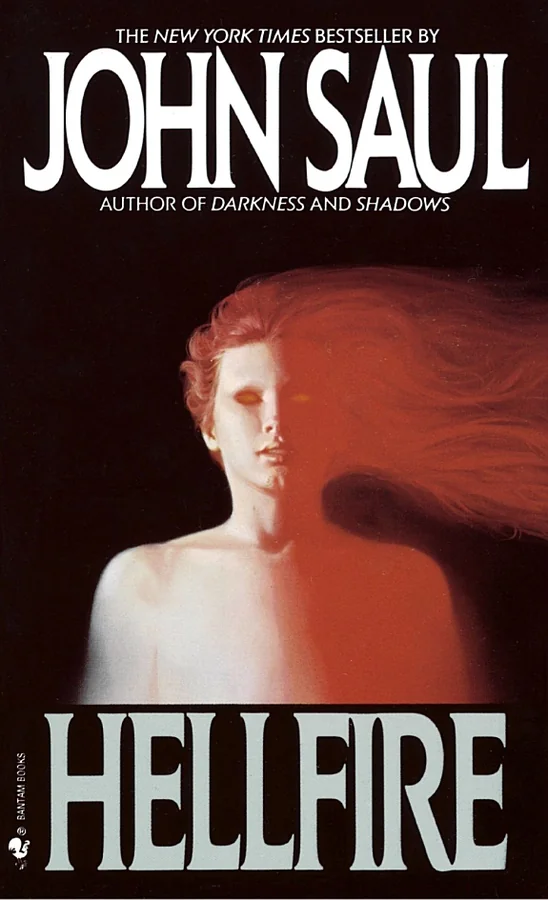
Hellfire
 76
76

Hellfire
John Saul's *Hellfire* operates on a familiar wavelength of small-town dread and ancestral malediction. The premise, rooted in the 1986 publication era's fascination with supernatural hauntings tied to specific locations, is effective. The narrative builds considerable tension around the Sturgess family's dark history and the ominous presence within the old mill. One notable strength is Saul's consistent ability to evoke a sense of pervasive unease, particularly in descriptions of the decaying mill and its oppressive atmosphere. However, the character development can feel somewhat thin, serving more as conduits for the unfolding supernatural events than fully realized individuals. The exploration of the "elemental fury" at the story's core, while present, could have benefited from a more nuanced presentation of its origins beyond inherited sin. Ultimately, *Hellfire* delivers a serviceable supernatural thriller, though it doesn't significantly deviate from the genre's established patterns.
📝 Description
76
John Saul's 1986 novel *Hellfire* revisits a century-old tragedy at an abandoned Massachusetts mill.
The novel is set in Westover, Massachusetts, focusing on an old mill where eleven children died in a fire a hundred years before the story begins. This past tragedy resurfaces when the last heir of the family that owned the mill plans to reopen it. The narrative unfolds against the backdrop of a seemingly peaceful New England town, a setting often used in American gothic fiction. The story draws on concerns about industrial legacies, the effects of unresolved historical events, and how malevolent forces can become linked to specific locations.
Saul's work touches on themes of inherited guilt, the destructive potential of natural forces awakened by human actions, and the recurring patterns of violence. The derelict mill functions as a strong symbol for buried trauma and suppressed history. The story suggests that some places absorb the resonance of past suffering, which can then impact the present and future.
While not explicitly occult, *Hellfire* taps into themes common in supernatural fiction that touches on esoteric concepts. The idea of a location becoming imbued with negative energy from past events, a concept known as 'place memory' or residual haunting, is central. This resonates with traditions that believe certain sites can hold psychic imprints. The narrative also hints at ancestral curses and the idea that past transgressions can manifest in the present, a motif found in various folk magic and spiritualist beliefs.
💡 Why Read This Book?
• You will learn how a specific location, like the Sturgess family's old mill in Westover, Massachusetts, can become a nexus for historical trauma and supernatural manifestation, a core concept explored in the novel. • You will feel the atmospheric dread associated with ancestral curses and the lingering effects of a century-old tragedy, drawing directly from the narrative's depiction of the 1986 publication context. • You will understand how elemental fury can be presented as a consequence of past sins, a thematic element central to John Saul's 1986 work, offering a specific lens on supernatural causality.
⭐ Reader Reviews
Honest opinions from readers who have explored this book.
❓ Frequently Asked Questions
What is the central tragedy that haunts Westover, Massachusetts in John Saul's Hellfire?
The town of Westover is haunted by the memory of a horrific fire at the old mill a century before the novel's events, which claimed the lives of eleven innocent young people.
Who is the last of the powerful Sturgess family mentioned in Hellfire?
The narrative focuses on the last descendant of the Sturgess family, whose actions in the 1986-published novel are pivotal in potentially unleashing the mill's dark secrets.
What kind of elemental fury does the book Hellfire suggest is unleashed?
The book implies an unleashed elemental fury tied to the historical tragedy at the mill, suggesting a powerful, destructive force connected to the location and the Sturgess legacy.
When was John Saul's novel Hellfire first published?
John Saul's novel *Hellfire* was first published in 1986, a period known for its popular supernatural thrillers.
What is the significance of the old mill in the story?
The old mill is the site of a century-old tragedy and is believed to hold dark secrets. Its reopening by the last Sturgess descendant is the catalyst for the novel's supernatural events.
Does Hellfire explore themes of inherited guilt?
Yes, *Hellfire* delves into the concept of inherited guilt, suggesting that the sins of past generations, particularly those of the Sturgess family, have consequences for the present.
🔮 Key Themes & Symbolism
Dormant Malevolence
The narrative posits that certain locations, like the Sturgess family's abandoned mill, can accumulate and harbor malevolent energy over extended periods. This energy, dormant for a century since the tragic events of 1986, is depicted as capable of resurfacing with devastating force. The concept explores how the physical environment can become a vessel for past trauma, waiting for a catalyst to reawaken its destructive potential and impact the present inhabitants of Westover.
Ancestral Curses
A central theme is the idea of ancestral curses, where the actions or transgressions of a family lineage, such as the Sturgess family, create a lingering blight. This curse manifests through the tragedy at the mill and continues to affect the last descendant. The novel suggests a cyclical nature to this malevolence, implying that the sins of the past are not easily escaped and can perpetuate suffering across generations.
Elemental Fury
The book refers to an 'elemental fury' as the driving supernatural force. This concept suggests a primal, possibly non-human, power tied to the site of the tragedy. It represents a raw, untamed force that reacts to the reopening of the mill and the Sturgess family's presence, acting as a terrifying consequence of suppressed historical events and unresolved spiritual debt.
Buried Secrets
The narrative is built around the concept of secrets locked away within the old mill, secrets that have festered for a hundred years. The people of Westover remember the tragedy but perhaps not its full truth. The impending reopening by the last Sturgess descendant is an attempt to confront or perhaps unleash these buried truths, highlighting how unresolved historical narratives can hold a potent, dangerous power.
💬 Memorable Quotes
Direct passages from the work, attributed to the author.
“The day the mill's doors slammed shut--forever.”
— This phrase signifies the abrupt and permanent end to the mill's operations following the tragedy, symbolizing the sealing away of secrets and the beginning of its haunted legacy.
“For behind the padlocks, deep within the dark, abandoned building, a terrible venge”
— This snippet, a part of the original blurb, strongly implies the presence of a malevolent entity or force within the mill, hinting at a vengeful presence awaiting discovery.
💡 Key Ideas
Editorial paraphrase of the work's core concepts — not direct quotes.
The old mill has been silent for a hundred years, its dread secrets locked from view.
This line sets the stage for the novel's central mystery, establishing the abandoned mill as a focal point of historical dread and concealed, dangerous knowledge.
Still, the people of Westover, Massachusetts, remember . . . and whisper of that terrible day when horrifying flames claimed eleven innocent young lives.
This quote highlights the persistent, albeit fragmented, memory of a past tragedy within the community, emphasizing the fear and unease that such unresolved historical events can engender.
But now, the last of the once-powerful Sturgess family is about to unlock those doors again . . . and unleash an elemental fury.
This passage introduces the catalyst for the story's supernatural events, pointing to the Sturgess family's descendant and the imminent confrontation with a powerful, destructive force tied to the mill's past.
🌙 Esoteric Significance
Tradition
While not explicitly aligned with a single esoteric tradition, *Hellfire* draws upon archetypal themes found in folk magic and broader Western occultism concerning place-based hauntings and elemental forces. Its narrative of inherited sin and a cursed lineage echoes concepts present in certain Gnostic or Kabbalistic mythologies, where the consequences of primordial events or flawed creation can manifest in the material world. The 'elemental fury' can be interpreted as a manifestation of untamed, chthonic energies often explored in Hermetic traditions.
Symbolism
The abandoned old mill serves as a potent symbol of a psychic wound in the landscape, a physical manifestation of suppressed trauma and historical guilt. The 'elemental fury' represents the unleashed, chaotic energies that result from unresolved suffering, akin to a localized eruption of primal forces. The Sturgess family, as the custodians of this cursed legacy, symbolize the burden of inherited responsibility and the destructive potential of secrets passed down through generations.
Modern Relevance
Contemporary practitioners of earth-based spirituality or animistic traditions might find resonance in *Hellfire*'s depiction of a location imbued with sentient, potent energy. Those interested in the psychological aspects of hauntings, viewing them as manifestations of collective trauma, can also draw parallels. The novel's exploration of how historical events can 'imprint' themselves onto a place aligns with modern discussions in psychogeography and theories of subtle energies, offering a fictionalized exploration of such concepts.
👥 Who Should Read This Book
• Students of American Gothic literature interested in genre conventions of the 1980s, particularly those focusing on haunted locations and ancestral curses. • Readers of supernatural thrillers who appreciate atmospheric suspense and narratives rooted in historical tragedy and small-town secrets. • Individuals exploring the concept of place-based hauntings and the idea of elemental forces being tied to specific sites of past trauma.
📜 Historical Context
John Saul's *Hellfire*, published in 1986, emerged during a robust period for supernatural horror novels. The mid-1980s saw authors like Stephen King dominating bestseller lists with tales blending psychological dread and supernatural elements, often set in small-town America. *Hellfire* taps into this milieu, employing the trope of a cursed location and a lingering ancestral tragedy. While Saul's work might be seen as engaging with popular horror trends, it also presents a narrative that could be compared to classic gothic literature's focus on decaying manors and inherited sin. The novel's reception likely placed it alongside other contemporary horror authors, though specific academic citations or major critical engagements from that era are not widely documented. Its focus on a localized, historical horror without explicit engagement with contemporary intellectual movements like postmodernism or deconstruction positions it as a more traditional genre piece.
📔 Journal Prompts
The old mill's dread secrets: what is the most potent unshared secret you hold?
The Sturgess family's legacy: how do familial histories shape present-day actions?
The eleven innocent young lives: reflect on the concept of collective memory of tragedy.
Unleashing elemental fury: consider the consequences of disturbing a long-dormant power.
Westover's whispers: what unspoken narratives exist within your own community?
🗂️ Glossary
Old Mill
The central, abandoned structure in Westover, Massachusetts, serving as the primary site of a century-old tragedy and the locus of supernatural events in the novel.
Westover, Massachusetts
The fictional New England town where the events of *Hellfire* unfold, characterized by its quiet facade and a dark, suppressed history tied to the old mill.
Sturgess Family
The once-powerful family associated with the old mill, whose legacy of secrets and tragedy directly influences the events of the novel.
Elemental Fury
A powerful, destructive supernatural force suggested to be unleashed from the old mill, intrinsically linked to the past tragedy and the Sturgess family's history.
Dread Secrets
The hidden, malevolent truths associated with the old mill and the tragedy that occurred there, believed to be locked away for a century.
Eleven Innocent Young Lives
Refers to the victims of the fire at the old mill, whose deaths form the historical basis for the haunting and the subsequent supernatural occurrences.
1986 Publication
The original year John Saul's novel *Hellfire* was first released, placing it within the context of popular horror literature of the era.
This book appears in 1 collection
🔮 Readers Also Liked
Browse all →









From the “Haunted Places” Collection
View all →







More Free Occult Philosophy Books
View all →