The Books of Shadows
 75
75

The Books of Shadows
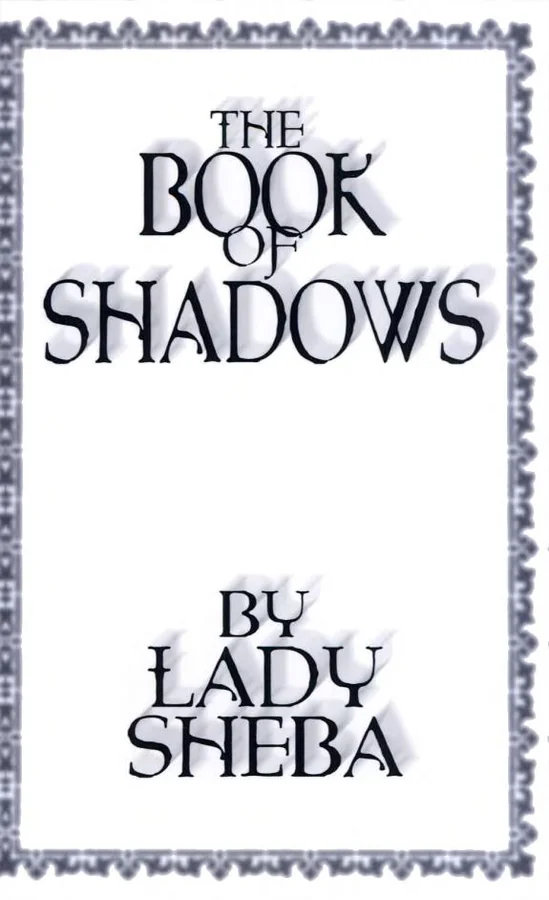
Lady Sheba's The Books of Shadows is a direct confrontation with popular mythos surrounding Witchcraft. Its strength lies in its clear, no-nonsense presentation, aiming to demystify the craft for a public often fed sensationalized narratives. Sheba’s voice is authoritative, attempting to re-establish a sense of dignified tradition. The author’s explicit goal, stated in the original blurb, to counter misconceptions from a film released that same year (2000) reveals a proactive stance against cultural misrepresentation. However, the work occasionally feels defensive, perhaps a consequence of its reactive genesis. While it provides a solid overview of what Sheba considers authentic practice, it sometimes lacks the deeper philosophical exploration found in other works, prioritizing instruction over intricate theory. For instance, the section on spellcasting, while practical, could benefit from more theoretical grounding regarding the manipulation of subtle energies. Nevertheless, it remains a valuable resource for its clarity and directness in defining a particular strand of Witchcraft.
📝 Description
75
Lady Sheba published The Books of Shadows in October 2000 to clarify modern Witchcraft practices.
The Books of Shadows was written by Lady Sheba to set straight public perceptions of modern Witchcraft. Sheba intended the book to counter the misinformation often spread by popular media. The text acts as an introduction, outlining essential beliefs, rituals, and the guiding ethics for practitioners. It is for anyone seeking a clear understanding of Witchcraft, moving past sensationalism. Newcomers curious about its spiritual and practical sides will find it useful. Established practitioners can use it to solidify their knowledge within a well-articulated tradition. The book also appeals to those studying comparative religion or the history of esoteric movements.
The work details the organization of covens, the positions within them, and the significance of the Wheel of the Year. It stresses the connection between the practitioner and the natural world, marking festivals and sabbats that align with agricultural and celestial rhythms. Magic is presented as a force for personal growth and ethical conduct, not simply superstition.
Published in 2000, this book emerged during a period of renewed interest in Paganism and Neo-Wicca. The late 20th century saw increased availability of occult literature and a growing search for spiritual paths outside mainstream religions. Lady Sheba's work aimed to correct widespread misconceptions about Witchcraft, which were often amplified by film and television portrayals. It addressed a cultural moment where the public image of the craft was heavily shaped by sensationalized media.
💡 Why Read This Book?
• Learn the fundamental structure and ethical guidelines of a specific Witchcraft tradition, as articulated by Lady Sheba, offering a direct contrast to Hollywood portrayals. • Understand the significance of the Wheel of the Year and its associated sabbats, gaining insight into the cyclical nature of ritual practice as presented in the book's 2000 publication context. • Gain practical knowledge regarding coven structure and the roles within, providing a concrete framework for understanding organized Wiccan practice beyond common stereotypes.
⭐ Reader Reviews
Honest opinions from readers who have explored this book.
❓ Frequently Asked Questions
What is the primary goal of Lady Sheba's The Books of Shadows?
The primary goal is to present the authentic beliefs and practices of Witchcraft, correcting widespread misconceptions, particularly those amplified by popular media around the year 2000.
When was The Books of Shadows first published?
The book was first published on October 1, 2000, a date chosen to coincide with and counter specific cultural narratives emerging at that time.
What historical context influenced the writing of this book?
The book was written in response to public misconceptions about Witchcraft, fueled by popular culture and media at the turn of the millennium, aiming to restore respectability to the ancient art.
Does Lady Sheba's book discuss specific Wiccan holidays?
Yes, the work explores the significance of the Wheel of the Year, detailing the various festivals and sabbats that mark the natural and celestial cycles important to Witchcraft practitioners.
Is this book suitable for beginners in Witchcraft?
Yes, it is designed to be a foundational text for newcomers seeking genuine understanding of Witchcraft, offering a clear primer on core tenets and practices.
What kind of magic is discussed in The Books of Shadows?
The book discusses magic as a force for personal growth and ethical action, emphasizing its role within the framework of Witchcraft traditions rather than as mere superstition.
🔮 Key Themes & Symbolism
Authenticity and Misconception
Lady Sheba directly addresses the chasm between public perception and the reality of Witchcraft, particularly concerning the cultural climate of 2000. The book functions as a corrective text, aiming to establish a clear, respectable image of the craft by detailing its core principles, rituals, and ethical framework. It champions an 'authentic' approach, distinguishing it from sensationalized or erroneous depictions that permeated popular culture.
The Wheel of the Year
Central to the book is the concept of the Wheel of the Year, representing the cyclical progression of seasons and their corresponding festivals. This theme underscores the connection between Witchcraft practice and the natural world. The text delineates the eight sabbats (Samhain, Yule, Imbolc, Ostara, Beltane, Litha, Lughnasadh, Mabon), highlighting their agricultural and spiritual significance for practitioners.
Coven Structure and Practice
The work provides an inside look at the organization of a coven, detailing roles, responsibilities, and the dynamics of group practice. This section is crucial for understanding Witchcraft not just as individual belief but as a communal and structured spiritual path. It outlines the necessary components for a functioning coven, emphasizing order and shared purpose.
Magic as Ethical Force
Contrary to sensationalized portrayals, Lady Sheba frames magic within The Books of Shadows as a force for positive personal development and ethical action. The emphasis is on responsible application, aligning magical work with natural cycles and personal integrity. This positions Witchcraft as a serious spiritual discipline rather than a collection of parlor tricks or malevolent forces.
💬 Memorable Quotes
Direct passages from the work, attributed to the author.
“To bring to light the authentic beliefs of Witchcraft and reestablish the respectability of this ancient art.”
— This statement captures the author's primary motivation for writing the book: a direct response to negative stereotyping and a desire to present a clear, dignified portrayal of Witchcraft as a legitimate spiritual tradition.
“Understanding the Wheel of the Year is fundamental to Witchcraft.”
— This interpretation emphasizes the central role of seasonal cycles and festivals in the practice of Witchcraft as presented by Lady Sheba, connecting the spiritual path to the rhythms of nature.
“The structure of the coven ensures order and shared purpose.”
— This interpretation focuses on the book's explanation of coven organization, highlighting the importance of community, defined roles, and collective spiritual endeavor in the practice of Witchcraft.
💡 Key Ideas
Editorial paraphrase of the work's core concepts — not direct quotes.
The Book of Shadows will clarify the genuine practices of the craft.
This paraphrased concept highlights the book's function as an instructional guide, promising to explain rituals and beliefs for those seeking accurate information, differentiating it from fictional or sensationalized accounts.
Magic is a tool for growth and ethical action.
This paraphrased concept positions the book's view of magic as a constructive and morally grounded force, countering common fears and misunderstandings about its nature and purpose within the craft.
🌙 Esoteric Significance
Tradition
This work aligns with the broader tradition of Neo-Wiccan and modern Witchcraft literature that seeks to codify and explain practices. It situates itself within a lineage aiming for clear transmission of ritual, ethics, and cosmology, often drawing upon earlier works while striving for contemporary relevance. It departs from purely academic or historical accounts by offering a practitioner's perspective, emphasizing lived experience and direct instruction.
Symbolism
The text prominently features symbolism tied to the natural world, most notably the Wheel of the Year, representing the eight primary seasonal festivals (sabbats) that structure the Witch's year. Another key motif is the coven, symbolizing community, shared power, and the structured transmission of knowledge. The concept of magic itself functions symbolically, representing the human capacity to interact with and influence subtle energies for personal and communal benefit.
Modern Relevance
Contemporary practitioners and students of Western Esotericism continue to reference foundational texts like Lady Sheba's for their clear exposition of organized Witchcraft. Its emphasis on ethical practice and structured ritual remains relevant for those seeking a grounded approach amidst the diverse field of modern spirituality. It provides a reference point for understanding the lineage and development of specific Wiccan traditions that value clear doctrinal and procedural outlines.
👥 Who Should Read This Book
• Aspiring practitioners of organized Witchcraft seeking a foundational text that clearly outlines coven structure, ethical guidelines, and key seasonal observances. • Individuals interested in comparative religion or folklore who wish to understand a specific, non-sensationalized perspective on modern Witchcraft traditions. • Readers seeking to differentiate between popular media portrayals of Witchcraft and the actual practices and beliefs as articulated by adherents.
📜 Historical Context
Lady Sheba's The Books of Shadows, published in October 2000, emerged during a significant period of Neo-Pagan revival and increased public visibility for Witchcraft. The late 20th century saw a growing interest in alternative spiritualities, yet public understanding remained heavily skewed by sensationalized media. Sheba's explicit aim was to counter the misconceptions fostered by popular culture, particularly films released around the millennium. This work engaged with the ongoing discourse surrounding the authenticity and perception of modern Witchcraft, a topic also explored by scholars and practitioners like Starhawk, whose own influential works advocated for feminist and earth-centered spirituality. While not directly engaging in academic debate, Sheba's book served as a popular accessible text for those seeking a clear articulation of what she considered traditional, organized Witchcraft, distinct from more individualistic or eclectic forms gaining traction.
📔 Journal Prompts
The author's stated goal of reestablishing respectability for Witchcraft.
The significance of the Wheel of the Year in daily life.
Defining ethical magic within the context of personal growth.
The structure and roles within a coven.
Distinguishing authentic practice from popular media depictions.
🗂️ Glossary
Coven
A group of Witches, typically numbering around thirteen, who gather for ritual and practice. The book details specific roles and organizational structures within a coven.
Wheel of the Year
The cycle of eight seasonal festivals celebrated by Witches, marking key points in the agricultural and solar year, such as Samhain, Yule, and Beltane.
Sabbats
The eight major festivals that comprise the Wheel of the Year, each with its own specific themes, rituals, and significance within Witchcraft practice.
Magic
As presented in this work, magic is viewed as the art and science of causing change to occur in conformity with Will, emphasizing ethical application and personal development.
Book of Shadows
A personal or group grimoire containing rituals, spells, and lore. Lady Sheba's work aims to be a foundational example of such a text for modern Witchcraft.
Esoteric
Relating to or accessible only by a relatively small number of people with a specialized knowledge or interest; inner knowledge.
Witchcraft
A spiritual path and practice focused on nature, magic, and personal empowerment, distinct from malevolent or folkloric stereotypes. Lady Sheba's text defines its authentic form.
This book appears in 1 collection
🔮 Readers Also Liked
Browse all →





From the “Book of Shadows” Collection
View all →





More Free Sacred Texts & Gnosticism Books
View all →