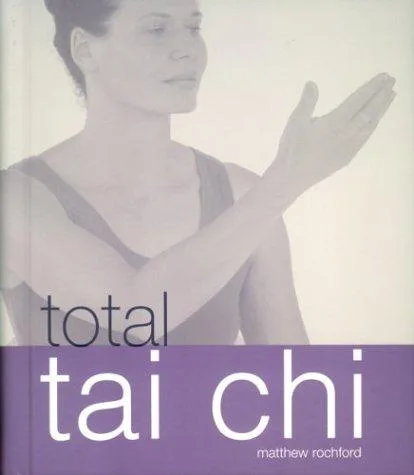
Total Tai Chi
 82
82

Total Tai Chi
Matthew Rochford’s Total Tai Chi attempts a rigorous examination of the internal martial art, moving beyond mere form instruction. The book’s strength lies in its detailed deconstruction of core principles, particularly its consistent emphasis on the energetic component, Qi, as the driving force behind effective practice. Rochford’s explanation of rooting, for instance, is particularly lucid, providing a practical anchor for students struggling with stability and power generation. However, the text occasionally suffers from a density that might challenge absolute beginners. While the philosophical depth is commendable, the sheer volume of concepts, such as the detailed breakdowns of specific postures and their energetic implications, can feel overwhelming without prior exposure. The chapter on the martial applications, while informative, could have benefited from more explicit visual aids to accompany Rochford’s precise descriptions of force vectors and yielding techniques. Ultimately, Total Tai Chi serves as a valuable, if demanding, resource for dedicated practitioners seeking a comprehensive understanding of the art's internal dimensions.
📝 Description
82
Matthew Rochford's 2003 book, Total Tai Chi, explains the internal martial art beyond mere physical exercise.
Published in 2003, Matthew Rochford's Total Tai Chi examines the internal martial art of Tai Chi Chuan, emphasizing its philosophical roots and practical use. Rochford presents Tai Chi as a complete system for integrating mind and body, and for cultivating energy, rather than solely a physical activity. The book dissects the art into its fundamental components. It provides clear explanations suitable for practitioners at all levels of their training.
This work is for individuals dedicated to deepening their Tai Chi practice beyond surface level movements. It speaks to students who want to understand the reasons behind the actions, focusing on energetic pathways, philosophical ideas, and martial applications that contemporary interpretations often miss. Instructors will also find it useful for enhancing their teaching with a stronger theoretical basis.
Total Tai Chi connects the practice to a broader spectrum of energetic cultivation. It draws parallels with other internal energy disciplines and philosophical systems, placing it within the early 21st century's growing Western engagement with traditional Asian practices. Rochford's book emerged when interest in the deeper, esoteric, and martial aspects of these arts was increasing, moving beyond a sole focus on health benefits or form instruction.
💡 Why Read This Book?
• Gain a nuanced understanding of Qi cultivation and circulation, as explained through Rochford’s detailed breakdowns of movement and posture, which is crucial for unlocking the energetic potential of Tai Chi. • Learn the specific principles of rooting and yielding, as described in the book’s foundational sections, enabling you to develop stability and generate power more effectively in your practice. • Appreciate the martial applications of Tai Chi beyond mere health benefits, by studying Rochford’s analysis of force dynamics and energetic principles as they apply to combat scenarios.
⭐ Reader Reviews
Honest opinions from readers who have explored this book.
❓ Frequently Asked Questions
What is the primary focus of Matthew Rochford's Total Tai Chi?
The book's primary focus is on the internal aspects of Tai Chi Chuan, emphasizing the cultivation and circulation of Qi (vital energy), mind-body integration, and the underlying philosophical principles that inform the practice, rather than just the external form.
When was Total Tai Chi first published, and who is the author?
Total Tai Chi was first published in 2003. The author is Matthew Rochford, who presents a comprehensive view of the art.
Is Total Tai Chi suitable for absolute beginners?
While it offers a comprehensive overview, the book's depth and detail might be more suited for practitioners who have some basic familiarity with Tai Chi forms or are looking to significantly deepen their understanding beyond introductory levels.
What core concepts are explored in the book?
Key concepts include Qi (vital energy), rooting, intention, the seamless flow of movement, and the principles of Yin and Yang as applied to posture and energetic exchange.
Does the book cover the martial applications of Tai Chi?
Yes, Total Tai Chi delves into the martial applications, explaining how the principles of energetic cultivation and movement translate into effective defensive and offensive techniques.
What distinguishes Rochford's approach to Tai Chi?
Rochford's approach distinguishes itself by focusing on the energetic and philosophical underpinnings, presenting Tai Chi as a holistic system for mind-body development and internal power cultivation.
🔮 Key Themes & Symbolism
Qi Cultivation and Circulation
The book places paramount importance on Qi, the vital life force, as the engine of Tai Chi practice. Rochford meticulously details how intention and awareness direct this energy through specific meridians and energy centers within the body. He explains that mastering the art requires not just physical movement but the conscious cultivation, channeling, and harmonization of Qi, enabling practitioners to develop internal power and resilience far beyond what is achievable through physical conditioning alone.
Mind-Body Integration
Total Tai Chi posits that true mastery is achieved when the mind and body function as a unified whole. Rochford emphasizes the role of intention (Yi) in guiding movement and Qi, asserting that the practitioner's mental focus is as critical as physical execution. This integration allows for spontaneous and effective responses, transforming the practice from rote memorization of forms into a dynamic, responsive art form deeply connected to the practitioner's energetic state.
Principles of Yin and Yang
The fundamental Taoist concept of Yin and Yang is woven throughout Rochford's analysis of Tai Chi. The book explores how these opposing yet complementary forces manifest in every aspect of the art: stillness and motion, expansion and contraction, yielding and asserting. Understanding and balancing Yin and Yang allows practitioners to achieve a state of dynamic equilibrium, essential for both effective energy flow and the application of martial principles.
Martial Applications and Energetic Power
Contrary to the common perception of Tai Chi as purely a health exercise, Rochford underscores its profound martial origins and applications. He details how the principles of Qi circulation, rooting, and strategic yielding can be employed to generate significant internal power, redirect an opponent's force, and achieve decisive outcomes. The book bridges the gap between internal energetic cultivation and practical combat effectiveness.
💬 Memorable Quotes
Direct passages from the work, attributed to the author.
“The seamless flow of movement is the conduit for Qi.”
— This statement highlights the energetic principle that fluid, unbroken motion is essential for the unimpeded circulation of vital energy (Qi) throughout the practitioner's body, a core tenet of internal martial arts.
“Rooting is not merely about being stable, but about connecting to the earth's energetic field.”
— This interpretation expands the concept of rooting beyond physical balance, suggesting a deeper energetic connection to the ground, which allows for the grounding of both physical force and vital energy.
“Intention guides Qi, and Qi animates the form.”
— This concisely explains the mind-body-energy connection in Tai Chi, where mental focus (intention) directs the vital force (Qi), which in turn brings the physical movements (form) to life.
“True Tai Chi embodies both the yielding of water and the power of a mountain.”
— This metaphor illustrates the principle of Yin and Yang in practice, showcasing how the art requires both adaptability and softness (like water) alongside rooted strength and unyielding power (like a mountain).
“The body is a vessel for energy; the mind is its navigator.”
— This emphasizes the dual nature of practice: the physical form (body) serves as the container for vital energy (Qi), while conscious awareness and mental direction (mind) are crucial for controlling and directing that energy.
🌙 Esoteric Significance
Tradition
Total Tai Chi firmly sits within the Taoist esoteric tradition, specifically as it relates to internal alchemy and the cultivation of vital energy (Qi). It draws heavily on principles found in classical Taoist texts and Neidan (internal alchemy) practices, interpreting the physical movements of Tai Chi as a method for refining and circulating Qi for health, longevity, and martial prowess. The work departs from purely secular interpretations by emphasizing the energetic and conscious dimensions that are central to Taoist cultivation systems.
Symbolism
Key symbols explored include the concept of Qi itself, visualized as a vital, flowing energy. The principles of Yin and Yang are fundamental, representing the dynamic interplay of complementary forces that govern all phenomena and are central to achieving balance in movement and energy. The 'form' of Tai Chi, while seemingly physical, symbolizes the structured pathways through which Qi is cultivated and directed, acting as a map for energetic transformation.
Modern Relevance
Contemporary practitioners and scholars of internal arts, as well as those exploring mind-body medicine and conscious movement, find resonance in Rochford's detailed exploration of Qi dynamics. Modern Qigong and Tai Chi lineages that emphasize energetic cultivation over purely physical form often draw upon the principles articulated in Total Tai Chi. Its approach also influences modern interpretations of somatic practices and embodied cognition within Western therapeutic and movement disciplines.
👥 Who Should Read This Book
['• Dedicated Tai Chi practitioners seeking to understand the energetic and philosophical underpinnings of their art beyond basic form instruction.', '• Students of internal martial arts interested in the principles of Qi cultivation, rooting, and intention as applied in a comprehensive system.', '• Individuals exploring Taoist philosophy and its practical applications in mind-body development and energetic awareness.']
📜 Historical Context
The early 2000s witnessed a significant surge in Western interest in traditional Asian martial and meditative arts, driven by a desire for holistic health practices and spiritual exploration. Within this milieu, Matthew Rochford's Total Tai Chi, published in 2003, emerged as a text aiming to provide a more in-depth, esoteric interpretation of Tai Chi Chuan. This period saw a proliferation of books focusing on the health and wellness aspects of Tai Chi, often presented in a simplified manner. Rochford's work, conversely, sought to reconnect the art with its deeper roots in internal energetic cultivation and martial efficacy, positioning it within a lineage of mind-body practices. While figures like Benjamin Lo were also exploring the martial dimensions of Tai Chi around this time, Rochford's text offered a particularly detailed examination of Qi dynamics and philosophical underpinnings, contributing to a growing scholarly and practitioner interest in the non-superficial aspects of these ancient arts.
📔 Journal Prompts
The concept of Qi as described in Chapter 3.
The role of intention (Yi) in guiding movement.
The balance of Yin and Yang in a specific posture.
The practical application of rooting principles.
The connection between seamless movement and Qi flow.
🗂️ Glossary
Qi (Chi)
The vital life force or energy that flows through all living things, central to the practice of Tai Chi and other internal arts for health and power.
Yin and Yang
Fundamental Taoist concepts representing complementary, opposing forces (e.g., passive/active, dark/light) that are in constant interplay and balance within the universe and the human body.
Rooting
A fundamental principle in Tai Chi that involves establishing a stable, grounded connection with the earth, allowing for effective energy transfer and balance.
Intention (Yi)
The mental focus or will that directs movement and Qi circulation within the body, considered a crucial element for advanced Tai Chi practice.
Form
The sequence of choreographed movements in Tai Chi, which serves as a vehicle for cultivating Qi, developing internal power, and practicing martial principles.
Neidan
Chinese internal alchemy, a Taoist practice focused on cultivating and refining the body's intrinsic energies (Qi, Jing, Shen) for spiritual development and longevity.
Meridians
Imaginary pathways within the body through which Qi is believed to flow, analogous to acupuncture channels.
🔮 Readers Also Liked
Browse all →








More Free Occult Philosophy Books
View all →