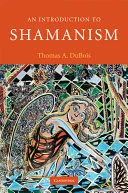
An Introduction to Shamanism
 83
83

An Introduction to Shamanism
Thomas A. DuBois’s survey, An Introduction to Shamanism, provides a much-needed academic clearinghouse for a topic often mired in New Age generalizations. DuBois avoids romanticism, instead presenting a structured overview of shamanic practices worldwide. His discussion of the trance state, particularly how it is invoked and interpreted across disparate cultures, stands out as a strength. The work effectively grounds abstract concepts in ethnographic examples, a significant advantage over more speculative accounts. However, the sheer breadth of the subject means that certain regions or specific traditions receive less detailed attention than specialists might desire. For instance, while the book touches upon Siberian shamanism, a cornerstone of early research, it could benefit from further exploration of its specific methodologies. Despite this limitation, DuBois succeeds in offering a balanced and informative primer that clarifies the essential elements of shamanism for the uninitiated.
📝 Description
83
Thomas A. DuBois's 2009 book is an introduction to shamanism's global practices.
This book surveys beliefs, rituals, and techniques central to shamanic traditions across the world. It moves past simple ideas to examine the diverse practices that make up this ancient form of spiritual engagement. The work systematically looks at the core elements that define shamanism in various cultures, giving readers a basic understanding.
It places shamanism within its larger historical and cultural settings. The book discusses the academic study of shamanism, which became important in anthropology around the mid-20th century, especially with scholars like Mircea Eliade. DuBois frames the research and understanding of shamanic practices, recognizing how scholarly views have changed over time and in different academic fields.
Central to the text is the role of the shaman as a go-between for the human and spirit worlds. The work covers altered states of consciousness, ecstatic journeys, and the use of healing and divination methods. It stresses the importance of shamanic practices for communities and individuals, showing how they fit into daily life and the worldview of many societies.
Shamanism, as presented by DuBois, represents a long-standing human engagement with spiritual realities and altered states of consciousness. This tradition, studied academically since the mid-20th century, involves individuals who act as intermediaries between the physical world and spirit realms. The book details the practices, beliefs, and communal significance of these traditions, situating them within diverse cultural and historical frameworks. It examines how shamans use altered states for healing, divination, and maintaining cosmic balance, offering a survey of these phenomena as they appear across different global societies.
💡 Why Read This Book?
• Gain a structured understanding of shamanic beliefs and rituals worldwide, moving beyond popular misconceptions by examining specific ethnographic examples documented by DuBois. • Learn about the academic history of shamanic studies, including the influence of scholars like Mircea Eliade, providing context for contemporary research dating from the mid-20th century onwards. • Grasp core shamanic concepts such as altered states of consciousness and the mediator role of the shaman, understanding their function within diverse cultural cosmologies.
⭐ Reader Reviews
Honest opinions from readers who have explored this book.
❓ Frequently Asked Questions
What is the primary focus of Thomas A. DuBois's An Introduction to Shamanism?
The book offers a global survey of the beliefs, rituals, and techniques central to various shamanic traditions. It aims to provide a foundational understanding by examining practices across different cultures and historical contexts.
When was An Introduction to Shamanism first published?
The original publication date for An Introduction to Shamanism by Thomas A. DuBois was May 14, 2009.
Who is the author of An Introduction to Shamanism?
The author is Thomas A. DuBois, an academic who has extensively studied and written about shamanism and indigenous cultures.
What academic disciplines does this book engage with?
The book draws upon anthropology, comparative religion, and cultural studies. It addresses how these fields have approached the study of shamanism over time.
Does the book focus on a single shamanic tradition?
No, An Introduction to Shamanism provides a comparative overview, exploring shamanic practices found in diverse regions around the world rather than concentrating on a single tradition.
What is a key concept explored in the book regarding the shaman's role?
A central theme is the shaman's function as a mediator between the human and spirit worlds. The work details how this role is enacted through altered states and spiritual journeys.
🔮 Key Themes & Symbolism
Mediator Between Worlds
The work emphasizes the shaman's critical role as a bridge between the mundane human realm and the spirit world. This intermediary function is explored through diverse cultural lenses, detailing how shamans typically enter altered states of consciousness to commune with spirits, retrieve lost souls, or gain knowledge for their communities. DuBois examines the techniques employed, such as drumming, chanting, and ecstatic dance, to facilitate these trans-dimensional journeys and the responsibilities inherent in such a position.
Altered States of Consciousness
A core element examined is the deliberate induction of altered states of consciousness, often referred to as trance. The book surveys the variety of methods used across different cultures to achieve these states, from psychotropic substances to rhythmic sound and ritualistic performance. It clarifies how these states are not mere experiences of dissociation but are understood within shamanic cosmologies as access points to spiritual realities, crucial for healing, divination, and communal well-being.
Comparative Ritual Analysis
DuBois undertakes a comparative analysis of shamanic rituals worldwide, highlighting both commonalities and significant variations. The text breaks down the typical components of a shamanic ritual, including preparation, invocation, spirit journeying, and return. By examining practices from Siberia to the Americas, the book illustrates how universal human needs for understanding, healing, and connection are addressed through distinct but related ritualistic frameworks.
The Shaman in Society
Beyond the individual spiritual practice, the book addresses the shaman's integral place within their society. It discusses how shamans often serve as healers, spiritual guides, historians, and community leaders. The work explores the social and cultural factors that shape the perception and function of shamans, underscoring their importance in maintaining cosmic balance and addressing communal challenges through their unique spiritual authority and abilities.
💬 Memorable Quotes
Direct passages from the work, attributed to the author.
“Shamanism is understood as a set of beliefs and practices that involve communication with the spirit world.”
— This statement expresses the fundamental definition presented in the book, highlighting the core function of shamanism as a spiritual technology for interacting with unseen realms.
“Altered states of consciousness are crucial for shamanic practice.”
— This highlights the essential nature of non-ordinary states of awareness, positioning them not as mere psychological phenomena but as necessary conditions for accessing spiritual knowledge and power.
“Rituals vary widely but often share common structural elements.”
— This observation points to the comparative nature of DuBois's study, acknowledging the global diversity of shamanic expression while identifying underlying patterns in ritual performance across cultures.
“The study of shamanism has evolved significantly over time.”
— This reflects the book's engagement with the academic history of shamanism, suggesting that scholarly understanding has shifted and deepened since its initial investigation.
💡 Key Ideas
Editorial paraphrase of the work's core concepts — not direct quotes.
The shaman acts as a mediator between the human and spirit realms.
This paraphrased concept underscores the central role of the shaman as a conduit, facilitating exchange and understanding between the terrestrial and the celestial or underworld.
🌙 Esoteric Significance
Tradition
While not strictly adhering to a single esoteric lineage like Hermeticism or Kabbalah, An Introduction to Shamanism engages with practices that form the bedrock of many Western esoteric traditions. Shamanism, as a practice of spirit-communion and altered states, shares conceptual overlap with certain forms of Western magic, ecstatic prophecy, and indigenous spiritual systems that influenced movements like Theosophy. DuBois's work serves as an accessible academic bridge, allowing practitioners and scholars of esoteric arts to understand the global roots and diverse manifestations of techniques they may encounter or employ.
Symbolism
Key symbols often found in shamanic traditions, and implicitly discussed by DuBois, include the World Tree or Axis Mundi, representing a cosmic structure connecting different realms, and spirit animals, which act as guides or embodiments of spiritual power. The concept of the luminous or spirit body, distinct from the physical form, is also central. These symbols function not merely as decorative elements but as active conduits for spiritual energy and understanding within the shamanic worldview.
Modern Relevance
Contemporary thinkers and practitioners in fields ranging from depth psychology (e.g., Jungian analysis exploring archetypes and the collective unconscious) to modern animistic philosophies and neo-shamanic movements draw heavily on the academic understanding of shamanism that DuBois synthesizes. His work provides a crucial reference point for understanding the historical and cross-cultural validity of practices that seek to re-establish connection with nature, the spirit world, and indigenous wisdom traditions in an increasingly secularized and technologically driven era.
👥 Who Should Read This Book
• Beginning students of comparative religion and anthropology seeking a foundational overview of global spiritual practices. • Individuals interested in indigenous worldviews and the historical development of human belief systems, wanting to understand non-Western spiritual technologies. • Practitioners of esoteric arts or comparative mythology curious about the cross-cultural roots of altered states, spirit communication, and healing modalities.
📜 Historical Context
Published in 2009, Thomas A. DuBois's An Introduction to Shamanism arrived at a time when academic interest in shamanism, particularly from anthropological perspectives, had been well-established for decades. The mid-20th century, notably through the work of Mircea Eliade and his influential book *Shamanism: Archaic Techniques of Ecstasy* (1951), had solidified shamanism as a key area of study. DuBois’s work builds upon this foundation but also reflects later critiques and refinements in the field, moving away from potentially universalizing theories towards more nuanced, culturally specific analyses. While Eliade’s work was foundational, later scholars began to question its broad generalizations. DuBois’s introduction engages with this more complex scholarly landscape, offering a contemporary synthesis that acknowledges the diverse methodologies and interpretations that have emerged since the initial wave of research.
📔 Journal Prompts
The shaman's role as mediator between worlds.
Techniques for achieving altered states of consciousness.
The symbolic meaning of the World Tree in shamanic cosmology.
The social functions of shamanic rituals.
Comparative analysis of spirit animal symbolism across cultures.
🗂️ Glossary
Shaman
An individual believed to have the ability to journey into the spirit world and interact with spirits, often acting as a mediator for their community.
Altered State of Consciousness (ASC)
A state of awareness that deviates from the normal waking consciousness, commonly achieved through ritual, meditation, or psychotropic substances in shamanic contexts.
Spirit World
The non-physical realm inhabited by spirits, deities, ancestors, and other supernatural beings, accessible to shamans through their practices.
Ecstasy
A state of profound spiritual or emotional rapture, often associated with shamanic trance and direct experience of the divine or spirit realms.
Divination
The practice of seeking knowledge about the future or the unknown through supernatural means, often performed by shamans using various techniques.
Cosmology
A framework of beliefs about the structure, origin, and workings of the universe, including the relationship between the physical and spiritual realms.
Mediator
An intermediary who facilitates communication or reconciliation between two parties; in shamanism, typically between humans and spirits.


![BHAGAVAD GITA AS IT IS [NEPALI LANGUAGE].](/img/thumb/bhagavad-gita-as-it-is-nepali-language-ac-bhaktivedanta-swami-prabhupada-883290.webp)