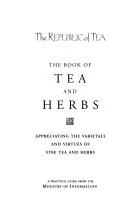
The Book of Tea and Herbs
 83
83

The Book of Tea and Herbs
The "Book of Tea and Herbs" arrives with an intriguing premise: a purported lost document from a Republic's Minister of Leaves. Its 1993 publication date, however, grounds the playful fabrication in a more contemporary context, offering a practical guide laced with historical lore. The text excels in its accessible presentation of tea's cultural journey and the myriad uses of common herbs. One particular delight is the section detailing the historical spread of tea culture from China, touching upon its arrival in Europe and the subsequent societal impact, a narrative often overlooked in drier botanical texts. The sixty line drawings are charming, though at times their integration feels slightly disconnected from the main text. A minor limitation is the lack of precise citations for the historical anecdotes, which, while entertaining, leave the reader occasionally uncertain about the factual basis of certain claims. Nevertheless, as an accessible introduction to the world of tea and herbs, it provides a well-rounded and enjoyable experience. It is a charming compendium for the curious mind.
📝 Description
83
Published in 1993, 'The Book of Tea and Herbs' presents itself as a rediscovered manuscript by a Republic's Minister of Leaves.
This 1993 reprint, presented as a manuscript from a "Minister of Leaves," offers a blend of practical information and historical context surrounding tea and herbs. It moves beyond simple botanical descriptions to examine the cultural significance and evolving rituals associated with tea across different societies. The text is enhanced by sixty line drawings that visually support the lore and data it conveys.
The book is suitable for readers interested in the connections between botany, history, and cultural practices, especially concerning everyday beverages and medicinal plants. It appeals to those who enjoy factual content woven into an engaging narrative, delivered with a distinctive, somewhat old-fashioned voice. Enthusiasts of herbalism, tea lovers, and anyone curious about the historical development of common practices will find its contents absorbing. It also appeals to those who appreciate books with a unique aesthetic and a playful intellectual tone.
The "Minister of Leaves" persona positions this book within a tradition of early modern naturalists and early anthropologists who meticulously documented flora and their applications. While published in 1993, its style deliberately echoes 18th or 19th-century compendiums, a period marked by extensive cataloging of global botanical resources and their integration into Western science and domestic life. This era often saw the blending of scientific observation with folklore and medicinal knowledge, a format this book emulates to frame its compilation of information.
💡 Why Read This Book?
• Learn about the historical trajectory of tea consumption, from its origins to its integration into Western social customs, as detailed in the sections discussing tea's cultural journey. • Discover practical applications and fascinating folklore surrounding various herbs, moving beyond simple identification to understand their traditional uses as presented in the herbal sections. • Appreciate the symbolic role of a "Minister of Leaves," offering a unique perspective on the human relationship with botanical resources and their historical management.
⭐ Reader Reviews
Honest opinions from readers who have explored this book.
❓ Frequently Asked Questions
What is the significance of the "Minister of Leaves" persona in The Book of Tea and Herbs?
The "Minister of Leaves" is a fictional persona adopted for the book, presenting itself as a rediscovered early document. This framing adds a layer of historical mystique and narrative charm, allowing the author to explore tea and herb lore from a unique, authoritative, yet playful perspective.
When was The Book of Tea and Herbs first published?
The Book of Tea and Herbs was first published in 1993. Despite its content evoking an older era, its modern publication date means it benefits from contemporary research and editorial standards.
Does the book provide scientific information on herbs or focus more on lore?
The book balances practical information with fascinating facts and lore. While it covers the history and culture surrounding tea and herbs, it also touches upon their many ways of enjoyment and use, blending historical context with engaging narratives.
Are there illustrations in The Book of Tea and Herbs?
Yes, the book is enhanced by sixty line drawings. These illustrations serve to visually support the text, depicting various herbs and aspects of tea culture discussed within its pages.
What kind of reader would most enjoy The Book of Tea and Herbs?
Readers interested in the cultural history of beverages, herbalism, folklore, and those who appreciate a book with a unique narrative voice and charming illustrations would find this book particularly engaging.
Is The Book of Tea and Herbs a historical text or a modern interpretation?
It is a modern publication (1993) cleverly packaged as a reprint of a long-lost early document. It offers a practical guide filled with historical facts and lore, presented through an entertaining, fictionalized historical lens.
🔮 Key Themes & Symbolism
Tea as Cultural Artifact
This theme examines tea not merely as a beverage but as a significant cultural artifact that has shaped global interactions, social rituals, and economies. The work traces the historical diffusion of tea from its origins, detailing how its adoption in different societies fostered unique customs, ceremonies, and even political discourse. It highlights the leaf's transformation from an obscure plant to a central element in daily life for millions, influencing trade routes and societal structures across continents.
Herbal Wisdom and Application
The book explores the diverse applications of herbs, extending beyond culinary uses to encompass medicinal and ritualistic practices. It studies the historical understanding and utilization of various plants, presenting lore and practical knowledge accumulated over centuries. This theme emphasizes the intimate connection between humanity and the plant kingdom, showcasing how herbs have been integral to well-being, healing, and spiritual pursuits across different cultures.
The Art of Enjoyment
Central to the book is the celebration of the myriad ways the tea leaf can be enjoyed. This theme focuses on the sensory and experiential aspects of tea consumption, from the preparation rituals to the appreciation of its diverse flavors and aromas. It touches upon the aesthetic and contemplative dimensions associated with tea culture, encouraging readers to engage with the practice as a form of mindful enjoyment and a connection to historical traditions.
Historical Documentation and Lore
The work adopts the guise of a historical document, presented as a rediscovered manuscript. This framing allows for the compilation and dissemination of historical facts and folklore surrounding tea and herbs. It plays with the idea of preserving and presenting knowledge from a specific (albeit fictional) historical perspective, offering insights into how such information might have been cataloged and shared in earlier eras, blending factual accounts with entertaining narratives.
💬 Memorable Quotes
Direct passages from the work, attributed to the author.
“Each herb carries its own whisper of the earth's potent secrets.”
— This interpretation highlights the inherent power and mystery attributed to herbs in traditional knowledge systems, implying they hold significant, perhaps even hidden, properties.
“From royal courts to humble hearths, the tea ceremony binds disparate peoples.”
— This concept underscores the unifying social and cultural role of tea rituals, demonstrating their ability to transcend social strata and geographical boundaries.
“The Republic's Minister of Leaves sought to codify the wisdom of the garden.”
— This interpretation suggests the fictional author's aim was to systematically gather and organize the accumulated knowledge concerning plants and their uses, particularly tea and herbs.
💡 Key Ideas
Editorial paraphrase of the work's core concepts — not direct quotes.
The leaf, once steeped, unlocks stories of distant lands and ancient practices.
This paraphrased concept suggests that the simple act of preparing tea is a gateway to a wealth of historical knowledge and cultural traditions from around the world.
Understanding the leaf requires more than knowing its name; it demands appreciating its journey.
This paraphrased idea emphasizes that a comprehensive understanding of tea involves not just botanical identification but also an awareness of its historical origins, trade routes, and cultural evolution.
🌙 Esoteric Significance
Tradition
While not overtly tied to a single esoteric lineage like Hermeticism or Kabbalah, the work speaks to the broader tradition of applied mysticism and natural philosophy. It reflects the alchemical principle of 'as above, so below' by exploring the mundane (a cup of tea, common herbs) through a lens of profound historical, cultural, and symbolic significance. The persona of the "Minister of Leaves" can be seen as a modern interpretation of a wise custodian of natural secrets, akin to figures in ancient druidic or shamanic traditions who held intimate knowledge of plant spirits and their virtues.
Symbolism
The tea leaf itself serves as a potent symbol, representing transformation through infusion and the connection between disparate cultures via trade and ritual. Herbs, in general, symbolize the earth's bounty and its healing or psychoactive properties, often embodying specific planetary or elemental associations within esoteric systems. The act of steeping can symbolize the unlocking of hidden potentials or spiritual insights, mirroring processes of alchemical refinement or meditative concentration, where simple elements yield complex results.
Modern Relevance
In contemporary practice, "The Book of Tea and Herbs" finds relevance among herbalists, tea ceremony practitioners, and those interested in the history of psychoactive or medicinal plants. Its accessible approach makes it a gateway for individuals exploring natural wellness and mindful consumption. Thinkers and practitioners in fields like ethnobotany, cultural anthropology, and even slow-living advocates can draw inspiration from its method of integrating historical lore with practical appreciation of botanical resources, encouraging a deeper connection to the natural world.
👥 Who Should Read This Book
• Aspiring herbalists and natural health enthusiasts seeking to understand the cultural and historical context of plant usage beyond mere therapeutic benefits. • Tea connoisseurs and cultural historians interested in the global journey of tea and its associated rituals, appreciating a narrative that blends fact with engaging storytelling. • Readers of esoteric literature who enjoy works that explore the hidden lore and symbolic significance within everyday practices and natural elements.
📜 Historical Context
Published in 1993, "The Book of Tea and Herbs" emerged during a period of renewed interest in holistic health, alternative traditions, and historical documentation. While not a primary source from an earlier era, its presentation as a rediscovered manuscript taps into the appeal of antiquarian texts that characterized late 20th-century esotericism. This era saw figures like Michael D. Coe popularizing Mesoamerican cultures, and a broader academic and public fascination with the history of everyday objects and practices. The book's playful fabrication aligns with a trend of reinterpreting historical narratives, offering a charming, albeit fictionalized, account that contrasts with the more rigorous, scientific botanical studies gaining prominence. Its reception was likely within niche circles appreciating its mix of folklore and accessible history, rather than mainstream academic discourse.
📔 Journal Prompts
The Minister of Leaves' approach to cataloging botanical wisdom.
Reflect on the transformation of the tea leaf from dried matter to infused beverage.
Consider the symbolic journey of a specific herb mentioned in the text.
Explore the cultural binding power of tea ceremonies.
Contemplate the 'potent secrets' whispered by the earth's herbs.
🗂️ Glossary
Minister of Leaves
A fictional persona adopted by the author, presented as the historical head of tea and herb affairs within a Republic, lending an air of authority and playful erudition to the text.
Republic
Refers to a form of government, but in the context of the book's persona, it evokes an idealized or historical state where the cultivation and use of plants held significant cultural and administrative importance.
Line Drawings
Illustrations created using distinct lines, often employed for botanical texts to clearly depict plant structures, features, and cultural objects relevant to the subject matter.
Lore
A body of traditions, beliefs, and stories passed down through generations, often concerning a particular subject, place, or group of people, in this case, tea and herbs.
Infusion
The process of extracting flavor or properties from plant material by steeping it in a liquid, typically hot water, as in making tea.
Applied Botany
The study of plants with a focus on their practical uses for human benefit, including medicinal, agricultural, industrial, and cultural applications.
Connoisseur
An expert judge in matters of taste, particularly in fine food, drink, or the arts; in this context, someone with refined knowledge of tea.
This book appears in 1 collection
🔮 Readers Also Liked
Browse all →









From the “Tea Leaf Reading” Collection
View all →

More Free Occult Philosophy Books
View all →