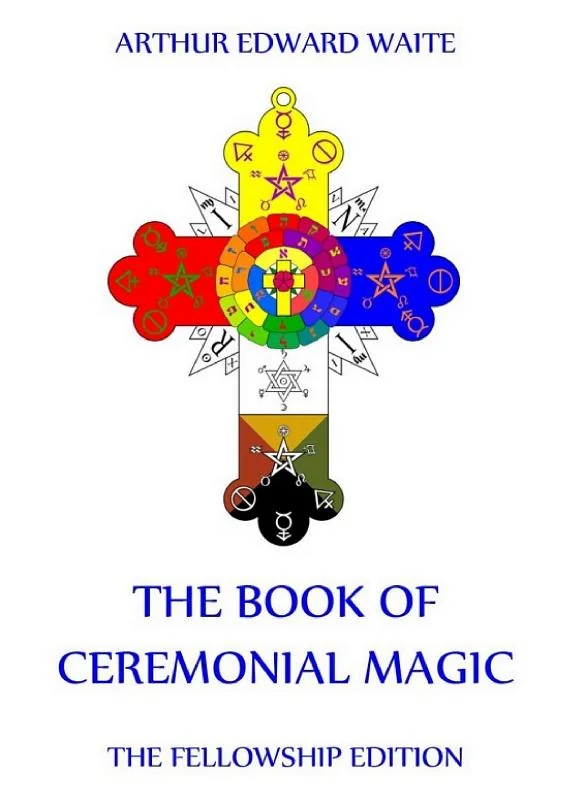
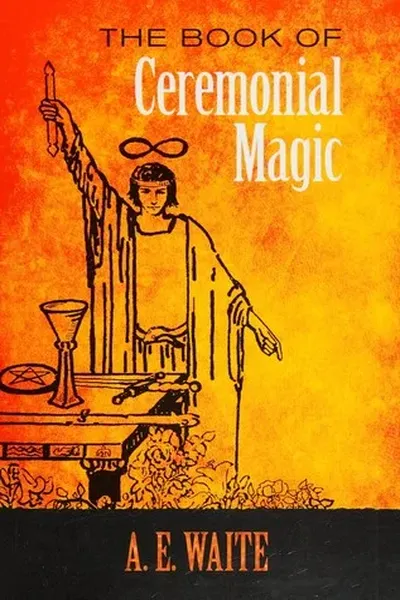
The Book Of Ceremonial Magic
 73
73

The Book Of Ceremonial Magic
Arthur Edward Waite's "The Book of Ceremonial Magic" presents a fascinating, if dry, dissection of the grimoire tradition. Waite's primary strength lies in his encyclopedic cataloging of texts like the "Grimorium Verum" and the "Key of Solomon," offering a crucial historical overview. However, his pervasive skepticism, while intellectually honest, sometimes feels like a damper on the subject's inherent mystique. For instance, his treatment of the "Black Pullet" leans heavily on debunking rather than exploring its symbolic narrative. The work's academic rigor is undeniable, but it lacks the evocative spirit found in the very texts it analyzes. Ultimately, it serves as an indispensable scholarly reference for the skeptical occult historian.
📝 Description
73
Arthur Edward Waite's 1911 book scrutinizes historical magical texts and their rituals.
Originally published in 1911 as "The Book of Black Magic and of Pacts," Arthur Edward Waite's "The Book of Ceremonial Magic" offers a systematic overview of the grimoire tradition. Waite meticulously examines the procedures and purported efficacy of historical magical texts, scrutinizing foundational works with a critical perspective on their contents and historical claims. This volume is intended for serious students of esoteric history and comparative occult studies.
Waite's work emerged during a period of burgeoning interest in the occult. Acknowledging figures like Aleister Crowley and the Hermetic Order of the Golden Dawn, Waite maintained a distinctly skeptical stance. His aim was to dissect magical practices rather than promote them, distinguishing him from contemporaries who embraced the occult with less reservation. He questions the historical authenticity and practical viability of ancient procedures, often highlighting their symbolic and psychological dimensions.
Published in 1911, this work engages with the Western esoteric tradition, particularly the history of ceremonial magic and its associated literature, the grimoires. It emerged in a milieu marked by a renewed interest in occultism, with figures like Aleister Crowley and groups like the Hermetic Order of the Golden Dawn active. Waite, himself a prominent occult scholar, adopts a critical posture towards the magical claims within these texts, distinguishing his approach from purely practical or devotional engagement.
💡 Why Read This Book?
• Gain a critical historical perspective on seminal grimoires like the "Key of Solomon," understanding Waite's 1911 analysis of their structure and intent. • Appreciate Waite's skeptical approach to magical claims, contrasting it with the historical milieu of early 20th-century occultism and figures like Aleister Crowley. • Examine the procedures described for talismans and invocations, learning how Waite deconstructs their historical context and psychological underpinnings.
⭐ Reader Reviews
Honest opinions from readers who have explored this book.
❓ Frequently Asked Questions
What is the primary focus of "The Book of Ceremonial Magic"?
The book primarily focuses on a critical examination and synthesis of historical grimoires, detailing their rituals, purported effects, and the entities invoked, as analyzed by Arthur Edward Waite.
When was Arthur Edward Waite's "The Book of Ceremonial Magic" first published?
Arthur Edward Waite's work, initially titled "The Book of Black Magic and of Pacts," was first published in 1911. The edition referenced here was revised later.
Which famous grimoires does Waite discuss?
Waite discusses numerous grimoires, including the "Key of Solomon," the "Grimorium Verum," the apocryphal "Fourth Book of Cornelius Agrippa," and the "Black Pullet" (Poulet Noir).
What is Waite's attitude towards the magical practices described?
Waite adopts a largely skeptical and analytical stance, scrutinizing the historical authenticity and practical efficacy of the magical procedures he details.
Is this book suitable for beginners seeking practical magical instruction?
No, this book is more of a historical and critical analysis. Beginners seeking direct magical instruction might find Waite's skeptical approach less immediately useful than practitioners or historians.
What historical period does Waite's research cover?
Waite's research covers a broad historical spectrum of grimoires, many of which originated in the medieval and Renaissance periods, though his own analysis was published in the early 20th century.
🔮 Key Themes & Symbolism
The Grimoire Tradition
This work meticulously details the contents and structure of numerous grimoires, texts that have historically been central to Western ceremonial magic. Waite synthesizes procedures from foundational texts such as the "Key of Solomon" and the "Grimorium Verum," providing an outstanding historical overview. He explores the common threads and unique elements within these diverse magical manuals, clear the evolution of ritualistic practices and the invocation of spirits.
Skeptical Historical Analysis
A hallmark of Waite's approach is his critical perspective. Rather than uncritically accepting the efficacy of the rituals described, he subjects them to historical scrutiny. This analysis questions the origins, authenticity, and practical reality of the magical claims, offering a scholarly counterpoint to more devotional or practical occult literature prevalent at the time of its writing in the early 20th century.
Ritual and Elemental Magic
The book examines the specific components of ceremonial magic, including the creation of talismans, the conjuration of various entities, and the use of divine names and symbols. It studies the practical instructions found in grimoires, analyzing the symbolic language and the purported means by which practitioners sought to influence the material and spiritual worlds.
Esoteric Authenticity
Waite engages with the question of what constitutes authentic esoteric knowledge. By dissecting popular grimoires, he implicitly or explicitly evaluates their claims against historical evidence and logical reasoning. This provides a framework for understanding how esoteric traditions are constructed, transmitted, and sometimes questioned over time.
💬 Memorable Quotes
Direct passages from the work, attributed to the author.
“The Book of Black Magic and of Pacts was undertaken as an examination of the literature of witchcraft and its cognate subject.”
— This statement from Waite's original preface clarifies his intent: to study, rather than endorse, the magical texts. It positions the work as an academic inquiry into a specific corpus of occult literature.
“It is supposed to be a book of diabolical ceremonies, and it bears that character on its face.”
— This refers to the nature of certain grimoires discussed, highlighting their often dark or infernal associations within occult lore and Waite's objective description of their perceived content.
“The great magical text attributed to Solomon is the Key.”
— Waite identifies the 'Key of Solomon' as a paramount work within ceremonial magic literature, underscoring its significance and influence on subsequent grimoires and magical traditions.
“The Grimorium Verum is a highly questionable document.”
— This expresses Waite's critical assessment of the "Grimorium Verum," indicating his doubt regarding its historical reliability and the authenticity of its claims, a common theme in his analysis.
“The Poulet Noir is a curious little book.”
— Waite uses this phrase to describe the "Black Pullet," suggesting its unique or peculiar nature within the broader field of magical texts he surveys, hinting at its unusual contents or folklore.
🌙 Esoteric Significance
Tradition
Waite's work is situated within the broader tradition of Western Esotericism, particularly its focus on ceremonial magic and the study of historical occult texts. While he analyzes Hermetic, Kabbalistic, and Solomonic magical traditions, his approach is distinctively scholarly and critical, often departing from the devotional or practical aims of many occultists. He acts as a critical historian examining the lineage of these traditions rather than an adherent seeking to perpetuate them.
Symbolism
The book frequently engages with symbols integral to ceremonial magic. This includes the pentagram and hexagram, used for protection and invocation; the magical circle, representing a sacred and protected space; and various divine names and sigils derived from Kabbalistic and angelic traditions, believed to grant authority over spirits and elements.
Modern Relevance
Contemporary scholars of Western esotericism and historians of religion continue to cite Waite's work as a foundational text for understanding the history of grimoires. Practitioners of ceremonial magic, even those who might disagree with his skepticism, often consult it for its comprehensive cataloging and historical context of texts like the "Key of Solomon" and "Grimorium Verum."
👥 Who Should Read This Book
• Students of Western Esotericism seeking a scholarly overview of historical magical texts and their purported practices. • Researchers of comparative religion interested in the historical development and cultural impact of grimoires. • Skeptical occult historians who wish to engage with primary source material on ceremonial magic through a critical lens.
📜 Historical Context
Published in 1911, Arthur Edward Waite's "The Book of Ceremonial Magic" emerged during a period of intense Western esoteric revival. The late Victorian and Edwardian eras saw a surge of interest in spiritualism, Theosophy, and ceremonial magic, with organizations like the Hermetic Order of the Golden Dawn (founded 1888) attracting many seekers. Waite himself was a prominent member of the Golden Dawn, though his relationship with its more flamboyant practitioners, such as Aleister Crowley, was often contentious. This book, originally titled "The Book of Black Magic and of Pacts," represented a more scholarly and critical examination of grimoires than many contemporary works. While figures like Crowley were actively developing and publishing their own magical systems, Waite focused on dissecting historical texts, often with a skeptical eye, distinguishing his approach from those who sought to revive or practice these arts with unreserved enthusiasm. His critical stance was a significant counter-current to the more uninhibited occultism of the era.
📔 Journal Prompts
The 'Key of Solomon' as a foundational text for ceremonial magic.
Waite's skepticism versus the inherent claims of grimoires.
The function and symbolism of the magical circle in ritual.
Analysis of the "Grimorium Verum" as a historical artifact.
The concept of pacts as presented in the 'Book of Black Magic and of Pacts'.
🗂️ Glossary
Grimoire
A textbook of magic, typically containing instructions on how to create magical tools, cast spells, and invoke supernatural entities. Grimoires are historical documents central to the study of Western ceremonial magic.
Key of Solomon
A famous grimoire attributed to King Solomon, detailing magical rituals, talismans, and conjurations. It is considered a key work in the history of ceremonial magic, influencing many subsequent texts.
Grimorium Verum
A grimoire purported to have been written by Alibeck the Egyptian, detailing methods for commanding demons and spirits. It is known for its direct and often forceful instructions for pact-making.
Black Pullet (Poulet Noir)
A curious grimoire, also known as 'The Black Pullet,' which claims to reveal secrets of creating talismans and achieving wealth and power through magical means, often involving an enchanted hen.
Talismans
Magical objects inscribed with symbols or sigils, believed to possess occult powers. They are often created under specific astrological conditions to attract fortune, protection, or other desired outcomes.
Invocation
The act of calling upon a deity, spirit, or supernatural entity, often for assistance, guidance, or to manifest its presence. In ceremonial magic, this is a core ritualistic practice.
Pact
An agreement, often involving a magical or spiritual entity, where one party agrees to provide service or devotion in exchange for knowledge, power, or favor. This concept is central to texts like the 'Grimorium Verum'.
This book appears in 1 collection
🔮 Readers Also Liked
Browse all →





From the “Ceremonial Magic” Collection
View all →





More Free Magic & Ritual Books
View all →