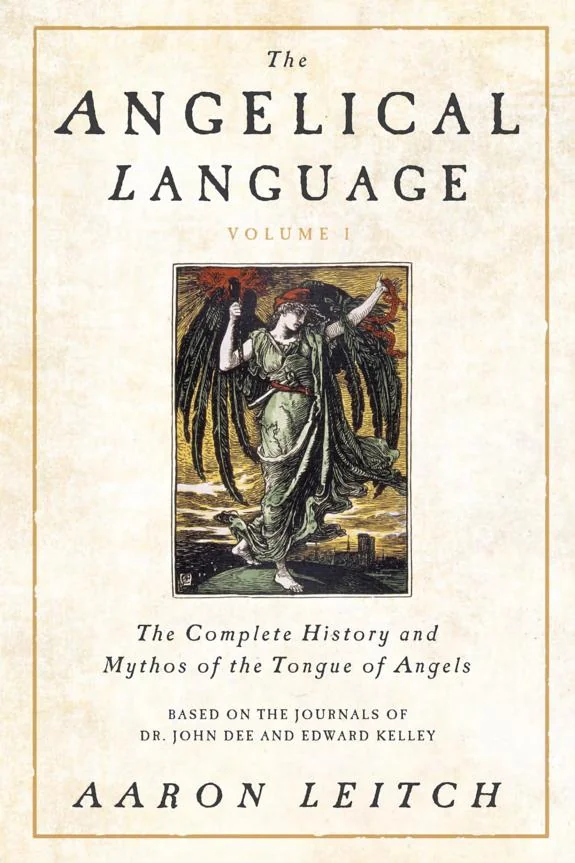
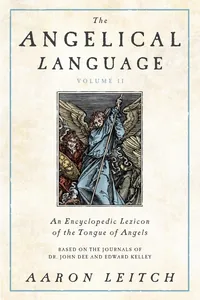
The Angelical Language, Volume I
 76
76

The Angelical Language, Volume I
Aaron Leitch’s "The Angelical Language, Volume I" is an indispensable primary resource for anyone serious about the Enochian system. Unlike many popularizations, Leitch grounds his analysis firmly in the historical record, specifically the original journals of John Dee and Edward Kelley. His meticulous presentation of the language's structure, from its unique alphabet to its complex grammar, offers a scholarly perspective rarely found in occult literature. The strength of this volume lies in its detailed exposition of the raw material, allowing readers to see the language as Dee and Kelley first encountered it.
A limitation, however, is the sheer density of the material. This is not a casual read; it demands significant focus and prior knowledge of occult history. While Leitch provides context, the uninitiated might struggle with the esoteric terminology and the speculative nature of the source material. The section detailing the phonetic values of the angelic letters, for instance, is academically rigorous but dense. Nevertheless, for those dedicated to understanding the genesis of Enochian magic, this book is a foundational text. It provides an unvarnished look at the language itself, avoiding the interpretive layers that often obscure the original transmissions.
📝 Description
76
Aaron Leitch's 2013 book reconstructs the angelic language from John Dee and Edward Kelley's 16th-century journals.
The Angelical Language, Volume I by Aaron Leitch provides a detailed examination of the angelic language purportedly received by Dr. John Dee and Edward Kelley in the late 1580s. Leitch bases his analysis on the extensive private journals kept by Dee and Kelley between 1583 and 1589, reconstructing the language's structure, alphabet, and grammatical rules. This work goes beyond simple translation; it offers an academic introduction to the principles behind this complex system and the divine beings Dee and Kelley claimed to contact.
This book is aimed at serious students of Western esotericism, Renaissance occultism, and ceremonial magic. It will be of particular interest to scholars of John Dee's extensive work and to practitioners interested in the theoretical basis of angelic communication. Readers who study comparative linguistics within esoteric traditions or the historical development of Enochian magic will find substantial material. Some background in occult history or magical theory is beneficial for full appreciation.
This study situates itself within the history of Renaissance magic, specifically the claims of John Dee and Edward Kelley. Their work with what became known as Enochian magic occurred during a period of renewed interest in Neoplatonism, Kabbalah, and Hermetic philosophy across Europe. Dee, a prominent mathematician and advisor, sought divine knowledge for both spiritual and political ends. The intellectual climate of Elizabethan England, marked by figures like Giordano Bruno, fostered such esoteric inquiries, though Dee and Kelley's angelic communications were met with skepticism by some contemporaries.
💡 Why Read This Book?
• Gain direct exposure to the structure of the Enochian language as documented by John Dee and Edward Kelley in the late 16th century, offering insights into the grammatical and phonetic systems they recorded. • Understand the foundational elements of the Aethyrs, the celestial realms from which the angelic language is said to have originated, providing a cosmological framework for the system. • Explore the detailed 49-letter angelic alphabet, including its unique symbolic and phonetic assignments, which is critical for anyone studying the practical or theoretical aspects of Enochian magic.
⭐ Reader Reviews
Honest opinions from readers who have explored this book.
❓ Frequently Asked Questions
What is the primary source material for The Angelical Language, Volume I?
The book is based on the private journals of Dr. John Dee and Edward Kelley, meticulously detailing their alleged communications with angelic beings between 1583 and 1589.
Who was Dr. John Dee and why is he relevant to this book?
Dr. John Dee was a prominent Elizabethan mathematician, astronomer, and occultist. His collaboration with Edward Kelley in documenting the angelic language makes his journals the central primary source for this esoteric system.
Is this book a translation of the angelic language?
No, it is an analytical reconstruction and exploration of the language's structure, alphabet, and grammar as presented in Dee and Kelley's original records, rather than a direct translation of specific angelic communications.
What is the Enochian language?
The Enochian language is the term used for the angelic language purportedly revealed to John Dee and Edward Kelley. It is characterized by a unique alphabet, grammar, and vocabulary distinct from any known human tongue.
What are the Aethyrs mentioned in the book?
The Aethyrs are described as celestial realms or planes of existence from which the angelic language and its associated beings are said to originate, forming a key part of the cosmological context for the language.
What level of prior knowledge is recommended for readers?
A background in Western esotericism, Renaissance occultism, or ceremonial magic is recommended, as the book delves into complex theoretical and historical material without extensive introductory explanations.
🔮 Key Themes & Symbolism
The Enochian Alphabet and Grammar
This volume meticulously dissects the 49-letter Enochian alphabet, examining its unique phonetic values and symbolic associations. Leitch presents the grammatical structures purportedly received by Dee and Kelley, highlighting deviations from human linguistic norms. The focus is on understanding the language as a divine construct, with an emphasis on its internal logic as revealed through the source documents, rather than a direct translation of its supposed meaning.
Angelic Communications and Hierarchies
Central to the work is the concept of communication with angelic intelligences. The book details the various beings Dee and Kelley claimed to interact with, often referred to as angels or spiritual entities. It explores the purported hierarchy and nature of these beings within the framework of the angelic language, presenting the linguistic system as a key to accessing divine knowledge and interacting with the spiritual realms.
The Aethyrs and Celestial Geography
The Angelical Language is presented as being intrinsically linked to the Aethyrs, a series of 30 celestial planes or realms. Leitch outlines the structure and significance of these Aethyrs as described in the journals, detailing how they form a cosmological map and a source for the angelic language and its associated spiritual forces. This conceptual geography is vital for understanding the context of the linguistic revelations.
John Dee and Edward Kelley's Work
The entire system is examined through the lens of the historical figures who documented it. The book emphasizes the importance of the 1583-1589 journals as the primary evidence for the Angelical Language. It frames the work within the context of Dee's broader intellectual pursuits during the Elizabethan era, highlighting his quest for divine wisdom and knowledge through esoteric means.
💬 Memorable Quotes
Direct passages from the work, attributed to the author.
“The Angelical Language is a divine tongue, revealed through scrying in the late 16th century.”
— This statement frames the core premise of the book: the origin of the Enochian language as a supernatural revelation received by Dee and Kelley, distinct from human invention.
“The system comprises a unique 49-letter alphabet with specific phonetic and symbolic attributes.”
— This highlights a fundamental structural element of the Angelical Language, emphasizing its distinctiveness and the detailed nature of its components as presented in the source material.
“The Aethyrs represent celestial realms from which the language and its angelic messengers emanate.”
— This interpretation connects the linguistic system to its cosmological context, suggesting a divinely ordered universe where language is a conduit from higher spiritual planes.
“Dee and Kelley's journals are the primary record of this linguistic and spiritual endeavor.”
— This emphasizes the evidentiary basis for Leitch's work, underscoring the reliance on the historical documents produced by the original practitioners of the Angelical Language.
“The grammar of the Angelical Language exhibits principles unlike those found in terrestrial tongues.”
— This points to the alien nature of the language's structure, suggesting it operates on principles that transcend human linguistic conventions, reinforcing its divine origin.
🌙 Esoteric Significance
Tradition
The Angelical Language is a central component of the Enochian magical system, which has roots in Renaissance Hermeticism and Kabbalistic thought, albeit with a unique angelic origin narrative. While Dee and Kelley were deeply versed in these traditions, their purported angelic communications introduced a distinct angelic cosmology and language that did not neatly fit existing frameworks. It represents a departure from solely human-derived magical systems, positing a direct, divinely transmitted method for spiritual communion and magical operation.
Symbolism
The 49-letter alphabet is highly symbolic, with each letter possessing unique visual, phonetic, and spiritual correspondences. These symbols are not merely arbitrary characters but are believed to encode divine principles and energies. The structure of the language itself, with its unique grammar and syntax, is seen as reflecting a higher order of reality, distinct from the limitations of human language. The Aethyrs also function symbolically as a map of consciousness and spiritual planes.
Modern Relevance
Contemporary practitioners of Western esotericism, particularly those involved in ceremonial magic and Hermetic orders like the Hermetic Order of the Golden Dawn and its successors (e.g., the Astrum Argenteum), frequently engage with the Enochian system. Thinkers and practitioners focusing on angelic magic, comparative occultism, and the study of historical magical texts often cite Dee and Kelley's work as foundational. The system continues to be a subject of scholarly and practical esoteric research.
👥 Who Should Read This Book
['• Students of Renaissance occultism: Those interested in the historical development of magic and esoteric thought during the Elizabethan era, specifically the work of Dr. John Dee.', '• Practitioners of ceremonial magic: Individuals seeking to understand the theoretical underpinnings and linguistic components of the Enochian magical system.', '• Scholars of comparative religion and esotericism: Researchers interested in unique linguistic phenomena within religious and mystical traditions, and the history of angelology.']
📜 Historical Context
The genesis of the Angelical Language, as presented in Aaron Leitch's work, is firmly rooted in the late Elizabethan era, specifically the period between 1583 and 1589. Dr. John Dee, a respected scientific and mathematical mind of his time, alongside his associate Edward Kelley, embarked on a series of scrying sessions that purported to reveal a divine language. This occurred during a period of intense intellectual and spiritual exploration in Europe, characterized by a renewed interest in Neoplatonism, Hermeticism, and Kabbalah, largely fueled by the rediscovery and translation of ancient texts. Dee's ambition was to acquire divine knowledge that could aid in spiritual understanding and even statecraft. While Dee was a figure of considerable intellectual standing, his work with Kelley, particularly the angelic communications, placed him outside the mainstream of contemporary scientific thought, aligning him more with the burgeoning esoteric movements. The reception of Dee's angelic system was complex; while some contemporaries were intrigued, others, like the skeptical mathematician Thomas Harriot, likely viewed such claims with considerable doubt, contributing to a divided intellectual landscape regarding the nature of reality and divine revelation.
📔 Journal Prompts
The structure of the 49-letter angelic alphabet.
The purported grammatical rules of the Angelical Language.
The concept of the Aethyrs as celestial realms.
The historical context of Dee and Kelley's scrying sessions.
The potential for divine communication through structured language.
🗂️ Glossary
Angelical Language
The purported divine language revealed to Dr. John Dee and Edward Kelley through scrying sessions between 1583 and 1589. It is characterized by a unique alphabet and grammar.
Enochian
A term commonly used to refer to the Angelical Language, linking it to the biblical figure Enoch, who was said to have walked with God and translated into a heavenly language.
Dr. John Dee
A prominent Elizabethan mathematician, astronomer, geographer, and occultist who, with Edward Kelley, documented the Angelical Language in his extensive private journals.
Edward Kelley
A scryer and associate of Dr. John Dee, credited with receiving the dictations of the Angelical Language during their joint magical operations in the late 16th century.
Aethyrs
Thirty celestial planes or spiritual realms described within the Enochian system, from which the language and its angelic beings are said to originate. Each Aethyr has associated characteristics and intelligences.
Scrying
The practice of gazing into a reflective surface, such as a crystal ball or dark mirror, to receive visions or communicate with spiritual entities. This was the primary method used by Dee and Kelley.
Journals (1583-1589)
The extensive collection of personal records kept by Dr. John Dee detailing his magical experiments, spiritual communications, and the documentation of the Angelical Language and Enochian system.
This book appears in 1 collection
🔮 Readers Also Liked
Browse all →









From the “Enochian Magic” Collection
View all →


More Free Magic & Ritual Books
View all →