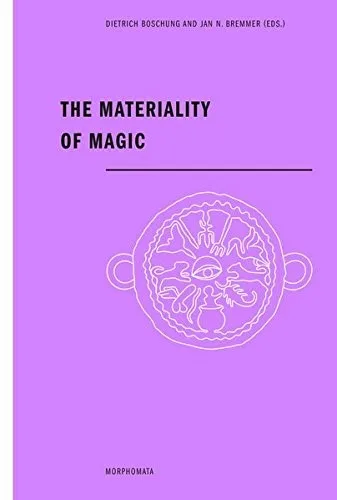
The Materiality of Magic
 61
61

The Materiality of Magic


Celeste Moreau (Divination & Symbolism Reviewer) — In 'The Materiality of Magic,' Dietrich Boschung offers a profoundly insightful examination of the often-overlooked physical dimensions of ancient magical practices. Moving beyond mere textual analysis, Boschung meticulously details the tangible objects—from potent amulets and inscribed rings to enigmatic figurines and sacred gems—that served as the very bedrock of ritual efficacy. This work is a significant contribution, illuminating how material culture shaped and was shaped by magical beliefs across diverse ancient societies. Its cross-cultural breadth and detailed focus on artifactual evidence make it indispensable for scholars and serious practitioners alike. A truly illuminating exploration into the tangible essence of the arcane.
📝 Description
61
Dietrich Boschung's 2003 book examines the physical objects used in ancient magic.
Dietrich Boschung's 'The Materiality of Magic' moves beyond abstract theories to investigate the physical objects that formed the basis of ancient magical practices. The book details how items like carved gems, inscribed rings, ritual diagrams, grimoires, amulets, and figurines acted as conduits for supernatural energies and shaped belief systems.
Boschung reconstructs the sensory dimensions of ancient magic, allowing readers to understand the tangible elements that fueled ritual and belief. This work is for those who recognize that true power involves not only knowledge but also the manipulation of the physical world, highlighting the links between the earthly and the spiritual. It appeals to practitioners who understand the importance of objects in ritual alongside spoken incantations.
This book contributes to the study of magic by focusing on its material aspects, a departure from purely textual or theoretical analyses. It aligns with scholarly interest in the practical application of ritual across various cultures and historical periods. By examining the role of specific artifacts, Boschung situates magical practice within the tangible world, demonstrating how objects were imbued with meaning and power, thereby influencing the beliefs and actions of individuals in ancient societies.
💡 Why Read This Book?
Uncover the tangible roots of ancient sorcery. This book reveals how amulets, gems, and ritual objects were not mere decorations but powerful tools in the hands of ancient practitioners. Ideal for scholars seeking new perspectives, practitioners yearning for deeper understanding of material ritual, and seekers curious about the physical embodiment of magical intent across cultures.
⭐ Reader Reviews
Honest opinions from readers who have explored this book.
❓ Frequently Asked Questions
What is the primary focus of 'The Materiality of Magic'?
The book's primary focus is on the physical objects and materials used in ancient magic, such as amulets, gems, rings, figurines, and grimoires, examining their role and significance in ritual practices.
How does this book differ from previous studies on ancient magic?
Unlike studies focusing solely on texts, incantations, or theoretical aspects, this work uniquely emphasizes the tangible, material components of magic, offering a fresh, object-centric perspective.
Which historical periods and cultures does the book cover?
The book draws upon a broad range of ancient cultures and historical periods, providing a cross-cultural examination of magical materiality without being limited to a single region or era.
Is this book suitable for beginners in the study of magic?
Yes, while academically rigorous, the book's clear explanations and focus on concrete examples make it accessible to dedicated beginners interested in the practical and material aspects of magic.
What kind of insights can practitioners gain from this book?
Practitioners can gain deeper insights into the historical efficacy and symbolic resonance of various magical tools and materials, potentially informing their own contemporary practices and understanding of ritual.
🔮 Key Themes & Symbolism
The Tangible Power of Objects
This theme explores how ancient cultures imbued inanimate objects with potent spiritual and magical energies. It looks at the belief systems that transformed everyday items into conduits for supernatural influence, examining the craftsmanship, materials, and symbolic adornments that amplified their efficacy. Boschung illustrates how the physical presence and inherent qualities of amulets, talismans, and ritual tools were considered integral to the success of magical operations, revealing a worldview where the material and the mystical were inextricably linked in the pursuit of power and protection.
Cross-Cultural Material Magic
This theme highlights the universal yet culturally specific ways in which magic manifested physically across different ancient societies. Boschung demonstrates how diverse traditions, from the Mediterranean to the East, utilized distinct materials, forms, and iconography in their magical practices. By comparing and contrasting the materiality of magic in various regions, the book uncovers shared human impulses and unique cultural adaptations in harnessing supernatural forces through tangible means, revealing a collection of global esoteric traditions grounded in the physical world.
Symbolism Embodied in Form
This theme focuses on the profound symbolic language embedded within the material forms of ancient magical artifacts. It examines how shapes, engravings, colors, and the very substances used in amulets, rings, and figurines conveyed specific meanings and invoked particular powers. Boschung illustrates how the meticulous design and composition of these objects were not arbitrary but were carefully orchestrated to resonate with cosmic forces and influence outcomes, offering a deep dive into the semiotics of magical materiality and the deliberate artistry behind ancient enchantment.
💬 Memorable Quotes
Direct passages from the work, attributed to the author.
“Gems held the secrets of the earth, rings bound the will of the stars.”
— This highlights the distinct symbolic and energetic properties attributed to different magical materials, differentiating the grounded power of stones from the celestial influence channeled by rings.
“A drawn sigil was a map to the unseen.”
— This metaphor suggests that intricate magical diagrams served as visual representations or pathways, guiding practitioners towards or accessing hidden spiritual realms and forces.
“Figurines were vessels for presence, not mere effigies.”
— This underscores the belief that small statues or figures were not just representations but active containers or conduits for spirits, deities, or desired energies.
“The grimoire’s dust was the residue of forgotten intent.”
— This evocative phrase suggests that ancient magical texts carry the lingering energy and purpose of their past users, making the very physical remnants of these books spiritually charged.
💡 Key Ideas
Editorial paraphrase of the work's core concepts — not direct quotes.
The weight of a charm was the weight of its promise.
This quote emphasizes the physical substance and perceived power of magical objects, suggesting that their tangible nature directly correlated with their efficacy and the belief placed in them.
🌙 Esoteric Significance
Tradition
This work draws implicitly from a broad spectrum of esoteric traditions that recognize the power of physical anchors in spiritual practice. It speaks to Hermeticism, Neoplatonism, and various forms of folk magic and shamanism where the manipulation of material objects is central to invoking celestial influences, channeling terrestrial energies, or interacting with the spirit world. The book bridges the gap between academic historical study and the practitioner's understanding of material ritual, grounding esoteric principles in verifiable historical artifacts and practices.
Symbolism
The symbolism explored is complex, encompassing the inherent qualities of materials (e.g., the purity of gold, the grounding nature of stone), geometric forms (e.g., circles for containment, triangles for manifestation), inscribed symbols (e.g., sigils, divine names, planetary signs), and anthropomorphic or zoomorphic representations (e.g., deities, spirits, protective animals). Each element is analyzed for its potential to act as a catalyst, a conduit, or a representation of cosmic forces, revealing a complex symbolic language designed to interact with the unseen.
Modern Relevance
In an age often characterized by digital abstraction, 'The Materiality of Magic' offers a vital counterpoint, reminding us of the enduring power of the tangible. Its insights into the use of amulets, talismans, and ritual objects provide a historical foundation for contemporary practices in modern witchcraft, paganism, and various forms of spiritual or therapeutic work that emphasize the importance of physical tools and symbolic embodiment. The book encourages a deeper appreciation for the sensory and material dimensions of belief and ritual, fostering a more grounded and potent connection to esoteric principles.
👥 Who Should Read This Book
This important work is essential for a diverse audience. **Academics and historians** specializing in ancient history, religious studies, archaeology, and the history of magic will find it an invaluable, rigorously researched resource that opens new avenues for interpretation. **Esoteric practitioners and occultists** will discover a wealth of historical context and inspiration for their own ritual work, gaining a deeper understanding of the lineage and efficacy of material magic. **Curious seekers and mythology enthusiasts** will be captivated by the tangible evidence of ancient beliefs and practices, offering a unique lens through which to view the human relationship with the divine and the supernatural. Beginners will find it an accessible yet profound introduction to the physical underpinnings of magical traditions.
📜 Historical Context
Dietrich Boschung's "The Materiality of Magic" emerges from a vibrant scholarly landscape that, in recent decades, has increasingly shifted its gaze from the abstract to the concrete in understanding antiquity. While earlier scholarship often prioritized textual analysis, focusing on spells, incantations, and theological interpretations, a new wave of research has sought to reconnect these practices with the lived realities of ancient peoples. This book stands as a proof of that evolution, particularly resonant in the late 20th and early 21st centuries, a period marked by a surge in archaeological discoveries and interdisciplinary approaches to history. The rise of material culture studies, anthropology, and the sociology of religion provided fertile ground for examining how objects, rituals, and social contexts interacted to create meaning and exert influence. Boschung’s work, therefore, is not only a study of ancient magic but also a reflection of contemporary academic trends that champion a more holistic and embodied understanding of the past.
📔 Journal Prompts
Reflect on a personal object that holds significant symbolic meaning for you. What makes it powerful?
Research a specific material (e.g., copper, obsidian, lavender) and its traditional magical associations. How might these properties be utilized in ritual?
Consider the difference between a spoken spell and a magically inscribed object. Which do you find more potent, and why?
Imagine you are an ancient practitioner preparing a ritual. What material objects would you choose, and what specific purpose would each serve?
How does the modern focus on digital or abstract communication compare to the ancient emphasis on tangible magical artifacts?
🗂️ Glossary
Amulet
A small object worn or carried, believed to possess protective or magical properties against harm, evil spirits, or bad luck. Often inscribed with symbols or made from specific materials.
Taliman
Similar to an amulet, but often more complex and specifically designed to attract a desired influence, such as wealth, love, or success, rather than merely ward off negativity.
Grimoire
A textbook of magic, typically containing magical spells, rituals, methods of divination, and instructions on how to create magical tools and summon supernatural beings.
Sigil
A symbol or emblem believed to possess magical power. Often created by combining letters or parts of words, or through abstract geometric designs, then consecrated through ritual.
Incantation
A series of words used as a magical spell or charm. It is the spoken component of many magical rituals, intended to invoke, command, or influence supernatural forces.
This book appears in 3 collections
🔮 Readers Also Liked
Browse all →





From the “Ritual Magic” Collection
View all →




More Free Magic & Ritual Books
View all →