Bless Me, Ultima

 76
76

Bless Me, Ultima
Rudolfo A. Anaya’s *Bless Me, Ultima* achieves a remarkable feat: it grounds its profound spiritual and cultural inquiries in the visceral, sensory experience of childhood. The narrative’s strength lies in its unflinching portrayal of Antonio’s inner turmoil, particularly his wrestling with Catholic dogma against the indigenous and folk traditions embodied by Ultima. Anaya masterfully depicts the tension between the rigid doctrines of the Church, as espoused by the priests, and the fluid, often contradictory, spiritual wisdom offered by Ultima. A limitation, however, is that the antagonist, Tenorio Trementina, can sometimes feel archetypal to the point of lacking nuanced development, serving more as a force of opposition than a fully realized character. The passage where Antonio witnesses the death of Lupito, and subsequently questions the efficacy of his catechism lessons, is particularly poignant, illustrating the profound disconnect between abstract religious teaching and the harsh realities of life and death. This novel is a vital exploration of faith and identity, rendered with enduring power.
📝 Description
76
Rudolfo Anaya's *Bless Me, Ultima*, published in 1972, chronicles a young boy's spiritual awakening in rural New Mexico.
The novel follows Antonio Márez Luna, a six-year-old boy in Guadalupe, New Mexico, during World War II. His life changes with the arrival of Ultima, an elderly curandera, who becomes his spiritual guide. Through Antonio's eyes, the story depicts his grappling with faith, identity, and the clash between traditional folk beliefs and Catholic doctrine. The narrative weaves together elements of magical realism, where spiritual phenomena and folk magic are presented as part of everyday life. Antonio witnesses violence and moral dilemmas, forcing him to question the teachings of the Catholic Church and the nature of good and evil. Ultima's wisdom and connection to the land offer him an alternative spiritual path. The story culminates in Antonio making choices that shape his understanding of his heritage and his future.
Anaya uses Antonio's perspective to examine the complexities of growing up between cultures. The novel contrasts the spiritual practices of the vaqueros, tied to the land, with the more structured religion of the townspeople. Antonio's internal conflict is amplified by external forces, including the feud between the Márez and Luna families and the malevolent influence of Tenorio Trementina. Ultima acts as a mediator, embodying ancient wisdom and a connection to nature that guides Antonio through these challenges. The novel explores themes of destiny, free will, and the search for belonging in a world undergoing rapid change.
This novel sits within a tradition that blends indigenous spiritual practices with Catholic iconography, a common feature in Latin American magical realism. Ultima, the curandera, embodies a connection to the earth and ancestral knowledge, representing a form of folk spirituality that predates and coexists with organized religion. Her methods and worldview reflect a holistic understanding of health and the cosmos, drawing on ancient beliefs about healing, nature spirits, and the interconnectedness of all things. The book portrays this tradition not as separate from everyday life but as an integral part of the community's spiritual and cultural fabric, offering an alternative to the more rigid doctrines of the Church.
💡 Why Read This Book?
• You will gain insight into the syncretic nature of spirituality in the American Southwest, understanding how indigenous beliefs, Catholicism, and folk magic coexisted, as exemplified by Ultima's role and the narrative's exploration of the Golden Carp myth. • You will experience a deeply personal coming-of-age narrative that grapples with existential questions, learning how Antonio’s early life in Laguna, New Mexico, shapes his evolving understanding of good, evil, and destiny. • You will encounter a foundational work of Chicano literature, appreciating its significance within the context of the 1970s Chicano Movement and its contribution to establishing a distinct cultural literary voice.
⭐ Reader Reviews
Honest opinions from readers who have explored this book.
❓ Frequently Asked Questions
What is the significance of the Golden Carp in Bless Me, Ultima?
The Golden Carp represents a pagan, pre-Christian spiritual force that offers an alternative to Antonio's Catholic upbringing. It symbolizes the ancient connection to nature and the land, challenging the perceived universality of the Catholic God and offering a more integrated, earth-based spirituality.
Who is Ultima and what does she represent?
Ultima is an elderly curandera, a healer, who arrives to live with the Márez family. She embodies ancient wisdom, a deep connection to nature, and a form of folk spirituality that blends indigenous traditions with a practical understanding of life and death.
When was Bless Me, Ultima first published?
Rudolfo A. Anaya's Bless Me, Ultima was first published in 1972, making it a significant work within the Chicano literary movement of that era.
What is the setting of Bless Me, Ultima?
The novel is set in rural New Mexico, primarily in the small village of Guadalupe and the surrounding llano (plains) and valley areas, during the 1940s.
How does Bless Me, Ultima explore themes of identity?
The book explores Antonio's struggle to reconcile his inherited identities: the agricultural Lúna family, the nomadic Márez family, his Mexican heritage, and his American upbringing, all while questioning his Catholic faith.
Is Bless Me, Ultima based on a true story?
While not a direct autobiography, Bless Me, Ultima draws heavily on Rudolfo A. Anaya's own childhood experiences, cultural background, and the spiritual landscape of rural New Mexico, making it semi-autobiographical.
🔮 Key Themes & Symbolism
Faith and Doubt
The narrative deeply investigates Antonio's burgeoning crisis of faith. He questions the tenets of Catholicism, particularly the concept of God's justice, when confronted with violence and death. The presence of Ultima and the alternative spiritual path offered by the Golden Carp provide counterpoints to his rigid religious education, pushing him towards a more personal and integrated understanding of the divine. This exploration highlights the tension between institutionalized religion and lived spiritual experience.
Cultural Identity and Heritage
Antonio's identity is shaped by the complex interplay of his family's heritage, the Lúna and Márez sides, and the broader Chicano experience. The novel examines the struggle to reconcile traditional Mexican culture with American life, and the assertion of a distinct cultural identity. Ultima serves as a conduit to ancestral wisdom and indigenous traditions, offering Antonio a connection to a spiritual lineage that predates Catholicism, thereby enriching his sense of self.
Duality and Balance
A central theme is the exploration of dualities: good versus evil, light versus darkness, the spiritual versus the material. This is most vividly represented by Ultima and Tenorio Trementina, but also manifests in Antonio's internal conflicts. The novel suggests that true understanding comes not from choosing one side, but from recognizing the interconnectedness and necessary balance between these opposing forces, a concept embodied by Ultima's holistic approach to life and healing.
The Power of the Land
The range of rural New Mexico, the llano, is more than a setting; it is a living entity that profoundly influences the characters and their spiritual understanding. The land represents freedom, ancestral memory, and primal forces. Ultima's connection to the earth and its rhythms underscores the importance of nature in spiritual life, contrasting with the more abstract doctrines of organized religion.
💬 Memorable Quotes
Direct passages from the work, attributed to the author.
“I was seven years old when the old woman came.”
— This opening line immediately establishes the narrative's focus on memory and the central role of Ultima. It frames the entire story as Antonio's recollection of the transformative presence of this elder figure in his youth.
“The Golden Carp was a god of the river, and he was a god of the people.”
— This statement introduces the concept of the Golden Carp as a significant spiritual entity, distinct from the Christian God. It highlights its connection to nature and community, presenting an alternative, earth-centered faith for Antonio to consider.
“The only true god, I pray, is the Golden Carp.”
— This reflects Antonio's growing spiritual questioning and his attraction to the pagan deity. It shows his internal conflict as he weighs the teachings of the Catholic Church against the wisdom and spiritual path offered by Ultima and the Golden Carp.
“I was born to the golden carp and to the Virgin of Guadalupe.”
— This interpretation of Antonio's spiritual identity signifies his attempt to integrate seemingly disparate religious influences. It represents the syncretism that is central to his evolving understanding of faith and heritage.
“It is the blood of the people that has made me.”
— This conceptualization emphasizes the importance of ancestry and collective identity. It suggests that an individual's being is deeply rooted in the history, experiences, and spiritual essence of their people.
🌙 Esoteric Significance
Tradition
This work draws significantly from indigenous spiritual traditions and folk Catholicism prevalent in rural New Mexico, rather than a formal Western esoteric lineage like Hermeticism or Kabbalah. It embodies a form of vernacular spirituality, where ancient earth-based beliefs, shamanic healing practices (curanderismo), and Catholic devotion intermingle. Ultima represents a continuation of ancient wisdom keepers who mediate between the natural world and the spirit realm, a role found across many indigenous traditions worldwide.
Symbolism
The owl, particularly Ultima's owl, is a potent symbol. In many indigenous and folk traditions, owls are seen as spiritual guides, messengers, or protectors, often associated with wisdom, mystery, and the spirit world. The Golden Carp functions as a symbol of pagan divinity, representing a pre-Christian connection to the earth, water, and natural cycles, offering a powerful alternative to the abstract, often patriarchal, God of Catholicism. The llano itself symbolizes freedom, ancestral connection, and the raw, untamed forces of existence.
Modern Relevance
Contemporary practitioners of shamanic healing, curanderismo, and those exploring earth-based spiritualities often reference *Bless Me, Ultima* as a literary touchstone. Its depiction of a holistic worldview, where the spiritual is immanent in the natural world and community, appeals to modern seekers disillusioned with purely materialistic or dogmatic systems. Thinkers and writers interested in decolonizing spirituality and reclaiming indigenous wisdom traditions find Anaya's work a vital example of cultural resilience and spiritual continuity.
👥 Who Should Read This Book
• Students of Chicano literature and cultural studies will find this novel essential for understanding the development of ethnic literary canons and the impact of the Chicano Movement. • Readers interested in comparative religion and spirituality will benefit from its nuanced portrayal of syncretism, particularly the blending of indigenous beliefs and Catholicism. • Those drawn to coming-of-age narratives that explore profound questions of faith, identity, and morality will connect with Antonio's journey and the wisdom of Ultima.
📜 Historical Context
Rudolfo A. Anaya's *Bless Me, Ultima*, first published in 1972, emerged during a fertile period for Chicano literature, deeply intertwined with the Chicano Movement. This era (roughly 1960s-1970s) was characterized by a surge in artistic and political expression aimed at asserting Mexican American identity and rights. Anaya's novel offered a powerful literary voice that countered dominant Anglo narratives by centering the experiences, folklore, and spiritual traditions of Mexican Americans. Its exploration of cultural hybridity, religious syncretism, and the assertion of a distinct cultural identity resonated strongly with the movement's goals. The book's reception was significant; it became a foundational text in Chicano studies and ethnic literature programs, though it also faced challenges, including bans in some school districts due to its perceived controversial themes, highlighting its impact on cultural and educational discourse. Contemporary authors like Sandra Cisneros and Gary Soto would later build upon the literary groundwork laid by Anaya.
📔 Journal Prompts
Antonio's internal conflict between Catholic doctrine and Ultima's wisdom, consider the tension.
Reflect on the symbolism of the Golden Carp as an alternative spiritual path.
Analyze Ultima's role as a curandera and her connection to the natural world.
Explore the significance of the llano as a symbol of freedom and heritage.
Consider the duality of good and evil as presented through Ultima and Tenorio.
🗂️ Glossary
Curandera
A traditional folk healer, often female, found in Hispanic cultures, particularly in rural areas. Curanderas use a combination of herbal remedies, spiritual practices, and rituals to heal physical and spiritual ailments.
Llano
Spanish for 'plain' or 'flatland.' In the context of the novel, it refers to the vast, open grasslands of rural New Mexico, symbolizing freedom, ancestral connection, and a primal way of life.
Chicano/Chicana
A term adopted by some Mexican Americans to express a distinct cultural and political identity rooted in their heritage and experiences in the United States, particularly associated with the Chicano Movement.
Curse
In the novel, curses represent a form of spiritual or magical attack, often employed by antagonists like Tenorio. They signify a malevolent intent to cause harm, sickness, or misfortune, highlighting the presence of dark forces.
Golden Carp
A pagan deity mentioned in the novel, representing a pre-Christian spiritual force connected to nature and the earth. It serves as an alternative to traditional Catholic beliefs for Antonio.
Familia
Spanish for 'family.' The concept of family is central, encompassing not just immediate relatives but also a broader sense of community and ancestral ties that shape identity and belonging.
Santero
An artisan who creates religious images, particularly in the folk art tradition of New Mexico. Santeros often craft statues (santos) and retablos (wall paintings) depicting saints and biblical figures.
🔮 Readers Also Liked
Browse all →







More by Rudolfo A. Anaya, Rudolfo Anaya, Ruben Anaya
All books →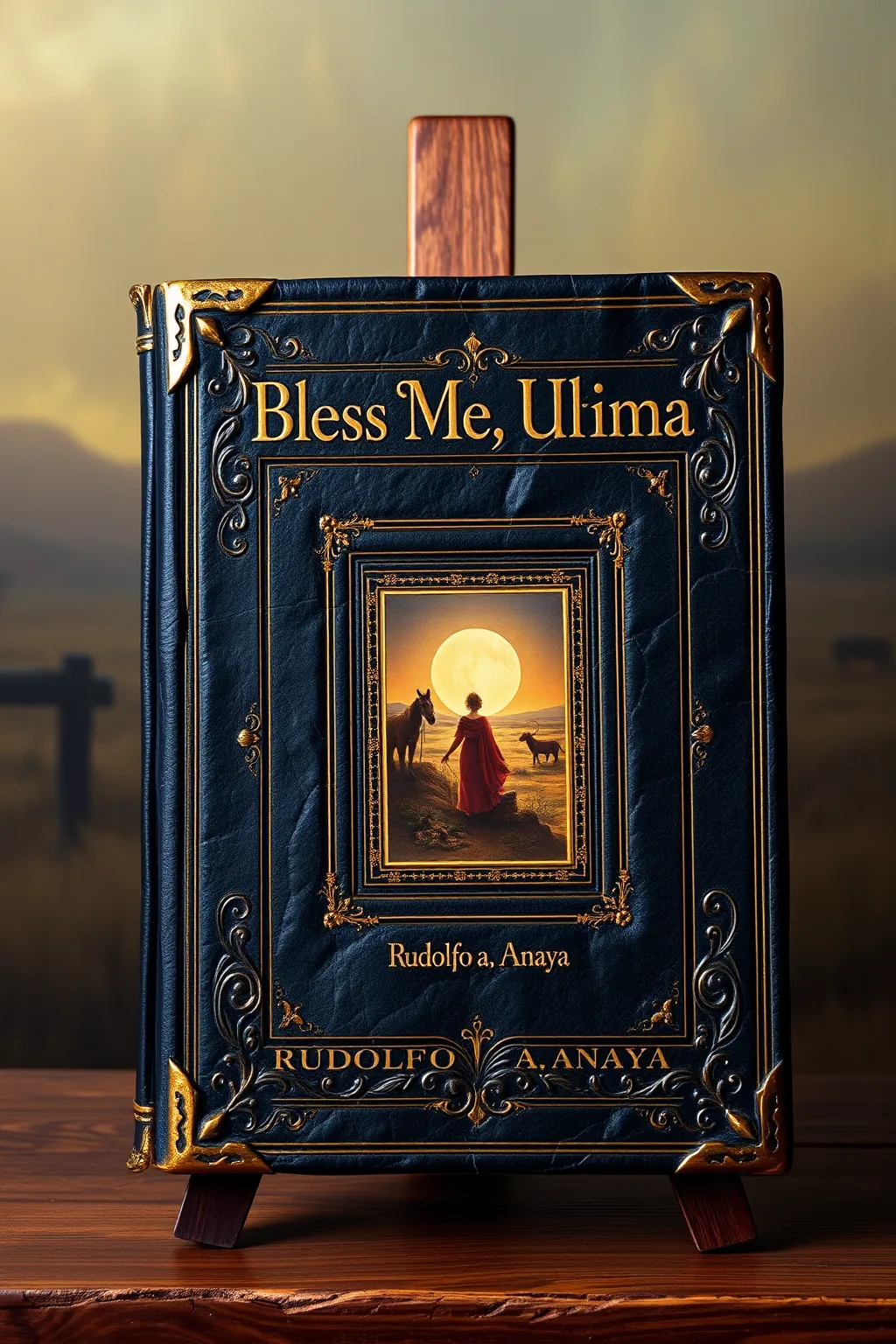
More Free Magic & Ritual Books
View all →