The Amityville Horror

 78
78

The Amityville Horror
The enduring power of *The Amityville Horror* lies in its relentless cataloging of terror, presented as a factual account. Anson's prose, while sometimes bordering on the sensational, effectively conveys the escalating dread experienced by the Lutz family. The book excels at depicting the psychological toll of a perceived haunting, making the suburban setting feel violated and unsafe. However, the narrative's reliance on a purely terrifying, relentless onslaught without significant character development or exploration of alternative explanations can feel one-dimensional. The passage describing the biblical plague of flies, a recurring and vivid detail, is particularly unsettling. Despite its narrative limitations, the book remains a foundational text in modern paranormal literature, a chilling testament to the fear of the unknown within domestic spaces.
📝 Description
78
Published in 1977, The Amityville Horror details a family's alleged 28-day ordeal in a supposedly haunted house.
Jay Anson's 1977 book, The Amityville Horror, recounts the supposed supernatural experiences of the Lutz family after they moved into 112 Ocean Avenue in Amityville, New York. The narrative describes a series of terrifying events that allegedly drove the family from their home within 28 days. These incidents, attributed to demonic influences and the house's violent history, included unexplained noises, objects moving on their own, and apparitions.
The book appeals to those interested in documented accounts of alleged hauntings and paranormal phenomena. It is a key text for discussions surrounding the Amityville case, a subject that has captured public attention for years. Readers fascinated by the intersection of psychological stress and possible supernatural occurrences will find this account offers a detailed, personal perspective on a family's difficult time.
Emerging in 1977, a time of heightened public interest in the paranormal, the story taps into anxieties about domestic security and the intrusion of dark forces into suburban life. The events, set in an affluent Long Island community, suggest the presence of hidden darkness beneath a calm exterior.
The Amityville Horror fits within a tradition of popular accounts of alleged demonic hauntings that gained traction in the latter half of the 20th century. Following the success of works like *The Exorcist*, stories detailing malevolent spiritual entities and their impact on domestic spaces resonated with a public increasingly curious about the occult. This book contributes to a subgenre that blurs the lines between reported experience, psychological distress, and supernatural belief, examining the idea of specific locations becoming imbued with negative spiritual energy due to past events.
💡 Why Read This Book?
• Understand the specific narrative details of the 1974 DeFeo murders and how they are presented as foundational to the alleged haunting at 112 Ocean Avenue. • Experience a detailed account of the supernatural phenomena reportedly experienced by the Lutz family during their 28 days in the house. • Analyze the cultural impact of the Amityville case, which became a touchstone for paranormal discussions following its 1977 publication.
⭐ Reader Reviews
Honest opinions from readers who have explored this book.
❓ Frequently Asked Questions
When was The Amityville Horror first published?
The Amityville Horror was first published in 1977, becoming an immediate bestseller and sparking widespread fascination with the case.
Who were the main people involved in the Amityville case as presented in the book?
The book focuses on George and Kathy Lutz, their three children, and the alleged supernatural occurrences they faced after moving into the house.
What is the significance of the address 112 Ocean Avenue?
112 Ocean Avenue is the address of the house in Amityville, New York, where the alleged hauntings and the murders by Ronald DeFeo Jr. took place.
Did the Lutz family stay in the house for a long time?
According to the book, the Lutz family fled the house after only 28 days due to the escalating paranormal activity they claimed to experience.
Is The Amityville Horror considered a factual account?
While presented as a true story by Jay Anson, the veracity of the events described has been widely disputed, with many questioning the Lutz family's claims.
What happened at 112 Ocean Avenue before the Lutz family moved in?
In November 1974, Ronald DeFeo Jr. murdered his parents and four siblings in their beds at the 112 Ocean Avenue residence, a crime central to the book's narrative.
🔮 Key Themes & Symbolism
The Corrupted Domestic Sphere
The Amityville Horror presents a profound violation of the safe haven that a home should represent. The narrative details how the seemingly idyllic suburban house at 112 Ocean Avenue becomes a source of terror for the Lutz family. This theme is explored through phenomena like disembodied voices, chilling cold spots, and physical manifestations that invade their private lives. The book suggests that malevolent forces can infiltrate even the most ordinary-seeming environments, turning familial security into a constant state of dread and paranoia.
Lingering Traces of Violence
A central tenet of the book is the idea that past atrocities can leave an indelible psychic imprint on a location. The narrative explicitly links the alleged hauntings to the 1974 murders committed by Ronald DeFeo Jr. within the house. This concept explores how extreme violence might saturate a physical space with residual energy or demonic influence, affecting subsequent inhabitants. The book functions as a case study in this phenomenon, suggesting that the house itself remembers and perpetuates the trauma it has witnessed.
Psychological and Spiritual Warfare
Beyond mere poltergeist activity, the book explores the psychological and spiritual torment inflicted upon the Lutz family. George and Kathy Lutz are depicted as enduring not only physical manifestations but also intense emotional and spiritual attacks. The narrative questions the boundaries between genuine supernatural influence and extreme psychological stress, or even demonic possession, as described by the family. This theme examines how such experiences can erode a person's sanity and faith, pushing them to the brink.
The Unseen and The Unknown
The Amityville Horror taps into a primal fear of what lies beyond the veil of ordinary perception. The book's enduring appeal stems from its detailed cataloging of inexplicable events that defy rational explanation. It explores the terror that arises when the familiar world is disrupted by forces that are invisible, intangible, and seemingly malevolent. This theme appeals to an audience interested in the limits of human understanding and the possibility of realities that exist just beyond our grasp.
💬 Memorable Quotes
Direct passages from the work, attributed to the author.
“The house had a presence. It was alive.”
— This statement captures the core fear presented in the book: that the dwelling at 112 Ocean Avenue was not merely a structure but an active, malevolent entity influencing its inhabitants.
“It was as if the house itself was breathing evil.”
— This interpretation conveys the overwhelming sense of dread and a palpable atmosphere of malice that the book attributes to the Amityville residence, going beyond mere spooky occurrences.
💡 Key Ideas
Editorial paraphrase of the work's core concepts — not direct quotes.
We were being tormented. Every single minute of every single day.
This paraphrase highlights the relentless nature of the alleged paranormal activity, emphasizing the pervasive and constant psychological and spiritual assault experienced by the Lutz family.
The voices came from everywhere and nowhere.
This quote illustrates the disorienting and terrifying nature of the auditory phenomena, suggesting an omnipresent, unseen source of torment that defied spatial understanding.
The evil was too strong. We had to leave.
This paraphrase reflects the ultimate decision of the Lutz family to abandon their home, driven by an overwhelming force they perceived as irrepressible and fundamentally evil.
🌙 Esoteric Significance
Tradition
While not explicitly tied to a single esoteric lineage, *The Amityville Horror* engages with themes common in Western occult traditions, particularly demonology and the concept of psychic residue or hauntings. It touches upon the idea that places can become saturated with negative spiritual energy due to traumatic events, a concept found in various magical and spiritualist practices. The narrative's focus on a malevolent, almost sentient house aligns with folklore and occult lore that personifies locations as having their own spiritual or energetic 'will'.
Symbolism
The house at 112 Ocean Avenue functions as a primary symbol, representing the corrupted sanctuary of the home and the invasion of the profane into the sacred domestic space. The alleged red eyes in the windows of the house, a recurring visual motif, symbolize a watchful, malevolent consciousness—a demonic presence observing and influencing the inhabitants. The biblical plague of flies mentioned in the book symbolizes divine judgment or overwhelming corruption, acting as a harbinger of escalating terror and decay.
Modern Relevance
The Amityville case, as popularized by this book, continues to be referenced in discussions of paranormal investigation, ghost hunting, and the psychology of fear. It serves as a touchstone for modern hauntology and the study of spectral phenomena. Contemporary paranormal investigators and authors often cite the Amityville narrative when discussing the possibility of residual hauntings or intelligent hauntings, and its influence can be seen in various media exploring haunted locations and the darker aspects of spiritual intrusion.
👥 Who Should Read This Book
• Individuals fascinated by documented paranormal cases and true crime, particularly those interested in the Amityville incident's place in cultural history. • Readers exploring the intersection of psychological distress and alleged supernatural phenomena, seeking detailed accounts of alleged hauntings. • Students of folklore and popular culture, examining how narratives of terror and the supernatural shape societal anxieties and beliefs.
📜 Historical Context
Published in 1977, *The Amityville Horror* arrived during a surge of public interest in the occult and supernatural, fueled by phenomena like the alleged haunting of the Enfield Poltergeist in the UK and popular culture successes like *The Exorcist* (1973). Jay Anson's book tapped into a post-Vietnam War era anxiety, presenting a terrifying invasion of the domestic sphere—the quintessential American suburban home. This contrasted with the more overtly political or social unrest of the preceding years. The book's sensational claims were met with both widespread fascination and skepticism. While it sold millions of copies and spawned a film franchise, critics and investigators, notably paranormal skeptic Joe Nickell and journalist Ricky Sears, later questioned the veracity of the Lutz family's account, suggesting elements might have been embellished or fabricated. The book's reception highlights a cultural appetite for true-life horror stories, even when their factual basis remained contested.
📔 Journal Prompts
The pervasive sense of dread described by the Lutz family.
The concept of residual energy from the 1974 DeFeo murders.
The symbolism of the house at 112 Ocean Avenue.
The family's initial motivations for purchasing the Amityville property.
The psychological impact of constant, unexplained phenomena.
🗂️ Glossary
Poltergeist
A type of ghost or spirit believed to be responsible for physical disturbances such as loud noises and objects being moved or destroyed.
Residual Haunting
A paranormal phenomenon where past events are replayed in a location, often perceived as an echo or imprint of energy rather than an interactive spirit.
Intelligent Haunting
A paranormal phenomenon where a spirit or entity appears to be aware of and interacts with the living, exhibiting consciousness and agency.
DeFeo Murders
The 1974 mass murder of six members of the DeFeo family in their home at 112 Ocean Avenue, Amityville, New York, preceding the Lutz family's alleged experiences.
Lutz Family
George and Kathy Lutz, the central figures in the book who claimed to have experienced severe paranormal activity during their brief residency at 112 Ocean Avenue.
Psychic Residue
The theory that strong emotions or events can leave an energetic imprint on a location, which can later be perceived by sensitive individuals.
Demonic Possession
The belief that a malevolent entity, such as a demon, takes control of a person's body and mind, a concept explored in the book's alleged phenomena.
🔮 Readers Also Liked
Browse all →








More by Jay Anson
All books →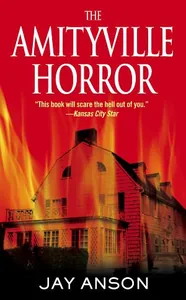


More Free Occult Philosophy Books
View all →