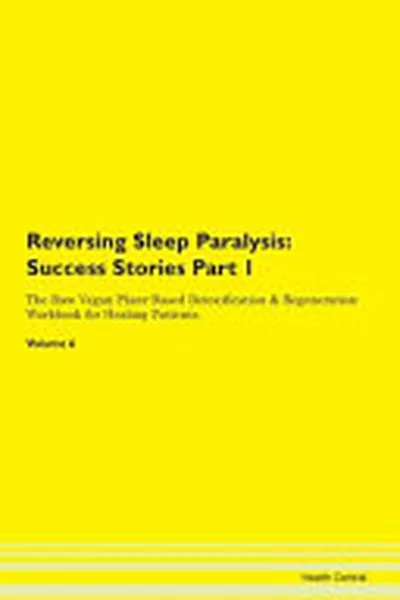
Reversing Sleep Paralysis
 79
79

Reversing Sleep Paralysis
Health Central’s Reversing Sleep Paralysis workbook offers a surprisingly structured and direct approach to a condition that often leaves sufferers feeling helpless and terrified. Its primary strength lies in its workbook format, providing actionable steps rather than mere theoretical discussion. The initial blurb’s claim of reaching health goals in a short space of time, while optimistic, reflects the book's proactive methodology. However, the book’s brevity and its 2019 publication date mean it may not engage deeply with the vast historical and cross-cultural interpretations of sleep paralysis, which often involve spiritual or symbolic dimensions explored in older esoteric traditions. A specific passage detailing lucid dreaming techniques as a method to confront and alter the sleep paralysis experience would have been particularly valuable, illustrating the potential for agency within the episode. Ultimately, as a practical guide for immediate relief, it serves its purpose, though it might leave those seeking deeper symbolic understanding wanting more.
📝 Description
79
Published in 2019, Reversing Sleep Paralysis offers a structured workbook for those experiencing this condition.
Health Central's 2019 workbook, Reversing Sleep Paralysis, provides practical support for individuals aiming to overcome the distressing episodes of sleep paralysis. It is designed for those who experience this condition regularly and seek methods to manage or stop these episodes. The book suits individuals preferring a self-guided, hands-on approach to health concerns and aims to help users achieve their goals more quickly. It also benefits anyone wanting to grasp the psychological and physiological aspects of sleep paralysis and apply strategies for improvement.
The workbook's central idea is its organized method for reversing sleep paralysis using directed exercises. It probably discusses physiological triggers, psychological connections, and possible management tactics. This involves comprehending the transitional state between sleep and wakefulness, where paralysis is frequent, and finding ways to regain control or change perceptions during these episodes. The content is built around actionable steps for users to implement.
While the book addresses sleep paralysis from a modern scientific perspective, its focus on altering perceptions and regaining control during the liminal state between waking and sleeping touches upon esoteric traditions concerned with consciousness manipulation and dream control. Historically, experiences similar to sleep paralysis were interpreted through supernatural lenses, such as Greek myths of Morpheus or the concept of night hags. Esoteric practices often delve into the nature of these transitional states, viewing them not merely as physiological events but as opportunities for spiritual or psychological exploration and influence, aiming to achieve mastery over subjective experiences.
⭐ Reader Reviews
Honest opinions from readers who have explored this book.
❓ Frequently Asked Questions
What is sleep paralysis according to Health Central's workbook?
The workbook defines sleep paralysis as a temporary inability to move or speak that occurs when you are waking up or falling asleep. It highlights the distressing nature of this phenomenon, which can involve hallucinations and a feeling of pressure.
How does Reversing Sleep Paralysis differ from other books on the topic?
This book functions as a practical workbook, offering structured exercises and direct guidance. Unlike purely theoretical texts, it emphasizes user participation and self-directed action to achieve specific health goals related to sleep paralysis.
When was Reversing Sleep Paralysis first published?
The book was first published on October 7, 2019, by Health Central, positioning it within contemporary health and wellness literature.
Can this workbook help with sleep paralysis hallucinations?
Yes, the workbook aims to provide strategies for managing the entire experience of sleep paralysis, which often includes hallucinations. By offering tools to confront the episode, it intends to reduce the fear and impact of these phenomena.
Is this book suitable for someone with no prior knowledge of sleep disorders?
The workbook is designed to be resourceful and supportive, suggesting it is accessible to individuals without extensive prior knowledge. It guides users toward their health goals concerning sleep paralysis.
What kind of health goals does the book address?
The primary health goal is the reversal or significant reduction of sleep paralysis episodes. It focuses on empowering users to actively manage the condition and improve their sleep-related well-being.
🔮 Key Themes & Symbolism
Active Management Strategies
The workbook emphasizes moving beyond passive suffering by presenting techniques for active engagement with sleep paralysis episodes. This involves learning to recognize the onset, understanding the physiological state, and employing specific mental or physical exercises to regain control or alter the perception of the event. The focus is on empowerment, transforming a frightening experience into one that can be managed and potentially overcome through consistent practice and self-awareness.
Workbook-Style Application
Central to the book's design is its function as a workbook, implying a practical, hands-on approach. Users are guided through a series of exercises and prompts intended to be completed directly within the book or through dedicated practice. This format aims to facilitate rapid progress toward stated health goals by making the learning process interactive and directly applicable to the user's personal experience with sleep paralysis.
Understanding the Liminal State
The work likely explores the unique neurological and psychological state experienced during sleep paralysis – the threshold between full consciousness and deep sleep. Understanding this liminal state is presented as crucial for effective management. By clarifying the sensations, hallucinations, and paralysis associated with this transitional phase, the workbook seeks to reduce fear and provide a framework for intervention.
Goal-Oriented Health Improvement
The book is framed around achieving specific health goals related to sleep paralysis. This implies a structured pathway toward improvement, focusing on measurable progress and the ultimate aim of reversing or significantly mitigating the condition. The resource is presented as a supportive tool, designed to help individuals attain these objectives in a relatively short timeframe.
💬 Memorable Quotes
Direct passages from the work, attributed to the author.
“A truly resourceful and supporting workbook.”
— This phrase highlights the book's practical nature and its aim to provide assistance. It suggests the content is designed to be both informative and actively helpful, functioning as a reliable guide for the user.
“Help you reach your health goals in a short space of time.”
— This indicates the book's focus on efficacy and efficiency. It promises tangible results and a relatively quick path to improvement for those struggling with sleep paralysis, emphasizing a proactive approach to wellness.
“A Must Have!”
— This strong endorsement suggests the book is considered essential for anyone experiencing sleep paralysis. It implies the content is highly valuable and addresses a critical need for effective management strategies.
“Reversing Sleep Paralysis: A Workbook Approach”
— This title, or a similar phrasing, captures the book's core function. It signals that the reader will engage in active exercises and guided processes rather than passively absorbing information.
“Supportive guidance for managing sleep paralysis episodes”
— This interpretive statement emphasizes the book's role as a companion resource. It aims to provide comfort and direction, helping individuals read through the challenging experiences of sleep paralysis with greater confidence.
🌙 Esoteric Significance
Tradition
While Reversing Sleep Paralysis (2019) is presented as a modern health resource, the *experience* of sleep paralysis has deep roots in esoteric traditions worldwide. Many cultures interpret these episodes not merely as physiological events but as encounters with spiritual entities or astral projections. Esoteric lineages such as shamanism, certain branches of Western Hermeticism, and various folk magic traditions often contain specific rituals, protective measures, or interpretive frameworks for dealing with night terrors and sleep paralysis, viewing them as potential points of contact with other realms.
Symbolism
In many esoteric traditions, the paralysis experienced during sleep paralysis is symbolic of being 'stuck' or energetically bound, often by external forces or internal blockages. Hallucinations, such as the 'intruder' or 'hag' figures, can symbolize confronting one's shadow self, primal fears, or even entities from non-physical planes. The pressure felt is sometimes interpreted as a weight of spiritual or karmic significance. Overcoming these sensations is often seen as a form of spiritual initiation or a test of one's willpower and connection to higher protective forces.
Modern Relevance
Contemporary practitioners of lucid dreaming and astral projection often engage with sleep paralysis as a gateway phenomenon. Techniques for intentionally inducing or controlling sleep paralysis are explored in modern occult circles and within communities focused on out-of-body experiences (OBEs). While Health Central's workbook focuses on a clinical reversal, the underlying phenomena it addresses continue to be interpreted and utilized within modern esoteric practices as methods for exploring consciousness and non-physical realities.
👥 Who Should Read This Book
['• Individuals experiencing frequent and distressing sleep paralysis episodes who are seeking practical, self-guided methods for management and potential reversal.', '• Readers interested in understanding the physiological and psychological aspects of sleep paralysis from a contemporary health perspective, as presented in a 2019 publication.', '• Those who prefer workbook formats and hands-on exercises for addressing health challenges, aiming for tangible results in a structured timeframe.']
📜 Historical Context
The study of sleep paralysis, often termed 'incubus attacks' or 'nightmare hags' in earlier periods, has roots stretching back to antiquity. Ancient Greek physicians like Hippocrates described conditions involving sleep disturbances and paralysis. By the 17th century, figures such as physician Sir Richard Blackmore explored the phenomenon, linking it to humors and bodily imbalances. The 20th century saw a shift towards scientific and psychological explanations, particularly with the rise of sleep medicine and the formal classification of sleep disorders. Health Central’s 2019 workbook, Reversing Sleep Paralysis, operates within this modern scientific framework, building upon decades of research into REM sleep, parasomnias, and the neurobiology of sleep. It emerges in an era where cognitive behavioral therapy for insomnia (CBT-I) and other evidence-based psychological interventions are standard approaches, contrasting with earlier supernatural or humoral theories.
📔 Journal Prompts
Reflect on the specific sensations described in the workbook during a recent sleep paralysis episode.
Analyze the potential triggers identified in the text that might precede your sleep paralysis experiences.
Consider the workbook's approach to regaining control during an episode and how it contrasts with your usual reaction.
Document any recurring themes or figures observed during sleep paralysis hallucinations, referencing the workbook's interpretations.
Map out a personal action plan based on the workbook's exercises for managing sleep paralysis.
🗂️ Glossary
Sleep Paralysis
A temporary inability to move or speak that occurs when you are waking up or falling asleep. It is often accompanied by hallucinations and a sense of pressure.
Workbook
A book containing exercises or problems for a student to complete. In this context, it implies a practical, hands-on approach to learning and applying strategies.
Health Goals
Specific objectives related to improving one's physical or mental well-being. For this book, the primary goal is the reversal or management of sleep paralysis.
Liminal State
A transitional or in-between state, often referring to the period between wakefulness and sleep where sleep paralysis commonly occurs.
Resourceful
Having the ability to find quick and clever ways to overcome difficulties. In the book's context, it refers to the practical solutions and information provided.
Supporting
Providing encouragement or emotional help. This suggests the book aims to be a comforting and guiding resource for those experiencing distress.
Hallucinations
Perceptions in dreams or waking states that seem real but are created by the mind. In sleep paralysis, these can include visual, auditory, or tactile experiences.