One
 83
83

One
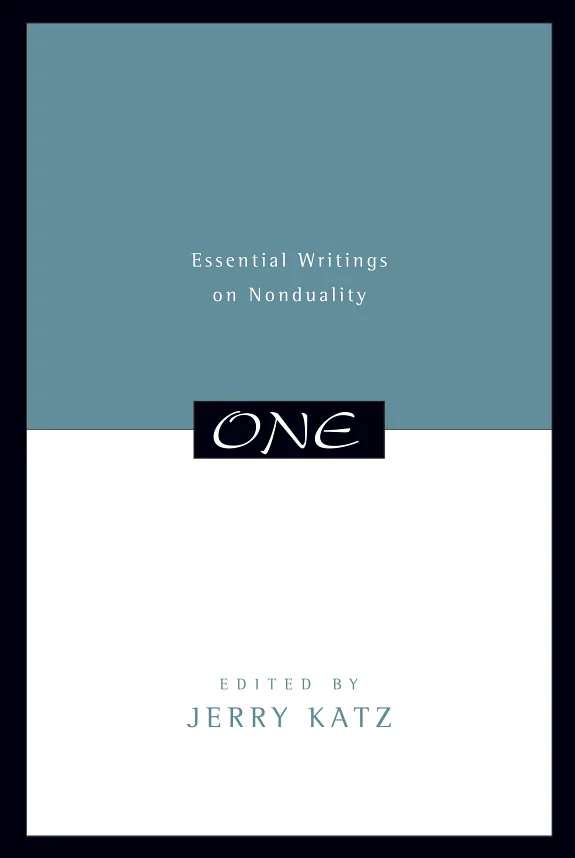
Jerry Katz's "One" attempts to distill the essence of nonduality, a concept often veiled in dense philosophical or theological language. Its strength lies in its eclectic selection, pulling from a wide array of modern essays and classical spiritual texts. The inclusion of passages from Buddhism, Taoism, and Christianity alongside contemporary voices offers a broad spectrum of expression. However, the sheer diversity can sometimes lead to a lack of sustained depth. While the book successfully avoids overly academic prose, a passage discussing the Christian concept of the Trinity in relation to nonduality, for instance, feels somewhat brief and could benefit from more extensive exploration. The overarching achievement is its accessibility, presenting a complex idea without resorting to overly esoteric or impenetrable language. It serves as a useful primer, offering varied entry points into the nondual perspective.
📝 Description
83
Jerry Katz's 2007 book 'One' posits nonduality as a lived experience, not mere philosophy.
Jerry Katz's 'One' presents nonduality not as an abstract philosophical problem, but as a lived understanding. The book gathers contemporary voices and historical texts that articulate the core idea: existence is a single, undivided reality. It moves beyond academic jargon to offer accessible expressions of this unity, illustrating how perceived separations are ultimately conceptual overlays on a fundamental oneness. The collection aims to convey the essence of nonduality through vibrant, direct language, making a complex spiritual concept understandable for a broad audience.
This compilation is intended for seekers exploring the nature of reality and consciousness, particularly those drawn to spiritual traditions that emphasize unity. Readers interested in modern interpretations of ancient wisdom will find accessible language and varied perspectives. It offers insights that can be integrated into daily life rather than remaining purely theoretical. Individuals curious about the common threads across world religions regarding ultimate reality will also find value here.
Published in 2007, 'One' arrived during a period of growing Western interest in nondual teachings, especially those originating from Eastern traditions. The work engages with influential movements like Advaita Vedanta from Hinduism and various Buddhist schools. It also incorporates contemporary Western writers who have made these ideas more accessible. The book reflects a trend towards synthesizing Eastern spiritual philosophies with Western cultural perspectives, mirroring the early 21st century's intellectual climate that favored accessible spiritual literature.
💡 Why Read This Book?
• Understand the core tenets of nonduality as presented in contemporary spiritual discourse, gaining clarity on how distinctions are viewed within a unified existence, as explored in the book's modern essays. • Discover accessible expressions of unity from diverse global traditions, moving beyond academic frameworks to grasp the experiential nature of nonduality, referenced by the inclusion of Buddhist and Taoist passages. • Explore how ancient spiritual insights into oneness are articulated by modern writers, providing a bridge between historical wisdom and current contemplative practices, as exemplified by the 2007 publication date and its engagement with contemporary thought.
⭐ Reader Reviews
Honest opinions from readers who have explored this book.
❓ Frequently Asked Questions
What is the primary focus of Jerry Katz's book "One"?
The book's primary focus is the concept of nonduality, which posits that existence is a single, undivided whole. It aims to convey this understanding through accessible language, drawing from both contemporary writings and major spiritual traditions.
When was "One" first published?
Jerry Katz's "One" was first published on January 30, 2007. This places it within a period of growing interest in accessible spiritual literature concerning oneness.
What spiritual traditions are referenced in "One"?
The book draws from major traditions including Buddhism, Taoism, Hinduism, Christianity, Judaism, and Islam. It highlights passages that express the concept of unity across these varied spiritual lineages.
Is "One" an academic text?
No, "One" is explicitly non-academic in style. It uses modern, popular writing and spirited passages from various traditions to convey the understanding of nonduality in a direct and engaging manner.
What is the central idea explored in "One"?
The central idea is nonduality: the understanding that existence is one undivided whole. The book suggests that while daily distinctions are useful, they do not represent the ultimate truth of reality.
Who compiled the "One" collection?
The collection "One" was compiled by Jerry Katz. The book was first published in 2007, bringing together diverse expressions of nondual understanding.
🔮 Key Themes & Symbolism
The Unity of Existence
The core theme of "One" is the fundamental unity of all existence, a concept known as nonduality. This perspective challenges the common perception of a world made of separate entities, suggesting instead that underlying all apparent divisions is a single, indivisible reality. The book presents this not as a mere philosophical concept but as a direct understanding, illustrated through contemporary prose and selections from major spiritual traditions like Hinduism and Buddhism. It emphasizes that the distinctions we make are functional tools for reading through the world, not fundamental truths about its nature.
Beyond Conceptual Separation
This work explores the idea that conceptual thinking, while necessary for daily life, can obscure the direct experience of oneness. "One" features writings that highlight the limitations of language and logic in fully grasping the nondual nature of reality. It suggests that true understanding often arises from intuitive insight or direct apprehension, rather than intellectual analysis alone. The book’s non-academic style aims to bypass intellectual barriers, allowing readers to connect with the essence of nonduality through more experiential or direct modes of comprehension.
Cross-Tradition Convergence
A significant theme is the convergence of diverse spiritual traditions on the concept of unity. "One" deliberately compiles passages from seemingly disparate sources—Buddhism, Taoism, Christianity, Judaism, and Islam—to demonstrate a shared underlying realization of oneness. This comparative approach reveals common threads in humanity's quest for understanding ultimate reality. By presenting these varied expressions side-by-side, the book underscores the universality of the nondual insight, suggesting it is a perennial wisdom found across cultures and historical epochs.
Accessible Spirituality
The compilation prioritizes accessible language and engaging writing to bring the concept of nonduality to a wider audience. Eschewing esoteric jargon and dense academic discourse, "One" draws heavily on modern, popular writing. This approach aims to make profound spiritual ideas relatable and applicable to everyday life. The book serves as an entry point for those new to nondual teachings, offering a clear and direct presentation of complex ideas without demanding prior specialized knowledge.
💬 Memorable Quotes
Direct passages from the work, attributed to the author.
“Existence is one undivided whole.”
— This is the foundational statement of nonduality presented in the book. It asserts that reality is not composed of separate parts but is a singular, unified field, challenging our everyday perception of individuality and multiplicity.
“Daily distinctions we make are useful, but not ultimately true.”
— This highlights the pragmatic vs. ultimate truth distinction. While we need to differentiate objects and concepts to function, this collection suggests these separations dissolve upon deeper inquiry into the nature of reality.
“The book conveys what nonduality itself is, in a nonacademic style.”
— This points to the author's intention: to explain nonduality directly and without scholarly pretense. The focus is on clarity and accessibility, using contemporary language to discuss ancient wisdom.
“Draws heavily on modern, popular writing on the subject.”
— This indicates the collection's contemporary relevance and accessible approach. It bridges classic spiritual concepts with modern voices familiar to a general readership interested in spirituality.
“Spirited passages from major traditions.”
— This emphasizes the vibrant and engaging nature of the selected texts. It promises a dynamic exploration of nonduality through diverse historical and cultural lenses, including Buddhism and Christianity.
🌙 Esoteric Significance
Tradition
While not explicitly tied to a single esoteric lineage like Hermeticism or Gnosticism, "One" draws heavily from the nondual streams within Advaita Vedanta (Hinduism) and Mahayana Buddhism, traditions that have profoundly influenced Western esoteric thought. Its emphasis on the illusory nature of the phenomenal world and the ultimate reality of Brahman or Shunyata aligns with perennialist philosophies explored in esoteric circles. The work can be seen as a modern articulation of concepts found in mystical branches of various religions, making them accessible outside traditional esoteric training.
Symbolism
The book's primary symbolic representation is the number 'One' itself, signifying absolute unity, the unmanifest source, and the totality of existence. Other symbolic motifs emerge from the diverse traditions included: the concept of Maya (illusion) in Hinduism, representing the deceptive nature of the perceived separate reality; the Buddhist concept of Emptiness (Shunyata), symbolizing the lack of inherent, independent existence in all phenomena; and within Christian mysticism, the idea of the Godhead or Divine Unity that transcends all created forms.
Modern Relevance
Contemporary thinkers and practitioners in mindfulness, integral spirituality, and various forms of Western Buddhism continue to engage with the ideas presented in "One." Its accessible approach to nonduality influences modern spiritual teachers who aim to communicate complex metaphysical concepts without relying on specialized jargon. The book's emphasis on direct experience and the dissolution of the separate self appeals to therapeutic modalities focused on self-compassion and interconnectedness, as well as with philosophical explorations of consciousness.
👥 Who Should Read This Book
• Seekers interested in nonduality: Individuals exploring the concept of oneness and the nature of reality will find accessible explanations and diverse perspectives, particularly those drawn to the core idea presented by the 2007 publication. • Comparative religion students: Those studying the commonalities across global spiritual traditions will benefit from the curated passages that highlight unity in Buddhism, Hinduism, and Christianity. • Readers seeking accessible spirituality: Individuals new to metaphysical or spiritual concepts who appreciate clear, non-academic writing will find "One" a welcoming introduction to profound ideas.
📜 Historical Context
Published in 2007, Jerry Katz's "One" arrived during a period of heightened Western interest in nondual philosophies, significantly influenced by teachers like Ram Dass and Eckhart Tolle, who popularized concepts from Advaita Vedanta and Buddhism for a mass audience. This era saw a surge in accessible spiritual literature that sought to bridge Eastern wisdom traditions with contemporary Western sensibilities. "One" fits squarely within this movement, offering a collection that moves away from dense scholarly works and toward direct, relatable expressions of unity. While not engaging directly with specific academic debates, it implicitly responded to the popularization of ideas often discussed in comparative religion studies and New Age thought. Its publication reflects a cultural moment where synthesizing diverse spiritual insights into a cohesive, understandable whole was a prominent endeavor, offering an alternative to more dogmatic religious structures.
📔 Journal Prompts
The concept of existence as one undivided whole: How does this contrast with your daily experience of separation?
Reflections on the distinction between useful distinctions and ultimate truth as presented in the book.
Exploring the 'spirited passages' from major traditions: What common threads of unity do you observe?
The role of modern, popular writing in conveying spiritual concepts like nonduality.
Consider the idea that daily distinctions are not ultimately true: what implications does this have for perceived problems?
🗂️ Glossary
Nonduality
The understanding that existence is a single, undivided whole, challenging the perception of inherent separation between objects, individuals, or concepts. It suggests that ultimate reality is singular.
Unity
The state of being joined together or in agreement; oneness. In the context of the book, it refers to the fundamental interconnectedness and singular nature of all reality.
Distinctions
The act of noticing or understanding the difference between things. In nonduality, these are seen as functional tools for reading through the world but not reflective of ultimate reality.
Advaita Vedanta
A prominent school of Hindu philosophy emphasizing the nondual nature of reality, asserting that the individual soul (Atman) is identical with the ultimate reality (Brahman).
Mahayana Buddhism
A major branch of Buddhism that emphasizes the concept of emptiness (Shunyata) and the bodhisattva ideal, often interpreted in ways that align with nondual perspectives.
Conceptual Thinking
The process of forming ideas or concepts based on sensory input or abstract reasoning. The book suggests this mode of thought can obscure direct experience of oneness.
Perennial Wisdom
The idea that there is a common source or set of truths underlying all major spiritual and mystical traditions throughout history.
This book appears in 1 collection
🔮 Readers Also Liked
Browse all →








From the “Self-Realization” Collection
View all →





More Free Occult Philosophy Books
View all →