The ^AKoan
 84
84

The ^AKoan
Steven Heine and Dale S. Wright's edited collection, The ^AKoan, attempts to broaden the scholarly and practitioner's understanding of Zen koans. It succeeds admirably in demonstrating that koans are not monolithic entities but rather dynamic instruments whose forms and functions have evolved significantly. The essays collectively underscore the diversity within the tradition, a point particularly well-made in discussions of regional variations and the historical interplay between different Zen lineages. A limitation, however, is the uneven accessibility; some essays presume a deep prior knowledge of Buddhist philosophy, which may alienate newcomers. The exploration of Hakuin Ekaku's influential role in systematizing koan study is a standout, offering concrete examples of his pedagogical methods. Ultimately, this volume serves as a valuable, if demanding, resource for anyone serious about the intricacies of Zen koan practice.
📝 Description
84
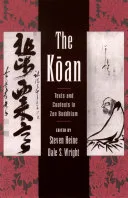
Published in 2000, The ^AKoan reassesses the koan's dynamic function in Zen Buddhist spiritual training.
This collection of essays, edited by Steven Heine and Dale S. Wright, examines the koan beyond its common perception as a mere riddle. The contributors consider the koan as a central pedagogical tool within Zen Buddhism, demonstrating its active role in spiritual development. They trace the historical evolution of koan practice and its varied applications, moving past simplistic understandings to reveal the inherent complexities of this method of inquiry.
The volume is suited for academics specializing in religious studies, especially those focused on East Asian Buddhism and contemplative practices. It also speaks to advanced Zen practitioners seeking a deeper theoretical grasp of the koan system. Readers interested in the philosophy of language, consciousness studies, and the historical development of religious practices will find its detailed analysis valuable.
The ^AKoan positions itself within the study of Zen Buddhism, a tradition emphasizing direct experience and insight over doctrinal exposition. Koans, central to this path, serve as focal points for contemplation, intended to break down conceptual thinking and lead to awakening. This book addresses how these paradoxical statements functioned historically and pedagogically, particularly within the context of Western scholarly engagement with Zen, acknowledging regional variations and the evolving nature of their transmission.
💡 Why Read This Book?
• Gain a nuanced understanding of koan development, moving beyond simplistic definitions to appreciate their historical and regional diversity, as explored in essays discussing the tradition's formation. • Grasp the functional role of koans in Zen training, recognizing them not just as riddles but as active tools for cultivating specific states of consciousness, a concept central to the work. • Discover the complex interplay between masters and disciples in the koan process, highlighting how transmission and interpretation have shaped practice over centuries, a dynamic examined through historical case studies.
⭐ Reader Reviews
Honest opinions from readers who have explored this book.
❓ Frequently Asked Questions
What is the primary argument of The ^AKoan regarding traditional koan study?
The primary argument is that Western understanding of koans has been historically limited. The book asserts that koans are diverse, have evolved significantly over time, and function dynamically in Zen religious training beyond being mere enigmatic questions.
When was The ^AKoan first published, and who are the editors?
The ^AKoan was first published on April 20, 2000. It is edited by Steven Heine and Dale S. Wright.
Does this book provide actual koans for practice?
While the book discusses koans extensively and analyzes their use, it is primarily an academic and critical examination rather than a manual for direct koan practice. It focuses on the theory and history behind koans.
What historical figures are discussed in relation to koan tradition?
The book explores the historical development of koans, often referencing influential figures like Hakuin Ekaku, who played a significant role in systematizing koan study, and Dogen Zenji, examining his lineage's engagement with koans.
What academic fields does The ^AKoan contribute to?
It significantly contributes to religious studies, Buddhist philosophy, East Asian studies, and the history of contemplative practices, offering new perspectives on a core element of Zen Buddhism.
How does the book challenge conventional views of koans?
It challenges the view of koans as static, unsolvable riddles by highlighting their varied historical contexts, the diverse methods of their application, and their role as catalysts for awakening rather than mere intellectual puzzles.
🔮 Key Themes & Symbolism
Evolution of Koan Practice
This collection argues that the koan tradition is not static but has undergone significant evolution since its inception. Contributors trace how koans were formulated, transmitted, and utilized differently across various Zen schools and historical periods. The work highlights shifts from early, perhaps more spontaneous, uses to later systematized curricula, particularly noting the influence of figures like Hakuin Ekaku in the 19th century in standardizing koan sets and their interpretative frameworks, challenging a monolithic view of koan study.
Koan as a Pedagogical Tool
Central to the book is the understanding of the koan as a sophisticated pedagogical instrument designed for spiritual training. It moves beyond viewing koans as mere intellectual puzzles or Zen riddles. Instead, the essays illuminate how koans function to disrupt conventional, dualistic thinking, provoke existential inquiry, and ultimately facilitate the realization of non-dual awareness. The master-disciple relationship in the context of koan transmission and guidance is also a crucial element explored.
Diversity within the Tradition
The ^AKoan emphasizes the rich diversity within the koan tradition, a facet often overlooked in generalized Western interpretations. The essays explore variations in koan literature, different approaches to their study across geographical regions (e.g., Japan, China), and the distinct ways various Zen lineages, such as Rinzai and Soto, have integrated or adapted koan practice. This challenges the notion of a single, uniform koan method.
Koan and Language
The book examines the philosophical implications of koans, particularly their relationship with language and conceptual thought. Contributors examine how koans function at the limits of linguistic expression, designed to point beyond words and concepts to a direct experience of reality. The inherent paradoxes and nonsensical elements within koans are analyzed not as flaws but as intentional features aimed at breaking down reliance on conventional logic and language.
💬 Memorable Quotes
Direct passages from the work, attributed to the author.
“Understanding koan formation requires examining previously unrecognized factors.”
— This highlights the book's objective to unearth less-discussed historical influences and contextual elements that shaped the development and application of koan practices within Zen Buddhism.
“The diversity of koan practice has been severely limited in scholarly perception.”
— This statement underscores the editors' and contributors' belief that conventional scholarship has often presented an oversimplified or uniform view of koan study, neglecting its complex nature.
“Koan study aims to disrupt dualistic thinking.”
— This interpretation points to a core function of koans discussed within the text: their capacity to challenge conventional, binary modes of thought and perception, leading towards a more integrated understanding.
“Hakuin's systematization significantly impacted koan transmission.”
— This refers to the crucial role of the 18th-century Japanese Zen master Hakuin Ekaku in organizing and standardizing koan curricula, a development extensively analyzed within the book's historical context.
💡 Key Ideas
Editorial paraphrase of the work's core concepts — not direct quotes.
Koans are not static riddles but dynamic tools that have evolved.
This paraphrased concept captures the book's central thesis: koans should not be seen as unchanging historical artifacts but as living instruments of spiritual training whose form and function have adapted through centuries of use.
🌙 Esoteric Significance
Tradition
While Zen Buddhism is often studied separately from Western esoteric traditions, The ^AKoan's exploration of consciousness, non-dual awareness, and the disruption of conceptual thought aligns with aims found in Hermeticism and Gnosticism. The koan functions as an 'alchemical' tool, transforming the practitioner's perception by breaking down egoic structures and conventional reality constructs, echoing esoteric pursuits of direct gnosis or union.
Symbolism
The koan itself, often presented as a nonsensical phrase or paradoxical question (e.g., 'What is the sound of one hand clapping?'), functions symbolically. It represents the limitations of rational intellect and the conventional world. The silence or emptiness that can follow contemplation of a koan symbolizes a state of pure potentiality or Buddha-nature, a recurring motif in Mahayana Buddhist philosophy.
Modern Relevance
Contemporary mindfulness movements and contemplative neuroscience draw implicitly on the principles discussed. Thinkers exploring altered states of consciousness, non-dual philosophy, and the limits of language find resonance in the koan's method. Practices influenced by Zen, including certain forms of embodied cognition research and therapeutic approaches focused on cognitive reframing, indirectly benefit from the deep analysis of koan dynamics presented in works like this.
👥 Who Should Read This Book
• Scholars of East Asian religions and comparative philosophy seeking to deepen their understanding of Zen Buddhist pedagogy and its historical nuances. • Advanced Zen practitioners interested in the theoretical underpinnings and historical evolution of koan study, moving beyond rote memorization to critical engagement. • Students of mysticism and contemplative traditions worldwide who wish to explore a highly refined method for cultivating insight and altering consciousness.
📜 Historical Context
Published in 2000, The ^AKoan emerged within a robust academic landscape examining Zen Buddhism, influenced by scholars like D.T. Suzuki whose earlier works had popularized Zen in the West, albeit sometimes through a romanticized lens. The late 20th century saw a critical turn, with scholars like Bernard Faure questioning established narratives. This collection positioned itself within that critical discourse, specifically targeting the perceived limitations in understanding koans. It engaged with the legacy of figures like Hakuin Ekaku, whose systematization of koans in the 18th century became a focal point for both praise and critique. The book aimed to correct a scholarly tendency to view koans monolithically, instead highlighting the rich diversity stemming from different monastic lineages and historical periods, thereby contributing to a more nuanced academic reception of Zen's pedagogical methods.
📔 Journal Prompts
The function of the koan in disrupting dualistic thinking.
Reflect on the historical evolution of koan transmission.
The master-disciple dynamic in koan contemplation.
The limits of language as explored through koan paradoxes.
How the concept of 'kōan-shiki' writing challenges conventional literary forms.
🗂️ Glossary
Koan
An enigmatic question, statement, or anecdote used in Zen Buddhist practice to provoke doubt, challenge conceptual thinking, and stimulate spiritual insight.
Zen Buddhism
A school of Mahayana Buddhism that originated in China (as Chan) and spread to other East Asian countries, emphasizing meditation (zazen) and direct experience over scripture.
Soto Zen
One of the two major schools of Zen Buddhism in Japan, traditionally associated with Dogen Zenji, often emphasizing silent illumination (shikantaza) and a less confrontational approach to koans compared to Rinzai.
Rinzai Zen
One of the two major schools of Zen Buddhism in Japan, historically known for its rigorous use of koans and the master-disciple interactions designed to break through conceptual barriers.
Hakuin Ekaku
An 18th-century Japanese Rinzai Zen master credited with revitalizing Zen practice and systematizing the koan curriculum, making it a central feature of Rinzai training.
Dogen Zenji
A 13th-century Japanese Buddhist monk who founded the Soto school of Zen in Japan, known for his philosophical writings emphasizing practice-enlightenment.
Non-dualism
A philosophical or spiritual concept that rejects the fundamental distinction between mind and matter, self and other, or subject and object, aiming for an integrated understanding.