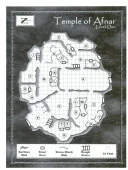
Temple of the Troll God
 81
81

Temple of the Troll God
Timothy Brown’s "Temple of the Troll God" offers a compelling, if occasionally dense, reinterpretation of Scandinavian folklore through an esoteric lens. Brown steers clear of simplistic mythologizing, instead presenting a structured analysis that positions trolls as more than mere fairy tale creatures. His examination of their chthonic associations and symbolic resonance with primal energies is particularly strong. One passage that stands out is his discussion linking troll dwellings to subterranean spiritual realms, a concept that gives the book its unique metaphysical weight. However, the work sometimes suffers from a lack of direct engagement with contemporary folkloric scholarship, occasionally feeling like a dialogue with older traditions rather than a fully integrated modern perspective. The prose, while precise, can be demanding for readers unfamiliar with esoteric terminology. Despite these limitations, "Temple of the Troll God" provides a valuable, albeit specialized, perspective for those seeking to understand the deeper currents within ancient myths.
📝 Description
81
Timothy Brown's 2001 book analyzes the troll figure as a potent symbol in metaphysical thought.
Timothy Brown's "Temple of the Troll God" examines the troll not just as a fairy tale character but as a significant symbol in metaphysical traditions. Published in 2001, the book offers an analytical framework for understanding ancient beliefs, going beyond simple narratives. Brown investigates the origins and development of troll figures, aiming to reveal their deeper symbolic meanings and potential links to primal forces or archetypes.
The work is suited for serious students of comparative mythology, folklore, and esoteric thought. Readers interested in the psychological and spiritual dimensions of myth, rather than just folklore, will find value. Those with an academic or investigative approach to esoteric subjects, seeking to grasp the underlying structures of belief systems and symbolic representation, will also benefit. The book directly addresses individuals curious about the darker, chthonic aspects of folklore and their metaphysical interpretations.
Published in 2001, "Temple of the Troll God" arrived during a time of renewed interest in folk traditions and their application in contemporary esoteric thinking. The early 2000s fostered independent publishing and online communities that supported niche subjects. Brown's work connects to a history of scholars and occultists, including figures like Carl Jung, who sought spiritual or psychological significance in myths. The book fits within intellectual currents that interpret folklore through a metaphysical lens.
💡 Why Read This Book?
• Gain an understanding of trolls not just as mythical beings but as symbolic representations of primal, untamed forces, drawing on interpretations of their subterranean associations as discussed in the book. • Explore the concept of the 'Inner Earth' as a metaphysical rather than purely geographical space, providing a framework for understanding esoteric cosmologies and their connection to folklore. • Uncover the potential for ancestral memory within myths, learning how ancient perceptions of the natural world and its energies might be encoded in figures like the troll, as Brown suggests.
⭐ Reader Reviews
Honest opinions from readers who have explored this book.
❓ Frequently Asked Questions
What is the primary esoteric interpretation of trolls presented in "Temple of the Troll God"?
The book interprets trolls not just as folkloric monsters but as symbolic embodiments of primal, untamed forces and chthonic energies, often associated with subterranean spiritual realms and the shadow aspect of the psyche.
When was "Temple of the Troll God" first published?
The book was first published in September 2001.
Does the book offer practical magical applications for troll symbolism?
While the book focuses on interpretation and symbolic understanding, it explores the metaphysical dimensions of troll figures, which can inform advanced esoteric practice rather than offering direct spellwork instructions.
Who might find "Temple of the Troll God" most beneficial?
Students of comparative mythology, esoteric traditions, folklore, and those interested in the psychological and spiritual dimensions of ancient myths will find the work particularly beneficial.
What makes this book different from standard folklore collections?
Unlike standard collections, "Temple of the Troll God" analyzes folklore through a metaphysical and esoteric framework, seeking deeper symbolic meanings and connections to primal energies, rather than just cataloging stories.
Does Timothy Brown cite specific historical or mythological sources?
Yes, the work engages with various Scandinavian myths and legends, and draws upon esoteric traditions and comparative mythological studies, referencing concepts similar to those explored by figures like Carl Jung.
🔮 Key Themes & Symbolism
Trolls as Metaphysical Entities
The core of "Temple of the Troll God" re-frames trolls from simple creatures of folklore to potent metaphysical symbols. Brown posits they represent untamed, primal forces that exist outside of conventional societal structures and ordered belief systems. These figures embody the chaotic, chthonic energies of existence, often linked to subterranean or 'underworld' realms within esoteric cosmologies. Their presence in myth signifies a confrontation with the raw, unmanifested aspects of reality or the psyche, offering a counterpoint to more civilized or spiritual archetypes.
The 'Inner Earth' and Symbolic Geography
Brown extensively explores the concept of the 'Inner Earth' not merely as a physical location but as a symbolic geography within esoteric thought. This realm, often associated with trolls, represents a space of primal power, hidden knowledge, and the unconscious. It serves as a metaphysical landscape where the boundaries between the material and spiritual blur, and where ancient energies can be accessed or encountered. This concept links Scandinavian folklore to broader esoteric traditions that discuss hidden worlds or planes of existence.
Primal Energies and Ancestral Memory
The book suggests that troll myths are repositories of 'Primal Energies' – fundamental forces that shaped the world and consciousness. These energies are often chaotic and powerful, and the figures embodying them serve as focal points for understanding the raw fabric of existence. Furthermore, Brown touches upon 'Ancestral Memory,' proposing that these myths may carry encoded elements of ancient human experiences, perceptions of the natural world, and encounters with these potent forces, offering a link to collective unconscious or historical psychic imprints.
Esoteric Interpretation of Folklore
This theme underpins the entire work. "Temple of the Troll God" exemplifies the esoteric approach to folklore, which seeks to extract spiritual, psychological, and metaphysical meanings from traditional tales. It moves beyond anthropological or historical analysis to uncover symbolic correspondences and archetypal patterns that resonate with esoteric philosophies. The book argues that ancient myths, like those concerning trolls, contain profound wisdom about the nature of reality, consciousness, and the human condition, accessible through interpretive frameworks.
💬 Memorable Quotes
Direct passages from the work, attributed to the author.
“Trolls embody the untamed aspects of existence.”
— This expresses Brown's central thesis that trolls are not mere monsters but symbolic representations of the wild, chaotic, and fundamental forces that underlie reality and consciousness.
“The subterranean is a field of primal power.”
— This highlights the symbolic geography explored in the book, linking trolls and their mythical abodes to the esoteric concept of the 'Inner Earth' as a source of raw, untamed energy.
“Mythic figures can be keys to ancestral consciousness.”
— This suggests the book's exploration of how ancient stories might contain encoded memories or perceptions of our ancestors, offering insights into early human experiences and their connection to the natural world.
“The troll represents a confrontation with the shadow.”
— This interpretation aligns the folkloric figure with psychological archetypes, suggesting trolls symbolize the darker, repressed, or untamed aspects of the human psyche that must be acknowledged.
“Folklore offers a language for primal energies.”
— This emphasizes the book's approach: that traditional tales are not just stories but symbolic vehicles for understanding fundamental forces and their influence on human experience and the cosmos.
🌙 Esoteric Significance
Tradition
This work draws heavily on a broad interpretation of Northern European folklore and mythology, infusing it with principles found in Western Esotericism. It aligns with traditions that seek to find spiritual or psychological archetypes within mythic narratives, similar to how Gnosticism interprets biblical stories or Hermeticism analyzes ancient Egyptian myths. The focus on primal forces and subterranean realms also echoes certain chthonic aspects found in various occult traditions, attempting to synthesize them into a cohesive esoteric cosmology.
Symbolism
Key symbols include the Troll itself, representing untamed nature, primal energy, and the shadow self; the subterranean dwelling, signifying the 'Inner Earth' or unconscious realm from which these forces emerge; and the mountain or remote landscape, symbolizing isolation, primal power, and a space outside of civilization where these entities reside and can be encountered.
Modern Relevance
Contemporary practitioners of animism, folk magic, and certain branches of psychological occultism find value in Brown's work. His reinterpretation of troll figures as embodiments of primal energies can inform modern approaches to nature spirituality and shadow work. Thinkers exploring the resurgence of folk traditions in contemporary paganism and esoteric practice often reference such analyses to understand the deeper archetypal significance of mythological beings.
👥 Who Should Read This Book
• Students of comparative mythology and folklore seeking esoteric interpretations beyond anthropological studies. • Practitioners of Western Esotericism interested in the symbolic and psychological dimensions of Northern European myths. • Readers exploring the concept of 'primal energies' and their manifestation in archetypal figures, particularly those drawn to chthonic or shadow aspects of existence.
📜 Historical Context
Published in 2001, "Temple of the Troll God" emerged in an era where interest in esoteric interpretations of folklore was gaining traction, partly fueled by burgeoning online communities and independent publishing. Timothy Brown's work operates within a tradition of comparative mythology and occult philosophy that seeks deeper symbolic meanings in ancient tales, a lineage that includes figures like Carl Jung, whose concept of archetypes offered a psychological framework for understanding myth. This period saw a move away from purely historical or anthropological analyses of folklore towards more interpretive, psychological, and spiritual readings. The book engaged with a resurgence of interest in indigenous European traditions and their potential integration into modern esoteric systems, diverging from the more formalized Theosophical or Hermetic movements of earlier decades. While not directly engaging with a specific contemporary critique, its approach implicitly countered purely rationalist interpretations of myth prevalent in academic circles.
📔 Journal Prompts
The concept of Trolls as embodiments of primal energies, as explored in the book, invites reflection on untamed forces in one's own life.
Consider the 'Inner Earth' symbolism: what does this subterranean realm represent psychologically and spiritually for you?
Reflect on the idea of ancestral memory within folklore; how might ancient perceptions manifest in modern consciousness?
Analyze the confrontation with the shadow aspect as symbolized by the troll figure.
How do myths of chthonic beings offer a counterpoint to more celestial or spiritual archetypes?
🗂️ Glossary
Chthonic
Relating to the underworld or the earth; often signifies primal, subterranean, or darker forces and deities.
Primal Energies
Fundamental, raw forces of existence that are often chaotic and predate organized structures or consciousness.
Inner Earth
An esoteric concept referring to a symbolic or metaphysical realm beneath the surface of the physical world, often a source of hidden power or knowledge.
Archetype
A universal, archaic pattern or image that derives from the collective unconscious and is believed to influence human behavior and perception.
Metaphysical
Concerned with the fundamental nature of reality, existence, and the relationship between mind and matter, often beyond the scope of empirical science.
Symbolic Geography
The use of landscapes and locations within myths or esoteric systems to represent psychological states, spiritual concepts, or planes of existence.
Ancestral Memory
The idea that inherited experiences, perceptions, or knowledge from ancestors can be unconsciously present in individuals or groups.
This book appears in 1 collection
🔮 Readers Also Liked
Browse all →









From the “Spellcraft” Collection
View all →


More Free Occult Philosophy Books
View all →