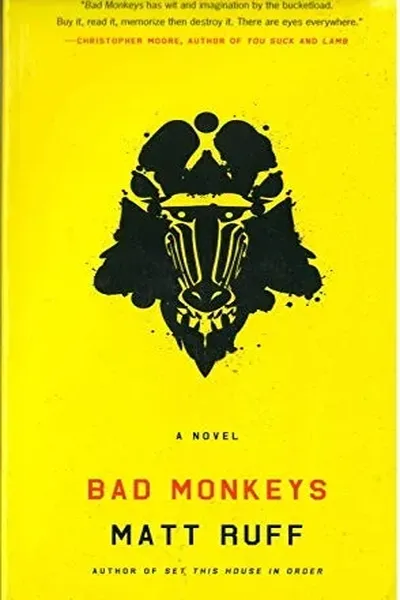
Bad Monkeys

 83
83

Bad Monkeys
Matt Ruff’s *Bad Monkeys* presents a peculiar, almost bureaucratic approach to preventing apocalyptic events, which is its most striking element. The protagonist, Jane, is a fascinatingly detached operative whose own murky history mirrors the organization she joins. Ruff excels at creating an atmosphere of unease and paranoia, making the reader question not only the Department’s motives but Jane’s own sanity and agency. However, the novel’s strength in its initial enigmatic setup occasionally falters under the weight of its own complexity. The intricate plot, while ambitious, can become somewhat convoluted in its later stages, demanding significant reader investment to untangle. The final revelations regarding the true nature of the Department and Jane's role offer a curious, albeit somewhat bleak, resolution. Ruff’s exploration of a secret society operating on the fringes of sanity and morality provides a unique lens through which to examine the concept of 'good deeds' gone awry.
📝 Description
83
Matt Ruff's 2008 novel, Bad Monkeys, concerns a secret organization that prevents global catastrophes.
The narrative follows Jane, a new recruit to the Department of Extraordinary Affairs, whose past is largely unknown. As she joins the clandestine group, she must contend with its internal politics and unusual assignments. This is not a typical thriller; it functions as a procedural that questions reality, memory, and the definition of heroism.
The book appeals to readers who appreciate speculative fiction that plays with genre expectations. Those who enjoy psychological thrillers that explore perception or literary fiction that experiments with narrative structure and unreliable narrators will find it thought provoking. It also suits readers interested in fictional secret societies and unconventional problem solving, particularly when ethical boundaries become blurred.
Published in 2008, Bad Monkeys appeared during a time when literary fiction increasingly incorporated genre elements, and speculative fiction developed more complex, character focused stories. Ruff's novel engages with authors like China Miéville and Jeff VanderMeer, who were also expanding the scope of science fiction and fantasy. The book's themes of covert agencies and reality manipulation reflect post 9/11 anxieties about surveillance and hidden power.
The novel examines the concept of 'pre-crime' through the lens of a secret organization tasked with averting future disasters. It explores the philosophical questions surrounding the prevention of events before they occur and the ethical dilemmas such actions create. The protagonist's struggle with her own identity as she grapples with her present actions and a forgotten past adds another layer to these considerations.
💡 Why Read This Book?
• Understand the ethical tightrope of preventative action by examining the "Department of Extraordinary Affairs" and its methods, as depicted in the novel's 2008 publication context. • Explore the subjective nature of reality and identity through Jane’s fragmented memories and her struggle to define her role within the clandestine organization. • Analyze the philosophical implications of pre-crime and cosmic balance as presented in the novel's unique, quasi-bureaucratic framework for averting disaster.
⭐ Reader Reviews
Honest opinions from readers who have explored this book.
❓ Frequently Asked Questions
What is the primary genre of Matt Ruff's Bad Monkeys?
While it features elements of thrillers and secret societies, *Bad Monkeys* is best categorized as speculative fiction, blending psychological suspense with philosophical questions about reality and morality.
Who is the main character in Bad Monkeys?
The central character is Jane, a new recruit in a clandestine organization tasked with preventing catastrophic events. Her past is largely unknown, even to herself.
What year was Bad Monkeys first published?
Matt Ruff's novel *Bad Monkeys* was first published in 2008.
Does Bad Monkeys involve supernatural elements?
The novel operates more in the realm of unexplained phenomena and psychological manipulation rather than overt supernatural forces, though the organization's capabilities and targets often blur the lines of conventional understanding.
What kind of organization does Jane join in Bad Monkeys?
Jane joins a secret organization known as the "Department of Extraordinary Affairs," which is dedicated to preventing global catastrophes through highly unconventional means.
Is Bad Monkeys part of a series?
No, *Bad Monkeys* is a standalone novel and not part of a series.
🔮 Key Themes & Symbolism
Bureaucracy of Fate
The novel presents a secret organization, the Department of Extraordinary Affairs, which functions with a peculiar, almost mundane bureaucracy to manage cosmic-level threats. This theme questions whether grand, world-altering events can be reduced to procedural tasks and memos. It explores the idea of preventing catastrophes not through heroic acts, but through organized, albeit bizarre, 'assignments.' The work suggests that even the prevention of global destruction can become a matter of paperwork and inter-office politics, highlighting a darkly humorous and unsettling aspect of control.
Fractured Identity
Central to *Bad Monkeys* is the protagonist Jane’s struggle with a fragmented or suppressed past. Her identity is not a fixed entity but a puzzle she and the reader must piece together. The Department itself seems to exploit or manipulate this fractured sense of self, using her as a tool whose personal history is less important than her present utility. This theme looks at how memory shapes who we are and what happens when that foundation is unstable or deliberately obscured, questioning the very notion of a cohesive self.
The Nature of Reality
Ruff consistently blurs the lines of what is real within the narrative. The Department’s targets, methods, and even the protagonist's perceptions are often questionable. The novel invites readers to question whether the 'catastrophes' they are preventing are objectively real or constructs within the organization’s framework. This exploration of subjective reality is a core esoteric element, suggesting that perceived reality can be manipulated or that multiple layers of existence are at play, beyond ordinary comprehension.
Moral Ambiguity of Intervention
The core mission of the Department—to prevent disasters—is ostensibly benevolent. However, their methods are often ethically dubious, involving manipulation, deception, and potentially harmful actions against individuals. This theme probes the idea that 'doing good' can necessitate 'doing bad,' and where the line is drawn. It questions the morality of intervening in fate or causality, even with positive intentions, suggesting that such interventions can have unforeseen and morally compromising consequences.
💬 Memorable Quotes
Direct passages from the work, attributed to the author.
“The Department of Extraordinary Affairs had a mission: to prevent catastrophes.”
— This straightforward statement, presented early in the novel, belies the complex and morally ambiguous methods the Department employs to achieve its seemingly noble goal.
“They didn't just deal with terrorists and dictators; they dealt with things that could end the world.”
— This highlights the extraordinary, almost cosmic, scale of the threats the clandestine organization aims to neutralize, setting it apart from conventional intelligence agencies.
“Every good deed was balanced by something bad.”
— This reflects the pervasive moral ambiguity within the narrative, suggesting a cosmic ledger where even well-intentioned actions have negative repercussions.
💡 Key Ideas
Editorial paraphrase of the work's core concepts — not direct quotes.
Jane's past was a blank space.
This paraphrase captures the essence of the protagonist's amnesia regarding her personal history, a central mystery that drives her character arc and the novel's plot.
Was she preventing the future, or creating it?
This paraphrased question expresses the novel's central theme of causality and free will, questioning whether the Department's actions are truly preventative or merely shaping events.
🌙 Esoteric Significance
Tradition
While not explicitly tied to a single esoteric tradition, *Bad Monkeys* draws heavily on Gnostic themes of a flawed demiurge or a chaotic cosmic order that requires intervention. The 'Department of Extraordinary Affairs' can be interpreted as a modern, bureaucratic manifestation of an agency attempting to correct imbalances in creation. Its methods, which involve manipulation and a detached view of individual lives for a greater (and uncertain) good, echo the complex morality sometimes found in esoteric philosophies that grapple with fate, destiny, and the human role in a larger cosmic play.
Symbolism
The concept of 'balance' is a key symbolic motif, representing a cosmic equilibrium the Department seeks to maintain, often through destructive means. Jane's fragmented memory functions as a symbol of a fractured self, a common theme in esoteric paths seeking integration and wholeness. The 'assignments' themselves, often bizarre and seemingly random, can symbolize the hidden hand of destiny or fate, suggesting that even mundane-seeming actions can have profound, world-altering consequences beyond human comprehension.
Modern Relevance
In contemporary discourse, *Bad Monkeys* speaks to discussions around predictive policing, preemptive action in national security, and the ethics of artificial intelligence making life-altering decisions. Thinkers and practitioners in transhumanism and speculative philosophy might find its exploration of engineered reality and manipulated consciousness relevant. It speaks to a modern unease with opaque systems of power and control, whether governmental or technological, that operate beyond public scrutiny.
👥 Who Should Read This Book
• Students of speculative fiction who appreciate narratives that deconstruct genre conventions and question the nature of reality. • Readers interested in philosophical explorations of morality, fate, and the ethics of intervention, particularly within clandestine organizational structures. • Fans of psychological thrillers that employ unreliable narration and explore themes of fractured identity and memory.
📜 Historical Context
When Matt Ruff’s *Bad Monkeys* was released in 2008, the literary landscape was fertile ground for speculative fiction that questioned reality and societal structures. It arrived in the wake of 9/11, a period marked by heightened anxieties about unseen threats and covert government operations, themes the novel directly engages with. Ruff's work can be seen in conversation with a burgeoning movement in literary fiction to embrace genre elements, much like contemporaries such as China Miéville or Jeff VanderMeer were exploring the uncanny and the surreal. The novel’s exploration of a clandestine agency intervening in fate echoed a broader cultural fascination with conspiracy and hidden powers, amplified by a decade of real-world geopolitical complexities. While not tied to a specific censorship event, the novel’s challenging themes of morality and the nature of reality would have resonated with readers seeking narratives that pushed beyond conventional storytelling, offering a counterpoint to more straightforward thrillers.
📔 Journal Prompts
The Department's mission to prevent catastrophes: reflect on the ethical compromises required.
Jane's fractured identity: consider how memory shapes perceived reality.
The bureaucratic nature of cosmic intervention: analyze the absurdity and horror.
The concept of 'balance' in the novel: explore its esoteric implications.
If you were a member of the Department, what 'assignment' would most trouble you?
🗂️ Glossary
Department of Extraordinary Affairs
A clandestine, quasi-governmental organization whose mission is to prevent catastrophic events across the globe through unconventional and often morally ambiguous methods.
Assignments
The specific tasks or missions undertaken by agents of the Department, which range from subtle manipulations to direct, often violent, interventions, aimed at averting larger disasters.
Cosmic Balance
The underlying principle the Department aims to uphold, suggesting a natural order or equilibrium that, if disrupted, can lead to global catastrophes. Maintaining this balance is their primary, often obscure, objective.
Pre-emptive Intervention
The core modus operandi of the Department, involving actions taken to stop future negative events before they occur, raising significant ethical questions about causality and free will.
Fractured Identity
A state of being where an individual's sense of self is incomplete, fragmented, or based on suppressed or unreliable memories, as experienced by the protagonist, Jane.
Reality Manipulation
The subtle or overt alteration of perceived or actual reality by the Department, often used as a tool or consequence of their operations.
Pre-crime
The concept of identifying and acting upon future threats or events before they manifest, a central operational theme for the Department.
🔮 Readers Also Liked
Browse all →









More by Matt Ruff
All books →
More Free Occult Philosophy Books
View all →