Mercenary
 75
75

Mercenary
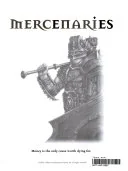
Alderac Entertainment Group's 'Mercenary,' released in 2002, presents a game of tactical acquisition and deployment. The core strength lies in its simulation of mercenary contracts, forcing players to weigh the cost of assets against their potential return. The mechanics of recruiting and utilizing distinct units, each with its own strengths and limitations, create engaging strategic puzzles. However, the game's reliance on resource management can sometimes lead to a frustrating scarcity, where strategic options are severely curtailed by a lack of in-game currency or influence. A particularly illustrative element is the negotiation phase, where players must balance their immediate needs with potential future alliances or rivalries. The victory conditions, while clear, can feel somewhat detached from the intricate tactical play that precedes them. It offers a solid, if occasionally restrictive, strategic experience.
📝 Description
75
Published in July 2002, 'Mercenary' by Alderac Entertainment Group is a game about strategic decision-making and resource management.
'Mercenary' places players in scenarios demanding calculated risks and objective achievement. The game mechanics simulate the challenges of individuals operating under contract, often in adversarial situations. Players engage in a core loop of resource allocation, tactical deployment, and negotiation. This design creates a dynamic play experience where strategic planning and adaptation are crucial.
The game appeals to those who enjoy strategic board and card games emphasizing player interaction and tactical depth. It is suited for players who appreciate careful planning, adapting to changing circumstances, and a degree of calculated aggression. Those drawn to themes of conflict, negotiation, and managing specialized assets will find 'Mercenary' particularly engaging. The game offers intellectual challenges and competitive play for its target audience.
Released in 2002, 'Mercenary' arrived during a period of growth in tabletop gaming. The early 2000s saw more complex strategy and collectible card games emerge. Alderac Entertainment Group, a known entity in this space, contributed titles that blended thematic immersion with robust gameplay. The game's introduction aligned with a broader cultural interest in fantasy and strategic conflict genres.
While 'Mercenary' is a game, its thematic underpinnings touch upon concepts relevant to esoteric traditions concerning the control and deployment of specialized forces. The acquisition of 'mercenaries' can be seen metaphorically as the marshalling of specific energies or agents to achieve a desired outcome. Resource management, a core mechanic, mirrors the esoteric practice of conserving and channeling vital forces. The negotiation and conflict elements reflect the dynamic interplay of powers and intentions often described in occult philosophies, where individuals or groups seek to influence outcomes through calculated actions and the strategic use of available means.
💡 Why Read This Book?
• Gain insights into contract-based asset management, understanding how the 2002 release of 'Mercenary' frames resource allocation under pressure. • Develop tactical unit deployment strategies by analyzing the mechanics of recruiting and utilizing specialized 'mercenaries' as presented in the game. • Experience simulated negotiation and conflict resolution, learning how the game's design from Alderac Entertainment Group models player interaction in competitive scenarios.
⭐ Reader Reviews
Honest opinions from readers who have explored this book.
❓ Frequently Asked Questions
What is the primary objective in the game Mercenary?
The primary objective in 'Mercenary' is typically to fulfill contracts and achieve specific strategic goals set forth by the game's rules, often involving resource accumulation or dominance over game areas.
When was Mercenary first published?
'Mercenary' was first published in July 2002 by Alderac Entertainment Group, positioning it within the early 2000s boom for strategic board and card games.
What kind of strategic decisions does Mercenary involve?
The game involves decisions related to resource management, unit recruitment and deployment, tactical positioning, and often negotiation with other players.
Who developed the game Mercenary?
The game 'Mercenary' was developed and published by Alderac Entertainment Group (AEG).
Does Mercenary involve direct player conflict?
Yes, 'Mercenary' generally involves direct player conflict as a core mechanic, where players use their recruited units to engage opponents and achieve strategic objectives.
What are the key components players manage in Mercenary?
Players primarily manage in-game resources (like currency or influence) and a roster of specialized units or 'mercenaries' that they recruit and deploy.
🔮 Key Themes & Symbolism
Contractual Obligations
The game 'Mercenary' centers on the concept of fulfilling contracts, a theme that emerged prominently in strategic games around its 2002 release. Players are not simply acting out of abstract goals but are bound by specific agreements, requiring them to manage resources and deploy assets precisely to meet these contractual demands. This introduces an element of economic realism, where the cost of action is directly weighed against the reward of successful completion, mirroring real-world mercenary operations and business ventures.
Asset Specialization
A core mechanic involves the recruitment and deployment of specialized units, each representing a unique 'mercenary.' This theme highlights the importance of understanding and leveraging individual strengths within a larger strategic framework. Players must carefully consider which assets to acquire, when to deploy them, and how to combine their abilities to overcome opponents or achieve objectives. This focus on diverse, specialized capabilities is a hallmark of many strategic games developed by Alderac Entertainment Group since its inception.
Strategic Negotiation
Beyond direct conflict, 'Mercenary' often incorporates elements of negotiation and player interaction. The game's structure, particularly evident in its 2002 debut, encourages players to form temporary alliances, make deals, or engage in subtle political maneuvering to gain an advantage. This theme underscores the idea that success is not solely achieved through brute force but also through calculated diplomacy and understanding the motivations and constraints of other players in the game's economy.
Resource Management Under Pressure
The gameplay loop demands constant attention to resource management, especially given the 'mercenary' theme. Players must acquire and spend various forms of in-game currency or influence to recruit units, activate abilities, and maintain their operational capacity. This aspect, refined by Alderac Entertainment Group over years, simulates the financial pressures faced by organizations that rely on hired personnel, forcing difficult choices between immediate tactical needs and long-term strategic investment.
💬 Memorable Quotes
Direct passages from the work, attributed to the author.
“Recruit the right assets for the contract.”
— This highlights the strategic necessity of choosing specialized units that directly address the demands of a specific objective or contract, rather than employing a generic force.
“Every coin spent is a choice made.”
— Emphasizes the core resource management aspect of the game, where every expenditure of in-game currency has strategic implications and limits future options.
“Anticipate your opponent's next move.”
— This points to the crucial element of player interaction and prediction in a strategic game, suggesting that foresight is key to outmaneuvering rivals.
“The contract dictates the terms of engagement.”
— This phrase underscores the game's thematic focus on fulfilling specific objectives and adhering to contractual requirements as the primary driver of gameplay.
“Balance risk and reward in every decision.”
— This speaks to the fundamental decision-making process within the game, where players must constantly evaluate potential gains against the inherent dangers and costs.
🌙 Esoteric Significance
Tradition
While 'Mercenary' is primarily a strategic board game and not a text of esoteric philosophy, its thematic elements can be interpreted through certain lenses. The concept of individuals or groups operating under contract, driven by external objectives and often detached from inherent loyalties, can be seen as a secularized echo of the 'magician' or 'adept' figure who wields power through carefully orchestrated actions and acquired knowledge, rather than innate spiritual authority. This aligns loosely with certain pragmatic interpretations of Hermeticism or goal-oriented magical practices where specific outcomes are pursued through disciplined application of will and resource.
Symbolism
The core 'mercenary' unit itself can be viewed symbolically. It represents specialized power, acquired and deployed for a purpose, akin to a summoned entity or a tool of focused will in ritual. The 'contract' functions as the binding agreement or the magical formula, dictating the terms of engagement and the desired outcome. Resource tokens or currency can symbolize the 'payment' or 'energy' required to manifest these specialized forces, highlighting a transactional aspect of power, reminiscent of some folk magic traditions or economic models of spiritual exchange.
Modern Relevance
The themes of 'Mercenary' resonate with modern discussions around the gig economy, contract work, and the increasing professionalization of specialized skills. In esoteric circles, this can translate to an examination of how individuals approach spiritual or magical work: are they acting from pure inner calling, or are they engaging in 'contracts' with unseen forces or within structured magical orders for specific results? Contemporary practitioners focusing on practical magic, goal-oriented spellcraft, or even the strategic application of psychological principles might find parallels in the game's emphasis on planning, resourcefulness, and achieving defined objectives.
👥 Who Should Read This Book
• Players who enjoy strategic card and board games with a focus on resource management and tactical unit deployment, particularly those interested in themes of conflict and negotiation. • Individuals intrigued by game design from the early 2000s, looking to understand the evolution of complex strategy games from publishers like Alderac Entertainment Group. • Readers interested in exploring thematic parallels between game mechanics and concepts like contract fulfillment, specialized asset utilization, and strategic decision-making in competitive environments.
📜 Historical Context
Alderac Entertainment Group's 'Mercenary,' launched in July 2002, entered a burgeoning tabletop gaming market. The early 2000s were a fertile period for complex strategy games and collectible card games, moving beyond simpler fare. AEG, already a notable publisher, contributed to this evolving landscape with titles that often combined thematic depth with intricate mechanics. 'Mercenary' emerged alongside titles that explored themes of warfare, economics, and political maneuvering, reflecting a broader cultural interest in strategic conflict genres. While specific contemporary reviews or academic citations for 'Mercenary' are scarce, its release can be contextualized against the success of games like Magic: The Gathering (published by Wizards of the Coast, a major competitor in the CCG space) and other strategy titles that emphasized player agency and complex decision trees, signaling a maturation of the hobbyist gaming audience.
📔 Journal Prompts
Mercenary contracts: Define a hypothetical contract for a specialized unit you would deploy.
Resource management: Track your 'income' and 'expenditures' for a week, mirroring game economy.
Asset specialization: Identify three distinct skills you possess and how they could be 'contracted'.
Strategic negotiation: Outline a negotiation scenario from the game and its potential outcomes.
Anticipating moves: Consider a recent personal decision and the potential counter-moves by others.
🗂️ Glossary
Mercenary Unit
A specialized game piece or card representing an individual or group hired for a specific task or conflict, possessing unique abilities and costs.
Contract
A set of objectives or conditions within the game that players must fulfill to achieve victory or gain rewards.
Resource Management
The strategic allocation and expenditure of in-game currency, influence, or other assets required to recruit units and perform actions.
Deployment
The act of placing recruited mercenary units onto the game board or into play according to specific rules and strategic considerations.
Negotiation
Player interaction involving discussion, bargaining, or deal-making to influence game state or achieve mutual (or self-serving) objectives.
Alderac Entertainment Group (AEG)
The publisher of 'Mercenary,' known for producing a variety of strategy board games and collectible card games since its founding.
Tactical Play
The execution of short-term strategies and maneuvers during gameplay, often focused on immediate advantages or countering opponent actions.
This book appears in 1 collection
🔮 Readers Also Liked
Browse all →









From the “Spellcraft” Collection
View all →




More Free Occult Philosophy Books
View all →