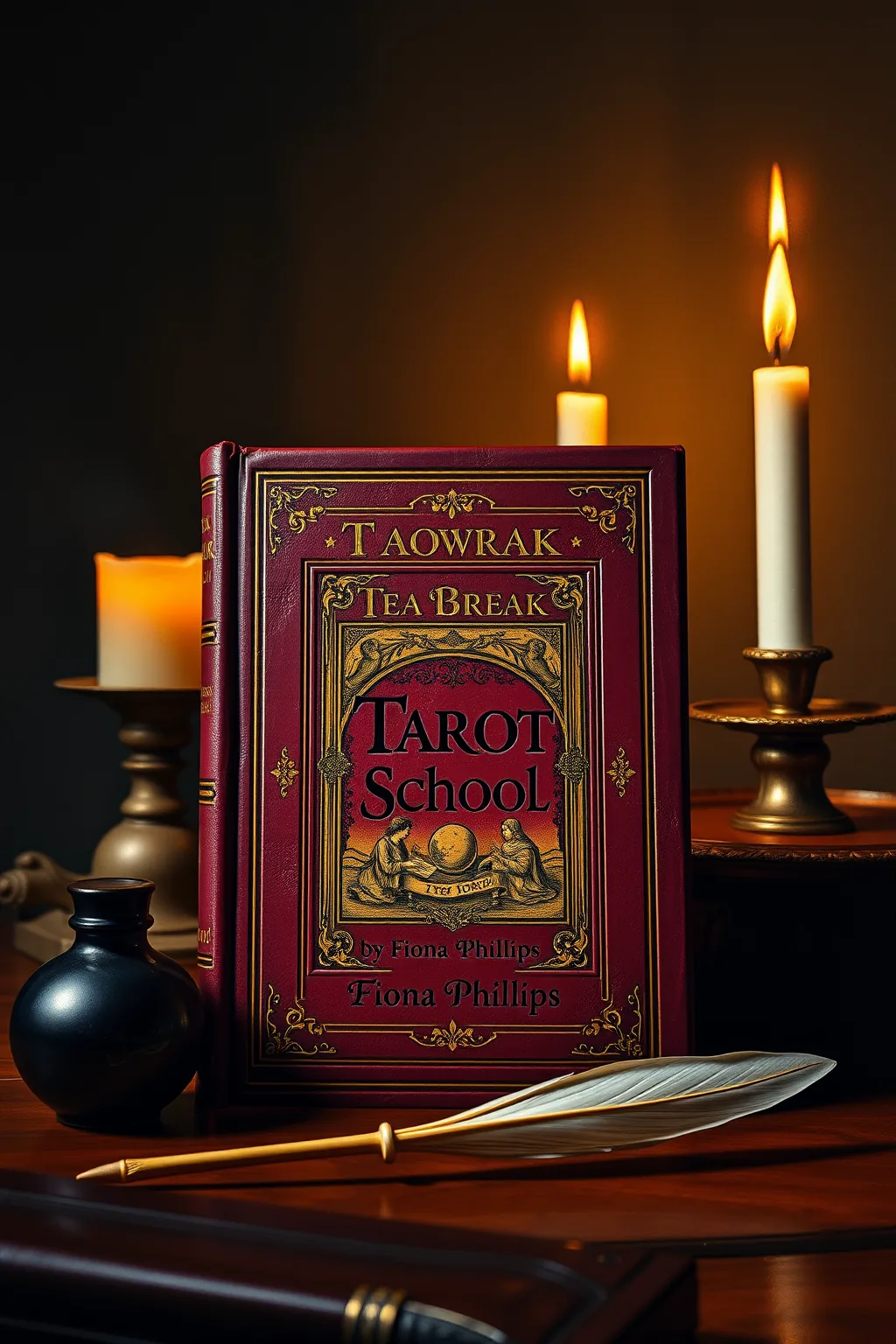
Tea Break Tarot School
 61
61

Tea Break Tarot School



By Marcus Thorne (Esoteric Sciences Reviewer) — Fiona Phillips' 'Tea Break Tarot School' is a luminous addition to the Esoteric Library's collection. Phillips masterfully demystifies the Tarot, presenting its complex symbolism with clarity and profound insight. This work eschews simplistic readings, instead guiding the reader towards an understanding of the Tarot as a sophisticated language of the soul. The book’s strength lies in its ability to connect esoteric principles with practical application, fostering intuitive development. It is an indispensable resource for anyone seeking to move beyond rote memorization and cultivate a truly integrated practice with the cards, whether they are novice seekers or seasoned practitioners looking to deepen their esoteric dialogue.
📝 Description
61
Fiona Phillips's 'Tea Break Tarot School' was published in 2021.
This book introduces readers to the Tarot, treating its cards as symbolic tools for understanding the self rather than simple fortune-telling devices. Phillips guides users through the meanings and archetypes of the major and minor arcana. The approach emphasizes introspection and personal growth, suggesting the Tarot can reveal subconscious patterns and aid in self-discovery.
The text aims to demystify the Tarot, making its complex symbolism accessible. It encourages a contemplative practice, where each card reading becomes an opportunity for deeper personal insight. The book is structured to support individuals at various stages of their Tarot study, from beginners to those with prior experience. It focuses on the philosophical aspects of the cards and their potential for fostering greater intuition.
Fiona Phillips's work situates the Tarot within esoteric traditions that view divination systems as mirrors of the human psyche. This perspective aligns with psychological approaches to Tarot, such as those influenced by Carl Jung's theories on archetypes and the collective unconscious. The book encourages a personal, introspective engagement with the cards, moving beyond predictive methods to a focus on inner development and spiritual understanding. It reflects a broader trend in contemporary esotericism to integrate ancient symbolic systems with modern psychological insights.
💡 Why Read This Book?
Uncover the hidden language of the soul through the ancient wisdom of Tarot. 'Tea Break Tarot School' offers a unique, intuitive approach, transforming complex symbolism into accessible pathways for self-discovery. Ideal for spiritual seekers, practitioners aiming to deepen their practice, and scholars interested in divination's metaphysical underpinnings. This book invites you to brew insight and draw wisdom from the archetypal currents of the Tarot.
⭐ Reader Reviews
Honest opinions from readers who have explored this book.
❓ Frequently Asked Questions
Is 'Tea Break Tarot School' suitable for absolute beginners?
Absolutely. Fiona Phillips provides a gentle yet thorough introduction, assuming no prior knowledge. The 'tea break' concept suggests digestible learning sessions, making complex Tarot concepts approachable for newcomers eager to explore.
What makes this Tarot book 'esoteric'?
The book emphasizes the Tarot's role as a mirror to the subconscious, a map of spiritual journeys, and a tool for accessing higher consciousness. It delves into symbolism, archetypal energies, and the philosophical underpinnings, aligning with deeper metaphysical traditions rather than superficial prediction.
How does this book differ from other Tarot guides?
'Tea Break Tarot School' focuses on cultivating intuition and personal connection with the cards, moving beyond rigid interpretations. It fosters an understanding of the Tarot as a living dialogue with the self and the universe, encouraging a more profound and personal practice.
Can I use this book for personal growth and not just divination?
Yes, this is a primary aim. The book frames Tarot as a powerful tool for self-reflection, psychological insight, and spiritual development. It guides readers to use the cards for understanding personal challenges and unlocking inner potential.
What kind of 'school' experience does the book offer?
It offers an internalized, self-paced 'school' experience. The lessons are structured to be absorbed gradually, like enjoying a cup of tea, promoting reflection and integration rather than rushed learning. It’s an invitation to a personal apprenticeship with the Tarot.
🔮 Key Themes & Symbolism
The Archetypal Language of the Tarot
This theme explores the profound universality of the Tarot's archetypes – the Fool's journey, the High Priestess's intuition, the Emperor's structure – as timeless expressions of the human psyche and cosmic forces. Phillips reveals how these symbols act as a sacred lexicon, translating the unseen into tangible imagery, offering insights into life's fundamental patterns and the archetypal energies that shape our experiences. Understanding these core symbols is presented not just as memorization, but as an awakening to a deeper, more resonant layer of reality.
Intuitive Connection and Inner Knowing
Moving beyond rigid interpretations, this theme emphasizes the cultivation of personal intuition as the primary key to unlocking the Tarot's wisdom. Phillips guides readers to forge a direct, soulful connection with each card, encouraging them to trust their inner voice and subjective responses. The book champions the idea that the Tarot is a dialogue, a mirror reflecting the querent's own inner landscape and subconscious wisdom, thus empowering individuals to discover truths that resonate deeply within their own being.
Tarot as a Path to Self-Transformation
This central theme positions the Tarot not merely as a tool for prediction, but as a potent catalyst for profound personal growth and spiritual evolution. The book illustrates how engaging with the Tarot's symbolism can illuminate subconscious patterns, reveal hidden potentials, and offer guidance for navigating life's challenges with greater wisdom and resilience. It presents the Tarot as a sacred map for the inner journey, facilitating self-discovery, healing, and the alignment of one's life with a higher purpose.
💬 Memorable Quotes
Direct passages from the work, attributed to the author.
“Each card is a whisper from the universe, waiting to be heard.”
— This poetic line frames the Tarot as a conduit for divine or cosmic communication. It encourages an attitude of receptivity and attentiveness, suggesting that profound wisdom is accessible through the symbolic language of the cards.
“To read the Tarot is to engage in a sacred conversation with yourself.”
— This highlights the deeply personal and introspective nature of Tarot reading. It positions the practice as a form of self-dialogue, where the cards act as prompts for exploring one's own thoughts, feelings, and subconscious motivations.
“Intuition is the compass that guides us through the symbolic landscape.”
— This emphasizes the crucial role of inner knowing in deciphering Tarot. It posits that while symbolism provides the map, intuition is the essential faculty that allows us to navigate its terrain effectively and find personal meaning.
💡 Key Ideas
Editorial paraphrase of the work's core concepts — not direct quotes.
The cards are not oracles of fate, but mirrors of the soul.
This quote emphasizes the Tarot's introspective power, suggesting that its messages reveal our inner states, choices, and potential rather than dictating an unchangeable future. It highlights the agency of the individual in interpreting and acting upon the insights gained.
The Fool's journey is not a destination, but a continuous unfolding.
This quote captures the essence of growth and evolution. It suggests that life's path, like the Fool's, is characterized by ongoing exploration, learning, and transformation rather than reaching a static endpoint.
🌙 Esoteric Significance
Tradition
This work draws deeply from Western Esotericism, particularly Hermeticism, Kabbalah, and Jungian psychology. It views the Tarot as a symbolic representation of cosmic principles, spiritual evolution, and the archetypal journey of the soul. The cards are seen as a 'Book of Thoth,' an ancient repository of divine knowledge, offering insights into the interconnectedness of all things and the hidden order of the universe.
Symbolism
The esoteric significance lies in the rich, multi-layered symbolism of each Tarot card. The Major Arcana represent fundamental life lessons and archetypal forces, while the Minor Arcana depict the ebb and flow of daily life and personal development. Phillips elucidates how these symbols are not arbitrary but are imbued with profound meaning derived from ancient mythologies, astrological correspondences, and alchemical processes, acting as keys to unlocking inner wisdom.
Modern Relevance
In an age often characterized by disconnection and materialism, 'Tea Break Tarot School' offers a vital bridge to inner knowing and spiritual depth. It provides accessible tools for self-exploration, stress reduction, and finding meaning amidst life's complexities. The book's emphasis on intuition and personal empowerment resonates strongly with contemporary seekers looking for authentic pathways to self-discovery and a more conscious, purposeful existence.
👥 Who Should Read This Book
This book is a treasure for a diverse audience. Absolute beginners will find a welcoming and clear entry point into the world of Tarot, guided by accessible language and a gentle learning curve. Experienced practitioners seeking to deepen their intuitive connection and move beyond rote memorization will discover new layers of meaning and sophisticated insights. Spiritual seekers yearning for a tool of self-discovery and personal growth will find the Tarot a powerful mirror to their inner landscape. Scholars interested in the historical and symbolic traditions of divination will appreciate the depth and nuanced interpretation.
📜 Historical Context
The development and popularization of Tarot decks, particularly those with rich symbolic imagery like the Rider-Waite-Smith, gained significant traction in the late 19th and early 20th centuries. This period, often termed the 'occult revival,' saw a burgeoning interest in ancient mysteries, esoteric philosophies, and mystical practices across Europe and America. Authors and practitioners sought to revive and re-interpret ancient wisdom traditions, including Kabbalah, Hermeticism, and various forms of divination. 'Tea Break Tarot School' emerges from this lineage, offering a modern interpretation grounded in the symbolic depth that captivated seekers during this era, connecting historical esoteric currents with contemporary spiritual exploration.
📔 Journal Prompts
Reflect on a time you felt like 'The Fool' beginning a new, uncertain path. What lessons did you learn?
Consider the High Priestess in your own life. What hidden knowledge or intuition are you currently being called to acknowledge?
If the Emperor represents structure and authority, how do you currently embody these qualities, and where might there be an imbalance?
Choose a Minor Arcana card that speaks to your current situation and write a short narrative about its meaning in your life.
How can you integrate the 'tea break' philosophy into your daily Tarot practice for deeper connection and reflection?
🗂️ Glossary
Archetype
Universal, archaic patterns and images that derive from the collective unconscious and are the psychic conditions of the experience of the divine. In Tarot, they represent fundamental human experiences and cosmic forces.
Divination
The practice of seeking knowledge of the future or the unknown by supernatural means. In Tarot, it's understood as accessing intuitive insights and understanding potential pathways rather than predicting a fixed destiny.
Esoteric
Intended for or likely to be understood by only a small number of people with a specialized knowledge or interest. Refers to hidden or inner teachings, often spiritual or mystical in nature.
Intuition
The ability to understand something immediately, without the need for conscious reasoning. In Tarot, it's the primary faculty used to interpret the cards beyond literal meanings.
Symbolism
The use of symbols to represent ideas or qualities. Tarot cards are rich with symbolism, each image and element carrying layers of meaning related to psychology, spirituality, and universal principles.
This book appears in 3 collections
🔮 Readers Also Liked
Browse all →
From the “Tarot” Collection
View all →
More Free Divination & Tarot Books
View all →