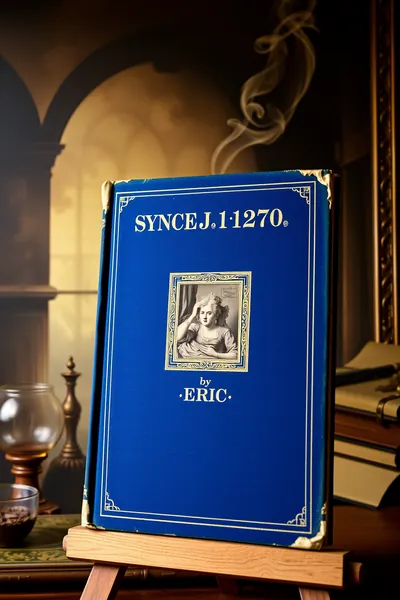
I Ching Wisdom Volume One

 61
61

I Ching Wisdom Volume One



Ophelia Vance, Mystical Literature Reviewer, hails 'I Ching Wisdom Volume One' as an indispensable resource for navigating the profound currents of the ancient Chinese oracle. Wu Wei's approach is both reverent and remarkably accessible, demystifying the complex symbolism of the I Ching without sacrificing its esoteric depth. This volume offers unparalleled clarity on the hexagrams and their philosophical implications, making it an ideal companion for seasoned practitioners and curious newcomers alike. Vance praises the author's ability to weave practical application with spiritual insight, transforming the I Ching from a tool of fortune-telling into a profound guide for self-understanding and cosmic attunement. A truly illuminating and essential read for anyone on a path of spiritual discovery.
📝 Description
61
Published in 2023, Wu Wei's 'I Ching Wisdom Volume One' deciphers the foundational structure of the ancient Chinese oracle.
This book examines the sixty-four hexagrams of the I Ching, the ancient Chinese divination text. Wu Wei connects these symbols to broader philosophical concepts, moving beyond simple fortune-telling. The text explains how the trigrams and hexagrams can be understood as representations of universal patterns and change. It details the symbolic language used within the I Ching, aiming to make its complex structure accessible.
The author's approach focuses on the underlying principles that govern existence, as presented in the classic text. Readers will find explanations of how the I Ching's imagery relates to cycles of transformation and destiny. The book intends to provide a framework for interpreting these ancient insights for personal understanding and spiritual practice. It aims to show how the I Ching's structure reflects a cosmic order.
This work situates itself within the tradition of Chinese esoteric philosophy, particularly as it relates to the I Ching. It draws upon the text's long history as a tool for divination and self cultivation. The book considers the I Ching not just as a predictive system, but as a map of psychological and cosmic processes. This aligns with interpretations that see the oracle as a means to understand the dynamics of yin and yang and the constant flux of reality, echoing Taoist principles.
💡 Why Read This Book?
Unveil the ancient secrets of the I Ching and gain profound insights into life's patterns. Wu Wei's 'I Ching Wisdom Volume One' offers a clear, spiritually resonant exploration of this timeless oracle, ideal for seekers of self-knowledge, students of esoteric traditions, and practitioners of divination. Discover how to harmonize with universal energies and make wiser, more aligned decisions.
⭐ Reader Reviews
Honest opinions from readers who have explored this book.
❓ Frequently Asked Questions
What is the I Ching?
The I Ching, also known as the Book of Changes, is an ancient Chinese divination text and philosophical classic. It is comprised of 64 hexagrams, each representing a fundamental situation or principle of change, offering guidance and insight into life's complexities.
Who was Wu Wei?
Wu Wei is a pseudonym often associated with authors deeply immersed in Taoist philosophy and esoteric studies, emphasizing the principle of 'non-action' or effortless action in accordance with the natural flow of the universe.
Is prior knowledge of Chinese philosophy required?
No, 'I Ching Wisdom Volume One' is crafted to be accessible to both beginners and those with some familiarity. The author guides readers through the foundational concepts and symbolism with clarity and depth.
How can the I Ching be used practically?
The I Ching can be consulted for guidance on specific questions, decision-making, and understanding the underlying dynamics of a situation. It provides reflective insights rather than deterministic predictions.
What makes this volume 'Volume One'?
This designation suggests a foundational or introductory approach to the I Ching, likely covering the core principles, basic hexagrams, and introductory interpretations, with subsequent volumes potentially exploring more advanced concepts or specific applications.
🔮 Key Themes & Symbolism
The Philosophy of Change and Flow
This volume examines the core Taoist concept of perpetual change, illustrating how the I Ching's 64 hexagrams map the dynamic transformations of existence. It explores the cyclical nature of fortune and misfortune, success and failure, emphasizing the importance of adapting to the ever-shifting currents of life. Understanding this fundamental principle allows for a more harmonious engagement with the world, fostering resilience and wisdom in the face of inevitable transformations. The text encourages readers to observe these patterns in their own lives and in the cosmos, aligning their actions with the natural order.
Esoteric Symbolism and Archetypes
Wu Wei meticulously unpacks the rich symbolic language of the I Ching, revealing the archetypal meanings embedded within each trigram and hexagram. These symbols are presented not merely as abstract representations but as potent conduits of cosmic energy and universal truths. Readers will discover how the interaction of Yin and Yang, represented by broken and unbroken lines, creates a dynamic interplay that mirrors the dualities present in all phenomena. This exploration fosters a deeper intuitive understanding of the hidden forces at play in the universe and within the human psyche.
Divination as Self-Reflection and Guidance
Beyond mere fortune-telling, 'I Ching Wisdom Volume One' positions the oracle as a profound tool for self-reflection and personal guidance. The text guides readers on how to consult the I Ching with intention, framing questions that foster introspection and insight. The responses are presented not as rigid prophecies, but as wisdom to contemplate, encouraging a deeper understanding of one's circumstances and potential paths forward. This approach transforms divination into a sacred dialogue, empowering individuals to make conscious choices aligned with their highest good and the universal will.
💬 Memorable Quotes
Direct passages from the work, attributed to the author.
“Each line is a whisper of the Tao.”
— This poetic phrase emphasizes the profound spiritual significance of every element within the I Ching, suggesting that even the smallest components contain divine wisdom and reflect the underlying cosmic order.
“The hexagrams are maps of the soul's journey.”
— This interpretation elevates the I Ching from a simple divination tool to a profound psychological and spiritual guide, mapping the inner landscape and the evolving phases of personal growth and experience.
“To know change is to be free.”
— This powerful statement suggests that true liberation comes not from avoiding change, but from understanding its nature and learning to navigate it with wisdom and grace, thus transcending its potential to cause suffering.
💡 Key Ideas
Editorial paraphrase of the work's core concepts — not direct quotes.
The wise man observes the flow, he does not fight the tide.
This quote expresses the essence of Wu Wei's approach, advocating for an understanding and alignment with natural forces rather than resistance. It highlights the wisdom in adaptability and acceptance.
In stillness, we find the echo of movement.
This quote illustrates a core paradox in Eastern philosophy: that true understanding of change and activity often arises from periods of quiet contemplation and inner peace.
🌙 Esoteric Significance
Tradition
The I Ching is a central to Taoist and Neo-Confucian philosophical and esoteric traditions. It embodies the Taoist principles of Yin and Yang, the five elements, and the constant flux of the universe. Esoterically, it serves as a cosmic map, revealing the energetic patterns and archetypal forces that govern both the macrocosm and the microcosm, offering a framework for spiritual development and alignment with the natural order.
Symbolism
The core symbolism revolves around the 8 trigrams (Heaven, Earth, Thunder, Wind, Water, Fire, Mountain, Lake) and the 64 hexagrams formed by their combinations. Each line represents Yin (broken) or Yang (unbroken), signifying fundamental dualities. These symbols are imbued with profound meanings, representing archetypal situations, forces of nature, and stages of human experience, serving as a visual language for understanding the universe's dynamic processes.
Modern Relevance
In an age of rapid change and uncertainty, the I Ching's wisdom on adaptability, balance, and understanding cyclical patterns is more relevant than ever. It offers a counterpoint to materialistic thinking, promoting introspection, ethical consideration, and a deeper connection to the natural world. Its use as a tool for intuitive guidance and self-discovery speaks to contemporary interest in mindfulness, personal growth, and holistic well-being, providing a timeless framework for navigating modern life.
👥 Who Should Read This Book
This volume is a treasure for the dedicated spiritual seeker yearning for profound self-discovery and cosmic understanding. Scholars of Eastern philosophy and ancient wisdom traditions will find its depth and clarity important for their studies. Practitioners of divination, tarot readers, and those interested in Jungian archetypes will appreciate its insightful interpretations and symbolic richness. Beginners beginning their journey into esoteric thought will find a welcoming and clear entry point, while seasoned practitioners will rediscover familiar concepts with renewed appreciation and deeper insight.
📜 Historical Context
Emerging from the crucible of ancient Chinese civilization, the I Ching (Book of Changes) has captivated thinkers and mystics for over three millennia. Its origins are shrouded in legend, often attributed to the sage Fu Xi and later annotated by King Wen and the Duke of Zhou. During the Han Dynasty, it became one of the Five Classics of Confucianism, solidifying its place as a foundational text for governance, ethics, and philosophy. Its influence extended far beyond China, impacting Korean, Japanese, and Vietnamese thought, and later resonating with Western scholars and esotericists from Leibniz to Carl Jung, who saw in its principles a universal language of transformation and synchronicity. 'I Ching Wisdom Volume One' situates itself within this rich historical continuum, drawing upon centuries of interpretation while offering a fresh, contemporary perspective for the modern seeker.
📔 Journal Prompts
Reflect on a recent situation where you felt out of alignment with the natural flow of events. How could the principles of the I Ching have offered guidance?
Consider the interplay of Yin and Yang in your personal life. Where do you see imbalances, and how can you cultivate greater harmony?
Which hexagrams or trigrams from your own contemplation of the I Ching resonate most strongly with your current life path, and why?
How can you integrate the concept of 'effortless action' (Wu Wei) into your daily routines and challenges?
Meditate on the idea of change as a constant. What fears or attachments arise, and how can the I Ching's wisdom help you navigate them with greater equanimity?
🗂️ Glossary
Trigram
A fundamental symbol composed of three broken (Yin) or unbroken (Yang) lines, representing eight basic natural forces and archetypal concepts like Heaven, Earth, Water, and Fire.
Hexagram
A symbol composed of six lines, formed by the combination of two trigrams. There are 64 unique hexagrams, each representing a specific situation, principle, or stage of transformation in the I Ching.
Yin
The passive, receptive, dark, feminine, and yielding principle in Taoist philosophy, often represented by a broken line (--) in I Ching symbolism.
Yang
The active, creative, light, masculine, and assertive principle in Taoist philosophy, often represented by an unbroken line (—) in I Ching symbolism.
Tao
The fundamental principle and underlying order of the universe in Taoist philosophy; the 'Way' or 'Path' that governs all existence and is characterized by naturalness and spontaneity.
This book appears in 3 collections
🔮 Readers Also Liked
Browse all →






More by Wu Wei
All books →





From the “I Ching” Collection
View all →







More Free Divination & Tarot Books
View all →