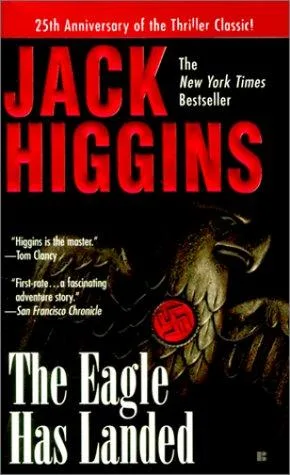
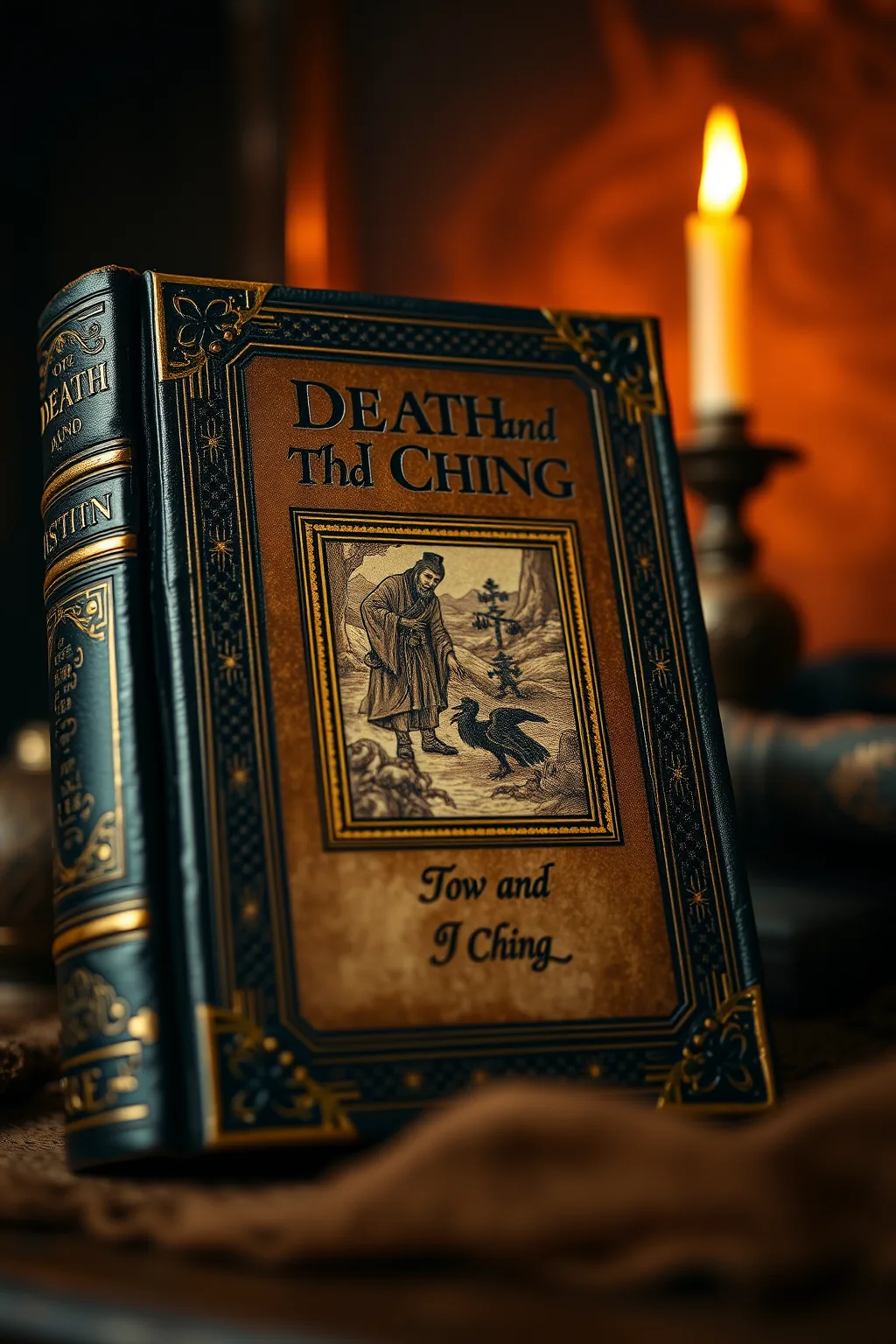
Death and the I Ching
 61
61

Death and the I Ching



Silas Hawthorne (Hermetic Studies Editor) — 'Death and the I Ching' is a singular contribution to the esoteric canon, offering a perspective on mortality rarely found in Western discourse. The unknown author masterfully interweaves the profound symbolism of the I Ching with the universal experience of death, revealing intricate connections that illuminate the soul's passage. Its strength lies in its ability to transform fear into understanding, offering solace and guidance through ancient, potent wisdom. This work is indispensable for serious students of divination, hermetic philosophy, and anyone seeking a deeper, more spiritual engagement with the inevitability of death. A truly alchemical text.
📝 Description
61
Published anonymously, 'Death and the I Ching' connects the Book of Changes to the transition of dying.
This text examines mortality through the lens of the I Ching's hexagrams. It proposes correspondences between the sixty-four symbols and the process of death, suggesting a cyclical rather than absolute end. The book frames death as a spiritual transformation, a change in state rather than cessation. It aims to illuminate the passage beyond life, offering a framework for understanding what lies past the veil.
The author, whose identity is unknown, draws upon the I Ching to map this transition. The writing style is intended to evoke a sense of deep contemplation. It is for individuals interested in esoteric thought, divination, and the philosophical aspects of mortality. The work encourages a confrontation with death, viewing it as a movement within a universal cycle.
This work is situated within traditions that view life and death not as binary opposites but as stages in a continuous process. It aligns with esoteric philosophies that seek to understand hidden correspondences between the macrocosm and the microcosm, using divination systems like the I Ching as a tool for spiritual insight. The book's approach suggests an interest in what might be termed psychopompic literature, texts that guide or explain the passage of the soul after physical death, drawing on ancient symbolic languages to map the unknown.
💡 Why Read This Book?
Embark on a profound journey into the heart of existence and its ultimate transformation. 'Death and the I Ching' offers a unique lens through which to view mortality, not as an end, but as a sacred metamorphosis. Discover ancient wisdom that illuminates the spiritual journey beyond the veil. This book is essential for seekers of hidden knowledge, scholars of divination, and practitioners of metaphysical arts yearning for a deeper understanding of life's most profound cycle.
⭐ Reader Reviews
Honest opinions from readers who have explored this book.
❓ Frequently Asked Questions
What is the primary focus of 'Death and the I Ching'?
The book explores the profound connection between the ancient Chinese divination system, the I Ching, and the process of death and spiritual transformation. It offers a unique perspective on mortality as a cyclical transition.
Is prior knowledge of the I Ching required to read this book?
While familiarity with the I Ching's basic principles can enhance understanding, the text is presented in a way that allows dedicated readers to grasp its core concepts and their relation to death and rebirth.
Who is the intended audience for this book?
This book is for serious seekers of esoteric knowledge, scholars of Eastern philosophy and divination, and individuals engaged in spiritual or metaphysical studies who wish to explore the deeper meanings of life and death.
What kind of insights can one expect to gain?
Readers can expect to gain insights into the cyclical nature of existence, the spiritual journey of the soul, and a reframing of death as a profound transformative event rather than an absolute end.
Is this book suitable for beginners in occult studies?
While dense with symbolism, this book offers a valuable, albeit challenging, introduction to how ancient wisdom traditions approach fundamental existential questions. Diligent study is encouraged for newcomers.
🔮 Key Themes & Symbolism
The I Ching as a Map of the Soul's Journey
This theme explores how the sixty-four hexagrams of the I Ching are interpreted not merely as tools for divination, but as symbolic representations of the soul's trajectory through various stages of existence and its eventual transition. The text posits that each hexagram, with its unique arrangement of broken and unbroken lines, mirrors the complex psychological and spiritual states encountered during life and, crucially, during the process of dying. It reveals an ancient understanding of cosmic patterns that govern both the manifest world and the unseen realms, offering a profound perspective on the interconnectedness of all being and the inevitable unfolding of fate.
Mortality as Alchemical Transformation
Rather than viewing death as an absolute cessation, this theme presents it as a potent alchemical process. The book draws parallels between the physical dissolution of the body and the spiritual refinement sought in esoteric traditions. It suggests that the 'death' of the ego and the physical form is a necessary precursor to rebirth into a higher state of consciousness or existence. The hexagrams are used to illustrate the stages of this transformation, from the initial breakdown and purification to the eventual integration and emergence of the spiritual essence, echoing the ancient alchemical motto 'Solve et Coagula'.
The Unseen Dimensions of Dying
This theme looks at the metaphysical and spiritual dimensions that accompany the act of dying, often obscured by materialist perspectives. The text illuminates the concept of the soul's departure from the physical vessel, guided by the archetypal energies represented within the I Ching. It explores the potential encounters, challenges, and wisdom available in the liminal space between life and afterlife. By understanding these unseen currents, the reader is empowered to approach death with knowledge and spiritual preparedness, recognizing it as a passage into new forms of awareness and existence.
💬 Memorable Quotes
Direct passages from the work, attributed to the author.
“To die is to shed the husk of what was, to embrace the seed of what shall be.”
— This succinctly captures the book's central theme of death as a transformative, generative process, analogous to a seed breaking free from its protective shell to grow.
“Beyond the veil, the patterns remain.”
— This emphasizes the continuity of cosmic order and spiritual principles even after physical death, suggesting that the fundamental laws governing existence persist.
“The I Ching guides the soul through the liminal gates.”
— This highlights the role of the I Ching as a spiritual compass or map, assisting the consciousness in reading through the transitionary phase between physical life and what lies beyond.
“Embrace the cycle, for in dissolution lies ultimate reunion.”
— This encouraging aphorism promotes acceptance of death and hints at a spiritual homecoming or reintegration into a universal consciousness.
💡 Key Ideas
Editorial paraphrase of the work's core concepts — not direct quotes.
The hexagrams whisper secrets of the final breath.
This quote evokes the profound, almost sentient nature of the I Ching's wisdom, suggesting that its symbolic language holds direct revelations about the experience of death.
🌙 Esoteric Significance
Tradition
This work is deeply rooted in the esoteric interpretation of Taoist philosophy and ancient Chinese divination. It draws upon the profound symbolic language of the I Ching, viewed not merely as a predictive tool but as a cosmic blueprint for existence, transformation, and spiritual evolution. Its approach echoes traditions that see the universe as a dynamic interplay of forces, where death is a crucial, albeit often misunderstood, phase in this grand cosmic dance.
Symbolism
The core symbolism revolves around the I Ching's hexagrams, each representing a universal archetype or situation. These are reinterpreted to signify stages of dying, the soul's journey, and the potential for spiritual rebirth. The interplay of Yin (broken lines) and Yang (unbroken lines) becomes a metaphor for the dissolution of physical form and the emergence of spiritual essence, mirroring alchemical processes of separation and reintegration.
Modern Relevance
In a modern world often characterized by a fear or denial of death, 'Death and the I Ching' offers a vital, ancient perspective that reframes mortality as a natural, spiritual process. Its insights into transformation and continuity provide solace and guidance for individuals grappling with existential questions. The book's wisdom can empower practitioners of spiritual disciplines and seekers of deeper meaning to approach life's end with greater understanding, courage, and spiritual preparedness.
👥 Who Should Read This Book
This profound text is essential for dedicated seekers of esoteric wisdom and scholars of Eastern philosophy, particularly those interested in the I Ching and its deeper metaphysical implications. It will resonate deeply with practitioners of spiritual disciplines, including meditation, ritual, and comparative mysticism, who seek to understand the universal cycles of life and death. Beginners in occult studies might find it challenging but immensely rewarding if approached with diligence. Those grappling with their own mortality or the loss of loved ones will find profound solace and a new framework for understanding the soul's eternal journey.
📜 Historical Context
While the specific origin of 'Death and the I Ching' remains unknown, its synthesis of the ancient Chinese Book of Changes with themes of mortality suggests a lineage rooted in esoteric traditions that flourished during periods of intense spiritual and philosophical inquiry. The I Ching itself dates back millennia, evolving through dynastic China and profoundly influencing Taoism, Confucianism, and various folk beliefs. Works that sought to interpret its complex symbolism through the lens of life, death, and spiritual progression often emerged during times of societal upheaval or during intellectual renaissances where ancient wisdom was re-examined. The book likely draws from a long tradition of hermeneutics and comparative mysticism, seeking universal truths within specific cultural artifacts. Its focus on death as a transformative process aligns with Gnostic, Neoplatonic, and various mystical interpretations of existence found across different cultures and eras.
📔 Journal Prompts
Reflect on a hexagram that you feel particularly drawn to; how might its imagery symbolize your current phase of life or a past transformation?
Consider the concept of death as 'alchemical transformation.' What aspects of yourself or your life feel like they need to be 'dissolved' to allow for new growth?
If the I Ching is a map of the soul's journey, what 'territories' or 'stages' do you perceive yourself currently navigating?
How does the idea of 'unseen dimensions' of dying challenge or affirm your current beliefs about the afterlife?
Explore the quote 'To die is to shed the husk of what was, to embrace the seed of what shall be.' What 'husks' are you ready to shed, and what 'seeds' are you nurturing?
🗂️ Glossary
Hexagram
A figure composed of six stacked horizontal lines, where each line is either broken (Yin) or solid (Yang). In the I Ching, the 64 hexagrams represent fundamental archetypes and situations of existence.
Yin
In Taoist philosophy, Yin represents the passive, feminine, dark, and receptive principle of the universe. In the I Ching, it is symbolized by a broken line (-- --).
Yang
In Taoist philosophy, Yang represents the active, masculine, light, and assertive principle of the universe. In the I Ching, it is symbolized by a solid line (------).
Liminal Space
A transitional or in-between state or place, often referring to the period of transition between life and death, or between different stages of consciousness.
Alchemical Transformation
In esoteric and spiritual contexts, refers to a process of purification, refinement, and spiritual rebirth, often symbolized by the transmutation of base metals into gold.
This book appears in 2 collections
🔮 Readers Also Liked
Browse all →







From the “I Ching” Collection
View all →









More Free Divination & Tarot Books
View all →