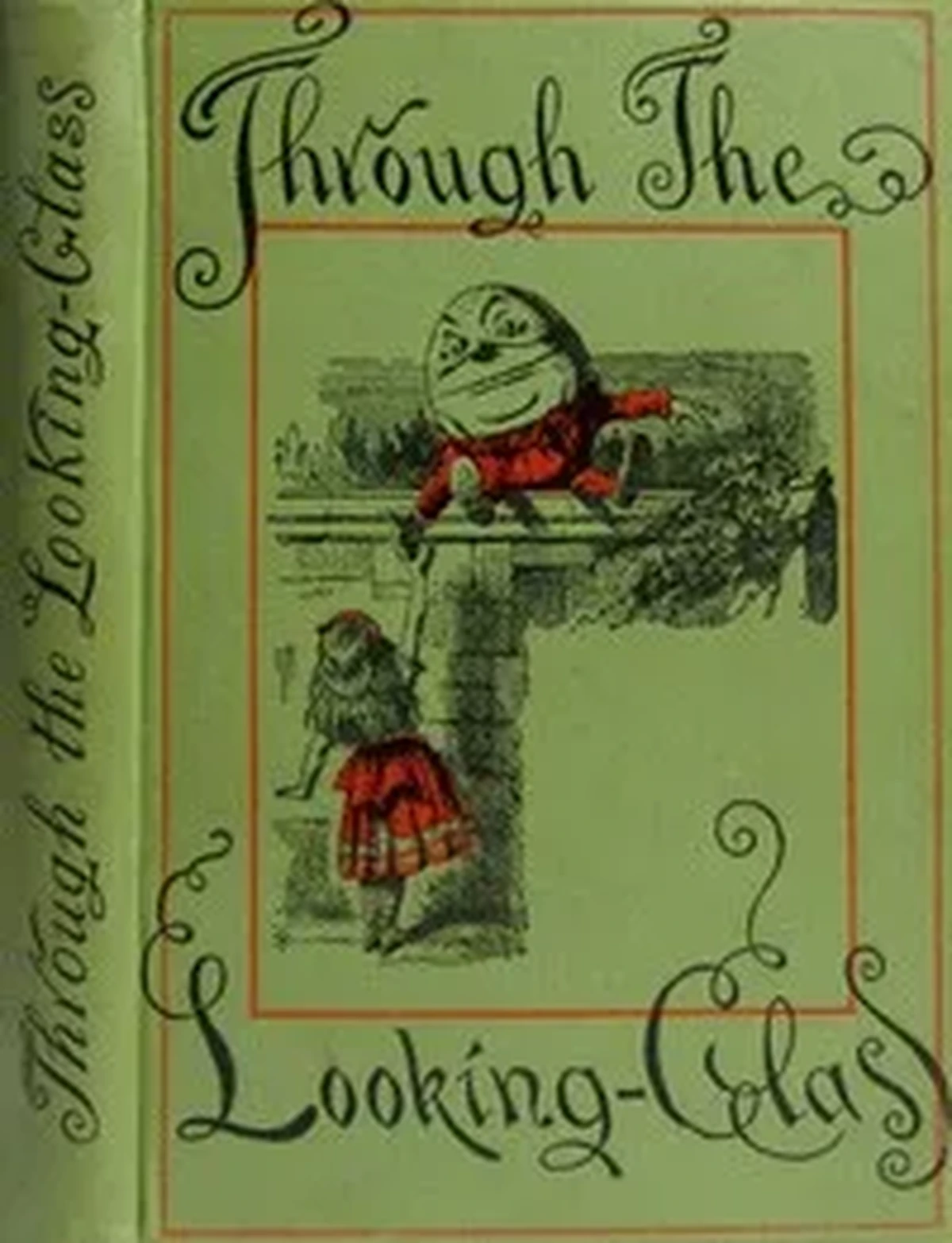
Through the Looking-Glass
 74
74

Through the Looking-Glass
The brilliance of "Through the Looking-Glass" lies not in grand pronouncements, but in its meticulous dismantling of our perceived reality through the lens of logic and language. Carroll, under the guise of a children's tale, constructs a world that feels both absurdly nonsensical and unsettlingly familiar, reflecting the often-arbitrary rules that govern our own lives. The character of Humpty Dumpty, with his assertion that words mean precisely what he chooses them to mean, "neither more nor less," is a masterful, albeit unsettling, commentary on semantic relativity that still echoes in philosophical discourse. However, the narrative's relentless adherence to its peculiar internal logic, while its strength, can also become a limitation for readers seeking straightforward narrative progression. The sheer density of wordplay and logical puzzles, while intellectually stimulating, sometimes risks overshadowing the emotional arc. Yet, the enduring power of this work is its capacity to make the reader question the very foundations of meaning and order. It's a cunningly crafted hall of mirrors for the mind.
📝 Description
74
Lewis Carroll's 1865 book Through the Looking-Glass presents a world governed by inverted logic.
Published in 1865, Through the Looking-Glass, and What Alice Found There follows Alice as she steps through a mirror into a world that operates on its own peculiar rules. Unlike its predecessor, Wonderland, this sequel features characters who are chess pieces and a reality where cause and effect, and time itself, behave differently. Carroll, a mathematician, uses this framework to question the nature of perception and the limits of formal systems.
The narrative serves readers interested in literature that examines logic, language, and the arbitrary construction of reality. It appeals to those who enjoy meta-narrative, surrealism, or the deconstruction of conventional thought. The book suggests that established orders can be challenged by imaginative approaches, finding potential meaning in playful or seemingly nonsensical arrangements.
Published in 1865, this work offers a playful counterpoint to the rigid rationalism of Victorian England. Carroll, a logician, uses the narrative to probe the boundaries of formal systems and perception. The book's exploration of inversion and paradox resonates with contemporary interests in spiritualism and the subjective nature of experience, hinting at underlying structures of thought that can be rearranged.
💡 Why Read This Book?
• Engage with the concept of semantic relativity as explored through Humpty Dumpty's linguistic philosophy, offering a unique perspective on how meaning is constructed and contested. • Contemplate the nature of reversed logic and causality by examining Alice's journey through the Looking-Glass, challenging conventional understandings of how reality operates. • Analyze the symbolic use of the chessboard structure, first introduced in "Through the Looking-Glass," to understand how formalized systems can paradoxically reveal the unpredictable nature of existence.
⭐ Reader Reviews
Honest opinions from readers who have explored this book.
❓ Frequently Asked Questions
What is the significance of the Red Queen in Through the Looking-Glass?
The Red Queen embodies the principle of "running to stay in place," illustrating a concept where immense effort yields no progress. This reflects Carroll's exploration of stagnation within seemingly ordered systems, a theme relevant to philosophical discussions on effort versus outcome.
When was Through the Looking-Glass first published?
Through the Looking-Glass, and What Alice Found There was first published on December 6, 1871, though it often carries the publication year of 1872 due to printing practices of the era.
How does Through the Looking-Glass differ from Alice's Adventures in Wonderland?
While both feature Alice and fantastical worlds, 'Looking-Glass' emphasizes logic, language, and inverted realities, notably structured around a chess game. 'Wonderland' is more dreamlike and episodic, focusing on surreal encounters and a more chaotic narrative flow.
What is the role of the White King in the narrative?
The White King represents a contrasting figure to the Red Queen, often portrayed as somewhat absent-minded and less forceful. His character serves to further highlight the varied manifestations of authority and control within the Looking-Glass world.
Are there specific mathematical concepts Lewis Carroll incorporated?
Yes, Carroll, a mathematician, imbued the work with logical paradoxes and playful explorations of number and order, notably through the chess game structure and wordplay that challenges formal definitions.
Is Through the Looking-Glass a public domain work?
Yes, as it was first published in 1871/1872, "Through the Looking-Glass" is in the public domain in most countries, allowing for free online access and republication.
🔮 Key Themes & Symbolism
Inverted Logic and Reality
The narrative of "Through the Looking-Glass" hinges on the concept of inversion. Alice enters a world that mirrors her own but operates on reversed principles – what is right is left, and forward motion can lead backward. This challenges the reader's assumptions about causality and spatial reasoning. The entire structure, based on a chess game, paradoxically uses a system of rules to explore the illogical. This theme invites contemplation on how our own perceived reality might be a construct of arbitrary rules, and how shifting these rules can alter understanding.
Language and Meaning
Carroll, a master of wordplay, uses the Looking-Glass world to interrogate the relationship between language and meaning. Humpty Dumpty's famous assertion that words mean what he intends them to, "neither more nor less," directly addresses the arbitrary nature of semantics and the power of definition. This theme explores how linguistic conventions shape our understanding and how easily meaning can be manipulated or become unstable, a concept echoed in contemporary philosophical debates about semiotics and interpretation.
The Nature of Time
Within the Looking-Glass world, time does not flow linearly. Alice experiences moments where one must run to stay in place, and the possibility of living backward is presented. This departure from chronological progression suggests a more fluid or subjective experience of time, a concept that speaks to certain mystical traditions and modern physics. The narrative playfully questions our rigid adherence to sequential time, hinting at alternative perceptions of temporal existence where past, present, and future might coexist or be malleable.
Order vs. Chaos
The book presents a fascinating dichotomy between structured order and underlying chaos. The chess game provides a framework of rules, yet the characters and events within it often defy logical progression or expected behavior. The Red Queen's constant demand for action to maintain status quo, and the White King's absent-mindedness, highlight the fragility of imposed order. This theme explores the tension between systems designed for control and the inherent unpredictability of existence, questioning whether true order can ever be achieved or if it's merely an illusion.
💬 Memorable Quotes
Direct passages from the work, attributed to the author.
“"'When I use a word,' Humpty Dumpty said, in rather a scornful tone, 'it means just what I choose it to mean — neither more nor less.'"”
— Humpty Dumpty's declaration is a direct challenge to conventional linguistic philosophy, asserting radical semantic autonomy. It highlights Carroll's fascination with how meaning is constructed and the potential for subjective interpretation to override objective definition.
“"It’s a trap!" cried the Rabbit... "It is no trap at all!" said the Queen.”
— This brief exchange underscores the unreliable nature of perception and information within the Looking-Glass world. What appears as a definitive 'trap' to one character is dismissed by another, reflecting the fluid and subjective reality Alice navigates.
“"I've a right to think," said Alice sharply... "Just about as much right," said the Cat, "as cats have to sing 'God save the Queen.'"”
— The Cheshire Cat's retort playfully dismisses Alice's assertion of inherent rights, contrasting human claims with the natural (or unnatural) abilities of other beings. It further emphasizes the arbitrary social and logical rules governing this peculiar world.
“"We must have been in the Looking-Glass all the time," said Alice, "and that used to be the real world."”
— This concluding thought by Alice suggests the permeable boundary between reality and its reflection, or between the mundane and the fantastical. It implies that the 'real' world itself might be a constructed or perceived state, mirroring the Looking-Glass experience.
💡 Key Ideas
Editorial paraphrase of the work's core concepts — not direct quotes.
"Well, in our country," said Alice; "and you've no idea how fast those Red Queens run when they want to get somewhere."
This line, spoken by Alice, captures the central paradox of the Red Queen's rule: immense effort is required simply to maintain one's current position, illustrating a theme of futility within a seemingly ordered system.
🌙 Esoteric Significance
Tradition
While not explicitly aligned with a single esoteric lineage, "Through the Looking-Glass" shares thematic resonances with Gnostic and Hermetic traditions, particularly in its exploration of inverted realities and the questioning of conventional perception. The looking-glass itself functions as a symbol akin to the alchemical 'mirror' or the Gnostic concept of the material world as a flawed reflection. The work’s emphasis on the arbitrary nature of language and meaning also echoes Kabbalistic ideas about the power of divine names and the structure of creation through word.
Symbolism
The **Looking-Glass** is paramount, symbolizing a threshold between the mundane and the inverted, the perceived and the truly understood. It suggests that reality may be a reflection, and that true understanding requires looking beyond superficial appearances. The **chess game** symbolizes the structured, yet often arbitrary, rules that govern existence; it represents a formalized system where logic is paramount, yet the narrative demonstrates how this logic can be subverted. Alice's journey represents the seeker's path through these structured illusions.
Modern Relevance
Contemporary thinkers in fields ranging from post-structuralist philosophy to cognitive science find value in Carroll's deconstruction of language and logic. The work's exploration of semantic relativity and the subjective construction of reality continues to inform discussions on epistemology and interpretation. Modern practitioners of chaos magic and symbolic interpretation might draw inspiration from the book's playful subversion of order and its use of surreal imagery to access altered states of consciousness or to challenge ingrained belief systems.
👥 Who Should Read This Book
• Students of logic and philosophy interested in paradoxes and linguistic relativity, who will find Humpty Dumpty's semantic arguments a unique case study. • Comparative literature scholars examining Victorian-era fantasy and its engagement with scientific and rationalist thought, providing context for Carroll's playful subversions. • Readers of surrealist and absurdist literature seeking foundational works that challenge conventional narrative and explore dreamlike logic, offering a precursor to later artistic movements.
📜 Historical Context
First published in 1871 (though often dated 1872), Lewis Carroll's "Through the Looking-Glass" emerged in a Victorian era grappling with the implications of Darwinism and an increasing emphasis on scientific rationalism. As a mathematician and logician, Carroll, whose real name was Charles Lutwidge Dodgson, used the narrative to playfully dissect the very foundations of logic and language, offering a counterpoint to the era's prevailing empiricism. The book’s intricate wordplay and paradoxes can be seen as a sophisticated intellectual game, challenging the notion of fixed meanings and objective reality. It was a period where authors like George Eliot were exploring complex psychological realism, and the Pre-Raphaelite Brotherhood was seeking symbolic depth in art, yet Carroll carved a unique niche with his logic-based fantasy. While not directly engaging with occult movements, the book's exploration of altered perception and non-linear time invited interpretations that touched upon the subjective and the subconscious, resonating with a broader cultural interest in inner experience that also fueled the rise of spiritualism.
📔 Journal Prompts
The Red Queen's decree: 'It takes all the running you can do, to keep in the same place.' Your own experience of this principle.
Humpty Dumpty's assertion of word ownership: what words do you own, and what words own you?
Alice's encounter with the Queen of Hearts: the arbitrary nature of pronouncements and their consequences.
The function of the chess board as a world: how structured environments shape behavior and perception.
Reflecting on the 'looking-glass' as a symbol for self-perception or societal reflection.
🗂️ Glossary
Looking-Glass
A mirror, serving as a portal to an inverted and illogical world in the narrative. Symbolically, it represents a threshold, a reflection of reality, or a tool for altered perception.
Red Queen
A character embodying the principle of 'running to stay in place,' representing the effort required to maintain status quo in a system that demands constant, yet ultimately static, exertion.
White King
A character often portrayed as absent-minded and less assertive than the Red Queen, representing a more passive or ineffective form of authority within the narrative's structured chaos.
Semantic Relativity
The philosophical concept, famously articulated by Humpty Dumpty, that the meaning of words is determined by the speaker's intent rather than fixed definitions.
Inverted Logic
A form of reasoning where standard logical operations or spatial orientations are reversed, creating paradoxes and challenging conventional understanding of cause and effect.
Chessboard World
The narrative's setting, structured like a chessboard, where characters move according to chess rules, symbolizing a world governed by formal logic that paradoxically leads to absurdity.
Time Fluidity
The concept that time is not strictly linear or constant, as depicted in the Looking-Glass world where characters may live backward or experience time in non-sequential ways.
🔮 Readers Also Liked
Browse all →









More by Lewis Carroll
All books →





More Free Occult Philosophy Books
View all →