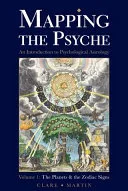
Mapping the Psyche Volume 1
 72
72

Mapping the Psyche Volume 1
Clare Martin's "Mapping the Psyche Volume 1" offers a refreshing departure from the often dense and jargon-laden astrological texts available. Her pedagogical approach, simulating a classroom setting with student queries, genuinely demystifies the basic building blocks of astrological language. The discussion on the zodiac signs, for instance, avoids simplistic categorizations, instead exploring their nuanced archetypes in a way that feels immediately relevant. However, the very strength of its conversational style occasionally leads to a lack of depth on certain complex topics, leaving the reader wanting more rigorous exploration in places. For example, while aspects are introduced, their intricate interplay and predictive applications are only lightly touched upon. Despite this, the book excels at making astrology accessible without sacrificing its esoteric essence. Martin succeeds in presenting complex material with clarity and a relaxed, engaging tone.
📝 Description
72
Clare Martin published Mapping the Psyche Volume 1 in 2016 to teach astrology through dialogue.
Mapping the Psyche Volume 1 introduces basic astrological concepts in a classroom-style format. Clare Martin uses a question-and-answer method, like a real lesson, rather than the memorization common in other astrology books. This method presents astrological language not as abstract ideas, but as practical tools for everyday life. The book builds a foundation for understanding celestial mechanics used in astrological interpretation.
This book suits people starting their astrology studies or those wanting a clearer understanding of the subject. It appeals to learners who like an interactive and easy-to-understand approach instead of dry academic texts. Anyone interested in the basic elements of astrological symbols, including planets, zodiac signs, houses, and aspects, will find this a useful beginning. It is written for those who want to use astrological principles for personal growth and daily situations.
Published in 2016, this book appeared during a time of growing interest in personal development and esoteric studies. While many contemporary astrology works focused on psychological interpretations, Martin's style returned to a direct, teaching method. The book belongs to a tradition of astrological education that emphasizes clear instruction and student engagement, moving away from highly specialized or academic interpretations. It represents a deliberate choice to make learning complex symbolic systems more accessible.
💡 Why Read This Book?
• Gain a foundational understanding of astrological principles through interactive learning, mirroring a classroom experience, which helps demystify concepts like the meaning of Saturn as introduced early in the text. • Learn to apply astrological language to everyday life, moving beyond abstract theory to practical interpretation, particularly concerning the twelve houses and their life areas as detailed in the book. • Discover the archetypal meanings of the planets and zodiac signs presented in a non-dogmatic, accessible manner, allowing for personal connection and understanding, exemplified by the book's treatment of Mars.
⭐ Reader Reviews
Honest opinions from readers who have explored this book.
❓ Frequently Asked Questions
What makes Clare Martin's teaching style in Mapping the Psyche Volume 1 different from other astrology books?
Martin employs a lively, classroom-style format, incorporating student questions to make the material accessible. This contrasts with the dry, 'cookbook' approach found in many astrology texts, focusing on fluent and immediately applicable learning.
Is Mapping the Psyche Volume 1 suitable for absolute beginners in astrology?
Yes, the book is specifically designed for beginners, presenting the basic building blocks of astrological language in a way that is easy to grasp and apply to everyday life.
What core astrological elements are covered in Volume 1?
Volume 1 covers the fundamental components of astrological language, including the planets, the twelve zodiac signs, the twelve houses, and the basics of aspects.
When was Mapping the Psyche Volume 1 first published?
The first edition of Mapping the Psyche Volume 1 by Clare Martin was published on March 24, 2016.
Does this book focus on predictive astrology or psychological astrology?
The book focuses on presenting the basic building blocks of astrological language in an accessible manner, making it applicable to everyday life rather than exclusively predictive or psychological interpretations.
How does the book approach the subject of astrological aspects?
Aspects are presented as dynamic forces that create interplay and tension within a birth chart, serving as a key concept after the discussion of planets, signs, and houses.
🔮 Key Themes & Symbolism
Astrological Language Fundamentals
This volume meticulously unpacks the core components of astrological communication. It moves beyond simple definitions to explore the archetypal significance of planets like Jupiter, the intrinsic qualities of zodiac signs such as Gemini, and the life-area representations of the houses. Martin's method emphasizes understanding these elements as interconnected parts of a symbolic language, crucial for anyone seeking to interpret a birth chart or celestial patterns beyond superficial analysis.
Pedagogical Approach to Esotericism
Clare Martin's unique teaching methodology transforms potentially dry subject matter into an engaging dialogue. By simulating a classroom environment, complete with student questions, the book makes complex esoteric principles readily digestible. This interactive format, particularly evident in the explanations of planetary rulerships, fosters a deeper, more intuitive grasp of astrological concepts than traditional, lecture-style presentations.
Practical Application of Celestial Concepts
A central tenet of this work is the immediate applicability of astrological knowledge to everyday life. The book demonstrates how understanding the interplay between, for instance, Mercury and the third house, can offer insights into communication patterns and daily routines. It bridges the gap between abstract symbolism and lived experience, encouraging readers to see astrology not merely as a predictive tool but as a framework for self-understanding.
Archetypal Symbolism in Astrology
The text looks at the rich archetypal symbolism inherent in astrological elements. Each planet, sign, and house is presented as embodying fundamental human experiences and energies. For example, the discussion of Venus explores its connection to relationship dynamics and values, providing a lens through which readers can examine their own lives and interpersonal connections through the ancient symbolism of the cosmos.
💬 Memorable Quotes
Direct passages from the work, attributed to the author.
“The planets are the actors, the signs are the costumes, and the houses are the stages.”
— This memorable analogy succinctly captures the fundamental relationship between the core components of an astrological chart, providing a clear framework for understanding how these elements interact to describe different facets of an individual's life.
“Questions from students punctuate the teaching, making the material accessible.”
— This statement highlights the book's pedagogical strategy, emphasizing its interactive and student-centered approach to learning complex astrological concepts, thereby enhancing clarity and immediate comprehension.
“The basic building blocks of astrological language are presented... in the lively and relaxed format of the classroom.”
— This emphasizes the book's departure from dry, academic presentations, suggesting an engaging and informal method of instruction designed to make foundational astrological knowledge easily understandable and applicable.
“The material is fluent and immediately applicable to everyday life.”
— This points to the practical utility of the astrological concepts presented, indicating that the book aims to equip readers with tools for self-reflection and understanding that can be integrated into daily living.
“Not in the dry, 'cookbook' manner which mars so many astrology texts.”
— This directly contrasts Martin's approach with common criticisms of astrological literature, promising a more dynamic and insightful exploration of the subject matter than simple, formulaic interpretations.
🌙 Esoteric Significance
Tradition
This work aligns with the Western Esoteric tradition, specifically within the Hermetic and Neoplatonic streams that have historically informed astrological practice. It emphasizes astrology as a symbolic language, a 'divine art' or 'sacred science' as understood by Renaissance thinkers like Marsilio Ficino. Martin's approach, while modern in its pedagogical delivery, respects the ancient lineage of astrology as a tool for understanding cosmic order and its reflection in the human psyche, departing from purely materialistic or solely psychological interpretations.
Symbolism
Key symbols include the planets (e.g., Mars as the principle of assertion and action) and the zodiac signs (e.g., Cancer as the archetype of nurturing and home). The houses are presented as symbolic arenas of life experience. The book elucidates how these symbols function not in isolation but in dynamic relationship, particularly through the introduction of aspects, which represent the energetic dialogues between celestial bodies, forming the core of astrological interpretation.
Modern Relevance
Contemporary astrologers and spiritual educators focused on practical self-development and accessible esoteric knowledge frequently draw upon Martin's clear, foundational approach. Schools teaching beginner astrology curricula often reference her method for its effectiveness in clarifying complex topics. Thinkers in the modern spiritual wellness movement who integrate astrological principles into coaching or therapeutic practices also find value in her emphasis on the immediate applicability of the astrological language.
👥 Who Should Read This Book
['• Aspiring astrologers seeking a clear, structured introduction to the foundational elements of astrological language, who will benefit from the classroom-style Q&A format.', "• Individuals interested in the Hermetic tradition and symbolic systems who want to understand the 'grammar' of Western astrology from a practical perspective.", '• Students of comparative spirituality looking to grasp the core components of a practice that has influenced Western thought for millennia.']
📜 Historical Context
Clare Martin's "Mapping the Psyche Volume 1," published in 2016, arrived during a period when psychological astrology, influenced by figures like Dane Rudhyar and Liz Greene, held significant sway. However, Martin's work consciously diverged from the dense, often theoretical psychological interpretations that had become prevalent. Instead, she opted for a pedagogical approach that mirrored the accessible, interactive style of early 20th-century astrological educators. This method deliberately avoided the pitfalls of 'cookbook' astrology, which often reduces complex planetary and sign interactions to simplistic, deterministic pronouncements. The book’s publication year placed it within a broader resurgence of interest in esoteric studies, yet its focus on foundational clarity positioned it as a counterpoint to more complex or niche astrological systems that were also gaining traction.
📔 Journal Prompts
Reflection on the archetypal meaning of Mars as presented and its manifestation in your daily actions.
Consider the symbolism of the fourth house and how it relates to your sense of home and security.
Analyze the qualities of the zodiac sign Leo as described and identify instances of its expression in your life.
How do the concepts of planetary rulerships, particularly concerning the Moon, inform your understanding of emotional responses?
Explore the relationship between the planet Mercury and the concept of communication as detailed in the text.
🗂️ Glossary
Planet
In astrology, celestial bodies (Sun, Moon, Mercury, Venus, Mars, Jupiter, Saturn, Uranus, Neptune, Pluto) used as symbolic indicators of archetypal energies and functions within a natal chart.
Zodiac Sign
One of the twelve divisions of the ecliptic, each associated with a specific constellation and embodying distinct archetypal qualities, energies, and modes of expression.
House
One of the twelve divisions of the astrological chart, representing different spheres of life experience, such as career, relationships, and personal finances, where planetary energies manifest.
Aspect
The angular relationship between two or more planets in an astrological chart, indicating the dynamic interplay, tension, or harmony between their respective energies and significations.
Archetype
A universal, primordial pattern or model of behavior, personality, or symbol that is part of the collective unconscious, often represented by planets and signs in astrology.
Rulership
The traditional assignment of a zodiac sign to a specific planet that is considered to 'govern' or have primary influence over that sign's energies and themes.
Natal Chart
A snapshot of the celestial positions at the exact moment and location of an individual's birth, used as a map for astrological interpretation.