Tarot in the Time of the Apocalypse
 61
61

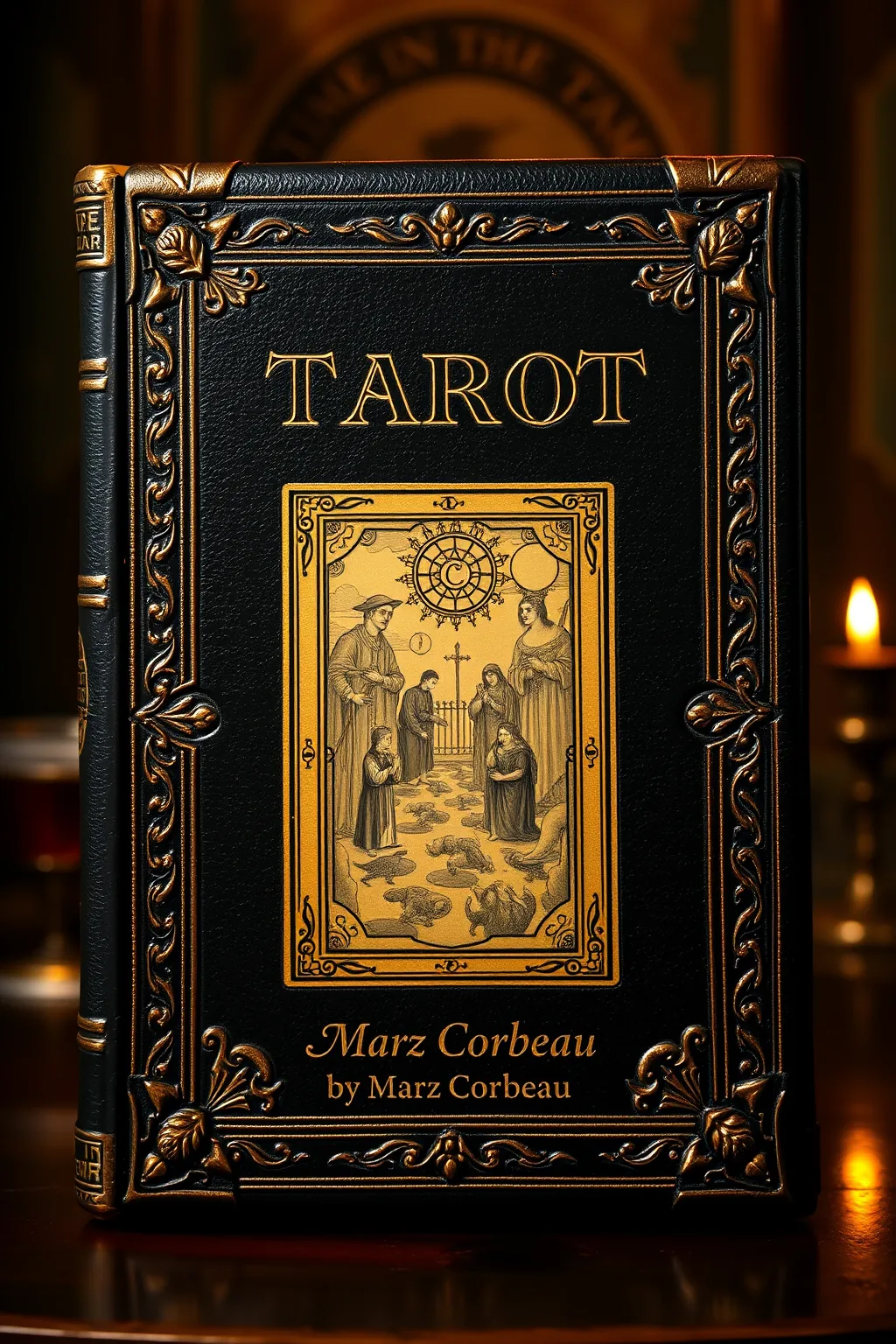
Tarot in the Time of the Apocalypse



Silas Hawthorne (Hermetic Studies Editor) — Marz Corbeau's 'Tarot in the Time of the Apocalypse' is a vital contribution to contemporary esoteric thought. Corbeau's unique perspective, forged in the crucible of recent global upheaval, offers fresh insights into the Tarot's ancient role as a tool for psychological and spiritual navigation. The essays masterfully articulate how the archetypes of Temperance and The Hermit, among others, become potent allies against the anxieties of our era. This work transcends simple divinatory practice, offering a profound contemplation of self-reliance and inner communion. Essential reading for serious Tarot practitioners and seekers of solace.
📝 Description
61
Marz Corbeau wrote 'Tarot in the Time of the Apocalypse' during the global pandemic.
This book examines the Tarot's use during a period of global crisis. Marz Corbeau combines personal accounts with occult traditions to show how the Tarot can offer inner strength. The author suggests the archetypal images of the cards can act as a steadying force when facing disorder. It aims to help readers find ways to build genuine connections and overcome feelings of isolation.
Corbeau views the Tarot not just as a divinatory tool, but as a method for self-discovery during uncertain times. The text encourages those experiencing anxiety about the future to reconnect with the Tarot's symbolic language. It presents the cards as a source of personal empowerment and a guide through what the author calls our current 'apocalyptic' era. The book seeks to reveal deeper understandings within the Tarot's imagery.
Marz Corbeau's work situates the Tarot within contemporary esoteric thought, specifically addressing its application during a time of collective upheaval. It draws on established occult frameworks that view the Tarot's Major Arcana as symbolic representations of universal human experiences and spiritual development. The book connects these ancient symbols to modern psychological and spiritual needs, suggesting the Tarot provides a structured system for understanding and coping with widespread societal disruption and personal fear. This approach aligns with traditions that see esoteric tools as practical aids for navigating difficult periods.
💡 Why Read This Book?
This book offers a deeply personal and esoteric lens through which to understand the Tarot's power during times of crisis. It provides practical guidance for cultivating inner peace and combating isolation, making it an indispensable resource for spiritual seekers, Tarot practitioners, and anyone navigating the complexities of modern uncertainty.
⭐ Reader Reviews
Honest opinions from readers who have explored this book.
❓ Frequently Asked Questions
How does the Tarot specifically help with feelings of loneliness?
Corbeau explores how engaging with Tarot archetypes can foster a sense of inner companionship and self-understanding, transforming solitary moments into opportunities for profound personal connection and introspection.
What is the esoteric significance of the Tarot during a pandemic?
The book posits that the Tarot's symbolic language offers a framework for understanding collective fear, promoting resilience, and facilitating a deeper connection to universal energies that transcend immediate worldly anxieties.
Is this book suitable for beginners in Tarot?
Yes, while it delves into complex esoteric themes, Corbeau's accessible writing style makes it valuable for both novice and experienced Tarot enthusiasts seeking deeper meaning.
Does the book offer practical techniques for using the Tarot?
Absolutely. It provides insightful methods and contemplative exercises for applying Tarot wisdom to specific challenges, particularly those related to temperance and social connection.
What makes this book different from other Tarot guides?
Its unique focus on the Tarot's role during a global crisis, combined with Corbeau's evocative prose and deep esoteric understanding, offers a timely and soul-stirring perspective.
🔮 Key Themes & Symbolism
Tarot as a Compass in Crisis
This theme examines the Tarot not as a mere predictive tool, but as an archetypal map guiding the soul through turbulent periods. Corbeau elucidates how the Major Arcana’s journey mirrors our own spiritual evolution, offering useful insights into navigating fear, uncertainty, and societal disruption. The cards become allies, providing clarity and resilience when external circumstances feel overwhelming, fostering an inner sanctuary of wisdom and strength.
The Alchemy of Solitude and Connection
Corbeau looks at the paradoxical nature of isolation during the pandemic, exploring how the Tarot can transform loneliness from a void into a fertile ground for self-discovery. Through contemplation of cards like The Hermit and The Lovers, readers are guided to forge deeper connections with their inner selves and, by extension, with the interconnected web of existence, finding solace and profound companionship within.
Temperance: The Art of Inner Balance
This theme focuses on the vital lesson of Temperance in the face of overwhelming external pressures. Corbeau illustrates how the Tarot teaches the practice of mindful blending of opposing forces – chaos and order, despair and hope – to achieve equilibrium. It's about finding the golden mean, the alchemical fusion of disparate elements within oneself to cultivate a stable and serene inner landscape amidst external storms.
💬 Memorable Quotes
Direct passages from the work, attributed to the author.
“Loneliness, a vast ocean, can become a sea of self-discovery with the Tarot as our vessel.”
— This highlights the transformative potential of solitude when approached with the symbolic wisdom of the Tarot, turning perceived emptiness into an opportunity for profound inner exploration.
“Temperance is not suppression, but the sacred art of harmonizing the discordant notes within.”
— This interpretation emphasizes that achieving inner balance through Temperance is an active, alchemical process of integration rather than mere suppression of emotions or impulses.
“In the silence, the archetypes found their voice, speaking truths the noise had long drowned out.”
— This suggests that periods of quiet introspection, facilitated by engaging with the Tarot, allow for the revelation of deeper, often overlooked, universal truths and spiritual wisdom.
“The pandemic, a harsh alchemist, forced us to confront the metals of our soul.”
— This metaphor frames the global crisis as a powerful, transformative force that compels individuals to examine and purify their inner selves, much like an alchemist refines raw materials.
💡 Key Ideas
Editorial paraphrase of the work's core concepts — not direct quotes.
The cards whispered solace when the world outside roared with disquiet.
This quote captures the book's central premise: the Tarot's ability to offer inner peace and guidance when external circumstances are chaotic and frightening.
🌙 Esoteric Significance
Tradition
This work draws heavily from Western Esotericism, particularly Hermeticism and Jungian psychology, which explore archetypal symbolism as a means of understanding the human psyche and its connection to universal forces. It situates the Tarot as a modern manifestation of ancient wisdom traditions that seek to bridge the material and spiritual realms, offering a path to self-knowledge and spiritual growth.
Symbolism
The book looks at the strong symbolism of the Tarot, interpreting its archetypes – such as The Fool’s journey, The High Priestess’s intuition, and The Temperance card’s balance – as powerful metaphors for navigating life’s challenges. It explores how these visual narratives represent fundamental human experiences and cosmic principles, providing a sacred language for understanding personal and collective destinies.
Modern Relevance
In an age marked by rapid technological advancement and existential anxieties, 'Tarot in the Time of the Apocalypse' highlights the enduring relevance of the Tarot as a tool for personal empowerment and spiritual grounding. It demonstrates how ancient wisdom can be applied to contemporary issues, offering practical guidance for mental well-being, emotional resilience, and finding meaning amidst global crises.
👥 Who Should Read This Book
This book is an invaluable resource for **spiritual seekers** yearning for deeper meaning and connection in turbulent times. **Tarot practitioners**, both novice and seasoned, will find fresh perspectives and advanced techniques for applying the cards to modern challenges. **Scholars of esoteric traditions** will appreciate its insightful analysis of archetypal symbolism and its place in contemporary spiritual discourse. Lastly, anyone experiencing **anxiety, loneliness, or a sense of overwhelm** due to current events will discover practical wisdom and profound solace within its pages.
📜 Historical Context
Published in the wake of the COVID-19 pandemic, 'Tarot in the Time of the Apocalypse' emerged from an era defined by unprecedented global disruption, widespread illness, and profound social isolation. This period saw a significant resurgence of interest in esoteric practices, as individuals sought solace, meaning, and tools for navigating uncertainty. The book reflects a contemporary need to re-evaluate traditional wisdom, particularly divination systems like the Tarot, in light of collective trauma and a redefined sense of 'normalcy.' It speaks to a generation grappling with existential questions and seeking spiritual anchors in a rapidly changing world, situating the Tarot not just as a historical artifact but as a vital, living practice for modern resilience.
📔 Journal Prompts
Reflect on a time you felt immense loneliness and how you navigated it. Which Tarot card might have represented your state, and which might have offered guidance?
Consider the concept of 'Temperance' in your own life. Where do you feel out of balance, and what small steps can you take to harmonize opposing forces?
How has the recent 'apocalyptic' period changed your perception of resilience and inner strength? What archetypes from the Tarot resonate with your personal journey of adaptation?
Explore the idea of the Tarot as a 'vessel' for self-discovery. If you were to start a path of reading through your own inner landscape, what would be your first destination?
Write about a time when external 'noise' hindered your inner wisdom. How can you create more moments of sacred silence to hear the 'whispers' of your intuition and the archetypes?
🗂️ Glossary
Archetype
In Tarot and Jungian psychology, archetypes are universal, archaic patterns and images that derive from the collective unconscious and are the psychic counterpart of instinct. They represent fundamental human experiences and motivations.
Esotericism
Esotericism refers to a broad range of spiritual traditions that focus on inner knowledge, spiritual transformation, and hidden wisdom, often transmitted through symbolic language and mystical practices.
Hermeticism
A philosophical and religious tradition based on the purported teachings of Hermes Trismegistus. It emphasizes divine wisdom, spiritual enlightenment, and the interconnectedness of the microcosm (human) and macrocosm (universe).
Temperance
In Tarot, the Temperance card symbolizes balance, moderation, patience, and the blending of opposites. It represents the alchemical process of combining disparate elements to create harmony and equilibrium.
Divination
The practice of seeking knowledge of the future or the unknown by supernatural means. In the context of Tarot, it involves interpreting card spreads to gain insight into personal situations, challenges, and potential outcomes.
This book appears in 3 collections
🔮 Readers Also Liked
Browse all →
From the “Tarot” Collection
View all →
More Free Divination & Tarot Books
View all →